


More news on this day
Australia has aligned its travel advisories with some of the most hard-hit countries in the Middle East, as expanding conflict, airspace closures and aviation disruptions trigger a wave of strong warnings that is reshaping global tourism and long-haul flight networks.
Get the latest news straight to your inbox!
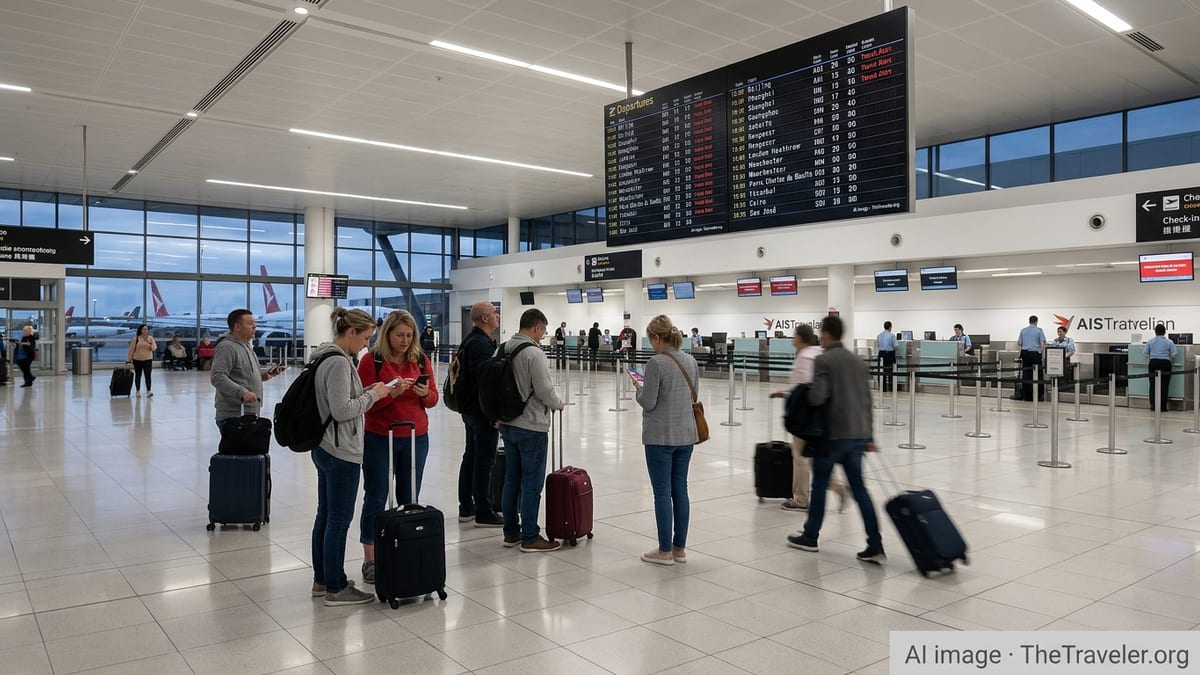
Australia Tightens Advice As Regional Risk Escalates
Publicly available updates from Australia’s Smartraveller portal in late May 2026 show that travel advice for key Middle East destinations has hardened in response to the evolving conflict centred on Iran, Israel and neighbouring states. Israel and the Palestinian Territories, Lebanon, Syria, Iraq, Yemen and parts of Iran are now subject to higher-level advisories, including explicit instructions not to travel or to leave while commercial options remain available.
A dedicated Middle East conflict bulletin issued by the Australian government in May urges Australians already in affected countries to consider departure if it is safe to reach an airport and if flights are still operating. The notice highlights the risk of rapid airspace closures, missile and drone threats, and potential spillover across borders, underscoring how quickly the security and aviation environment can change for travellers.
The tougher tone places Australia broadly in line with warning levels set by other Western governments, particularly the United States and several European states. It also effectively mirrors the reality on the ground for many Middle East governments, which have been forced to shut airports, close airspace or curtail commercial operations since the conflict flared in late February.
For Australian travellers and airlines, the shift means that what were once routine stopovers or holiday itineraries through major Gulf and Levant hubs are now subject to enhanced risk assessments, insurance complications and the possibility of sudden route changes or cancellations.
Middle East States Move From Transit Hub To Conflict Zone
A cluster of Middle Eastern governments including Bahrain, Kuwait, Israel, Iran, Iraq, Qatar, Syria, the United Arab Emirates and Yemen have all implemented some level of airspace closure or severe restriction since the escalation of hostilities on 28 February 2026, according to international aviation data and media coverage. In many cases, formal travel advisories have been raised domestically and by foreign governments to the highest tiers, reflecting both security threats and the practical impossibility of safe commercial operations.
Reports from regional outlets and international news agencies indicate that Israel and Iran have experienced repeated missile and drone exchanges, while strikes and attempted attacks have also affected or targeted infrastructure in Gulf states such as Kuwait, Qatar, Bahrain and the UAE. In Kuwait, widely reported drone strikes on Kuwait International Airport led to a full suspension of commercial flights and ongoing closure of national airspace, leaving foreign carriers to reroute or cancel services.
Across Iraq and Syria, conflict-related air defence activity has prompted broad flight restrictions, while Yemen’s long-running instability and the presence of non-state armed groups with demonstrated capabilities against aviation and shipping have kept risk levels elevated. In several countries, governments have urged citizens to avoid non-essential travel abroad while the conflict persists, or have focused resources on evacuating nationals from higher-risk zones.
The combined effect has been to transform what was until recently one of the world’s busiest and most reliable transit regions into a patchwork of no-go areas and narrow, highly controlled corridors. The change is particularly stark for major hubs in the UAE and Qatar, which previously marketed themselves as safe, politically stable connector airports between Europe, Asia, Africa and Oceania.
Global Flight Maps Redrawn As Airspace Closes
Industry analyses from aviation consultancies and travel data providers describe the first quarter of 2026 as the most disruptive period for global air traffic since the Icelandic ash cloud crisis in 2010. The trigger was the simultaneous closure of multiple Middle East flight information regions on 28 February, when coordinated United States and Israeli operations against Iranian targets were followed by retaliatory action and cascading airspace restrictions.
Flight tracking platforms and specialist reports show that airspace over Iran, Iraq and parts of the Gulf quickly emptied of routine civilian traffic, with Bahrain, Kuwait, Qatar, the UAE, Israel, Jordan and Syria among the states that either fully closed or heavily restricted their skies. Airlines were forced to send Europe–Asia and Europe–Australia services north via the Caucasus and Central Asia, or farther south over Egypt, Saudi Arabia and the Arabian Sea, adding hours of flying time to some routes.
Research from global aviation bodies and financial consultancies suggests that jet fuel prices roughly doubled in the weeks after the conflict escalated, while key Middle East airports experienced more than a 50 per cent drop in passenger throughput in March and April. Capacity constraints, higher fuel burn on longer detours and war-risk insurance premiums have translated into sharply higher fares on many long-haul routes, including itineraries that would typically connect through the Gulf.
Separate assessments by regional and international organisations highlight the impact on tourism-dependent economies. With Middle East hubs operating far below capacity and some destinations effectively unreachable on commercial flights, visitor arrivals have slumped, and airlines have trimmed schedules or suspended services indefinitely. Travel retailers and tour operators report that passengers are increasingly seeking routings that avoid the region entirely, even when alternatives are longer or more expensive.
Tourism Shockwaves From Europe To Asia-Pacific
The Middle East conflict’s aviation fallout is rippling well beyond the immediate region, affecting tour operators, hotels and destinations from Southern Europe to Southeast Asia and the Pacific. Analysts note that since Russian and Ukrainian airspace were already largely closed to many carriers, the loss or partial loss of Middle East corridors has left airlines with a shrinking number of viable pathways, particularly between Europe and Asia.
For Australia, New Zealand and Southeast Asian destinations, this has meant fewer direct services to Europe and a heavy reliance on complex multi-stop itineraries that avoid the conflict zone. Data cited in sector reports show tens of thousands of flight cancellations to and from the wider Middle East since late February, with an estimated millions of passengers affected directly through cancellations, longer journeys or missed connections.
European tourism bodies and airport associations have warned of a challenging northern summer if instability continues, pointing to reduced airline competition on remaining routes and average fares that remain significantly above pre-conflict levels. Even travellers who are not flying near the Middle East are feeling the effects through higher ticket prices, limited seat availability and more frequent last-minute schedule changes driven by knock-on operational pressures.
Destinations that once marketed the convenience of single-stop connections via Dubai, Abu Dhabi or Doha now face the prospect of prolonged access difficulties. Travel demand studies suggest that some long-haul leisure travellers are postponing or shortening trips, while high-end business travel, which is more time-sensitive, is shifting to carriers and routings that can offer the greatest certainty of avoiding disruption.
What Australia’s Stronger Warning Means For Travellers
Australia’s decision to issue prominent warnings about the conflict-affected Middle East, alongside the existing high alert levels applied by countries such as Bahrain, Kuwait, Israel, Iran, Iraq, Lebanon, Palestine, Qatar, Syria, the UAE and Yemen, signals a new phase in global travel risk management. Rather than isolated advisories tied to specific incidents, governments are now treating the wider region as a fluid, high-risk environment that can affect travellers even in transit.
Current Australian guidance stresses that routes traversing or skirting conflict-affected airspace can change at short notice, and that flights may be diverted, delayed or cancelled with limited ability for airlines to provide alternatives. Travellers are urged via public information channels to monitor official travel advice, register their whereabouts if already in impacted countries and maintain flexible plans that can adapt to sudden schedule shifts.
Insurance providers have also updated their advisories, with many policies excluding cover for travel into destinations subject to “do not travel” warnings or into active conflict zones. Consumer watchdogs and travel industry associations recommend that passengers scrutinise policy wording carefully, particularly where itineraries involve transfers through Middle East airports that may be affected by airspace closures or security incidents.
For now, aviation analysts suggest that the outlook hinges on the duration and geographic spread of the conflict. A sustained crisis would likely cement structural changes to global route networks, entrench higher operating costs and keep government travel warnings at elevated levels. For Australian travellers and the wider tourism economy, the message from current advisories and market data is that caution, flexibility and close attention to official updates are essential when planning journeys that intersect with the Middle East.