


Deep beneath a quiet residential street in Bacoli, west of Naples, lies one of the most astonishing Roman engineering works still standing: Piscina Mirabilis. From above, you see only a simple doorway and a bit of brickwork. Inside, you step into a vast underground forest of columns, dim light filtering from high windows onto damp stone and the faint smell of tufa. It is spectacular, but its most impressive details are easy to miss if you arrive unprepared, rush your visit, or misunderstand how access works. This guide walks you through how to visit Piscina Mirabilis today, what to look for once you are inside, and how to connect the experience with the wider Campi Flegrei landscape.
Get the latest updates straight to your inbox!
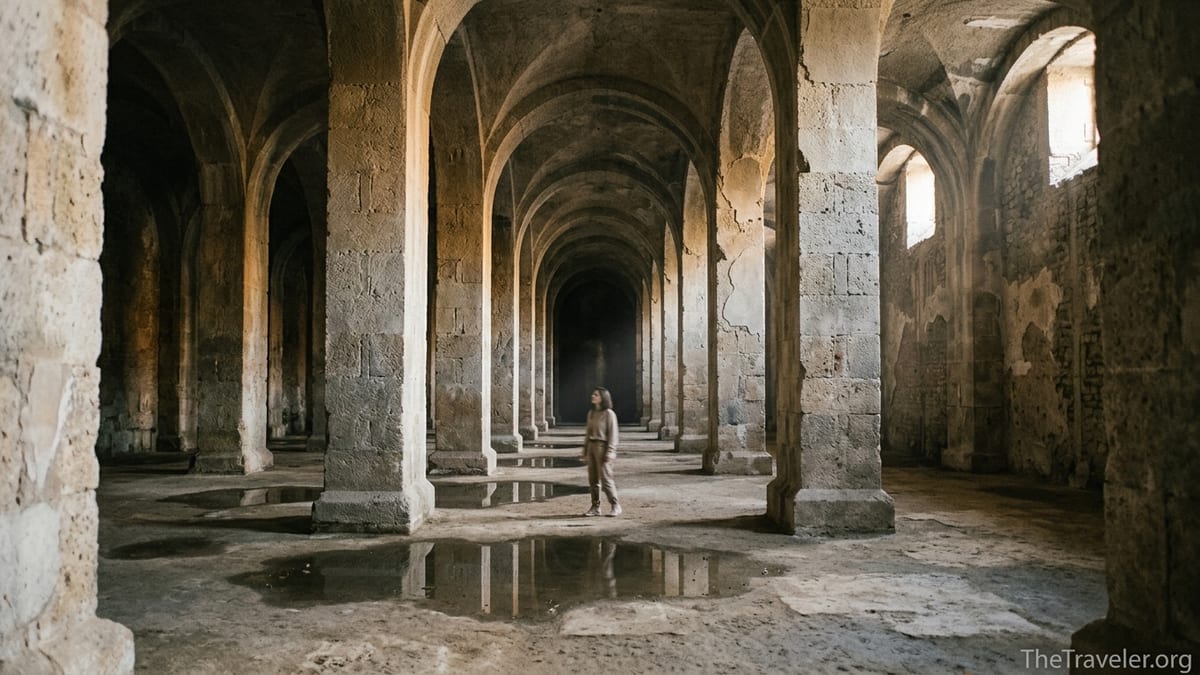
Understanding What You Are Looking At
To really appreciate Piscina Mirabilis, it helps to know what it was and why it was built. This immense underground cistern, about 70 meters long, 25 meters wide and around 15 meters high, once stored fresh water for the main harbor of the western Roman fleet at Misenum. Fed by the Augustan aqueduct from the distant Serino springs, it was essentially the strategic water battery of the navy, holding roughly 12,000 cubic meters of drinking water, comparable to several modern Olympic swimming pools in capacity. Walking into the cistern today, it is easy to be carried away by the atmosphere and forget that every column and vault was part of a carefully calculated hydraulic system.
The interior is laid out like a basilica or a cathedral: four long naves divided by rows of massive pillars into twelve barrel-vaulted corridors. That resemblance is not accidental. Roman engineers used familiar architectural forms to support enormous weights of earth and water. When you are inside, take a moment to stand in the center and look along the length of a nave, then shift to the side and look diagonally through the grid of columns. This simple change of viewpoint reveals just how regular and sophisticated the layout is, and it makes for some of the most striking photographs you can bring back.
Materials are another important detail that visitors often overlook. The walls and vaults are cut into and lined with local yellow tufa from the Campi Flegrei, sealed with hydraulic mortar made from lime, crushed tiles and volcanic pozzolana. If you look closely at chipped corners and repair patches, you can distinguish the rough tufa blocks from the smoother, reddish waterproof plaster. Guides will sometimes shine a flashlight on these surfaces to show the difference, and it is worth asking them to point it out. You will start to see the cistern not as a cave, but as a man-made machine for water.
Finally, pay attention to the light. The faint shafts that fall from small openings high in the walls were not purely aesthetic. They allowed air circulation and inspection of water levels, and they still determine how you experience the space. Arriving at different times of day changes everything: on late morning visits, the light knifes in from the side and highlights just a few pillars; in late afternoon it can be softer and more diffused. Planning your visit time with this in mind can make the difference between a gloomy walk-through and a memorable, almost sacred atmosphere.
How to Arrange Your Visit Without Stress
The logistical detail many travelers miss is that Piscina Mirabilis is not a casual walk-up site. Access is overseen as part of the Parco Archeologico dei Campi Flegrei, under the Italian Ministry of Culture, and advance booking is usually required. In practice, this means you should not rely on simply turning up in Bacoli and hoping the door is open. Schedules and conditions change periodically, so before your trip, check the latest information from official channels, then plan a specific day and time for your visit within your Naples or Campania itinerary.
In recent seasons, the cistern has typically been open on specific days of the week, often clustered around weekends, with timed entries and limited numbers. Tickets are commonly handled through regional cultural service platforms or via partnerships such as local co-operatives authorized by the park, and walk-in slots, if they exist at all, can be snapped up by small group tours. As a real-world example, visitors have reported paying only a few euros per person for a standard entry but needing to reserve a time slot at least several days in advance in high season. Because prices and methods may shift from one year to the next, it is safest to budget around the cost of a small museum ticket and to book as soon as your travel dates are firm.
Many travelers choose to visit Piscina Mirabilis with a licensed guide, either through the park system or through local associations in Bacoli. These guided visits tend to be in small groups and are often timed to coincide with the official opening windows. The additional cost is modest compared to private tours in more famous sites, and the payoff is substantial: a guide can explain details like the water inlets and outlets, point out traces of ancient maintenance work, and help you interpret graffiti and later alterations that you might walk past on your own. If you are on a tight schedule, a guided slot also reduces the risk of confusion at the entrance or language issues over timing.
If you are traveling with someone who has limited mobility, ask specifically about current accessibility conditions when you book. The cistern is underground and reached by stairs; the Ministry of Culture has studied and implemented accessibility improvements, but the combination of steps, uneven floors and humidity means that conditions are still challenging for some visitors. Knowing in advance how many stairs there are and whether handrails are present allows you to decide whether a visit is feasible or whether it is better to enjoy the Campi Flegrei through easier sites such as the archaeological park at Baia or the Aragonese castle museum overlooking the coast.
Getting to Piscina Mirabilis from Naples
From central Naples, reaching Piscina Mirabilis involves combining regional rail or bus with a short walk through the residential streets of Bacoli. The most straightforward public transport option is usually the Cumana railway line, which links the city with the western suburbs and the Campi Flegrei coastline. Travelers commonly board the Cumana near the city center and ride out toward Torregaveta, the seafront terminus. From Torregaveta, local buses operated under the regional Unicocampania system connect to Bacoli and Miseno; services typically stop on main roads from which you can walk up toward Via Piscina Mirabile, the street above the cistern.
Because timetables and route numbers can change, it is smart to verify current schedules a day or two before your excursion, especially if you are traveling outside peak commuting hours or on Sundays. Apps and station ticket offices in Naples can help clarify which departure you need. Many visitors buy a day ticket or integrated pass that covers both the Cumana and the local buses, allowing flexible stops at other Campi Flegrei sites on the same day. When you board the bus from Torregaveta or another hub town, you can let the driver know you are heading to the Piscina Mirabilis area in Bacoli; drivers on local routes are often familiar with the site and can advise you on the best stop for the short uphill walk.
If you prefer more direct transport, taxis and ride-hailing options from Naples can take you to Bacoli in around an hour, depending on traffic, and drop you close to the entrance. While this is more expensive than public transport, it can be cost-effective for a small group or family and saves several transfers. Some travelers arrange a round-trip with waiting time included so that the driver can also take them to nearby attractions such as the baths of Baia or the lakes around Fusaro. When you negotiate or book, make it clear that your main stop is Piscina Mirabilis in Bacoli, not the better-known seaside resort of Miseno alone.
For those staying in nearby coastal towns like Pozzuoli, Baia or Miseno, reaching Piscina Mirabilis can be as simple as a short local bus ride or even a walk, but you still need to pay attention to hills and summer heat. In July and August, Bacoli’s narrow streets can be very warm in mid-afternoon. If you have an early entry time at the cistern, consider arriving in town a bit earlier, taking a shaded coffee break near the waterfront, then climbing up to the entrance shortly before your slot. That way you step into the cool underground space from the heat outside and appreciate the contrast that the Roman engineers themselves surely valued.
Inside the Cistern: Details You Should Not Miss
Once you descend the staircase into Piscina Mirabilis, resist the urge to take all your photos in the first few minutes. Give your eyes time to adjust to the light and walk slowly toward the center. One of the most important features is the alignment of the 48 internal pillars that support the vaults. Stand at one of the shorter ends, lean gently against the wall and look straight down the central nave: you will see a long canyon of columns receding into shadow. Now move a few steps to either side and watch how the pattern shifts into diagonals and cross-views. Amateur photographers often find that their most atmospheric shots are taken from these off-center positions rather than from the middle of the space.
Next, look down. In the floor of the central area there is a lowered basin, around a meter deep, that functioned as a settling and cleaning tank, sometimes referred to as the piscina limaria. This was where sediment could accumulate and where workers could drain and clean portions of the cistern. Guides may explain how the water level could be controlled using channels and outflow points. The feature is modest compared to the soaring vaults, but it speaks directly to how the cistern worked on a daily basis to keep water usable for thousands of sailors and support staff in the fleet above.
Raise your eyes to the side walls and search for the high, narrow openings that pierce the tufa. These windows provided ventilation and light and were part of a larger system that included inlets from the aqueduct and outlets toward distribution points. In several spots you can trace the path of now-dry channels that once brought water into the tank. In some sections you may also notice patches where the waterproof plaster has been repaired in antiquity, sometimes in a slightly different color. These details are subtle, but they help you imagine the maintenance crews who periodically emptied and cleaned the cistern.
Finally, pay attention to textures and marks. Over time, visitors, workers and possibly even soldiers scratched names and symbols into the surfaces. Some are post-Roman, others more recent. In corners and on certain pillars, darker stains show where water levels once reached or where moisture still collects. A good guide will often sweep a beam of light over these areas and briefly switch off other lights to show you how the space might have looked with only daylight filtering from above. If you come well prepared, you can ask questions about specific elements you notice, turning a short visit into a richer, more personal encounter with the site.
Combining Piscina Mirabilis with the Campi Flegrei
One of the best ways to avoid feeling rushed at Piscina Mirabilis is to make it part of a broader day in the Campi Flegrei rather than a quick side-trip from somewhere else. The volcanic landscape west of Naples is dense with archaeological sites, small fishing harbors and thermal baths, and Bacoli sits right at the heart of it. After your visit underground, you can walk downhill back toward the waterfront and continue the day at nearby Lake Miseno, where the Roman fleet once anchored, or at the modern promenade with cafes and gelaterie popular with locals on weekends.
Just a short distance away above the bay, the Aragonese castle of Baia houses the Archaeological Museum of the Campi Flegrei. Many artifacts found in the area, including statues and inscriptions, are displayed there, helping you place Piscina Mirabilis in its wider context as part of the naval and villa landscape. Because entrance tickets for several sites in the Campi Flegrei are sometimes bundled or valid over multiple days, it is practical to plan a loop that might include the museum at Baia, the thermal ruins along the coast, and perhaps the acropolis of Cuma on another ridge. Checking current ticket combinations when you book your Piscina Mirabilis slot can save both money and time.
Another rewarding combination is to pair the cistern with the underwater archaeological park of Baia, accessible by glass-bottom boat or diving operators in the area. Seeing submerged villa foundations and mosaics in the bay and then descending into the dry but still water-shaped volume of Piscina Mirabilis creates a powerful double image of how Romans used and controlled water in every direction. Practical constraints like sea conditions and availability of boat tours mean you need to be flexible with scheduling, but even a simple walk along the shore, looking back toward Bacoli’s hillside where the cistern is hidden, helps connect the dots.
If you are staying several nights in Naples, you might dedicate one full day to the Campi Flegrei instead of trying to squeeze Bacoli in between Pompeii and the Amalfi Coast. Public transport passes that cover the metropolitan area can make this economically attractive. Start early from Naples, visit one or two major sites in the morning, pause for a long seafood lunch at a lakeside trattoria in Bacoli or Baia, then head to Piscina Mirabilis for a late afternoon entry when the light entering the high windows is often at its most evocative. This way the cistern becomes the quiet crescendo of your day rather than a hurried stop.
Practical Tips for a Better On-site Experience
Conditions inside Piscina Mirabilis are quite different from the streets above. The air is cool and humid year-round, the lighting is low, and the stone floors can be slick in places. Wear shoes with good grip rather than smooth-soled sandals, especially if you are visiting after rain or during a period of high humidity. A light sweater or scarf can be useful even in high summer, particularly for children or anyone sensitive to temperature changes. Because the space is enclosed, sound carries; speaking in low voices helps preserve the atmosphere and makes it easier to hear your guide’s explanations.
Photography is generally allowed for personal use, but flashes are often discouraged or forbidden to protect the surfaces and not disturb other visitors. In low light, your best bet is to increase ISO moderately and use a wide aperture rather than rely on flash. Smartphones handle this surprisingly well; many recent models have dedicated night or low-light modes that can capture the pattern of columns and light beams without extra equipment. A small tripod or monopod may not be permitted, so plan on hand-held shots. Take a few photos early, then put the camera away for several minutes to focus on the experience itself before taking more targeted images of specific details.
Visits are time-limited, so it helps to arrive with a simple mental checklist of what you most want to see: the overall grid of columns, the central cleaning basin, the high windows, traces of plaster and repairs, and any interpretive panels or temporary exhibitions that may be installed. Many guided visits last under an hour, which is enough if you move with purpose. If there is something that fascinates you, such as Roman hydraulic mortar or ancient engineering more broadly, mention it to your guide at the beginning. They can often tailor their commentary, pointing you toward parts of the cistern that align with your interests.
Finally, remember that Piscina Mirabilis sits in a residential neighborhood. Be respectful of noise when arriving and leaving, do not block driveways, and use marked parking areas if you come by car. Local bars and small shops in the streets below provide an opportunity for a coffee, a snack or a post-visit conversation with residents, many of whom are proud of the cistern as part of their town’s identity. Supporting these businesses is a simple way to contribute to the community that hosts such an extraordinary monument.
The Takeaway
Visiting Piscina Mirabilis is less about ticking off another famous Italian attraction and more about stepping quietly into the infrastructure that once sustained an empire. From the outside, the entrance in Bacoli is almost anonymous. Inside, the regular forest of columns, the echoing vaults and the subtle play of light and water stains reveal a level of engineering sophistication that rivals more celebrated monuments. If you arrive with a grasp of its function, a clear plan for access, and a sense of what to look for, the cistern transforms from an atmospheric curiosity into a deeply meaningful experience.
By pairing Piscina Mirabilis with other sites in the Campi Flegrei, planning your transport carefully from Naples, and paying attention to small details like footwear, camera settings and the timing of your entry, you can avoid the most common frustrations. Instead of scrambling for a last-minute ticket or rushing through in a crowded group, you give yourself space to walk slowly between the pillars, trace the line of an ancient water channel with your eyes, and imagine the sounds of workers and soldiers who once relied on this hidden reservoir. In that moment, the “wondrous pool” fully lives up to its name.
FAQ
Q1. Do I need to book in advance to visit Piscina Mirabilis?
Yes, advance booking is strongly recommended and often required. Entry is usually managed through timed slots with limited numbers, and walk-up access cannot be relied on, especially in high season.
Q2. How long should I plan to spend inside the cistern?
Most guided visits last around 30 to 45 minutes, which is enough to see the main features without rushing. If you like photography or detailed explanations, allow at least an hour in your wider schedule.
Q3. What is the easiest way to reach Piscina Mirabilis from Naples by public transport?
Commonly, travelers take the Cumana railway from Naples toward Torregaveta, then connect to a local bus to Bacoli and walk up to Via Piscina Mirabile. Always check current timetables shortly before your trip.
Q4. Is Piscina Mirabilis suitable for visitors with limited mobility?
The cistern is underground and reached by a staircase, with uneven and sometimes damp floors inside. Some accessibility improvements exist, but it can still be challenging; ask about current conditions when you book.
Q5. Can I visit Piscina Mirabilis without a guide?
Policies vary. In many cases you can enter on your own during opening hours, but a guided visit is highly recommended, as guides explain the hydraulic system and point out subtle features that are easy to miss.
Q6. What should I wear for a visit inside the cistern?
Wear comfortable shoes with good grip, as the floors can be slippery. Even in summer, bring a light layer because the underground space is cooler and more humid than the streets outside.
Q7. Are photos allowed inside Piscina Mirabilis?
Photography for personal use is generally permitted, but flash and tripods may be restricted. Low light means you should rely on your camera or phone’s high-ISO or night modes for sharp images.
Q8. Can I combine a visit to Piscina Mirabilis with other nearby sites in one day?
Yes. Many travelers pair the cistern with the Archaeological Museum at Baia, the thermal ruins along the coast, or lakes and promenades around Bacoli and Miseno as part of a full Campi Flegrei day.
Q9. Is it worth visiting if I have already seen places like Pompeii and the Colosseum?
Definitely. Piscina Mirabilis shows a different side of Roman achievement: the hidden infrastructure that made cities and fleets possible. It complements, rather than duplicates, the experience of major ruins.
Q10. When is the best time of day to visit Piscina Mirabilis?
Late morning or late afternoon often offer the most atmospheric light, as sunbeams enter through the high windows and accentuate the columns. However, your choice may also depend on transport and tour availability.