


More news on this day
Baggage handling problems at Philadelphia International Airport have caused significant disruption for passengers, with reports of delayed luggage, crowded claim areas and long waits for bags during one of the busiest travel periods of the summer.
Get the latest news straight to your inbox!
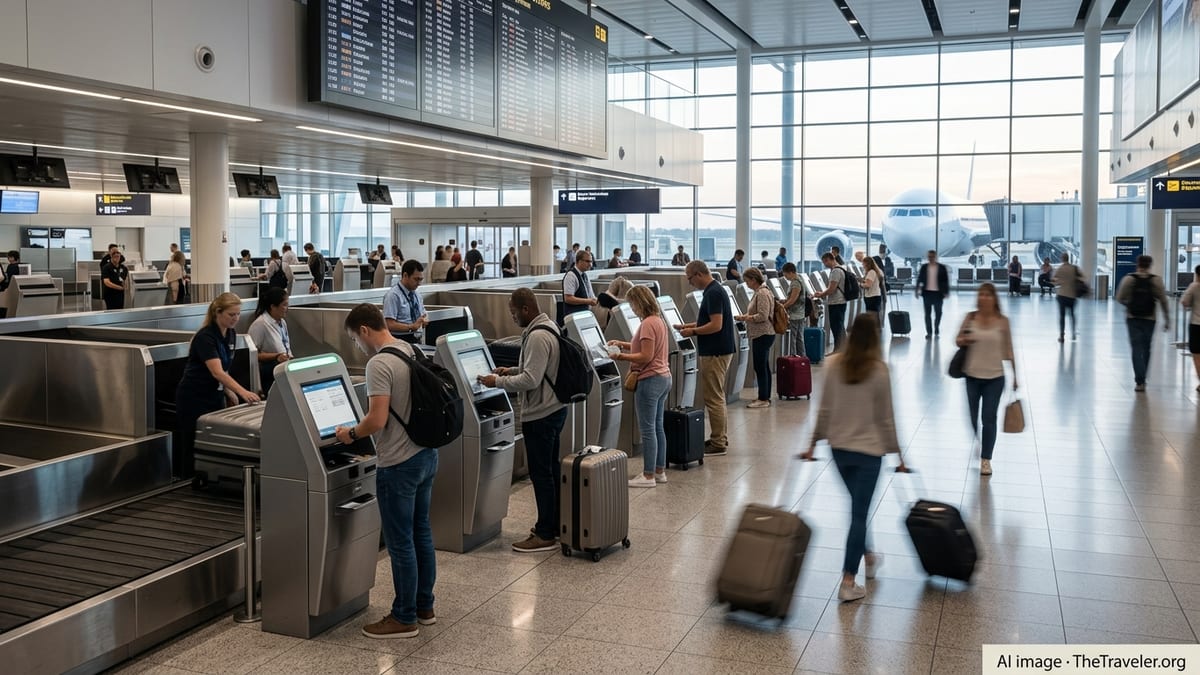
Mechanical faults trigger mounting baggage delays
Reports from travelers and local media indicate that a mechanical problem in parts of the baggage handling system at Philadelphia International Airport has led to widespread delays in checked luggage reaching carousels. The disruption appears to have affected multiple terminals that process both domestic and international flights, intensifying pressure on already busy evening arrival banks.
Passengers arriving on recent flights have described waiting well over an hour for bags to appear, with some claiming that carousels remained idle while ground teams attempted to manually move luggage through affected areas. The knock-on effect has been a build-up of baggage in back-of-house sorting zones, where limited staffing and constrained access reportedly slowed efforts to clear the backlog.
Publicly available airport planning documents show that Philadelphia’s baggage systems are a mix of older installations and more recently upgraded components, reflecting years of incremental expansion at one of American Airlines’ key hubs. When a single segment of that network fails, luggage often has to be routed around the fault or handled manually, increasing the risk of misconnection and delay.
The disruption has not generally halted flight arrivals or departures, but it has added a stressful extra chapter to journeys that, in many cases, had already been lengthened by summer thunderstorms and regional air traffic constraints across the Northeast.
International arrivals hardest hit by congestion
Travelers arriving from transatlantic and Caribbean destinations through the airport’s international facilities have reported some of the longest waits. These passengers must clear federal inspections before retrieving their bags from a large shared claim hall that feeds multiple onward connections throughout the United States.
According to recent traveler accounts, baggage from widebody aircraft has been particularly slow to reach carousels, with some inbound flights seeing the first bags appear only after prolonged gaps. For connecting passengers with relatively tight layovers, those delays can quickly translate into missed onward flights or the choice to leave the airport without their checked luggage.
Philadelphia’s role as a major hub means that many international passengers are only passing through the city, relying on the airport’s baggage network to transfer their luggage between flights. When conveyor segments or sorting nodes are out of service, bags may be held in temporary staging areas to be redirected later, increasing the chance that travelers arrive at their final destination without their belongings.
Seasonal traffic has added to the strain. With international demand close to or above pre‑pandemic levels, even a modest reduction in baggage system capacity can make it difficult to keep up with peaks in evening arrivals when multiple long-haul flights land in quick succession.
Domestic passengers face crowds at carousels and claim halls
The impact has not been limited to international routes. Domestic travelers arriving into the airport’s central terminals have reported crowded baggage halls, limited space around carousels and large clusters of unclaimed bags as airport workers attempt to separate luggage by flight during the disruption.
Some passengers arriving from leisure destinations described walking into claim areas where bags from earlier flights were still lined up along walls or clustered near airline baggage offices. For those landing late at night, the combination of fatigue, limited ground transportation options and uncertainty about luggage status has contributed to mounting frustration.
Airport guidance materials highlight that each terminal’s baggage operations are ultimately managed by individual airlines and their ground-handling partners, even though the underlying conveyor infrastructure is maintained by the city’s aviation department. When disruptions occur, this division of responsibilities can complicate efforts to provide passengers with clear, up-to-the-minute information on where their bags are within the system.
Social media posts from affected travelers show families waiting in crowded hallways outside baggage offices and passengers attempting to track their belongings through airline apps that sometimes lag behind the reality on the ground. In some cases, bags have reportedly been held back for delivery to passengers’ homes once the backlog is processed.
Recent power and infrastructure issues add to passenger unease
The baggage disruption comes after a series of infrastructure challenges at Philadelphia International Airport, including a recent power-related outage that affected escalators, moving walkways and elevator access between terminals and baggage claim. While flight operations were largely unaffected in that incident, it heightened traveler sensitivity to behind-the-scenes vulnerabilities at the busy hub.
Public documents detailing federal infrastructure grants for Philadelphia highlight ongoing investment in heating, cooling and electrical systems that support terminal operations, including baggage areas. These projects are intended to modernize equipment and improve resilience, but they can also necessitate temporary closures or reconfigurations that put additional stress on remaining systems.
Travelers navigating the airport during such periods have described a patchwork of detours, temporary signage and rerouted passenger flows, particularly around the international complex and adjoining ground transportation links. When baggage disruptions coincide with these broader works, the overall passenger experience can deteriorate quickly.
Observers note that Philadelphia is not alone in grappling with luggage disruptions. Across the United States and Europe, a combination of aging infrastructure, tight labor markets and rising travel demand has produced a series of high-profile baggage breakdowns in recent years, underscoring the fragility of systems that often operate at or near capacity.
Advice for travelers passing through Philadelphia in coming days
Travel specialists and frequent flyers advise that anyone connecting through or arriving at Philadelphia International Airport in the near term should prepare for the possibility of longer waits at baggage claim and, where feasible, consider traveling with carry-on luggage only. For trips that require checked bags, placing essential items such as medications, keys and travel documents in hand baggage can help mitigate the impact of any delay.
Passengers who have already checked luggage are encouraged by consumer advocates to retain baggage tags, boarding passes and any documentation related to delays, as these can be important for tracing bags and filing claims. Many airlines now offer app-based bag tracking, but travelers report that it can take time for status updates to reflect real-world movements during major disruptions.
Publicly available information from airport and airline communication channels suggests that teams are working to clear backlogs and restore normal baggage flows as quickly as possible. However, with summer schedules operating near full capacity, it may take several news cycles and multiple days of relatively smooth operations before the system fully stabilizes.
For now, travelers with flexible plans may wish to allow extra time between connecting flights at Philadelphia, monitor flight and baggage updates closely, and be prepared for a slower-than-usual experience in baggage claim, even once they are back on the ground.