


Monzo has become a go to travel companion for many UK based and now US based travellers, thanks to instant app notifications, strong budgeting tools and fee free spending in foreign currencies. But before you rely on that hot coral card for everything from tapas in Barcelona to street food in Bangkok, it is important to understand exactly how Monzo’s pricing, fees and limits work when you leave home. This guide walks through the main costs, with practical examples, so you can plan a smooth, fee light trip.
Get the latest updates straight to your inbox!
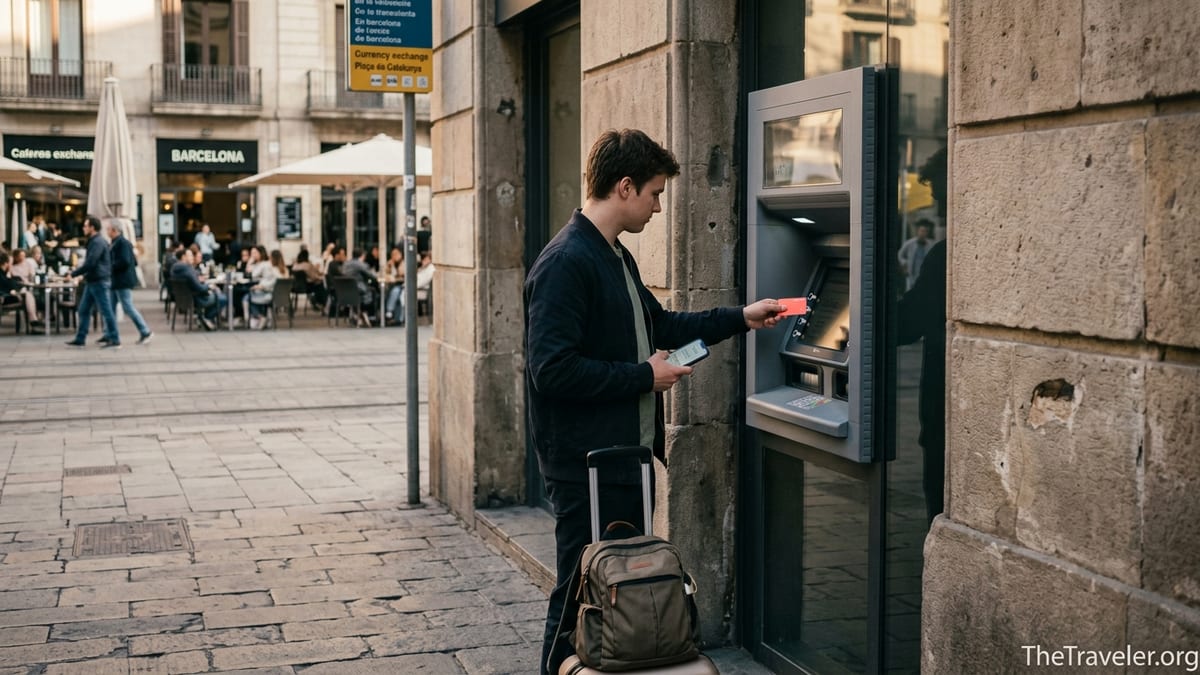
How Monzo Handles Exchange Rates and Card Spending Abroad
The cornerstone of Monzo’s travel appeal is that it does not add its own foreign transaction fee on top of card purchases in another currency. When you tap your Monzo debit card for a 25 euro dinner in Rome or a 4,000 yen train ticket in Tokyo, the transaction is converted at the live Mastercard exchange rate, without an extra Monzo percentage layered on top. In practical terms, that means if the mid market rate is roughly 1 GBP to 1.17 EUR on a given day, your 25 euro meal should cost around 21 to 22 pounds, depending on the exact Mastercard rate at the time you pay, rather than a few pounds more because of bank markups.
For travellers, this makes Monzo particularly attractive compared with traditional high street debit cards that typically add a 2 to 3 percent non sterling transaction fee on every overseas purchase. For example, if you spent the equivalent of 800 pounds over a week in New York on hotels, restaurant bills and museum tickets, a 3 percent foreign transaction fee from a conventional bank could add around 24 pounds in extra charges. With Monzo’s standard debit card, you avoid that specific fee and just pay whatever the Mastercard rate is on the day of each transaction.
Monzo also passes through the exchange rate for online transactions made in a foreign currency. If you are in London booking a hotel in Mexico that charges in Mexican pesos, or buying a rail pass from a European website in euros, the same principle applies: Monzo converts at the Mastercard rate, without adding its own percentage fee. You will see the original foreign currency amount and the exact sterling conversion in the transaction details in the app, which can be reassuring if you are trying to keep a close eye on your travel budget.
One key point to remember is that dynamic currency conversion can still catch travellers out. Many card terminals and ATMs abroad offer to bill you in pounds rather than the local currency. If you accept that offer, the local bank or ATM operator sets the exchange rate and may add a hefty margin. To benefit from Monzo’s pricing, you should almost always choose to pay in the local currency, letting Mastercard and Monzo handle the conversion instead.
Cash Withdrawals Abroad: Free Allowances and That 3 Percent Fee
Monzo’s approach to cash is stricter than its approach to card payments. While spending on the card abroad is fee free from Monzo’s side, cash withdrawals in foreign currencies are subject to rolling limits and a 3 percent fee once you go over your allowance. For many casual travellers that is not a major issue, but in cash heavy destinations it can add up quickly if you do not plan ahead.
If Monzo is your “main bank account” as defined in the app, you can withdraw cash without Monzo fees across the European Economic Area, which includes popular holiday destinations such as Spain, Italy, Portugal, Greece and France. Outside the EEA, there is a free allowance of 200 pounds in foreign currency ATM withdrawals every 30 days on the standard account. Once you exceed that 200 pound equivalent, Monzo charges 3 percent on further withdrawals in that rolling 30 day period. For instance, if you are backpacking through Thailand and take out the equivalent of 300 pounds over two withdrawals in Chiang Mai and Bangkok, the first 200 pounds would be free and the remaining 100 pounds would incur a 3 pound Monzo fee.
Daily ATM withdrawal caps still apply for security reasons, but these are separate from the pricing rules. As an example, many Monzo customers see a standard daily withdrawal limit of a few hundred pounds, but you would need to check your exact allowance in the “Limits” section of the app before you travel. It is perfectly possible to hit the fee free 200 pound monthly allowance before hitting your hard daily limit if you make several small withdrawals over the course of a trip.
These rules make a real difference in cash based countries. Take Japan as a practical example. Although card acceptance in big cities like Tokyo and Osaka has improved, plenty of smaller izakayas, rural guesthouses and local markets still prefer or require cash. Over a two week trip, a couple might comfortably withdraw the equivalent of 400 to 500 pounds to cover trains in more remote areas, cash only restaurants and temple donations. Under Monzo’s standard pricing, half of that sum would attract a 3 percent fee, which might add 6 to 9 pounds in charges on top of whatever the local ATM operators charge. In contrast, if the same couple spent most of their time in card friendly Scandinavia and used cash only for the occasional small purchase, they might stay well within the 200 pound limit and pay no Monzo cash fees at all.
Free, Plus and Premium Plans: What Changes for Travellers
Monzo offers a free current account alongside several paid tiers, currently branded as Extra, Perks and Max. These plans mainly focus on extra budgeting tools and lifestyle perks, but they also change some of the travel related limits and benefits, particularly for ATM withdrawals abroad. If you are a frequent traveller, the monthly fee for a higher tier may pay for itself in reduced cash fees, although you need to run the numbers based on your own habits.
Recent fee information published by Monzo shows that the paid tiers typically offer higher fee free cash withdrawal allowances in foreign currencies before the 3 percent charge kicks in. For example, while a standard account holder outside the EEA has a 200 pound free allowance in a 30 day period, some paid plans offer up to 600 pounds fee free in the same period. That means a long term traveller crossing several countries in Southeast Asia or South America could withdraw the equivalent of 600 pounds from ATMs with no Monzo fee, instead of being capped at 200 pounds, which could save up to 12 pounds in Monzo charges if they would otherwise need that much cash.
Inside the EEA, Monzo’s own materials highlight unlimited fee free ATM withdrawals for customers who use Monzo as their main bank on the free tier, while higher plans may retain generous or unlimited allowances regardless of main bank status. In practice, this matters if you are taking multiple shorter city breaks around Europe each year. A traveller who flies from Manchester to Barcelona in March, then to Berlin in June and Athens in September, might take out 80 to 100 euros in cash on each trip for small purchases. With Monzo used as their main account, they would not pay Monzo fees for those ATM withdrawals in the eurozone, whatever their plan type.
The paid plans also bundle other travel oriented benefits. Monzo Max, for instance, has typically included worldwide travel insurance and mobile phone insurance underwritten by third party providers, alongside roadside assistance in the UK and Europe. Perks has focused more on cashback and partner discounts, such as money back on hotel bookings or streaming services. None of these change the basic fact that card spending abroad remains free of Monzo foreign transaction fees across all tiers, but they can make the overall value proposition stronger if you would otherwise pay separately for travel insurance or are likely to make heavy use of foreign ATMs.
Main Bank Status, Joint Accounts and Regional Nuances
A subtle but important part of Monzo pricing is how your “main bank” status affects certain limits, particularly abroad cash allowances. Monzo defines main bank use based on factors such as whether you pay in your salary and how frequently you use the account. In return, main bank customers typically enjoy higher or unlimited free ATM allowances within the EEA. If you are only using Monzo as a side travel card, without your wages going in, you may find your free limits are smaller than a friend who uses Monzo for everything at home.
This distinction can be confusing in real life. Consider a couple sharing a Monzo joint account but still keeping separate salaries in their own individual accounts at other banks. In some cases, joint accounts that are funded by a partner who uses Monzo as their main bank can benefit from bigger free allowances, which affects how much cash they can take out on a joint holiday before fees apply. Before a big family trip, it is worth both partners checking the “Limits” and “Allowances” sections for both their personal and joint accounts in the app, so that they understand which card is the most cost efficient to use at overseas ATMs.
Regional differences are starting to matter more too. Monzo has expanded beyond the UK and now offers accounts in other markets, with slightly different features and legal documents. For a traveller with a US issued Monzo card, the key travel message remains the same: no Monzo foreign transaction fee on card spending, and card purchases converted at the Mastercard rate. However, cash withdrawal allowances, daily caps and some fee structures can vary between regions, so it is essential to review the specific fee documents linked from your local version of the app rather than relying on UK focused articles alone.
It is also worth combining Monzo with a backup card from another provider, especially in countries where certain networks or issuers are not universally accepted. Travellers report occasional issues using some UK fintech cards in markets like Brazil, Vietnam and smaller towns in the United States. In practice, this might mean carrying a traditional Visa debit card from your high street bank, or a specialist travel credit card with no foreign transaction fee, to sit alongside Monzo in your wallet. That way, if one card is declined or an ATM rejects it, you are not left stranded.
Real Trip Scenarios: What Monzo Might Actually Cost You
To make Monzo’s pricing concrete, it helps to walk through a few realistic itineraries. Imagine a long weekend in Paris for a solo traveller from Birmingham. They pay for their Eurostar tickets and hotel deposit in pounds before they leave, then use Monzo for everything on the ground. Over three days they tap their card for 60 euros of cafe lunches, a 45 euro museum pass, 90 euros of bistro dinners and 20 euros of metro tickets. They also withdraw 60 euros in cash for small bakery purchases and tips. With Monzo’s fee free card spending and, assuming they use Monzo as their main account, unlimited ATM withdrawals in the EEA, they would likely pay no Monzo fees at all. The only extra cost might be a small operator fee from a French ATM if they choose a machine that charges foreigners.
Now consider a more demanding two week backpacking trip across Thailand and Cambodia. A couple based in Leeds book most of their guesthouses on a big booking site, paying with Monzo in local currencies without foreign transaction fees. They spend roughly the equivalent of 900 pounds on card over the fortnight, from restaurant bills to domestic flights and ferry tickets. They also rely heavily on cash for tuk tuks, smaller markets and rural areas, withdrawing the equivalent of 500 pounds in Thai baht and Cambodian riel during their stay. On a standard Monzo account, the first 200 pounds of those cash withdrawals would be free of Monzo charges, while the remaining 300 pounds would incur a 3 percent fee, adding around 9 pounds in Monzo ATM fees. They might also pay separate fees to local ATM operators, which can be 3 to 5 pounds per withdrawal in some parts of Southeast Asia.
A third example is a digital nomad working remotely from Lisbon for a month. They rent an apartment that requires a bank transfer in euros, which they send from Monzo using an international payment partner shown in the app. That transfer will incur a separate fee displayed upfront before they confirm, usually a small percentage plus a fixed amount that varies by currency corridor. Once in Portugal, they pay for almost everything by card, from co working passes to supermarket runs and train tickets. They withdraw perhaps 100 euros in cash over the month. Given the high card acceptance in Lisbon and their low reliance on cash, they are unlikely to hit any Monzo ATM fee thresholds and will mainly benefit from fee free card spending at the Mastercard rate.
Across these scenarios, one pattern stands out: Monzo is strongest for travellers who can rely primarily on card payments, especially in regions like Western Europe and North America where contactless and chip and PIN are widely accepted. In cash heavy destinations, Monzo is still usable and competitive, but you need to think more carefully about how much you will withdraw and whether a higher tier or a complementary card with more generous ATM terms would make sense.
Tips to Keep Monzo Costs Low When You Travel
With a few practical habits, you can usually keep Monzo related costs very low on the road. The first is to pay in local currency whenever you are given a choice. In many countries, hotels, shops and ATMs will detect that your card is from the UK or US and ask whether you want to be billed in pounds or dollars instead of the local money. Choosing pounds or dollars often means accepting a poor exchange rate set by the merchant or ATM, which can quietly add 4 to 6 percent to the bill. Choosing euros in Spain, koruna in the Czech Republic or pesos in Mexico lets Monzo apply the Mastercard rate with no added foreign transaction fee.
Next, plan your cash withdrawals to sit within your free allowances where possible. Rather than taking out the equivalent of 50 pounds every other day in a cash heavy country, it can be more cost efficient to make one or two larger withdrawals, staying within the 200 pound fee free window on a standard plan or higher limits on paid tiers. Before you travel, open the app and look at the “ATM allowances” or “Limits” section, which will show exactly how much you can withdraw abroad before fees apply and whether you qualify for higher allowances as a main bank customer.
It also pays to do a quick search for overseas banks that offer fee free withdrawals to foreign cards in your destination. For example, travellers in Australia often report that certain major banks’ ATMs charge lower or no operator fees compared with independent machines in convenience stores. Similarly, in parts of Europe, bank branch ATMs are more likely to be free to use than privately owned units in tourist areas. While Monzo cannot control those third party charges, choosing the right machines can easily save a regular traveller 10 to 20 pounds over the course of a trip.
Finally, treat Monzo as part of a small toolkit rather than your only option. Many regular travellers combine Monzo with a specialist travel credit card that has no foreign transaction fee, to cover large purchases like car hire deposits or hotel bills where credit card protections are valuable. Others pair Monzo with a competing app based bank that offers higher fee free cash allowances but less sophisticated budgeting tools. In day to day practice, you might use Monzo for most tap payments and real time budgeting, while reserving another card for ATMs in cash heavy countries or for big bookings made months before you fly.
The Takeaway
Monzo’s travel pricing is built around a simple headline: fee free card spending in foreign currencies at the Mastercard exchange rate, paired with stricter, clearly defined limits on cash withdrawals from overseas ATMs. For many holidaymakers and city break fans, that combination works extremely well. You tap and go almost everywhere without Monzo adding its own percentage fee, and you can take out modest amounts of cash in Europe and beyond with little or no extra cost.
The main caveats arise if you rely heavily on cash or are planning extended trips in countries where cards are still not the default. In those cases, the 3 percent fee on ATM withdrawals above your free allowance, and any extra charges levied by local ATM operators, can nibble away at your budget. Choosing the right Monzo plan, understanding whether you qualify as a main bank customer, and combining Monzo with a backup card can keep those costs under control.
Before you travel, take ten minutes to read the latest fee information in the Monzo app for your specific region and account type, check your ATM allowances and daily limits, and think about how card friendly your destination is. Do that, and Monzo can be a powerful, transparent tool for managing your travel money, rather than a source of surprise charges when you get back home.
FAQ
Q1. Does Monzo charge a foreign transaction fee when I pay by card abroad?
Monzo does not add its own foreign transaction fee on top of card purchases in other currencies, instead using the Mastercard exchange rate for conversion.
Q2. How much cash can I withdraw abroad with Monzo before paying fees?
On the standard plan, you typically get a 200 pound equivalent fee free cash allowance every 30 days outside the EEA, with higher or unlimited allowances in the EEA if Monzo is your main bank.
Q3. What happens if I go over my free ATM withdrawal allowance?
Once you pass your fee free limit in a rolling 30 day period, Monzo charges a 3 percent fee on additional foreign currency cash withdrawals, plus any operator fees the ATM itself may add.
Q4. Are Monzo’s paid plans better for frequent travellers?
Paid tiers like Extra, Perks and Max often include higher fee free ATM allowances abroad and added perks such as travel insurance or cashback, which can be worthwhile if you travel regularly and use a lot of cash.
Q5. Is it cheaper to pay in local currency or pounds when I am offered a choice?
It is usually cheaper to choose the local currency so Monzo can apply the Mastercard rate, rather than letting the merchant or ATM convert to pounds at a potentially poor rate.
Q6. Does Monzo charge for online purchases made in foreign currencies?
Monzo applies the same approach online as in person, converting foreign currency purchases at the Mastercard rate without adding a separate non sterling transaction fee.
Q7. How can I check my current Monzo limits before I travel?
You can see your ATM and spending limits, along with any free withdrawal allowances, in the “Limits” or “Allowances” section of the Monzo app, which updates in real time.
Q8. Are there differences between UK and US Monzo accounts for travel?
The core idea of no Monzo foreign transaction fee on card spending is consistent, but detailed cash allowances, daily caps and some fees differ by region, so you should consult the fee documents relevant to your local account.
Q9. Will I always avoid fees when using Monzo abroad?
You avoid Monzo’s own foreign transaction fee on card spending, but may still pay third party charges such as ATM operator fees or hotel surcharges, which Monzo cannot control.
Q10. Should I rely only on Monzo for money when travelling?
It is safer to carry Monzo alongside at least one backup card, such as a traditional debit or a no fee travel credit card, in case of acceptance issues, card loss or ATM problems.