


More news on this day
Emergency crews rushed to a Barcelona metro tunnel on Monday evening after a fire between the Clot and Glòries stations sent smoke through trains and platforms, prompting large-scale evacuations and medical treatment for more than 130 people affected by smoke inhalation.
Get the latest news straight to your inbox!
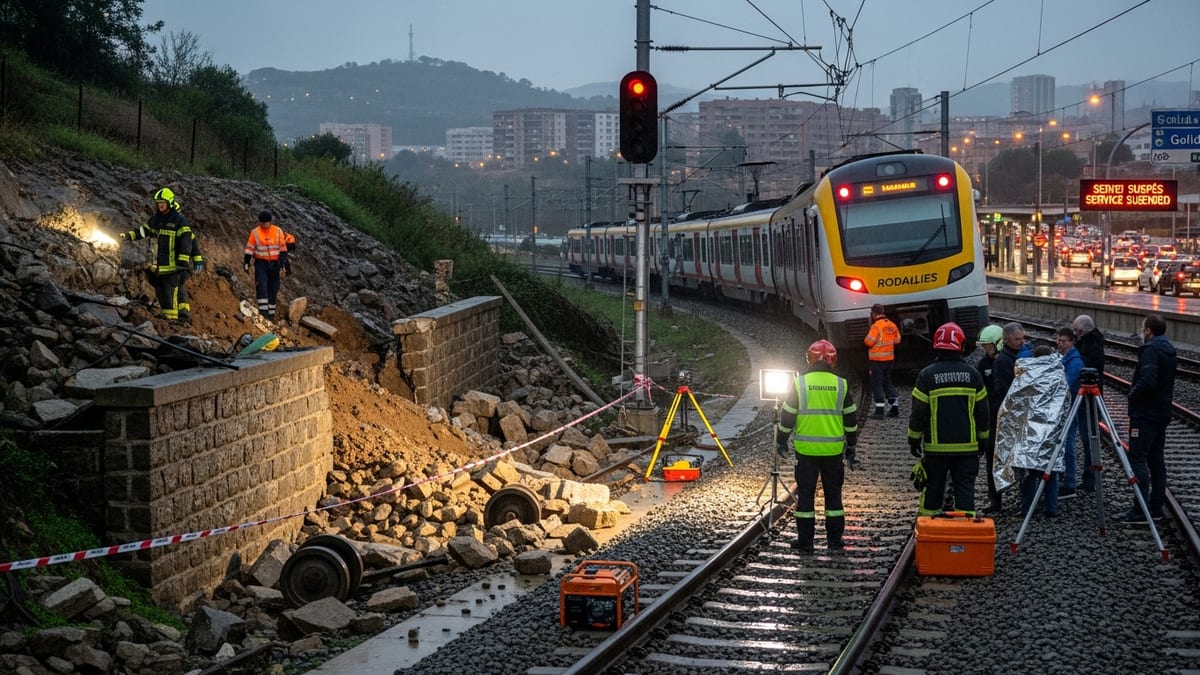
Fire Erupts Between Clot and Glòries
Reports from local media describe the incident as starting in the tunnel section of Line 1 between El Clot and Glòries on the evening of 27 July. Initial information indicates the fire originated in elements surrounding the overhead power system in the tunnel, sending thick smoke into at least one train and nearby station areas.
According to published coverage, the incident forced the closure of both Glòries station and the nearby El Clot interchange, which connects Lines 1 and 2 as well as commuter rail services. Train movements on the affected stretch of track were halted while emergency protocols were activated and power in the area was cut.
Images and video shared by broadcasters and online platforms show dark smoke filling parts of the tunnel and station, with passengers covering their faces as they moved along evacuation routes. Firefighters and medical teams can be seen gathering near station entrances as operations ramped up.
Publicly available information from Barcelona’s transport operator later described the event as a serious but contained fire in the tunnel infrastructure, with no reports of life-threatening burns but a significant impact from smoke exposure.
Mass Evacuation and Medical Response
Passengers aboard an affected Line 1 train were evacuated from the tunnel, with some walking along the trackside emergency walkways toward safe exits. Additional trains in the area were held or diverted as staff guided travelers away from the smoke-impacted sections.
Local news reports indicate that more than 130 people required medical attention for smoke inhalation, with dozens transported to hospitals for further assessment. The majority were described as suffering mild to moderate symptoms, including breathing difficulties and irritation to the eyes and throat.
Emergency services deployed multiple fire crews, ambulances and support vehicles to the scene, establishing triage points near the Glòries and Clot station entrances. Visual material from the scene shows stretchers positioned on sidewalks and passengers receiving oxygen as part of the on-site response.
Published accounts highlight that, despite the scale of the medical response, there were no immediate reports of fatalities. The incident nonetheless added to a series of recent disruptions affecting Barcelona’s rail and metro network this summer, heightening public concern about infrastructure safety and resilience.
Service Disruption and Gradual Restoration
The tunnel fire led to a complete suspension of Line 1 services between the affected stations while firefighters completed suppression work and technicians inspected the tunnel. Replacement surface transport was organized to help passengers bypass the closed segment during the peak of the disruption.
By Tuesday, 28 July, publicly available information from the operator indicated that regular traffic on Line 1 between Clot and Glòries had been restored following overnight checks and repairs. Early-morning services resumed under close monitoring, with additional staff present on platforms to assist passengers and provide guidance.
Although normal frequency was reported along most of Line 1, travelers were advised to allow extra time and stay alert to station announcements as crews continued technical inspections. Ongoing summer works on other parts of the network, including scheduled closures on Line 1 and other lines, added complexity for commuters re-routing around the affected section.
The incident briefly overlapped with wider maintenance projects in the Barcelona metro system, underscoring how unplanned emergencies can strain capacity during already heavily managed operating periods.
Cause Under Review as Safety Focus Intensifies
Preliminary technical explanations cited in European and Spanish media point to damage in the tunnel lining that may have dropped debris onto the energized overhead system, triggering the fire. Investigations are expected to focus on how such damage developed and whether it was detectable in routine inspections.
Engineering assessments will likely examine factors such as tunnel waterproofing, structural integrity and the condition of power supply components along the affected section. Attention is also expected to turn to smoke behavior in the confined environment and the performance of ventilation systems during the emergency.
The Barcelona metro has carried out complex safety drills in recent months, including exercises simulating power loss and full-train evacuations in tunnels. Observers are watching closely to see how lessons from those simulations aligned with the real-world conditions faced by passengers and responders during this week’s incident.
Urban transport specialists note that fires in rail tunnels, even when relatively contained, can reveal weaknesses in infrastructure maintenance regimes and emergency planning. The outcome of the technical review may influence future investment priorities for the city’s expanding underground network.
Impact on Travelers and Ongoing Advice
For many passengers, the tunnel fire translated into long delays, canceled journeys and sudden re-routing at the height of the evening travel period. Eyewitness accounts compiled by local outlets describe crowded platforms, confused travelers and periods of uncertainty while staff organized safe exits from the stations and tunnel.
Publicly available information from transport channels encourages passengers who may have been affected by smoke to seek medical advice if they continue to experience respiratory symptoms. Travelers are also urged to familiarize themselves with emergency signage and evacuation routes in underground stations, particularly at busy interchanges like Clot and Glòries.
In the short term, visitors and residents moving around Barcelona are being advised via local coverage to check real-time service updates before entering the metro, especially on Line 1 and other corridors undergoing planned works. Alternative options such as tram and bus routes remain available across the affected areas of the city.
While regular operations have largely resumed, the incident has placed a renewed spotlight on the challenges of managing emergencies in dense urban transport tunnels. For those planning trips in and around Barcelona, awareness of current service notices and a willingness to adjust routes quickly will remain important in the days ahead.