


More news on this day
Bavaria’s transport minister has reiterated support for connecting Germany’s rail network to the Brenner Base Tunnel, urging faster progress on the long-delayed northern access route that is seen as critical to shifting freight off Alpine roads.
Get the latest news straight to your inbox!
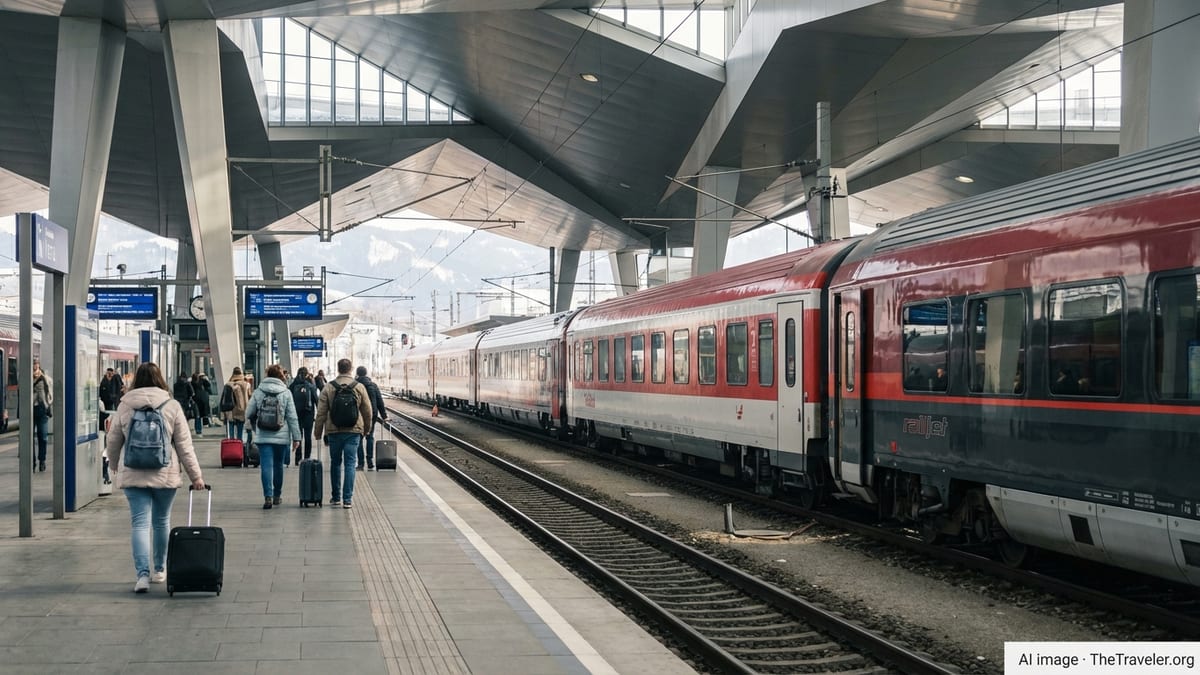
Bavarian backing after years of hesitation
The Brenner Base Tunnel between Austria and Italy is emerging as one of Europe’s most significant rail projects, promising a faster, flatter north–south axis beneath the Alps. As construction milestones accumulate in the main tunnel tubes, attention in Germany has turned to how Bavarian infrastructure will connect to the new route once it opens.
In this context, public statements from Bavaria’s transport minister Christian Bernreiter in recent weeks have been interpreted as a clearer political commitment from the state government to the Brenner link. In remarks tied to broader rail upgrades in southern Germany, Bernreiter welcomed progress on new lines and stressed that parliamentary handling of the Brenner Nordzulauf, the northern access route on German soil, should proceed without further delay.
The shift is notable because the Brenner Nordzulauf has long been a sensitive topic in Bavaria, where local opposition, environmental concerns and route disputes have slowed planning. Regional critics have been accused of jeopardising a project that Austria and Italy see as central to relieving transit pressure on the Brenner corridor. Bavaria’s latest signals of support suggest the state now wants to be viewed as a partner rather than an obstacle.
While the federal government in Berlin is formally responsible for authorising and financing the new rail line, Bavarian backing is seen as essential in navigating local hearings, land-use questions and the broader political debate over major infrastructure works.
From tunnel breakthrough to pressure on access routes
Construction of the Brenner Base Tunnel itself has advanced rapidly, with project information indicating that the main tunnel tubes between Austria and Italy are now largely connected and structural works are pushing toward completion. With a planned length of about 64 kilometres, the rail link beneath the Brenner Pass is expected to become the world’s longest underground railway connection and a key part of the trans-European corridor between Munich and Verona.
The closer the tunnel moves toward commissioning, the more acute the focus on its northern access has become. Studies of capacity along the Brenner corridor highlight that without upgraded approaches in Germany and Austria, the full benefits of the new tunnel for freight and passenger traffic cannot be realised. Rail operators and planners warn that bottlenecks north of Innsbruck would undermine investments under the Alps.
Austria has already embedded its access works, including upgrades in the Unterinntal valley, into a multi-year investment framework for its federal railways. According to public information from Vienna, the government sees the access routes as an integral part of its climate and modal-shift strategy, aimed at moving heavy trucks off congested Alpine motorways and onto rail.
Against this backdrop, statements from Munich calling for rapid parliamentary consideration of the Brenner Nordzulauf are being read as an attempt to show that Bavaria is aware of the timetable pressure. The longer the German side debates routes and financing, the greater the risk that the base tunnel opens with limited capacity on its northern flank.
Regional politics, local resistance and route choices
Despite the more supportive tone from the Bavarian transport ministry, the Brenner Nordzulauf remains politically contentious along the proposed corridor between Munich, Rosenheim and the Austrian border. Citizen initiatives have organised against new tracks in several communities, questioning noise, landscape impacts and the necessity of the scale of the project.
Planners working on behalf of the federal rail infrastructure company have adjusted route options several times in response to consultations with municipalities and residents. Recent planning updates indicate that technical work on preferred alignments has progressed to a point where federal parliamentary discussion can begin, but the political calendar in Berlin and lingering disputes on the ground have slowed formal next steps.
For Bavaria, the challenge is to reconcile regional support for cross-border rail investment with strong local scepticism in parts of Upper Bavaria. Publicly backing the Brenner link allows the state government to position itself as pro-rail and responsive to concerns in Tyrol about transit traffic, while still promising residents along the planned corridor that their objections will be heard during the approval process.
Observers of German transport policy note that the Brenner access debate has become a symbol of broader difficulties in delivering major infrastructure. Lengthy planning procedures, legal challenges and fragmented responsibilities between federal and state levels have repeatedly delayed rail projects, even as neighbouring countries press ahead with their own investments.
Implications for Alpine travel and freight flows
For travellers and the tourism sector, the eventual completion of the Brenner Base Tunnel and its access lines is expected to reshape mobility patterns across the eastern Alps. The tunnel is designed to significantly cut journey times between northern Italy, Austria and southern Germany, potentially making cross-border rail a more attractive alternative to driving or short-haul flights.
In the freight market, logistics groups are watching closely how quickly the German access route is approved and built. The Brenner corridor carries a substantial share of Europe’s north–south goods traffic, much of it currently on trucks. With Austria and Italy investing heavily in their sections, pressure is growing on Germany to match capacity and avoid creating a bottleneck at the border.
Reports indicate that European Union transport strategies view the Brenner axis as central to long-term climate targets, given its potential to shift large volumes of freight from road to rail. Experience from other Alpine base tunnels suggests that once sufficient rail capacity and competitive transit times are available, a gradual rebalancing between modes can be achieved.
For destinations across Tyrol, South Tyrol and Bavaria that depend on both tourism and efficient freight supply chains, a well-functioning Brenner rail link could ease congestion on mountain roads, reduce air pollution in narrow valleys and improve reliability for visitors arriving by train.
Next steps for Germany’s northern access
Following the latest signals from Munich, attention is turning to the German Bundestag and federal transport ministry, which must decide how quickly to put the Brenner Nordzulauf onto the parliamentary agenda. Public information from the national rail infrastructure operator indicates that the technical prerequisites for such a discussion are largely in place.
Key questions still to be resolved include the final route alignment, the phasing of construction and the distribution of costs between federal budgets and potential EU co-financing. Stakeholders along the corridor are also watching whether the project will be bundled with other southern German rail investments, such as capacity increases between major hubs.
For now, Bavaria’s explicit support reduces one source of uncertainty. If the state maintains its backing and Berlin moves ahead with legislative procedures, the Brenner Nordzulauf could shift from being a symbol of delay to a test case for faster delivery of strategic cross-border infrastructure. For travellers looking ahead to future Alpine rail journeys, that political alignment may prove as crucial as the engineering advances deep under the mountains.