


More news on this day
A sudden surge of flight cancellations at Beijing Daxing International Airport on June 12 has unleashed widespread disruption across Asian air corridors, with ripple effects now being felt from major Chinese hubs to Southeast Asia and beyond.
Get the latest news straight to your inbox!
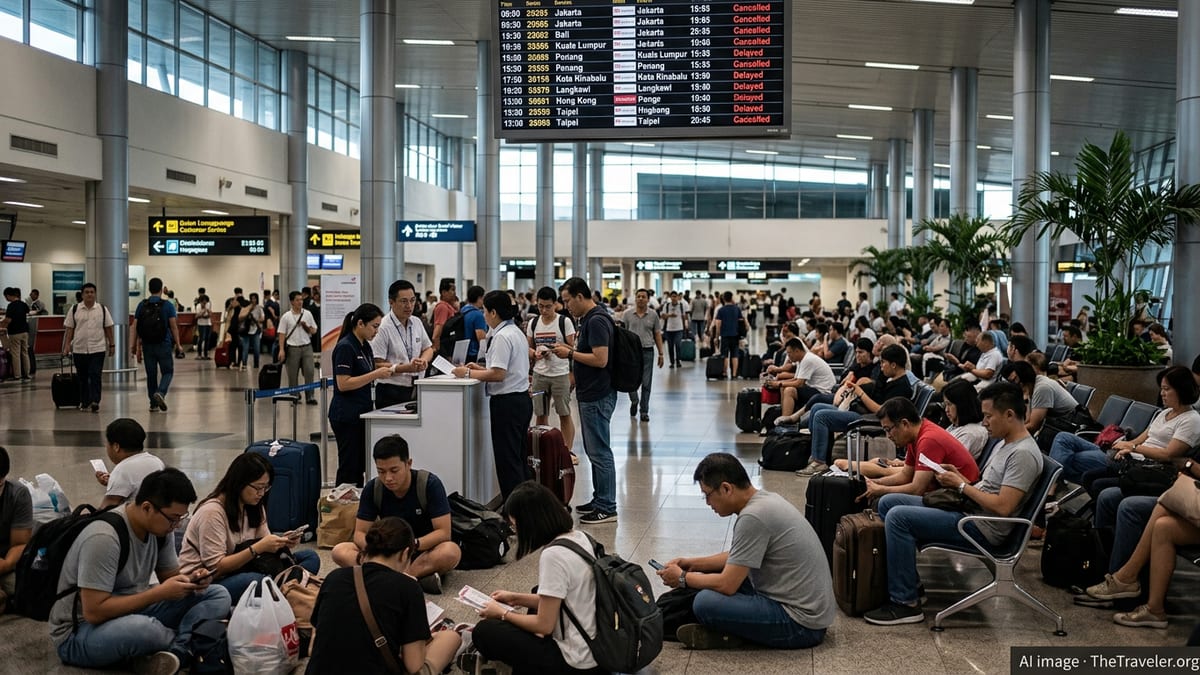
Mass Groundings At A Critical Beijing Gateway
Beijing Daxing International Airport, one of the region’s fastest growing hubs for both domestic and international traffic, has emerged as a focal point in a fresh wave of operational turmoil hitting Asian skies. Aviation tracking data compiled from multiple platforms for June 12 indicate that China recorded more than one hundred flight cancellations and over one thousand significant delays nationwide, with Daxing among the hardest hit facilities in the country.
Publicly available metrics reviewed by aviation analysts show that Air China and China Eastern, two of the largest operators at Beijing area airports, are carrying a substantial share of the disruption. One recent sector-wide assessment for China pointed to more than one hundred cancellations and in excess of one thousand delays in a single day, underscoring how fragile on-time performance has become at key hubs acting as gateways between China, Northeast Asia and Southeast Asia.
While real-time flight boards at Daxing still show many services operating, including long haul departures to Europe and dense domestic routes into China’s interior, pockets of cancellations have been concentrated on regional and secondary city flights. Travel commentators note that even a modest percentage of grounded services can quickly overwhelm airport resources when they involve high-volume carriers and connecting traffic.
Adding to the strain, Beijing Daxing’s role as an alternative to the older Beijing Capital airport means that schedule volatility is now split between two closely linked hubs. When irregular operations strike at one, rapid rebooking and rerouting efforts often spill over to the other, multiplying the impact on already congested airspace over northern China.
Regional Knock-On Effects From Northeast Asia To ASEAN
The cancellations and rolling delays at Daxing are hitting a densely woven network of intra-Asian routes, where short-haul sectors connect China with Japan, South Korea, Central Asia and the major hubs of Southeast Asia. Disruption on trunk routes such as Beijing to Kuala Lumpur, Bangkok and key points in Japan is contributing to missed connections and last-minute rebookings at airports across the region.
Analysis of recent traffic flows shows that carriers using Daxing as a primary gateway are heavily involved in cross-border itineraries that rely on tight transfer windows. When flights into Beijing arrive late or are cancelled outright, downstream departures from secondary hubs including Kunming, Chengdu and coastal Chinese cities are affected as aircraft and crew rotations fall out of sequence.
Southeast Asian hubs are also feeling the strain. Aviation-focused publications tracking the wider Asian picture report that hundreds of flights across the continent have been cancelled or severely delayed over the past forty-eight hours, with Chinese carriers prominent in the disruption tables. Kuala Lumpur, Bangkok and key airports in Vietnam and Indonesia have all reported elevated levels of operational irregularities tied to connecting passengers and equipment flows routed through mainland China.
In Northeast Asia, regional corridors linking Beijing with Seoul, Tokyo and other Japanese cities are particularly vulnerable. Even small clusters of cancellations can prompt protective reshuffling of aircraft by airlines, as they attempt to prioritize higher-yield or strategically important routes while trimming frequencies elsewhere.
Stranded Passengers And Mounting Operational Challenges
For passengers at Beijing Daxing, the operational turbulence translates into long queues at customer service counters, anxious waits at boarding gates and, in some cases, overnight stays. Social media posts and traveler forums are filling with accounts of last-minute schedule changes, cancellations communicated only hours before departure and difficulties securing alternative routings during peak periods.
Reports from across China highlight a pattern of travelers facing multi-hour delays, missed international connections and abrupt rerouting to different Beijing airports or distant hubs such as Shanghai, Guangzhou or Chengdu. For those on complex multi-leg itineraries, a single cancellation at Daxing can unravel an entire trip across Asia, particularly when visa rules and tight transit windows are involved.
From an operational standpoint, airlines are grappling with the challenge of resetting tight summer schedules while managing crew duty-time limits and aircraft positioning. Industry commentary suggests that the current disruption is partly the result of over-stretched networks, where aggressive capacity deployment following the rebound in Asian travel has left limited slack to absorb weather, airspace constraints or technical issues.
Airport operators across the region, including at Daxing, are working within these constraints as they manage gate assignments, ground handling and passenger flows amid shifting departure boards. Aviation observers note that even well-designed new terminals can experience bottlenecks when irregular operations coincides with peak travel weeks.
Structural Pressures Behind China’s Flight Disruptions
Behind the immediate wave of cancellations at Beijing Daxing and other Chinese hubs lie deeper structural pressures within the country’s aviation system. Recent analyses of Chinese air travel patterns point to a sharp rebound in domestic demand, with carriers adding frequencies on popular routes at the same time that long-haul international networks are still being recalibrated.
Regulatory documents from China’s civil aviation authorities show a push to optimize slot use at key airports, including Daxing, where new night-time slots and more intensive scheduling have been introduced to accommodate demand. However, tighter slot coordination comes with the risk that any disruption can quickly snowball when airlines are running close to the limits of available capacity.
Industry reporting also highlights the impact of changing airspace availability, including temporary restrictions along some of Asia’s busiest corridors. When combined with convective weather typical of the early summer months and ongoing fleet realignments among Chinese carriers, these factors create conditions where even localized issues at a single hub can escalate into system-wide delays and cancellations.
Travel analysts add that the rapid shift of traffic between Beijing’s two major airports has created a complex operating environment. Airlines seeking to balance their presence at Capital and Daxing must coordinate schedules, crew bases and maintenance locations, leaving little margin when unplanned events occur.
What Travelers Across Asia Should Expect Next
With the latest disruption metrics still elevated, travel experts caution that passengers flying through Beijing Daxing and other major Chinese hubs over the coming days should be prepared for ongoing schedule volatility. Historical patterns suggest that it can take several operating cycles for airlines to fully re-synchronize aircraft rotations and clear backlogs created by large cancellation events.
Publicly available data and airline advisories indicate that further short-notice adjustments to flight times and routes are possible as carriers respond to shifting demand, weather patterns and operational constraints. This means that itineraries involving tight connections, late-night arrivals or multi-stop journeys across Asia remain particularly exposed to change.
Passenger advocates recommend that travelers build additional buffer time into itineraries involving Beijing, Shanghai or Guangzhou, monitor flight status frequently on day-of-travel and consider flexible booking options wherever possible. For those with non-essential trips, postponing or rerouting through less congested hubs may reduce the risk of being caught in cascading delays.
For now, the situation at Beijing Daxing has become a stark illustration of how tightly interconnected Asia’s aviation network has grown. A concentrated burst of cancellations at a single mega-hub can quickly send shockwaves across an entire continent, leaving airlines, airports and passengers scrambling to keep pace with an increasingly unpredictable sky.