


More news on this day
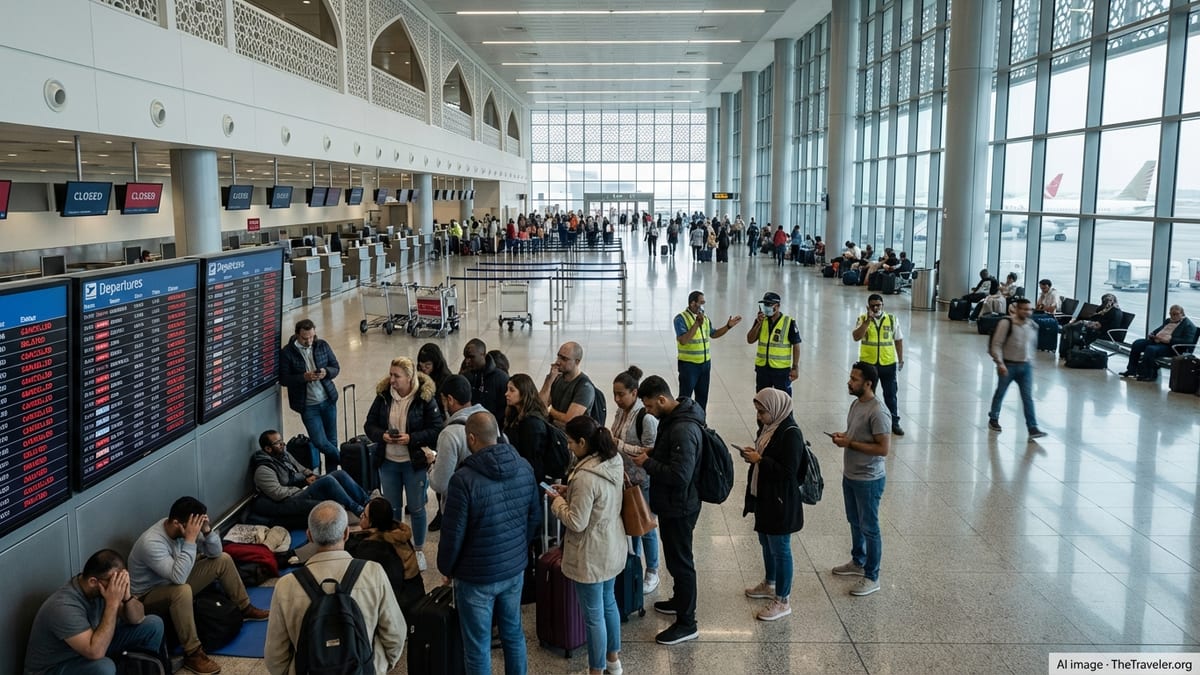
Travelers at Ben Gurion International Airport in Israel faced widespread disruption this week as 122 flights were delayed and at least 15 were canceled, snarling domestic services and major long-haul routes to New York, London, Paris, Dubai and other hubs.
Get the latest news straight to your inbox!
Major Carriers Hit Across Packed Summer Schedules
The disruption swept across many of the airport’s busiest operators, affecting El Al, Arkia, Israir, Lufthansa, United Airlines and several other foreign carriers that connect Tel Aviv with Europe, North America and the Gulf. Publicly available flight board data showed departure and arrival banks dominated by delay notices, with hold-ups often stretching well beyond an hour.
El Al, the largest airline at Ben Gurion and the dominant player on Israel’s long-haul network, saw delays ripple through services to New York, London and Paris as aircraft and crew were repositioned. Israir and Arkia, which rely heavily on short and medium haul routes to regional leisure destinations, also faced schedule knock-on effects that left passengers waiting for updated boarding times and occasional last-minute gate changes.
Among foreign airlines, Lufthansa and United Airlines were among those encountering interruptions on links to European and United States gateways. Some transatlantic services operated with extended ground times, while other flights were canceled outright, forcing passengers onto later departures or alternative routings via regional hubs.
Operational summaries from aviation tracking platforms indicated that the 122 delays and 15 cancellations represented a significant share of Ben Gurion’s daily movements, compressing capacity at times of peak summer demand and leaving aircraft out of their usual rotation patterns.
Domestic and Regional Routes Suffer Knock-on Effects
The disruption did not spare Israel’s domestic market. Arkia and Israir, important providers of internal connectivity and short-hop links to nearby countries, reported rolling delays on services that funnel travelers between Tel Aviv and resort areas or onward to European city breaks. Passengers connecting through Ben Gurion onto onward international flights faced missed connections and forced overnight stays.
Regional leisure routes that normally operate multiple times per day were particularly vulnerable. Reports from live flight boards highlighted late departures to Mediterranean and nearby Middle Eastern destinations as aircraft returning from delayed long-haul legs struggled to turn around on schedule. Even when flights eventually departed, baggage handling and boarding processes often ran behind their allotted windows.
Industry observers noted that disruption at a hub such as Ben Gurion tends to cascade through regional networks, as delayed aircraft and crew rotations compound minor schedule slippages into more serious gridlock. On days with already tight turnarounds, a cluster of delays and cancellations of the scale seen this week can strain operational resilience across several consecutive rotations.
For domestic travelers, this meant crowded departure halls and uncertainty over whether short sectors would operate close to their planned times. Some passengers turned to rail and road alternatives for journeys within Israel when same-day flight options became uncertain or fully booked.
Long-haul Links to New York, London, Paris, Dubai and Rome Disrupted
Key intercontinental corridors in and out of Israel also felt the impact. According to published airport and schedule data, services on flagship routes to New York, London, Paris, Dubai and Rome were among those disrupted as airlines adjusted departure slots and aircraft usage. These connections are vital for business travelers, diaspora communities and tourism flows, so even modest reductions in reliability can have an outsized effect.
On the North American side, flights to New York, including services operated by El Al and United Airlines, experienced extended ground holds and revised departure times. European gateways such as London and Paris saw altered schedules as carriers reassigned aircraft and sought to avoid further congestion at Ben Gurion during peak traffic periods.
Links to Gulf hubs, including Dubai, were also affected. Delayed or canceled services on these routes can complicate onward travel because many passengers rely on carefully timed connections through large transfer airports. Missed links can trigger a chain reaction of rebookings across multiple airlines and alliances.
Rome and other major European capitals, popular with Israeli leisure travelers and inbound tourists alike, recorded a mix of late departures and a small number of cancellations. With the busy holiday season underway, even a single canceled rotation can leave hundreds of passengers racing to secure the few remaining seats on alternative flights.
Passengers Face Long Queues, Rebookings and Limited Alternatives
For travelers caught in the disruption, the most visible effects were long lines at check-in counters, crowded departure halls and repeated changes on airport display boards. Social media posts and passenger accounts described extended waits for information, as well as difficulty reaching airline call centers during peak periods of rebooking activity.
Rebooking options were constrained on some routes because many flights were already operating near capacity. When services were canceled, passengers were often shifted to later flights, which in some cases departed the following day or required connections through third-country hubs. For those with fixed itineraries, including cruises, conferences or family events, the uncertainty added stress and unexpected expenses for accommodation and transfers.
Travel insurers and consumer advocates regularly advise passengers in such situations to document expenses and retain boarding passes and booking confirmations, as eligibility for compensation or reimbursement can vary by carrier, route and regulatory framework. In the Ben Gurion disruption, publicly available information suggests that some airlines offered flexible rebooking policies and waivers of change fees for affected customers.
However, with multiple airlines and jurisdictions involved, the practical experience for travelers varied widely. Some were able to secure same-day alternatives at no extra cost, while others reported longer waits and limited clarity on when they would be able to depart.
Ongoing Sensitivity Around Israel’s Air Connectivity
The latest episode underscores the ongoing sensitivity of Israel’s air transport network, in which Ben Gurion International Airport functions as an essential gateway for both domestic and international travel. Historical data and prior episodes of disruption show that operational constraints, security considerations and fluctuating demand can quickly alter flight schedules and airline capacity plans.
El Al, Arkia and Israir together carry the majority of Israeli-origin passengers, while foreign airlines such as Lufthansa and United Airlines provide crucial additional capacity on long-haul routes. When a single day sees more than a hundred delayed flights and a cluster of cancellations, the combined impact reaches far beyond the airport perimeter, affecting tourism operators, business activity and family travel plans on multiple continents.
Reports from aviation analytics firms indicate that airlines operating to and from Israel have already been managing a complex operating environment, with evolving route resumptions, schedule reductions and aircraft redeployments. The latest disruption at Ben Gurion fits into this broader pattern of volatility, where even brief incidents can have lingering consequences for connectivity.
Travel experts recommend that passengers booked on upcoming flights to or from Ben Gurion monitor their reservations closely, make use of airline apps and email alerts, and allow additional buffer time for connections. While schedules may stabilize in the coming days, this week’s events highlight how quickly conditions can change at one of the Middle East’s most important aviation hubs.