


For many women, booking a solo ticket is both an act of freedom and a leap of faith. Safety, ease of getting around, cost and the chance to meet others all matter more when you are your own backup plan. Around the world, certain destinations consistently rise to the top for solo female travelers because they manage to offer all of these at once. They are places where walking home after dinner feels normal, public transport is straightforward, and locals are used to welcoming women who arrive with a single suitcase and their own itinerary.
Get the latest updates straight to your inbox!
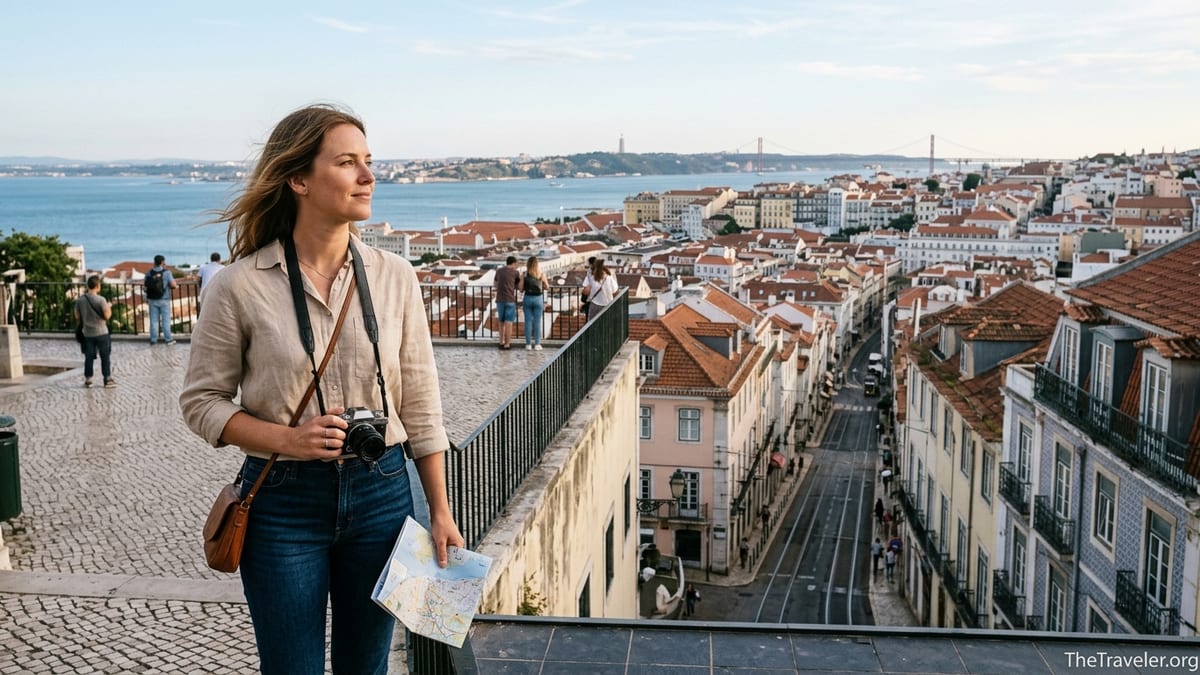
What Makes a Destination Stand Out for Solo Female Travelers
There is no single “safest” place for women, and no destination can remove risk entirely. Still, some cities and countries reliably score well on peace and safety indices while also offering strong infrastructure and a culture that treats solo visitors as routine rather than unusual. The Global Peace Index, updated annually using indicators such as crime rates, perceptions of safety and political stability, repeatedly places several European and Asia Pacific countries in the top tier. Recent editions have highlighted destinations like Portugal, Japan, Singapore and New Zealand as among the world’s most peaceful, and these are the same names that appear again and again on solo female travel shortlists.
Beyond those rankings, what women notice on the ground is often more practical. In a 2026 landscape where many travelers rely on their phones for everything, destinations with easy eSIM availability, widespread mobile data and reliable navigation apps feel more manageable. Japan, for instance, is frequently praised by solo women for the way a working map and transit app make huge cities like Tokyo instantly less intimidating. Women also look for visible everyday safety: locals walking at night, well lit streets, other solo travelers on public transport and guesthouses that offer secure keycard access, lockers and female-only dorms without extra fuss.
Another factor that makes certain destinations stand out is the “solo is normal” vibe. In Lisbon or Kyoto, a woman dining alone at 8 p.m. barely registers as unusual. Cafes are used to one-person tables, and many ramen counters or pastelaria counters are set up with solo diners in mind. That contrasts with some regions where staff may insist on seat-sharing, ask intrusive questions or treat solo women as a curiosity. Destinations that feel truly welcoming tend to be those where locals and service staff are accustomed to women commuting, traveling and socializing independently in their own lives.
Finally, standout solo destinations often make logistics smooth and affordable. That could mean airport trains that run every 10 to 20 minutes and cost under the equivalent of 15 US dollars, like the rapid connections from Lisbon, Kyoto or Copenhagen airports into the city center. It might be straightforward contactless payment on buses and metros, or an abundance of mid-range guesthouses in the 70 to 120 dollar per night range. All of these small details combine to reduce friction and leave more energy for exploring.
Portugal: A Gentle Introduction to Solo Travel
Portugal has grown into a modern classic for solo female travelers because it combines high safety scores with a forgiving pace. Recent analyses of the Global Peace Index place Portugal consistently within the top ten most peaceful countries worldwide, and several 2026 guides for women traveling alone point to low violent crime rates and a relaxed social atmosphere in cities like Lisbon and Porto. In practice, that translates into being able to wander cobbled streets with a camera, ride trams or trains between neighborhoods and return to your guesthouse on foot in early evening without feeling out of place.
Lisbon is often the starting point. Neighborhoods such as Baixa, Chiado and Príncipe Real are filled with boutique hotels and small guesthouses where private rooms commonly run in the 90 to 150 dollar range outside peak August weekends. Many hostels in these areas advertise female-only dormitories with curtains, under-bed lockers and 24-hour reception, details that matter more when you are on your own. The main caveat in Lisbon is the same one locals emphasize: pickpocketing around the historic tram routes and in packed viewpoints. Keeping valuables zipped inside a crossbody bag and using a simple anti-theft daypack for cameras or laptops is usually enough to avoid problems.
Porto, smaller and more compact, can feel even calmer. Solo women regularly report walking between the riverside Ribeira district and the artsy Cedofeita neighborhood after dinner with few issues beyond dealing with steep hills. The city’s metro system is clean, modern and easy to navigate with a rechargeable Andante card, and trains along the Douro River make day trips to wine villages straightforward without needing to rent a car. Further south, the Algarve’s coastal towns, such as Lagos or Tavira, offer beach walks, coastal hiking paths and organized small-group boat trips, which are ideal for solo travelers who want company for a few hours without committing to a full group tour.
What makes Portugal especially friendly to first-timers is how simple it is to stitch together an entire itinerary on public transport. Intercity trains between Lisbon and Porto take about three hours and, if booked a few weeks ahead, often cost the equivalent of 20 to 35 dollars in second class. Express buses reach surf towns like Peniche or Ericeira for similar prices. English is widely spoken in tourism businesses, and menus in central areas routinely appear in Portuguese and English. For women who are nervous about their first solo journey, this combination of calm atmosphere, reasonable costs and minimal language barrier is a powerful draw.
Japan: Ultra-Safe Cities and Seamless Transport
Japan has a near-mythical status among solo female travelers, and many women who have spent weeks there describe it as one of the few places where they stopped thinking of themselves as “solo female travelers” and simply felt like travelers. Recent safety guides aimed at women specifically highlight Japan’s very low rates of street crime and the cultural norm of keeping to oneself in public spaces. On Tokyo’s vast metro network, for example, commuters are mostly focused on their phones or books rather than on striking up conversations with strangers, which many women find quietly reassuring.
Public transport is where Japan truly stands out. A first-timer can land at Tokyo’s Haneda Airport, buy a rechargeable IC card such as Suica or PASMO from a ticket machine using cash or a credit card, and be in the city center in under half an hour by monorail or train for around 4 to 6 dollars. Long-distance travel between cities uses a similarly intuitive system: the Shinkansen bullet train connects Tokyo, Kyoto and Osaka with departures every 10 to 15 minutes in peak times. A reserved seat between Tokyo and Kyoto typically costs in the 110 to 140 dollar range and takes about two and a half hours, but travelers are paying for exceptional punctuality and safety as well as speed.
Japan also offers infrastructure that specifically acknowledges women’s needs. Many commuter lines in big cities designate women-only carriages during rush hours. While use of these cars is voluntary, they can offer a psychological buffer on packed trains and are clearly marked on platforms and carriage doors. Hostels, capsule hotels and business hotels increasingly market floors or entire properties as women-only, with secure keycard access and amenities such as high-quality hairdryers, skincare samples and pyjamas included in the room rate. It is common to find clean business hotel rooms in central Osaka or Fukuoka for 60 to 100 dollars per night, often with breakfast buffets heavy on rice, grilled fish and miso soup that set solo travelers up for a full day of sightseeing.
One recurring criticism from women is occasional unwanted attention or groping on crowded trains, an issue the women-only cars are intended to reduce. Safety advice from residents and frequent visitors is pragmatic: avoid the most congested rush-hour trains where possible, step into a women-only car when convenient, and move calmly away from anyone whose behavior feels off. Because Japanese cities are dense, alternative options such as walking or taking a slightly slower subway line are often available. For many solo women, the everyday courtesy, clean public restrooms in convenience stores and stations, and the sheer number of other women out alone in the evenings outweigh the occasional awkward encounter.
New Zealand: Nature, Road Trips and Welcoming Hostels
New Zealand regularly appears on lists of the safest countries to visit based on the Global Peace Index and similar measures, and it attracts a steady stream of solo women drawn by its hiking trails, small cities and English-speaking environment. Unlike compact urban destinations, it is a place where solo travelers tend to rent cars or campervans and cover long distances, so the question is less about walking home at night and more about feeling safe on remote roads and in isolated landscapes. For many, the answer is yes, provided they take the same care they would at home about seatbelts, weather forecasts and fatigue.
A classic solo route runs from Auckland through Rotorua and Taupo, then south to Wellington and across by ferry to the South Island. In practice, that might involve joining a small group tour to the geothermal parks near Rotorua one day, soaking in a public hot pool the next and then taking a long-distance bus to Wellington with other backpackers. Companies that run hop-on, hop-off bus passes, while less dominant than they were a decade ago, still operate on popular routes and can be a social lifeline for women who want pre-arranged transport combined with the flexibility to linger in a town for several days.
Accommodation for solo women in New Zealand is easy to find across a range of budgets. YHA-style hostels and independent backpacker lodges are widespread in places like Queenstown, Wanaka and Franz Josef, usually with a choice between mixed and female-only dorms and a smattering of simple private rooms. Female-only dorm beds in high season might run from 30 to 45 dollars per night, and many hostels build community around shared kitchens, noticeboards advertising rideshares and free walking tours organized by staff. For travelers who prefer more privacy, motels and guesthouses often have single-occupancy rooms for 90 to 140 dollars, with free parking right outside the door.
What helps New Zealand stand out is how normalized solo travel feels in its outdoor culture. Trailheads for popular hikes such as the Tongariro Alpine Crossing or the Hooker Valley Track are full of people hiking on their own, including many women, and shuttle services allow solo travelers to safely reach and leave point-to-point routes without considering hitchhiking. The main precautions solo women mention are route planning and weather. Checking Department of Conservation notices before committing to a multi-day trek, carrying warm layers even on seemingly mild days and letting a trusted contact know your plans are standard wisdom carried over from local hikers rather than gender-specific advice.
Singapore and Copenhagen: Compact, Hyper-Organized City Breaks
For women who want the feeling of being in a global city without a steep learning curve, Singapore and Copenhagen stand out as compact, meticulously organized options. Both cities rank near the top of global safety and quality-of-life indices and are praised for clean streets, modern public transport and clear signage. At street level, that looks like well lit pedestrian zones, locals who think nothing of cycling home late at night and an abundance of cafes and food halls where eating alone is entirely routine.
Singapore can be a reassuring first overseas destination for women from many parts of Asia due to its mix of languages and orderly infrastructure. The mass rapid transit system covers much of the city, and a stored-value card or contactless bank card is enough to tap on and off at stations. A typical fare for a 20 to 30 minute metro ride runs in the 1 to 2 US dollar equivalent range. Changi Airport’s arrival process is efficient enough that solo travelers frequently report being in their hotel or hostel less than an hour after landing. In neighborhoods like Kampong Glam or Tiong Bahru, capsule hotels and boutique hostels offer women-only pods with individual reading lights, curtains and locker space, a mid-range choice between dorms and private hotel rooms in a city where space is at a premium.
Copenhagen, by contrast, showcases a Nordic model of urban safety. Denmark regularly scores as one of the world’s least corrupt and most egalitarian societies, and solo women often remark on how many local women are out cycling, jogging or socializing in groups late into long summer evenings. The metro system, expanded in recent years, runs driverless trains on a 24-hour schedule on most lines, which means a woman leaving a concert or dinner at 11 p.m. can still expect a train every few minutes. While the cost of living is undeniably high, with mid-range hotels in central districts such as Vesterbro or Nørrebro often ranging from 160 to over 250 dollars per night, the flip side is access to tap water that is safe to drink everywhere, strong tenant protections and a general lack of aggressive street harassment.
Both cities do come with trade-offs. In Singapore, strict laws on littering, vandalism and drug offenses can feel heavy-handed to visitors used to looser regulation, and women who enjoy spontaneous nightlife might find some areas expensive or controlled. In Copenhagen, high prices make budgeting a challenge, and solo travelers may have to limit restaurant spending by buying groceries and picnic supplies from supermarkets. Yet for women whose top priorities are being able to move around safely at almost any hour and to navigate public transport with minimal confusion, these cities remain outstanding choices.
Mexico City and Medellín: Dynamic Latin America for Street-Savvy Travelers
Not all standout solo destinations are in the world’s most peaceful countries. Large Latin American cities like Mexico City in Mexico and Medellín in Colombia have reputations shaped by older crime statistics and media portrayals, yet in the past decade they have also seen growing communities of digital nomads and solo female travelers who report positive experiences. These cities tend to appeal to women who already have some solo travel under their belts, who are comfortable applying street-smart habits and who want access to vibrant culture, food and nightlife that more sedate destinations may lack.
Mexico City illustrates this mix clearly. In central neighborhoods such as Roma Norte, Condesa and Coyoacán, it is common to see women walking dogs, meeting friends in cafes or jogging in parks at all hours of the day. Boutique guesthouses and co-living spaces in these districts frequently advertise 24-hour security, keycode entry and work-friendly common areas, with private rooms often starting around 70 to 120 dollars per night. The city’s metro and bus systems are crowded but inexpensive, with single rides costing under a dollar, and some lines have women-and-children-only carriages during peak hours. Many solo women choose to use a mix of these public options by day and app-based taxis in the evening, selecting only drivers with strong recent ratings.
Medellín, once synonymous with drug violence, has transformed into a city where its metro system and cable cars are symbols of civic pride. Solo female travelers who base themselves in neighborhoods like El Poblado or Laureles describe streets filled with cafes, coworking spaces and hostels designed with remote workers in mind. Bed prices in female-only dorms might hover around 20 to 35 dollars, and long-stay apartments are widely advertised online. Still, safety advice from locals and expats remains clear: stick to known neighborhoods after dark, use registered taxis or ride-hailing apps for longer journeys, avoid obvious displays of wealth and learn enough Spanish to understand basic conversations and warnings.
These destinations stand out not because they are risk-free but because they offer rich rewards to women who are prepared to stay alert. Taking a street food tour of Mexico City’s markets with a vetted local guide, for example, can introduce a solo traveler to taco stands she might hesitate to approach alone. Joining a group day trip from Medellín to Guatapé means seeing rural landscapes and climbing the famous rock without managing all the logistics independently. For many women, such experiences are worth the extra planning and precautions.
How to Match a Destination to Your Solo Travel Style
Even among safe and welcoming places, not every destination suits every woman. The right match depends on how comfortable you are with ambiguity, how much solitude you enjoy and what you want your days to look like. Someone who loves structure and hates surprises might thrive in Japan or Singapore, where trains run to the minute and rules are clear. Another traveler who values serendipitous encounters, long hostel conversations and street-level energy might be far happier starting in Mexico City or Lisbon instead.
Budget also shapes the experience. A woman traveling with 60 dollars a day will find Southeast Asia’s established backpacker circuit, from Chiang Mai to Hoi An, far more forgiving than Copenhagen. There, a simple guesthouse room in a walkable neighborhood might cost 15 to 25 dollars per night, with street food dinners for a few dollars and scooter taxis for short hops. However, she may encounter more chaotic traffic and weaker pedestrian infrastructure than in Europe. At the other end of the spectrum, a traveler with 200 dollars a day could comfortably afford private rooms, museum tickets and frequent cafe stops in high-cost cities like Tokyo or Auckland while still keeping a cushion for unexpected expenses.
Another lens is community. Some women want to minimize interaction, perhaps using their trip as recovery from a demanding job or caregiving responsibilities. For them, destinations with strong cafe cultures and scenic walking routes, such as Porto’s riverfront or Kyoto’s temple districts, allow quiet exploration without pressure to socialize. Others actively seek new friends or travel companions. They might look for cities with well established hostel scenes, weekly social events and online communities where women post meetups and shared excursions. In 2026, many solo travelers use dedicated apps and groups that cater to women, which makes it easier to join a group hike, co-working day or dinner without a long planning horizon.
Personality traits also matter more than many first-time solo travelers expect. Someone who is naturally cautious might initially perceive any unfamiliar environment as risky, even in low-crime destinations, and feel much more relaxed starting in a place whose language and customs overlap with her own. Over time, experience tends to recalibrate these internal alarms. After successfully navigating the metro in Tokyo or a night train in Portugal, what once felt daunting becomes routine, allowing space for more adventurous choices later.
Practical Safety Habits That Work Almost Everywhere
The best solo travel destinations reduce risk but cannot remove it. What helps many women feel in control is a toolkit of small, repeatable habits that apply almost everywhere. One of the most powerful is simple: staying connected. Buying a local SIM card or eSIM upon arrival, keeping a modest power bank in a day bag and downloading offline maps for your key neighborhoods mean you are far less likely to feel stranded if your plans change or if you misjudge walking distances at night.
Accommodation choices are another pillar. Many experienced solo women make a habit of arriving in a new city during daylight, so that they can assess the street their hotel or hostel sits on. They read recent reviews that specifically mention security and the surrounding area, pay a little extra for properties with 24-hour staff and reception and do not hesitate to ask to change rooms if a door or lock feels flimsy. In destinations where hostel culture is strong, booking a bed in a well-reviewed female-only dorm for the first couple of nights gives time to meet others and gather local advice before moving to a private apartment or guesthouse.
On the street, consistent low-key behavior often makes more difference than elaborate gadgets. Keeping valuables distributed between a money belt, a small crossbody bag with a zipper and a backup stash in your luggage reduces the impact of any theft. Choosing main roads instead of alleys at night, sitting near other women or families on public transport and stepping into a shop or cafe to regroup if someone’s behavior feels off are strategies that come up repeatedly in both academic research and informal travel forums. Many women also establish personal rules around alcohol, such as alternating drinks with water, pouring their own drinks where possible and arranging transport back to their accommodation before a night out begins.
Social connection can be a safety tool as well as a source of joy. Joining a walking tour on your first full day in a new city gives you an overview of neighborhoods, helps you understand where you might feel comfortable wandering alone and introduces you to other travelers with similar questions. Using group classes, from cooking to language lessons, as daytime anchors can create a daily rhythm that feels grounding. When venturing further afield, such as on a rural hike in New Zealand or a day trip into wine country in Portugal, traveling with an organized small group reduces logistical stress and ensures someone would notice if you did not return as planned.
The Takeaway
For women considering their first or fiftieth solo trip in 2026, the encouraging news is that there has never been more information, infrastructure and community support available. Destinations from Portugal and Japan to Singapore, Copenhagen, New Zealand, Mexico City and Medellín stand out because they combine relative safety with character. They offer strong public transport, a mix of accommodation options and cultures where women moving independently through public space are a normal sight. None of them are free from risk, but all of them give solo female travelers a great deal to work with.
Ultimately, the best destination is the one that aligns with your comfort level, budget and curiosity. Some women will feel at home navigating Tokyo’s train maps, others will prefer lingering in Lisbon’s cafes. What unites these journeys is not the specific city but the experience of making decisions for yourself, adapting to new environments and discovering that you can handle more than you thought. With thoughtful planning, realistic expectations and a few solid safety habits, the world of solo travel opens wide. The places highlighted here are excellent starting points, but they are only the beginning of what is possible.
FAQ
Q1. What is the safest destination in the world for solo female travelers?
There is no single safest destination because risk depends on behavior, timing and personal background, but countries that regularly score highly on international peace and safety indices, such as Portugal, Japan, Singapore and New Zealand, are widely considered strong options for solo female travelers who prioritize low levels of violent crime and well developed infrastructure.
Q2. Is it safe to walk alone at night in cities like Lisbon, Tokyo or Copenhagen?
In central, well populated neighborhoods of Lisbon, Tokyo and Copenhagen, many women do walk alone at night and report feeling comfortable, especially in areas with good lighting and steady foot traffic. However, it is still wise to follow basic precautions such as staying on main streets, avoiding very quiet areas after midnight and arranging a taxi or rideshare if you feel unsure.
Q3. How can I check if my accommodation is safe for a solo stay?
Look for properties with recent reviews mentioning security, strong door locks and a neighborhood that feels busy rather than deserted. Prioritize places with 24-hour reception or on-site staff, clear emergency contact information, secure luggage storage and, if you are booking a hostel, well reviewed female-only dorms or floors with keycard access.
Q4. Are hostels a good idea for solo female travelers?
Hostels can be an excellent choice, especially in destinations with an established backpacker scene. Many now offer female-only dorms with privacy curtains, individual lockers and reading lights, as well as social activities like walking tours or communal dinners. If you are light sensitive or value privacy, consider starting with a smaller dorm or a private room in a hostel to test how you like the environment.
Q5. What should I do if I feel unsafe in a public place?
If you start to feel uncomfortable, trust that instinct early. Move to a busier area, step into a shop, cafe or hotel lobby, and take a moment to reassess. You can call a trusted contact, arrange a taxi through an app, or ask staff for help if necessary. In emergencies, use the local equivalent of your home country’s emergency number and, where language is a barrier, show hotel cards or maps with addresses.
Q6. How much money do I need for a solo trip to a “safe” destination?
Budgets vary widely, but as a rough guide, a frugal traveler in parts of Southeast Asia might live on 50 to 70 dollars per day including simple accommodation, food and local transport, while in high cost cities like Copenhagen, Tokyo or Singapore, many solo travelers report daily budgets closer to 150 to 250 dollars to cover a private room, transit, meals and activities.
Q7. Are ride-hailing apps safe for solo women at night?
In many cities, ride-hailing apps are a safer choice than hailing taxis on the street because they provide driver details, route tracking and digital payment. Good practice includes checking that the license plate and driver name match the app, sitting in the back seat, sharing your route with a friend and avoiding sharing personal details with the driver beyond what is necessary.
Q8. How can I meet other travelers or locals without compromising safety?
Structured activities are usually the safest way to meet people. Consider joining walking tours, cooking classes, language exchanges, coworking days or small group excursions booked through reputable operators. Many women also use well moderated online communities and apps created for female travelers to find companions for specific activities like hikes or museum visits.
Q9. What documents and backups should I carry as a solo female traveler?
Carry your passport, required visas and travel insurance details, plus digital and paper copies stored separately. It is sensible to have at least two ways to access money, such as a primary debit card and a backup credit card, and to keep a small emergency cash reserve. Storing important documents in a secure cloud folder or email ensures you can retrieve them if your phone or wallet is lost.
Q10. How do I choose my first solo travel destination as a woman?
Start by considering your comfort with language barriers, your budget and your tolerance for uncertainty. Many women pick destinations with strong infrastructure and reputations for safety, such as Portugal, Japan or New Zealand, for their first trip. Choosing somewhere with good public transport, plenty of mid-range accommodation and an active community of other solo travelers can help your first experience feel rewarding rather than overwhelming.