


The first time I drove up Puerto Rico’s PR 184 into the hills of Guavate, I promised myself I would not write about any lechonera I had not actually eaten at. La Ruta del Lechón is too important, too personal to Puerto Ricans, to reduce it to a scraped list of names. Over multiple visits spread across weekends and a quieter weekday, I ate my way through several of the best known spots on the Pork Highway. Some lived up to the legend, one absolutely did not, and each offered a very different balance of pork quality, music, parking stress and overall chaos. What follows is a report on the places where I have genuinely sat down with a tray of lechón and sides, in the order I ate at them, along with the details that matter when you are hungry, slightly lost in the mountains, and wondering if that last turn was a mistake.
Get the latest updates straight to your inbox!
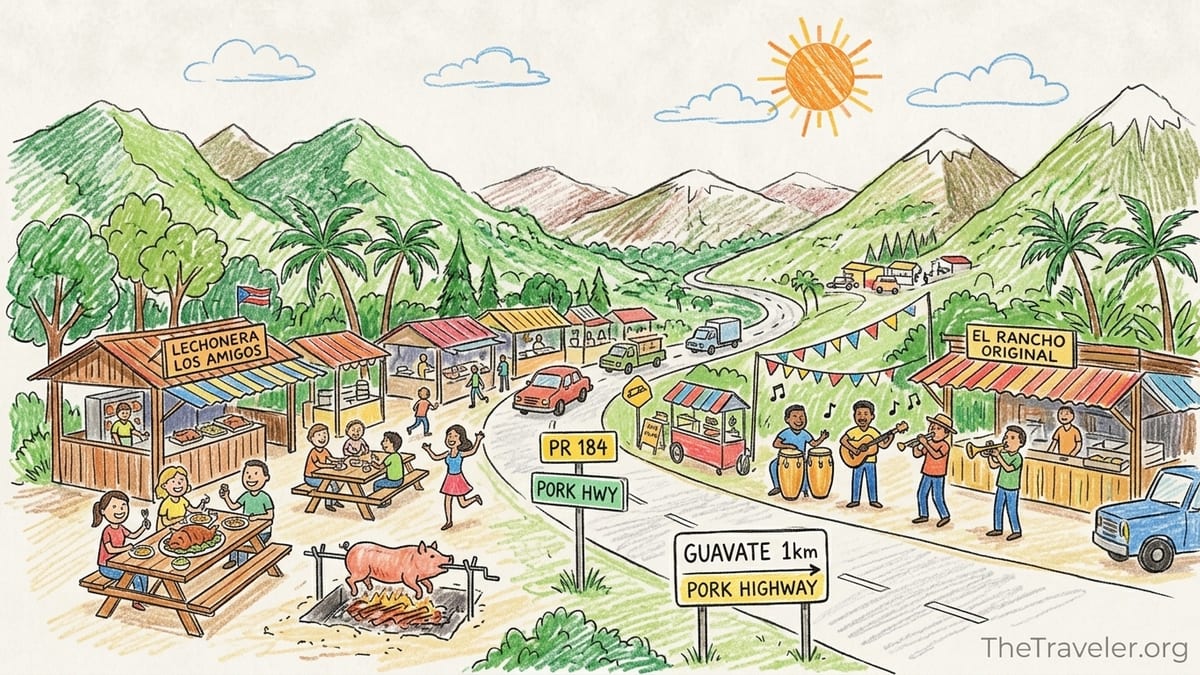
How This Guide Works, And What Guavate Is Like In Real Life
Guavate is a small mountain barrio in the municipality of Cayey, reached via Highway PR 52 and then PR 184, the road locals call the Pork Highway. It is close enough to San Juan that you can leave the capital late in the morning and still be standing in front of a whole pig around lunchtime, but far enough into the hills that the air cools, the road narrows and cellphone signal begins to flicker. The lechoneras here are not theme park attractions. They are open air, family run restaurants where whole pigs are roasted over charcoal or gas and carved to order, usually with a steam table of rice, stews and fritters beside the chopping block.
This guide is limited to lechoneras where I personally sat down and ate a plate of lechón and sides, at least once and in some cases twice. Well known names like Los Pinos, El Rancho Original, El Mojito and Doctor Lechón are part of the official and unofficial lore of the Pork Highway, but they appear here only if I ordered there, waited in line there and paid a bill there. I cross checked hours, prices and payment practices on recent visits with up to date information from local tourism sources and recent traveler reports, because details in Guavate shift frequently, especially after storms or ownership changes.
For each stop you will find the basics that determine whether a Guavate lunch is relaxed or stressful: what time I arrived, how hard it was to park, how long I stood in line, whether there was live music, the type of seating and crowd, what I ordered, how crisp the cuerito actually was, how tender the meat felt, whether the side dishes were worth the stomach space, what kind of portion I received, how much I paid, whether cash or cards were accepted and, most importantly, whether I would go back on my own dime. At the end, I pull those threads together into practical categories, so you can decide which single stop fits your one precious Guavate afternoon.
Prices and conditions mentioned here reflect visits during 2025 and 2026. In Guavate, pigs sell out, bands cancel and card terminals occasionally go offline. Treat this as a realistic snapshot, not a rigid script. The goal is not to crown one lechonera forever, but to help you match your appetite and tolerance for crowds to a place on the mountain that genuinely delivers.
Lechonera Los Amigos: Easiest Stop, Crowd Pleaser Pork
Lechonera Los Amigos sits at the very first right hand turn after you exit Highway 52 toward Guavate, under a red awning that you can see from the main road. On my first visit here I arrived on a Sunday at 11:15 a.m. The parking lot out front was already more than half full, but attendants were actively guiding cars, and I found a spot in about five minutes without needing to reverse onto the road. On a second, midweek visit around 1 p.m., I parked almost at the front door. For nervous drivers or first timers, this ease of access is a major advantage over the lechoneras deeper into the hills.
On that busy Sunday, the line snaked from the counter back toward the entrance, but it moved steadily. From joining the queue to sitting down with a full tray took just under 20 minutes. A trio with congas and guitar was setting up by the bar and by noon they were playing classic salsa and plena at a volume that felt festive but did not drown out conversation. Seating is simple picnic tables under the awning, plus a few plastic tables closer to the speakers. I managed to grab a table halfway between the band and the counter, which meant live music without having to shout across the table.
Both times, I ordered a plate built around lechón, arroz con gandules, yuca al mojo and a side of morcilla. On Sunday, a generous portion of pork, two sides and morcilla for one person came to roughly 15 dollars before drinks, including tax. On my weekday visit, when I ordered enough for two people, the bill landed just under 30 dollars without alcohol. Los Amigos accepted credit and debit cards on both visits, though there was a sign warning that card service can be interrupted, which is common in the hills. I kept cash in my pocket and would advise you to do the same in case the terminal is down.
The lechón at Los Amigos delivered a satisfying but slightly uneven plate. On Sunday, the cuerito was puffed and glassy crisp on most pieces, with bubbles that shattered when bitten. A couple of bits were soft on the underside where fat had pooled, but overall it lived up to the Guavate reputation. The meat itself leaned toward the drier side of tender: flavorful, with a well rendered fat cap, but not quite as juicy as what I would later find deeper up PR 184. Seasoning was deeply savory with garlic and herbs, and the salsa criolla on the side helped where the slices ran lean. The morcilla had a nicely spiced interior but a casing that could have been snappier. Portion sizes were solid without being excessive, appropriate for sharing plates and for picking up a second snack later on the road.
El Rancho Original: Big Scene, Big Flavor, Big Crowds
El Rancho Original sits much farther up PR 184, where the concentration of lechoneras is densest and the party atmosphere peaks. I visited on a Sunday in early afternoon, arriving at about 1:30 p.m., which every local had warned me was peak chaos. They were right. Parking here was by far the most challenging of any stop on this list. I followed attendants waving flags into a side lot, then inched along dirt and gravel until squeezing between two pickup trucks, a process that took nearly 15 minutes from the time I first saw the sign. If you are not comfortable with tight parking maneuvers, you will want to arrive much earlier or ride with someone who is.
Once inside, El Rancho Original is sprawling, with multiple seating areas under large pavilions and an open frontage where the pigs are displayed and carved. The line on my visit was formidable, stretching past the pig pits and looping back toward the entrance. It took about 30 minutes to reach the counter. Live music here is not a side act, it is the main show. A full band with brass section was playing merengue and salsa, and people were dancing between tables. The volume was high enough that ordering required some pointing and shouting, but in the pavilions farther from the speakers you could still talk without losing your voice.
Here I ordered lechón, arroz con gandules, a pastel, and tostones, along with a local beer. My plate of pork and two sides was about 16 dollars, with the pastel and beer adding a few more dollars to the total; for two people sharing a heavy meal, we spent around 35 dollars with drinks. Payment was a mix of card and cash. The main food counter accepted cards and the terminal was functioning, but a smaller bar kiosk near the dance floor was operating cash only that afternoon. If you plan to drink or buy from the satellite stalls, bring at least 20 to 40 dollars in cash.
The lechón at El Rancho Original ranked among the best I tasted in Guavate. The cuerito was not only crisp but consistently so, with very few chewy patches even on thicker pieces of skin. The underlying meat achieved that ideal balance of deeply seasoned exterior and moist interior, with pockets of gelatinous softness near the shoulder slices. The pastel was rich but a little heavy on the masa relative to filling, while the tostones arrived hotter and crunchier than the ones I tried at other stops. Side dish quality here matched the scale of the operation. Portion sizes were generous enough that two people with average appetites could comfortably share one full plate of lechón and three sides and still have room only for a shared dessert. Despite the parking stress and the long line, I would absolutely return, especially with friends who want the full, loud, dancing in the aisles Guavate experience.
Los Pinos: Storied Reputation, Solid Pork, Mixed Experience
Lechonera Los Pinos is one of the most famous names on the Pork Highway, often cited by locals and food writers as a benchmark for traditional spit roasted lechón. I visited on a Saturday at about 12:30 p.m., deliberately avoiding the most intense Sunday crowds. The parking area here is smaller and more fragmented than at El Rancho Original, but I managed to find a spot along the roadside shoulder within ten minutes, guided informally by an attendant who kept traffic flowing. The walk back to the entrance follows a slightly uneven shoulder, something to keep in mind for anyone with mobility issues.
Inside, Los Pinos felt more compact and less carnival like than El Rancho Original, but still lively. A small group of musicians was rotating between tables rather than playing from a fixed stage, which kept the sound level moderate. On my visit there was no formal band setup, but recorded salsa and reggaeton played over speakers between live sets. The line at the pork counter was shorter than I expected, about 10 to 15 minutes, thanks in part to a clear system where one person carved, one plated sides and another handled payment. Seating consisted of long communal tables under a roofed area, plus a few tables closer to the road for people watching.
I ordered the standard combination: a portion of lechón with plenty of cuerito, arroz con gandules, ensalada de coditos (elbow macaroni salad) and a slice of yuca with mojo. The plate with two sides came to around 14 dollars, edging toward 18 dollars with a soda and a small order of longaniza sausage on the side. Los Pinos accepted cards at the main register during my visit, but there were hand written signs recommending cash in case of connection issues, and a neighboring kiosk selling sweets and fritters was cash only. Compared with other stops, portion sizes were a touch smaller, but still adequate for a single diner with room left to graze elsewhere on PR 184.
The pork at Los Pinos was very good rather than transcendent. The cuerito had a pleasing crunch in most bites, though a couple of pieces had already lost their snap, which can happen as pigs sit under heat lamps at busy places. The seasoning was more restrained than at El Rancho Original and Los Amigos, with a cleaner pork flavor and less aggressive salt, something many purists will appreciate. Meat tenderness fell into the “comfortably chewable” category: not dry, but without the almost spoon tender pockets I encountered at my favorite stop later in the day. Side dishes were steady but unremarkable, with the arroz con gandules on the drier side and the macaroni salad offering creamy relief. I would return to Los Pinos, especially with visitors interested in its history, but if I only had one Guavate meal, I would probably point the car slightly farther up the hill.
La Placita Style Roadside Stop: Great Music, Disappointing Pork
Every Guavate story needs one letdown, and mine came at a medium sized lechonera modeled somewhat after the feel of San Juan’s La Placita, with bright paint, a central bar and a focus on cocktails. I stopped here on a Saturday after already eating at Los Pinos, lured by the sound of a tight salsa band and the promise of one more small plate. To keep things fair, I will describe the experience without naming the place, because ownership and quality can change quickly at these middle of the road stops and I do not want to freeze a single bad afternoon into a permanent verdict.
I arrived around 3:30 p.m., when the main lunch rush had started to thin. Parking was actually the easiest of the day, with several open spaces directly in front of the restaurant. There was no line at the counter, which at first felt like a blessing. A four piece band was playing classic Fania era salsa at a high level, and the dance floor in front of the bar was full. Tables near the musicians were packed, but I quickly found a spot at a side table with a clear view of the band and enough distance to talk over the music. Atmosphere alone, this would have been my favorite stop of the day.
The problem was the pork. I ordered a small portion of lechón with cuerito, arroz con gandules and a cold Medalla beer. The combo came to around 12 dollars, one of the better price points of the day. Payment at the bar and the food counter was card friendly, and the terminals worked without issue. The plate arrived quickly, within five minutes of ordering, but the visual cues were not promising. The tray displayed thin slices of pork that looked like they had been carved long before I walked in, with a layer of skin that lay flat and glossy rather than puffed.
A single bite confirmed what my eyes suspected. The cuerito here was almost entirely limp, with only the faintest suggestion of crunch at the very edges. The meat was noticeably dry, requiring extra sauce to swallow comfortably, and the seasoning had faded under heat lamp fatigue. Arroz con gandules was serviceable but lukewarm, and the only thing that really stood out on the plate was a small serving of garlicky yuca that somehow kept its texture. I finished about half the portion out of respect for the pig and the band, then pushed the plate aside and focused on the music. Despite the excellent live salsa, I would not return to this particular stop for food. If I happened to end up back there with friends, I would treat it as a place for a drink and dancing, not a serious lechón meal.
A Quieter Hillside Lechonera: Tender Meat, No Band, Easy Afternoon
On my last Guavate trip I made a point of visiting on a weekday, both to escape the most intense weekend scenes and to see how lechoneras function when the party dies down. This led me to a small hillside lechonera beyond the main cluster, a place popular with local workers and families that relies more on repeat regulars than tour buses. I arrived here on a Thursday around 1 p.m. The narrow parking pullout across the road still had several free spaces, and I was able to tuck my compact car into a spot without guidance or stress in under two minutes. The hum of PR 184 traffic was audible but gentle, and mountain air flowed through the open sided dining area.
There was no live music here, only a radio in the corner playing soft boleros and ballads. Seating was simple: a few sturdy wooden tables under a tin roof, with a view out toward the green slopes. I was the only obvious visitor from outside the region and quickly became invisible as local workers on their lunch break came in, ordered efficiently, and ate in small groups. The line at the counter never grew beyond two or three people, and I had my plate in hand within five minutes of walking in. Compared with the carnival feel of El Rancho Original and the steady buzz at Los Amigos, this felt almost like eating at a countryside comedor.
I ordered lechón, arroz con habichuelas, batata (sweet potato) and a bottle of water. The bill came to roughly 11 dollars, making this the best value of all my Guavate meals. Payment here was cash only, confirmed both by a hand lettered sign and a smile from the woman at the register when I asked about cards. Portions were slightly smaller than the biggest tourist oriented stops but still more than enough for a satisfying lunch. This was the tenderest pork I tasted on PR 184. The cuerito was less dramatically puffed than at El Rancho Original, with smaller bubbles, but it still cracked audibly when bitten and retained enough crispness to contrast with the meat.
The standout here was the texture of the lechón itself. The slices had a visible moisture and a faint shimmer of rendered fat, and they pulled apart with a fork rather than needing much knife work. Seasoning leaned more toward garlic and oregano than heavy salt, and the accompanying beans had a deep, home style flavor, as if they had been simmering since early morning. Side dish quality was quietly excellent, with creamy batata that had been roasted long enough to caramelize at the edges. There was no spectacle, no band encouraging dancing, and no one taking photos with the pig. For me, that was the charm. I would gladly return here on a weekday afternoon, book in hand, to linger over a slow lunch and coffee without any need to shout over a trumpet solo.
Best Lechón, Best Cuerito, Best Atmosphere And Other Superlatives
After multiple circuits up and down Guavate’s Pork Highway, some patterns emerged that can help match different travelers to specific experiences. If what you care about most is the lechón itself, especially the balance of moist meat and crisp cuerito, El Rancho Original and the quieter hillside lechonera came out on top. El Rancho Original delivered the most consistently puffed and shatteringly crisp skin, backed by deeply seasoned, juicy meat, though you pay for that quality with crowded parking and long lines. The hillside spot lacked the same dramatic bubbles on the skin but edged ahead for overall meat tenderness and the feeling that each plate was cut closer to the moment it left the spit.
For first time visitors driving up from San Juan, Los Amigos offered the most forgiving combination of easy access, manageable parking and a crowd that mixed locals with plenty of travelers. The fact that it sits at the first major turnoff from Highway 52 simplifies navigation, and on both visits I saw staff actively helping visitors understand the ordering process. The pork there was not the absolute best on the mountain, but the experience as a whole felt like an ideal introduction, with good live music, solid side dishes and the reassurance of functioning card terminals most of the time.
If you want maximum atmosphere, loud music, dancing and the feeling that you have stumbled into a full scale mountain festival, El Rancho Original stands alone. Its pavilions, large band setups and high energy crowd turn lunch into an event. Just be prepared for the tradeoffs: weekend parking that feels like a contact sport, potential half hour lines or longer, and the need to keep a firm grip on children in the crush. Los Pinos, by contrast, offered a balanced middle ground with a manageable scene and an aura of history, even if its pork did not quite surpass the other top contenders during my visits.
As for the disappointing La Placita style stop, it serves as a useful reminder that in Guavate, great music does not always equal great lechón. On any given weekend, you may be tempted to pull into whichever place is blasting the tightest salsa or has the easiest parking in that moment. My experience there convinced me to always look at the pig first. If the skin looks flat, the trays of meat appear picked over, and the line is suspiciously short during peak hours, it might be worth driving another minute or two up the hill. With only one serious lechón meal in Guavate, you want your plate, not just your playlist, to justify the trip.
The Takeaway
Eating lechón in Guavate is less about finding a single universally “best” lechonera and more about understanding what kind of afternoon you want and choosing accordingly. On one end of the spectrum sit the big, boisterous stops like El Rancho Original, where the combination of top tier pork, live bands and dancing crowds makes for a once in a trip memory, assuming you have the patience for tight parking and long lines. On the other end is the kind of quiet hillside lechonera where local workers eat, the parking is simple, the music is soft and the pork on your plate can be every bit as satisfying.
For most travelers driving up from San Juan, a smart strategy is to arrive in Guavate before noon, stop at Los Amigos or another accessible first lechonera to get your bearings and a solid plate, then continue up PR 184 to walk through the larger scene and decide whether you want a second small portion somewhere more intense. Budget between 12 and 20 dollars per person for a generous plate with sides, plus extra for drinks, desserts and the inevitable bag of leftovers. Always carry enough cash to cover your meal in case card terminals are down, and remember that pigs can and do sell out by late afternoon on busy weekends.
If you have time for more than one visit, try a weekend for the full spectacle and a weekday for a slower, more intimate meal. Pay attention to the details that matter in the moment: how the skin looks under the heat lamps, how many locals are in line, whether side dishes look fresh and replenished, and whether you are in the mood to shout along with a brass section or savor your pork with only mountain breezes for company. The joy of Guavate lies in that mix of controlled chaos and simple, deeply rooted cooking. Choose the lechonera that matches your appetite and your patience, and you will leave the Pork Highway already planning where you will eat on your next trip up the hill.
FAQ
Q1. How early should I arrive in Guavate to avoid the worst crowds?
On busy Saturdays and Sundays, arriving around 11:00 a.m. usually means easier parking and shorter lines, especially at the most popular lechoneras. After about 1:00 p.m., traffic thickens, parking lots fill and waits at the counter can easily stretch past 30 minutes at big spots like El Rancho Original.
Q2. How much should I expect to spend per person for lechón and sides?
Across the lechoneras I visited, a plate of lechón with two sides typically cost between 11 and 16 dollars before drinks. Adding items like pasteles, longaniza or dessert, plus beer or cocktails, usually pushes the total into the 18 to 25 dollar range per person for a full, generous meal.
Q3. Do most Guavate lechoneras accept credit and debit cards?
Several of the larger, better known lechoneras, including Los Amigos, Los Pinos and El Rancho Original, accepted cards when I visited, but all had signs warning that service can be interrupted. Smaller or more old fashioned spots were cash only. To stay flexible, bring enough cash to cover your whole group’s meal if terminals are down.
Q4. Is it better to visit Guavate on a weekend or a weekday?
Weekends deliver the classic Guavate experience with full bands, dancing, big crowds and a festival atmosphere, but also heavier traffic and longer lines. Weekdays are quieter, with easier parking and less live music, yet the pork can be just as good and the overall meal more relaxed.
Q5. How do I choose a good lechonera if I have not researched in advance?
Once in Guavate, look for a place where the pigs are actively being carved, the skin looks puffed and crisp, the steam table is being replenished and there is a steady line of local families. Be wary of large spots with no line at peak hours or pigs that look dried out and heavily picked over.
Q6. Can I share one plate of lechón between two people?
Yes. Portions at the busier Guavate lechoneras are generous, and two people with average appetites can often share one full plate of lechón with two or three sides, especially if you plan to sample snacks like morcilla, tostones or pasteles at more than one stop.
Q7. Are there vegetarian or non pork options available at lechoneras?
Lechoneras focus on pork, but many offer side dishes like rice, beans, yuca, batata, tostones and salads that can make a modest vegetarian plate. However, cross contact with meat is common, and dedicated vegetarian or vegan options are limited, so strict vegetarians may find Guavate challenging.
Q8. Is driving and parking in Guavate difficult for visitors?
The road up PR 184 is narrow and winding but in generally good condition. The main stress point is parking at peak times, especially at big lechoneras where attendants direct cars into tight spaces. Less confident drivers may prefer to arrive early, choose easier access stops like Los Amigos or visit on a weekday.
Q9. Do lechoneras in Guavate run out of pork before closing time?
Yes, especially on busy weekends and holidays. Each lechonera roasts a limited number of pigs, and by late afternoon some cuts or entire pigs may be sold out. To have the best choice of meat and crispiest cuerito, plan to eat in the late morning or early afternoon.
Q10. Can I safely bring leftovers from Guavate back to San Juan?
If you plan to bring leftovers, ask for them to be packed securely, keep them out of direct sun and get them into refrigeration within a couple of hours of leaving Guavate. The drive back to San Juan is typically 45 to 60 minutes, so a small insulated bag in the car is a practical idea if you expect to carry extra pork home.