


Tokyo Narita Airport has quietly become one of Asia’s better airports for eating well, with everything from serious sushi counters to steaming bowls of ramen and surprisingly good coffee tucked between departure gates. Whether you are racing to make a connection or have a half-day layover to fill, knowing where to eat can turn an ordinary transit into a memorable last taste of Japan. This guide focuses on real, currently operating restaurants and cafes in Narita’s three terminals, with practical tips on what to order, when to go, and roughly what you can expect to pay.
Get the latest updates straight to your inbox!
How Dining Works at Narita: Terminals, Security and Budgets
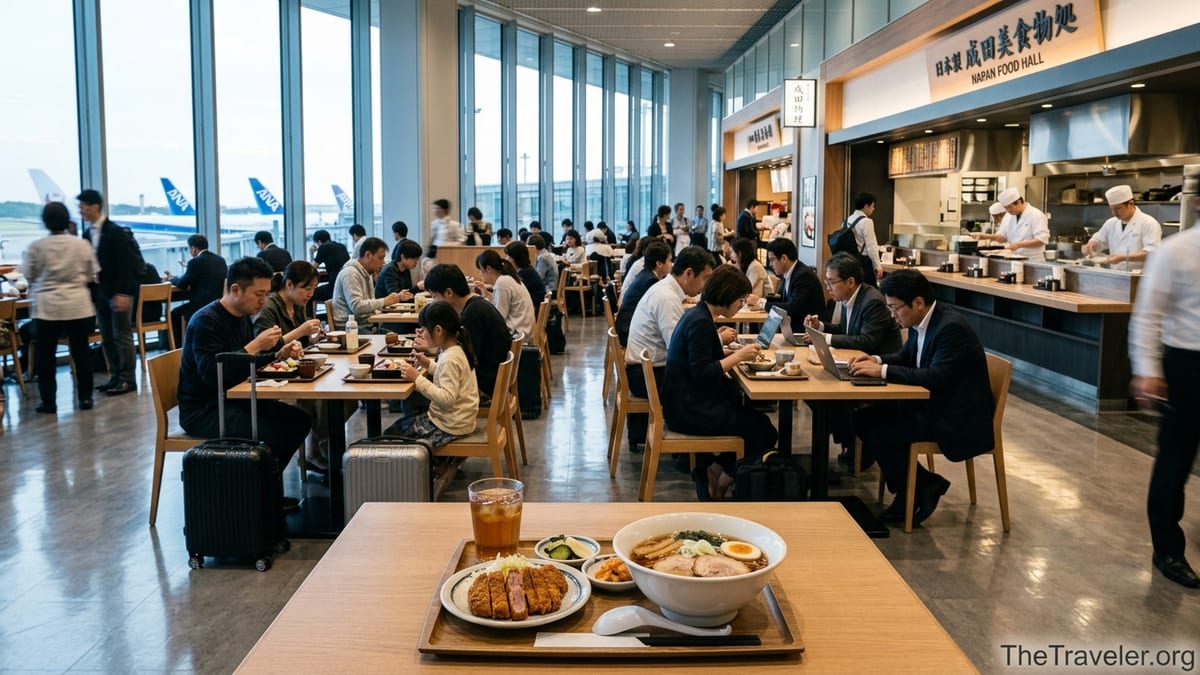
Narita has three terminals, each with its own character and mix of dining. Terminal 1 is the largest and most traditional, with a focus on Japanese staples like ramen and sushi, plus a few sit-down Western restaurants. Terminal 2 combines a busy international hub with a newer “Japan Food Hall” that pulls together well-known domestic chains. Terminal 3, built for low-cost carriers, leans toward fast, inexpensive, cafeteria-style dining. If you have time on the ground, it can be worth checking which terminal your flight departs from and planning a meal there instead of eating on the plane.
Most of the stand-out restaurants at Narita sit airside after security, especially in Terminal 1’s satellites and Terminal 2’s departure area. That means you should generally pass immigration and security first, then eat, rather than lingering landside. A typical midrange meal at Narita runs around 900 to 1,500 yen for a bowl of ramen or a set meal with rice and miso soup, while sushi or beef cutlet can range from about 1,500 to 3,000 yen depending on quality and portion size. Compared to downtown Tokyo, prices are slightly higher but still reasonable by international airport standards.
Because Narita serves long-haul flights all day, many food courts open early, often around 6:00 to 7:00 in the morning, and close late in the evening. However, not every individual restaurant keeps identical hours. If you land late or depart after 21:00, it is smart to head straight to the main food court in your terminal and choose from what is clearly still open, rather than hunting for a specific niche shop that may have already closed.
Top Sushi Spots: A Last Taste of Tokyo
For many travelers, the dream is to enjoy one more proper sushi meal before leaving Japan. Terminal 1 is the best place in Narita for this. Sushi bars here are compact but serious, with counter seating where chefs prepare nigiri and rolls to order. Typical sets start around 2,000 yen for an assorted platter and climb with the quality of fish and seasonal items such as fatty tuna or sea urchin. Compared with chain conveyor-belt shops in the city, airport sushi is a little pricier but still represents excellent value, especially if you focus on classic cuts like salmon, tuna, squid and sweet shrimp.
One well-regarded option in Terminal 1 offers chirashi bowls piled with sashimi over vinegared rice, a good choice if you want variety without committing to a long meal. Travelers on layovers report spending the equivalent of 25 to 40 US dollars here for a generous bowl and a drink. The atmosphere is calm and compact, and solo diners will feel comfortable slipping in for a quick but high-quality lunch at the counter between flights.
Another practical tip for sushi at Narita is to avoid peak departure times if you can. Late morning and early evening waves often see lines forming, especially at the better-known counters. If your schedule allows, aim for a late breakfast sushi around 10:00 or a mid-afternoon break between 14:00 and 16:00. Many restaurants turn tables quickly, but you will have a more relaxed experience if you do not need to watch the clock nervously while chefs assemble your order.
Ramen and Noodles: Warming Bowls Before Departure
Ramen is arguably the most reliable comfort food at Narita, particularly in Terminal 1 and Terminal 2. You will find classic shoyu ramen with soy-based broth, creamy tonkotsu styles, and occasionally spicy tantanmen or miso variations. In Terminal 1, one of the busiest ramen counters sits within the main food court and specializes in shoyu broth with springy wheat noodles, chashu pork, bamboo shoots and a seasoned egg. Expect to pay roughly 800 to 950 yen for a standard bowl, or a bit more if you add extra toppings like extra pork or buttered corn.
Terminal 2’s Japan Food Hall, opened as a more recent addition, features several noodle options. Travelers often gravitate to shops serving rich tonkotsu ramen or lighter chicken-based broths, which work well before a long-haul flight. Here, self-service ticket machines at the entrance are common. You choose your ramen style, purchase a ticket, and hand it to the staff, which keeps the ordering flow quick even during heavy traffic. This is convenient if you do not speak Japanese, as machines typically offer English display options and clear photos of each dish.
If you are flying from Terminal 3, do not expect elaborately decorated ramen restaurants, but you can still find satisfying bowls in the shared food court. Prices here lean lower, often under 900 yen, mirroring the budget-focused nature of low-cost carriers that depart from this terminal. The tradeoff is simple, canteen-like seating and a bit more noise, but quality is still solid. If you score a seat near the windows, you can enjoy your noodles while watching narrow-body jets taxi and depart, which can make even a short layover feel memorable.
Japan Food Hall and Terminal 2 Favorites
For variety under one roof, Terminal 2’s Japan Food Hall has become one of Narita’s main dining highlights. It is designed like a modern urban food court, where you order from individual counters and then sit in a shared seating area. Among its best-known tenants is a gyukatsu specialist, a chain from Kyoto that focuses on breaded and briefly deep-fried beef cutlets. Here, the beef is served pink in the middle with rice, shredded cabbage and small side dishes, and diners can finish cooking slices on a small tabletop stone grill. A typical gyukatsu set runs about 2,000 to 2,500 yen and feels like a complete, restaurant-level meal rather than airport fast food.
Another standout in the same hall is a kushikatsu and fried skewers shop offering bite-sized pieces of pork, chicken, vegetables and seafood, all coated in a light crumb and fried to order. Sets usually include a mix of skewers, rice and miso soup for around 1,200 to 1,600 yen. This is a good choice if you are traveling with friends and want to share plates while sampling different flavors. Beer and simple highball cocktails are commonly available, making it an easy place to unwind before an evening departure.
Curry rice, udon noodles and Japanese-style Western dishes like hamburg steak or omurice also feature prominently in Terminal 2. Look for menus that include plastic food models in front of the shop; these displays make it straightforward to point and order even if you do not read Japanese. Many of these restaurants turn over quickly and are forgiving for families with children, as staff are used to handling luggage and a mix of international passengers with different dietary needs.
Casual Meals, Coffee and Quick Bites
Not every layover calls for a full sit-down meal. If you simply need caffeine, a sandwich or a light snack between connections, Narita’s cafes and bakeries are surprisingly capable. In Terminal 2, one frequently praised stop in the international departure area is a cafe bar that specializes in coffee and draft beer, with a compact menu of pastas, sandwiches and snacks that work well at any time of day. Travelers report using it as a last quiet stop before boarding, with prices for a latte around 500 to 650 yen and simple meals in the 900 to 1,300 yen range.
Throughout all three terminals, you will find Japanese convenience stores and bakery counters selling onigiri rice balls, bento boxes and pastries. These are ideal if you want something you can carry onto the plane and eat when it suits you. A typical rice ball filled with salmon or tuna mayo costs about 150 to 250 yen, while pre-packed bentos with rice, pickles and a main such as karaage fried chicken run from 600 to 1,000 yen. For budget-conscious travelers or those catching red-eye flights, stocking up here can be more satisfying than relying on airline snacks alone.
For those who appreciate coffee, Narita includes both international chains and Japanese-style kissaten-inspired cafes. The latter may offer siphon-brewed coffee, small cakes and light sandwiches in a slightly more old-fashioned setting, often at higher prices but with calmer seating. If you have a few hours and need to work, these can double as improvised offices, especially if you can find a table with access to a power outlet. Keep in mind that these traditional cafes may have smoking and non-smoking zones, though more areas are becoming smoke-free over time.
Terminal 3: Budget-Friendly and Family-Oriented Options
Terminal 3 was built around low-cost carriers, and its dining follows the same philosophy: fast, affordable, and approachable. The main food court on the second floor feels more like a highway service area than a luxury mall, with long rows of communal tables and brightly lit counters along the walls. Here you will find well-known domestic chains including gyudon specialists serving beef bowls over rice, family restaurants with set menus of curry, fried chicken and hamburg steak, and burger shops with simple combo meals. Prices are often among the lowest in the airport, with filling meals easily under 1,000 yen.
One of the most popular choices in Terminal 3 is a branch of Matsuya, a major Japanese chain known for its beef bowls and set meals. Travelers like it because ordering is straightforward and fast: you use a ticket machine, choose from pictures of beef, pork or curry dishes, and collect your tray when your number is called. A standard beef bowl may cost in the 500 to 700 yen range, and adding a miso soup or salad still keeps the total modest. For families, Matsuya and similar chains are a practical way to feed both adults and children without breaking the bank.
Because Terminal 3 serves many early-morning departures on low-cost carriers, several shops in its food court open before dawn. That makes it one of the better places at Narita for an early breakfast, whether you want a simple coffee and toast set or something more substantial like a morning curry or udon bowl. If you are transferring between Terminal 2 and Terminal 3 by foot, the walk is covered and clearly signposted, so it is feasible to head to Terminal 3 specifically for a cheap meal if your schedule allows.
Vegetarian, Halal and Special Diet Considerations
Navigating dietary restrictions at any airport can be challenging, but Narita has gradually improved options for vegetarian, halal and other special diets. Many Japanese dishes are built around seafood, meat or dashi broth made from fish, so strict vegetarians and vegans need to be cautious. That said, you can increasingly find vegetable curries, tomato-based pastas and salads that avoid obvious animal products, particularly at Western-style cafes and family restaurants. When in doubt, look for English-language menus that clearly mark vegetarian items, or ask staff to confirm whether broth or sauces contain meat or fish.
Halal-observant travelers can sometimes find halal-certified options, particularly in larger food courts where curry and rice or donburi shops cater to international passengers. Look for signage indicating halal meat or ask staff. Even where fully certified meals are not available, many airport restaurants are familiar with preparing pork-free dishes, such as seafood curry or grilled fish sets without miso soup that contains dashi. If your requirements are strict, it is wise to plan ahead and eat in central Tokyo before arriving at the airport, then supplement with snacks or bakery items at Narita.
Gluten-free dining is more complex, as soy sauce and wheat flour appear in many Japanese dishes. Plain grilled fish, white rice, salads without croutons and some curries may be workable, but cross-contamination is likely. If you are highly sensitive, consider packing your own food or choosing international chains where allergen information is easier to obtain in English. Many airport cafes do, however, stock simple fruit cups, yogurt and nuts that can help round out a self-prepared meal.
Practical Tips for Eating Well on Any Layover
The key to enjoying Narita’s dining scene is to align your meal with your schedule. On a tight connection under 90 minutes, head straight for your gate’s nearest food court or convenience store and avoid sit-down restaurants with queues. For a 2 to 4 hour layover, pick one of the destination restaurants, such as a sushi counter in Terminal 1 or the gyukatsu shop in Terminal 2’s Japan Food Hall, and then allow time for a coffee or dessert afterward. With a half-day layover, you can even split meals across terminals, using the free shuttle buses or the walkway between Terminals 2 and 3.
Payment at Narita is straightforward. In addition to cash and major credit cards, many outlets accept IC cards such as Suica and PASMO, as well as mobile payments. If you have a small balance left on a transit card from days in Tokyo, using it to buy your last ramen bowl or coffee at the airport is a convenient way to use up stored value. Tipping is not customary in Japan, including at the airport, so simply paying the bill is sufficient.
Finally, remember that Narita’s restaurants and cafes can suddenly become busy when several wide-body flights depart in a narrow time window. If you see a long line at your first-choice restaurant, it is often smarter to pivot to a nearby alternative rather than risk rushing. Because overall food quality at Narita is high, even less famous counters often serve satisfying meals. Prioritizing a relaxed schedule and enough time to reach your gate will do more for your overall travel experience than chasing one particular bowl of ramen or sushi set.
FAQ
Q1. What is the best terminal at Narita Airport for food overall?
Terminal 1 generally offers the widest range of higher-end options, especially for sushi and ramen, while Terminal 2’s Japan Food Hall is excellent for variety and Terminal 3 is best for budget-friendly chain restaurants.
Q2. Can I get good sushi at Narita Airport or should I eat in Tokyo instead?
You can get genuinely good sushi at Narita, particularly in Terminal 1, and many travelers consider it a worthy “last meal” even compared with midrange Tokyo restaurants, though it may cost slightly more.
Q3. How much does a typical ramen bowl cost at Narita?
A standard bowl of ramen at Narita usually runs around 800 to 1,000 yen, with premium toppings or special styles pushing the price closer to 1,200 yen.
Q4. Are there vegetarian options at Narita Airport restaurants?
Vegetarian options exist but are limited; look for vegetable curries, tomato-based pastas, salads and some bakery items, and always confirm whether broths or sauces contain meat or fish.
Q5. Is Terminal 3 only fast food, or can I get a proper meal?
Terminal 3 leans toward quick, inexpensive chains, but you can still get a proper hot meal such as a beef bowl, curry rice or udon at very reasonable prices.
Q6. Do Narita Airport restaurants accept credit cards and IC cards?
Yes, most restaurants and cafes accept major credit cards and Japanese IC cards like Suica and PASMO, and some also support mobile payment services, making cash optional.
Q7. What time do restaurants at Narita typically open and close?
Many airport food courts open around 6:00 to 7:00 in the morning and stay open into the late evening, but individual restaurant hours vary, so late-night travelers should head for the main food court first.
Q8. Is it better to eat before or after security at Narita?
It is usually better to eat after security, as many of the best restaurants and most of the variety are located airside near the departure gates rather than in the landside public areas.
Q9. Are there halal-friendly options at Narita Airport?
Halal-certified options are limited but some curry and donburi shops offer halal or pork-free dishes; look for signage and ask staff, and consider eating a main meal in Tokyo if your requirements are strict.
Q10. Can I bring food from Narita restaurants onto the plane?
In most cases you can bring packaged food, bakery items and convenience store bentos onto the plane, but avoid strong-smelling dishes and always check your airline’s rules on outside food before boarding.