


Kotor might be small, but this medieval bay town packs in some of the most memorable experiences on the Adriatic. Within a single day you can wander Venetian-era alleys, climb a dramatic fortress, cruise past fjord-like cliffs to baroque island churches, and finish with grilled seafood on the waterfront as church bells echo across the bay. This guide focuses on the essential things to do in and around Kotor today, with practical, on-the-ground details to help you make the most of every hour in this UNESCO-listed gem.
Get the latest updates straight to your inbox!
Exploring Kotor Old Town: First Steps Through the Sea Gate
Most visits to Kotor start the same way: walking through the Sea Gate into the walled Old Town. This 16th century stone entrance faces directly onto the bay and cruise tender dock, so you will likely be here within minutes of arriving. Step under the crest and inscription above the arch and you move from the modern waterfront into a tight maze of marble lanes, shady squares and pale limestone facades shaped by centuries of Venetian rule. Unlike Dubrovnik, entry to Kotor’s Old Town is free, so you can come and go as often as you like through the three main gates.
Once inside, give yourself at least an hour simply to wander without a fixed route. Follow the polished stone streets as they open onto small piazzas like Trg od Oružja (Arms Square), where the tall clock tower looms over cafe terraces, and Flour Square, surrounded by palaces that once belonged to wealthy seafaring families. Shops lean heavily toward souvenirs, but you can still find small bakeries selling burek, gelato stands that appeal on hot afternoons, and tiny wine bars tucked into vaulted ground floors. If you arrive earlier than most cruise excursions, around 8 or 9 in the morning, you may have whole alleys to yourself except for local residents and cats sunning on doorsteps.
For orientation, stop briefly at the information board near the Sea Gate, where a posted town map highlights key landmarks. You will notice quickly that the Old Town is compact: walking from the Sea Gate at one end to the River Gate at the other takes less than 10 minutes without stops. That scale makes it easy to combine unstructured strolling with targeted visits to major sights like the Cathedral of Saint Tryphon, the city walls and the San Giovanni Fortress trailhead, all of which sit inside or immediately above these lanes.
If you prefer a little structure, consider a short walking tour with a licensed local guide. Small group tours that start just inside the Sea Gate usually last 60 to 90 minutes and cost roughly 15 to 25 euros per person, depending on group size and season. Guides point out details such as Venetian winged lions carved over doorways, old stone reliefs marking historic water levels from past floods, and the locations of bomb damage from late 20th century conflicts, details that are easy to miss if you explore entirely on your own.
San Giovanni Fortress & City Walls: The Iconic Kotor Hike
The single most famous thing to do in Kotor is climb to the ruins of San Giovanni Fortress, the stone stronghold that crowns the cliffs directly above the Old Town. From the base near the Church of Our Lady of Remedy, a stepped path of roughly 1,300 stone steps zigzags up to the main fortress at about 260 to 280 meters above sea level. The height sounds modest, but in summer heat it feels like a genuine workout, so bring water, wear shoes with grip and avoid starting in the middle of the day if possible.
As of 2026, visitors pay a small access fee at a ticket booth partway up the walls. The exact amount can change by season, but budget around 8 to 10 euros per person, payable in cash. The booth typically opens early in the morning and closes in the evening; in recent seasons, travelers have reported being told to descend by about 8 pm so that staff can secure the path. It is wise to confirm current opening hours with the tourist information office just outside the Sea Gate if you plan a sunrise or sunset ascent, as construction and maintenance sometimes affect specific sections.
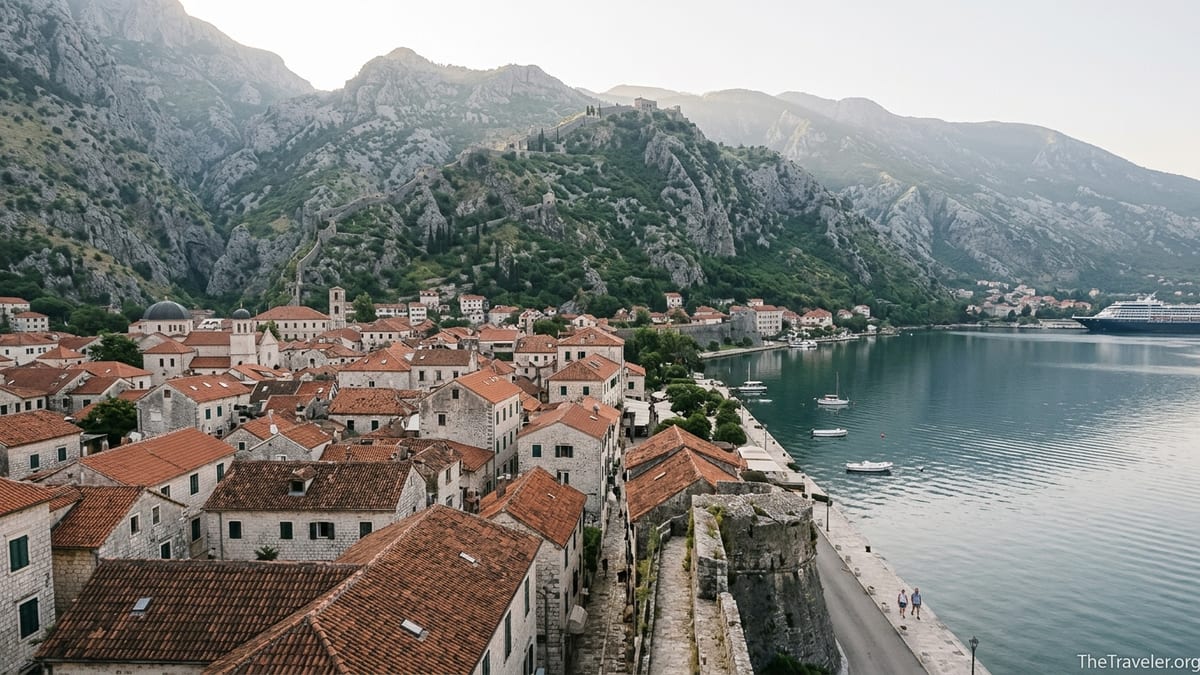
Most reasonably fit visitors take 35 to 50 minutes to reach the top, with plenty of photo stops along the way. Early morning climbs reward you with cool air, slanting light over the terracotta rooftops and far fewer people on the narrow staircase. Late afternoon and golden hour are equally photogenic but noticeably busier, especially on days when large cruise ships are in port. From the highest ramparts you look down on the Old Town like a stone model, see the cruise terminal and marina laid out below, and gaze along the fjord-like Bay of Kotor where mountains plunge straight into the water.
If you want a quieter path and a different angle on the bay, consider linking the fortress with the “Ladder of Kotor,” an old mule track that switchbacks up the mountains behind the city. Some hikers start on the Ladder, pass a small stone church and a snack stand selling local cheese and rakija, then drop through a hole in the fortress wall to rejoin the main path down. Conditions and access points can change, so ask at your accommodation or a local outdoor shop before attempting this variation, and avoid it in rainy weather when the rock can be slippery.
Key Sights Inside the Walls: Sea Gate, Cathedral and Cats
Within the Old Town, a few specific stops deserve more than a quick glance. The Sea Gate itself is the most photographed single entrance: carved stone, a small balcony, and a panel above the arch together frame a view straight into Arms Square. If you stand just outside the gate in late afternoon, you can watch the contrast between the bright bay and the cool, shaded interior of the Old Town, and often catch street musicians playing to the flow of visitors coming and going.
Only a few minutes’ walk from the Sea Gate, the Cathedral of Saint Tryphon dominates its own square. First consecrated in the 12th century and rebuilt after earthquakes, it is one of the most important Romanesque churches on the eastern Adriatic. Modest entrance tickets go toward ongoing restoration, and inside you can see relics of Kotor’s patron saint, fragments of medieval frescoes and a small treasury of religious art. Climb the inner stairs if they are open during your visit, as even the partial views from the upper level give an atmospheric glimpse over the surrounding rooftops and narrow streets.
Kotor’s reputation as “the city of cats” is not just a marketing slogan. Cats seem to be everywhere: curled on monastery thresholds, watching diners from under cafe chairs, and stretched out on sections of the warm city walls. Local volunteers and small organizations place food and water bowls in courtyards, and there is even a tiny Cat Museum where admission fees support feline care. Travelers often mention stopping into shops dedicated to cat-themed souvenirs to pick up handmade prints or small magnets displaying the town’s unofficial mascots. If you photograph cats, be respectful of residents’ windows and doorways and avoid disturbing animals that are eating or sleeping.
Beyond the big landmarks, some of Kotor’s most appealing corners are simple viewpoints: a shaded bench along the wall walk near the River Gate, a stone arch framing a sliver of bay, or a quiet side alley where laundry hangs overhead. Give yourself time to leave the main axes and explore the smaller lanes behind the cathedral, where you are more likely to pass children kicking a ball or locals chatting in doorways than tour groups following a flag.
Boat Tours, Perast and Life on the Bay
The Bay of Kotor is as central to the town’s identity as the fortifications, so getting out on the water is a highlight for many visitors. A standard shared speedboat tour from the marina just outside the Old Town typically combines several stops: the man-made island church of Our Lady of the Rocks near Perast, a glance at old submarine tunnels from the Yugoslav era, and then a longer run out toward the open Adriatic to swim in the Blue Cave before looping back through the inner bay. In 2026, group tours of about three hours commonly cost between 40 and 60 euros per person, while shorter inner-bay trips focusing only on Perast and Our Lady of the Rocks can be closer to 25 to 35 euros.
For more flexibility and privacy, small private speedboat charters for a half day often start around 300 to 350 euros per boat for up to six people, depending on the exact route and season. These private trips can adjust departure times to avoid the busiest periods at popular stops, linger longer where you want to swim, or include less visited corners of the bay such as quiet coves near the fishing villages. Several local operators maintain desks along Kotor’s waterfront promenade and in the marina, so you can compare itineraries and prices on the spot. Read the inclusions carefully: some tours fold fuel and island landing fees into the price, others list them separately to be paid in cash aboard.
Perast itself, about 12 kilometers along the bay from Kotor, is an elegant baroque town backed by steep green hills. Even if you visit on a combined boat trip, try to allow at least 45 minutes to stroll its single waterfront street, where stone palaces have been converted into small hotels, cafes and churches. Water taxis from Kotor also make the trip to Perast, and a few local buses link the two towns, but schedules can be limited and buses crowded in high season. Many travelers find that seeing Perast as part of a structured boat excursion is the least stressful option on short itineraries.
If you have several days in the area, you might add a calmer bay experience such as renting kayaks from Kotor’s waterfront or a nearby beach. A couple of hours of paddling along the inner bay’s edge in the early morning or just before sunset gives you yet another perspective on the walls, mountains and church towers, and can be more peaceful than joining the midday boat traffic that converges on the Blue Cave.
Waterfront Walks, Viewpoints and the New Cable Car
Kotor’s waterfront just outside the Old Town walls is more than a transit corridor for coaches and cruise tenders. A paved promenade runs from the marina area in front of the Sea Gate toward small beaches and hotels in Dobrota, lined with plane trees, benches and views back toward the fortifications. Walking even 15 to 20 minutes along this promenade in the direction of Dobrota rewards you with quieter stretches of water, small stone jetties used by locals for swimming, and terrace restaurants that look back toward the Old Town silhouette.
As you continue along the bay, occasional small pebble beaches appear, usually managed by adjacent bars or guesthouses that rent sunbeds and umbrellas. Prices fluctuate by season, but a pair of loungers with a shared umbrella might be around 10 to 15 euros for a day in shoulder season and somewhat more in July and August. On hot days these spots offer a practical way to combine sightseeing in the morning with relaxed swimming and bay views in the afternoon, all within easy walking distance or a short taxi ride back to the town walls.
For wider panoramas, one of the most notable recent additions to the area is the cable car linking the Kotor area with Lovćen’s slopes above. In about 10 to 15 minutes, cabins glide from near the coast up to a high viewpoint over the bay and surrounding mountains. Tickets are priced per person for a round trip, with family or small group packages sometimes advertised at the station. At the upper terminus you will find a viewing platform, a simple cafe and access to hiking paths further into Lovćen National Park. On clear days, this cable car journey provides some of the most expansive views in the region without the physical strain of a long uphill hike.
Even within the Old Town, smaller viewpoints are worth seeking out. Short sections of the lower city walls are accessible from inside the town, allowing you to walk above the streets for a few minutes and look back at campaniles and red roofs against the backdrop of cliffs. Early evening, when lights begin to come on in windows and the fortress walls glow with subtle illumination, is particularly atmospheric, especially on days when there is no large cruise ship moored in front of the town to dominate the harbor view.
Eating and Drinking in Kotor: From Simple Konobas to Bayfront Dining
Kotor’s dining scene leans heavily on local seafood, Italian-influenced dishes and simple grilled meats, with a mix of tourist-focused menus and a smaller number of places that still feel local. In and around the Old Town squares you will find pizzerias with wood-fired ovens, konobas serving black risotto and grilled calamari, and casual bakeries selling slices of cheese or spinach burek for only a few euros. Many restaurants post lunch specials or fixed menus that can be good value compared to ordering entirely à la carte on the main squares.
If you prefer a quieter setting, consider walking 10 to 20 minutes along the bay toward Dobrota, where waterfront taverns set tables on terraces just above the waterline. Here you can order a whole grilled fish to share, a carafe of Montenegrin wine and a simple side of blitva (chard and potato) while watching kayakers and small boats pass between jetties. Prices at these slightly removed spots can be more moderate than directly inside the Old Town, though you should still expect coastal European levels rather than deep budget bargains, especially in July and August when demand peaks.
Cafes and bars are scattered throughout the Old Town. Espresso-based coffee is standard, and many places serve it strong and inexpensive compared to western European capitals. Ice cream stands become popular in the heat of the day, and some bars set up tables under arches and loggias that stay shady well into the afternoon. If you want to sample local spirits, look for rakija made from grapes, plums or quince, and try it in small quantities, as the alcohol content is high. Montenegro also produces a range of local wines, with reds from the country’s interior often appearing on house wine lists.
As in many heavily visited destinations, menus can vary widely in quality in peak season, so glancing at a few recent online reviews or asking your accommodation host for current personal recommendations is sensible. Independent guesthouse owners often steer guests toward family-run konobas they visit themselves, which can lead you to more characterful experiences than simply picking the busiest terrace on Arms Square.
Practical Tips: Tickets, Crowds and Responsible Travel
With Kotor’s popularity rising, especially in the peak months of June through September, a bit of planning can make a big difference to your experience. Cruise schedules largely dictate the busiest days, when thousands of passengers disembark within a short window. If your itinerary is flexible, consider staying overnight so that you can explore early in the morning or after sunset, when day visitors have left and the Old Town becomes noticeably calmer. Many travelers who base themselves in Kotor for several days choose accommodations just outside the walls in Dobrota, where you can sleep in quieter surroundings but walk into the Old Town in under 20 minutes.
For the San Giovanni Fortress hike, carry at least one large bottle of water per person in warm weather, and consider wearing a hat and light clothing that covers your shoulders. Parts of the path have minimal shade and the stone steps reflect heat. Basic rules posted at the ticket point ask visitors not to climb on fragile ramparts, not to litter, and to supervise children on narrow sections. Respecting these guidelines helps preserve a historic fortification system that is integral to Kotor’s World Heritage status.
Boat tours depart in all but the roughest conditions, but the experience is different in shoulder seasons compared to high summer. In April and October the water at the Blue Cave can feel cold even on sunny days, so some travelers choose to enjoy the cave from the boat rather than swim. In July and August, sun protection becomes more critical; look for boats with partial canopies, bring reef-safe sunscreen and consider a light long-sleeved top to wear between swim stops. Motion-sensitive travelers may prefer shorter inner-bay trips, which stay in calmer waters, over longer open-sea runs toward the outer coast.
Kotor’s cats and narrow streets are part of its charm, but they also call for considerate behavior. Do not feed animals with unsuitable human food, and avoid blocking doorways or church entrances while taking photographs. Keep in mind that people live full-time within the Old Town walls, so try to keep noise down at night when walking back from bars or restaurants. Paying modest entrance fees, tipping appropriately in restaurants when service is good, and choosing locally run tours or accommodations all help keep the benefits of tourism in the community.
FAQ
Q1. How long do I need in Kotor to see the main sights?
Most travelers can see Kotor’s Old Town, hike to San Giovanni Fortress and take a short bay boat trip in two full days, but three days allows a more relaxed pace and time for Perast or the cable car.
Q2. What is the best time of day to hike to San Giovanni Fortress?
The most comfortable times are early morning shortly after sunrise or late afternoon a couple of hours before sunset, when temperatures are lower and the stone steps are not as hot.
Q3. How much does it cost to climb the Kotor fortress?
There is a small access fee collected at a booth on the path, typically under 10 euros per person in recent seasons, though the exact amount can change, so bring cash and check locally.
Q4. Are boat tours from Kotor to the Blue Cave and Perast worth it?
For many visitors they are a highlight, offering dramatic bay views and access to Our Lady of the Rocks, Perast and swimming spots; shared tours cost roughly 40 to 60 euros per person in 2026.
Q5. Can I visit Perast without joining a tour?
Yes, you can reach Perast by local bus, taxi or water taxi from Kotor, but boat tours are often more convenient for short stays because they combine Perast with nearby islands and viewpoints.
Q6. Is Kotor suitable for children and less experienced travelers?
Yes, the flat Old Town and waterfront are easy to explore, though the fortress hike is steep and may not suit very young children or anyone with mobility issues; shorter bay cruises are a good alternative.
Q7. What should I wear for visiting churches like the Cathedral of Saint Tryphon?
Dress modestly with shoulders and knees covered if possible, especially in high season when staff sometimes remind visitors of basic dress codes in active places of worship.
Q8. Do I need to book boat tours and restaurants in advance?
In July and August it is wise to prebook popular boat tours and make dinner reservations for peak times, while in spring and autumn you can often arrange both on the spot the same day.
Q9. Is swimming in the Bay of Kotor clean and safe?
Many locals and visitors swim from small beaches and jetties along the bay in summer; conditions vary by exact location and recent weather, so ask your accommodation or a tour operator for current advice.
Q10. How can I avoid the worst crowds in Kotor?
Stay overnight if possible, explore the Old Town early and late in the day, check cruise ship schedules, and consider visiting in May, early June or late September instead of peak summer.