


Choosing when to visit Marriott Vacation Club Harbour Lake in Orlando can make a noticeable difference to your budget and your sanity. Prices for family-sized villas swing widely across the year, and the pirate-ship pool decks that feel lively in March can tilt into too-busy in July. With a little planning around Orlando’s school calendars, weather patterns, and theme park crowd trends, you can hit that sweet spot of warm weather, lower nightly rates, and manageable crowds both at the resort and in the parks.
Get the latest updates straight to your inbox!
Understanding Harbour Lake and Orlando’s Travel Seasons
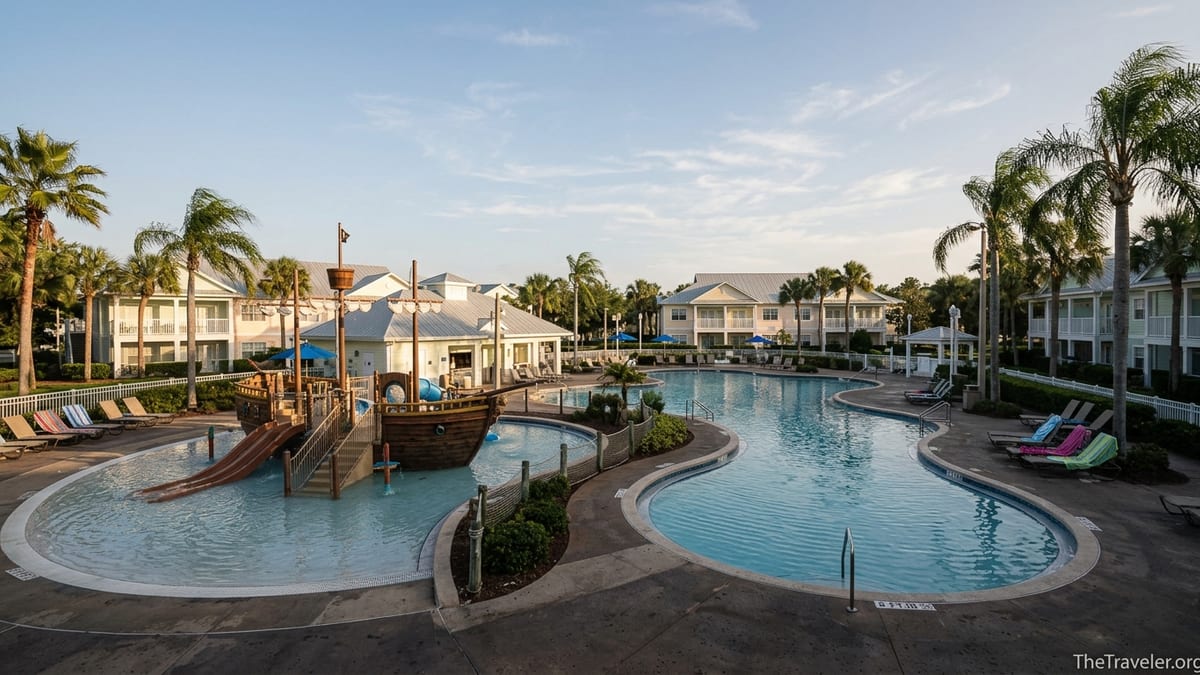
Marriott Vacation Club Harbour Lake sits just off International Drive, within a short drive of SeaWorld and about 15 to 20 minutes from Walt Disney World and Universal Orlando. It is a classic family resort: one and two-bedroom villas with full kitchens, separate living areas, and balconies, plus a pirate ship splash play area, waterslides, and activity-heavy pool decks. Because it is built for families, demand at Harbour Lake closely tracks when kids are out of school across the United States.
Broadly, Orlando runs on three simple seasons for visitors: peak school breaks, shoulder seasons when schools are in session, and true low periods between big holidays. Peak periods include Christmas through New Year’s, spring break weeks in March, and the heart of summer from mid-June through early August. These windows tend to bring the highest rates and the heaviest theme park crowds. Shoulder seasons, like early May or late September into early November, can still be warm and busy but are noticeably calmer and often less expensive.
Harbour Lake, as a vacation club resort, usually maintains strong occupancy year-round, but the intensity shifts. On a July Saturday, every chair around the Shipwreck Landing Pool might be full by 10 a.m., while on a random Tuesday in late October you can still find front-row loungers after lunch. Understanding this rhythm is the starting point for deciding when to go if you care most about saving money or avoiding crowds.
Cheapest Months: Late August Through Early October and Select Winter Weeks
If lower prices are your top priority, the best windows to target are late August through early October and specific winter weeks outside holidays. As U.S. schools reopen from roughly mid-August onward, many families drop Orlando from their immediate plans. Resorts like Harbour Lake often respond by easing rates relative to summer and offering more promotional inventory to vacation club owners and cash guests. In practical terms, a two-bedroom villa that might push toward a higher nightly range in mid-June can sometimes be several hundred dollars cheaper across a four- or five-night stay in late September compared with peak summer or Christmas week.
These late summer and early fall weeks are especially appealing for larger families who would otherwise be comparing Harbour Lake to an on-site Disney villa. Real-world travelers have noted differences as dramatic as paying around a couple of thousand dollars for eight nights in a two-bedroom at Harbour Lake versus five figures for the same period in a comparable Disney Beach Club villa. While exact numbers vary from year to year and from weekday to weekend, the pattern is consistent: as demand drops after summer break, value-oriented rates appear.
A second budget-friendly window appears in winter between major holidays. The weeks right after New Year’s until early February, excluding long holiday weekends and major events, often see calmer booking patterns. Temperatures are cooler, which keeps some families away from the water features, but for guests prioritizing price and who are happy using heated pools and hot tubs, this can be a strong value play. If you can travel midweek in late January, you might find noticeably softer prices on both the resort and nearby theme park tickets compared with President’s Day week or spring break.
Best Times for Smaller Crowds at the Resort and Parks
Crowd levels at Harbour Lake are shaped by the same forces as Orlando’s theme parks: national school calendars and major holidays. For smaller crowds both at the resort and in nearby parks, the sweet spots tend to be early May, late August through early October, and parts of late January and early February. These are times when schools are in session in most of the United States, and families hesitate to pull children out for a week-long trip.
In early May, for example, daytime highs usually sit comfortably warm rather than oppressively hot, yet the big summer rush has not hit. You might find more open loungers around the Florida Falls pool, shorter waits for the waterslide, and more breathing room at on-site activities. Over at Walt Disney World or Universal, while you will not have the parks to yourself, queue times generally trend lower than during spring break or June.
Late August through much of September and early October is another excellent window for smaller crowds. Despite the lingering Florida heat, attendance at the parks tends to drop after the back-to-school period, and that calm spills over to pool decks and parking lots around International Drive. Midweek days often feel especially relaxed; you may see kids playing on the pirate ship splash pad with plenty of space, and cast members have more time to chat during activities. For adults, restaurants on property and in the nearby I-Drive corridor can be easier to walk into without long waits.
Winter shoulder weeks, especially late January, can also deliver pleasantly low crowds. You might find yourself swimming in the resort’s heated pools with only a handful of other families around, and common areas like mini-golf, basketball courts, or the recreation station can feel almost private. The trade-off is cooler evenings and the occasional chilly day, but for guests who care more about quiet than pool time, that is often acceptable.
When to Avoid: Peak Price and Peak Crowd Periods
Several times of year combine the highest Marriott Vacation Club demand with intense theme park crowds, and those are the dates budget-sensitive or crowd-averse travelers should avoid when possible. The Christmas and New Year’s period, roughly from the week before Christmas through the first days of January, is the most obvious example. Harbour Lake is popular with multigenerational families using vacation club points during this festive period. Expect higher nightly rates on cash bookings, limited last-minute availability, full pool decks, and busy roads between the resort and the parks.
Spring break is another pressure point. Throughout March and sometimes into early April, different regions of the United States have school holidays, creating a rolling wave of demand. Even if your local schools are not on break, odds are that some major states are, and that shows up in both occupancy and pricing. At Harbour Lake, that can translate into wait times for poolside food and longer lines at check-in on weekends, along with higher nightly rates than you would see for the same room type in late April.
The core summer weeks from mid-June through early August are also busy. Families locked into school calendars flock to Orlando, and many choose villa-style accommodations like Harbour Lake to balance space and budget. This is when you are most likely to encounter full parking lots after a long park day and to see the water play areas shoulder-to-shoulder by midday. If your only option is summer, you can still make it work by booking well in advance, prioritizing weekday arrivals, and planning early-morning or late-evening pool time when the resort is naturally quieter.
Holiday weekends such as Memorial Day, Labor Day, and President’s Day also drive short, intense spikes in both prices and crowds. Even if they fall inside what would otherwise be a quieter month, the long-weekend effect can turn a Friday-to-Monday stay into something that feels like a mini-peak season. When possible, shift your dates by a few days on either side to step out of that surge.
Balancing Weather, Pool Time, and Savings
Because Harbour Lake’s main draw is its resort-style pools and splash areas, the best time for you personally might be a compromise between ideal pool weather and price. Summer offers the warmest water and most predictable pool days, but also high humidity, frequent afternoon thunderstorms, and crowd pressure. Winter is cheaper and quieter but brings occasional chilly days when even heated pools feel brisk, especially in the evenings.
For many travelers, late April to early May and late September to mid-October strike the best balance. In late April or early May, daytime highs typically sit in a comfortable warm range with lower humidity than peak summer. Kids can spend hours on the pirate ship play structure while adults enjoy the sun without feeling drained after an hour. At the same time, nightly cash rates at many Orlando properties are often lower than they will be once Memorial Day and June arrive, even if they are not at their absolute rock-bottom.
Late September to mid-October comes with its own pros and cons. The heat can still be intense, especially in the early afternoon, but crowds are often among the lowest of the year, and you can build your days around morning and evening pool time with an air-conditioned siesta in the villa mid-day. The resort’s family activities schedule is usually in full swing, yet you may find your kids can join in games or crafts without large groups competing for attention. For travelers coming from colder northern climates, this can feel like stretching summer a few extra weeks while enjoying off-peak pricing compared with holidays.
If you are especially sensitive to heat, consider a winter trip but plan your expectations. Aim for late February or early March rather than the depth of January for a slightly better chance of warm pool afternoons while still avoiding the busiest weeks of spring break. Bring light layers for mornings and nights, and think of the pools as a bonus rather than the core of your itinerary.
Real-World Price and Crowd Comparisons
To understand the impact of timing in practical terms, imagine two different families booking the same two-bedroom villa at Harbour Lake for a week. The first family travels in mid-July, locked into school calendars. They book a Saturday-to-Saturday stay, pay high-season rates, and find that the most economical option still pushes their total lodging budget significantly upward once taxes are added. The resort feels lively but crowded, with pool chairs taken early and parking tight after fireworks at the parks.
The second family chooses the last week of September instead, arriving on a Tuesday and leaving the following Tuesday. They find rates meaningfully lower compared with peak summer for similar villa categories, and midweek nights are usually cheaper than Friday and Saturday. Their total accommodation cost drops by hundreds of dollars for the week, enough to cover several character meals or additional park upgrades. Around the resort, they notice that the pirate ship pool is active, but they can still easily grab loungers mid-morning, and dining venues have shorter lines.
Another pair of examples: a retired couple planning a January getaway versus a family bound by spring break. The retirees choose a ten-day stay in the third week of January, booking a one-bedroom villa. They benefit from calmer pricing and can be flexible with arrival and departure days, choosing Monday–Thursday nights that tend to be less expensive than weekends. They spend more time at the hot tubs, enjoy quiet early-morning walks by the lake, and visit the parks on weekdays when lines are shorter. The spring break family, arriving mid-March, finds higher nightly rates and more limited villa categories, and must plan around heavier park crowds and more fully booked resort activities.
These scenarios are deliberately simplified, since real-time rates move daily based on demand and promotions. But the underlying lesson holds: sliding your dates out of peak corridors, arriving and departing midweek, and aiming for shoulder periods can translate into noticeable savings and a very different on-the-ground experience.
Booking Strategies to Lock In Lower Rates
Once you have identified your ideal travel window, a few practical tactics can help you lock in lower prices at Marriott Vacation Club Harbour Lake. First, be as flexible as possible with arrival and departure days. Orlando resort pricing commonly spikes on Friday and Saturday nights, while Monday through Thursday can be cheaper. Shifting a seven-night stay to run from Tuesday to Tuesday instead of Saturday to Saturday can shave a significant amount off the total.
Second, book early when you can, especially if you are aiming at popular shoulder weeks like early May or around special events at the parks. As demand fills in, resorts adjust their rates. If you reserve well in advance, you not only secure the villa type you want but also create an opportunity to re-check prices periodically and rebook if a better promotional rate appears, subject to the terms of your reservation. Many travelers keep a calendar reminder to look at rates again around 60 to 90 days before arrival.
Third, compare all-in costs, not just the headline rate. Harbour Lake is attractive because it typically does not add resort fees, and self-parking is usually straightforward compared with some area hotels that charge nightly parking or resort surcharges. A slightly higher nightly rate at Harbour Lake can still be the better value once you add in what you would otherwise pay for parking, resort fees, and breakfasts elsewhere. Having a full kitchen and in-room laundry can also trim food and baggage costs, particularly on longer stays.
Finally, if you have flexibility in how you structure your theme park days, consider building in “resort days” during your trip. By staying an extra night in a lower-priced shoulder week, you might come out ahead compared with squeezing a packed four-day park sprint into a shorter, more expensive window. Relaxing by the pool while paying off-peak rates can feel like bonus value.
The Takeaway
The best time to visit Marriott Vacation Club Harbour Lake for lower prices and smaller crowds is when most American students are in classrooms, not on break. Late August through early October and select winter weeks outside holidays stand out for value, while early May and late September often blend comfortable pool weather with softer pricing and shorter lines both at the resort and in the parks.
If your travel is locked to school breaks, you can still improve your experience by arriving midweek, booking as far in advance as practical, and planning early morning or late evening pool time when the resort naturally quiets down. For those with more freedom, looking beyond Christmas, spring break, and high summer pays real dividends: more space by the pirate ship pool, more relaxed meals, easier access to amenities, and a vacation budget that stretches further.
Ultimately, the “best” time to visit Harbour Lake is when the trade-off between weather, price, and crowds matches your family’s priorities. With a bit of attention to Orlando’s seasonal patterns and a willingness to travel just outside peak corridors, you can enjoy the resort’s tropical style and family-friendly comforts without paying the highest premiums or battling the biggest crowds.
FAQ
Q1. What are the absolute cheapest months to stay at Marriott Vacation Club Harbour Lake?
Late August through much of September and early October, plus select weeks in January and early February outside major holidays, are often among the least expensive times, as family demand drops once schools are back in session.
Q2. When is Harbour Lake least crowded?
Resort and park crowds usually dip in late August through early October, early May before Memorial Day, and the weeks after New Year’s into early February, excluding holiday weekends and major events.
Q3. Is summer a bad time to visit Harbour Lake?
Summer offers reliably hot pool weather and long park hours, but it also brings heavy crowds and higher prices. If you must travel in summer, aim for weekday stays, book early, and plan pool time at rope-drop or in the evening to avoid peak afternoon rush.
Q4. How does early May compare to March spring break?
Early May usually has fewer crowds and somewhat lower prices than March, when overlapping spring breaks push up demand. Weather in May is warm enough for long pool days, and park wait times are often shorter than in peak March weeks.
Q5. Will the pools be warm enough in winter?
Harbour Lake’s pools are heated, so many guests swim comfortably during sunny winter afternoons, especially from late February onward. Even so, occasional cold fronts can make evenings and early mornings feel chilly, so it is wise to pack light layers.
Q6. Are weekends always more expensive than weekdays?
Often, yes. Friday and Saturday nights in Orlando typically carry higher rates due to short leisure trips and events. If your schedule allows, shifting your stay to run Monday through Thursday or Tuesday through Tuesday can lower the average nightly cost.
Q7. How far in advance should I book for the best rates?
Booking several months in advance usually gives you more choice in villa types and a better chance of locking in lower rates before high demand dates fill. You can then monitor prices and, if your reservation terms permit, rebook if a more favorable rate appears.
Q8. Is hurricane season a bad time to visit?
Official hurricane season runs from June through November, with a higher likelihood of storms in late summer and early fall. While significant disruptions are relatively rare, travelers visiting in September or October should stay flexible, watch forecasts, and consider travel insurance, balancing that risk against typically lower crowds and prices.
Q9. Are there big savings compared with staying at an on-site Disney villa?
Many travelers report paying substantially less for a multi-bedroom villa at Harbour Lake than for a similar-sized villa at Disney resorts during the same dates, sometimes saving several thousand dollars across a week. Exact differences depend on season, promotions, and room types, but Harbour Lake often delivers more space per dollar.
Q10. If I only care about avoiding crowds, which single month is best?
There is no perfect month, but September is often one of the quietest overall, with many schools back in session and fewer families traveling. If heat and the possibility of storms are acceptable trade-offs, early to mid-September can feel noticeably calmer at both the resort and the parks than peak summer or holiday periods.