


More news on this day
Air travel across the United States is slowly restarting after a rare nationwide ground stop halted all departures for more than four hours on Friday, leaving stranded travelers racing to rebook flights, secure hotel rooms and, in many cases, improvise entirely new ways to get home.
Get the latest news straight to your inbox!
A Four-Hour Halt With Weekend-Long Consequences
The Federal Aviation Administration ordered the nationwide stop to all departing flights on the afternoon of Friday, November 13, after a communications failure affected multiple air traffic control centers. Publicly available advisories described the move as a response to “extraordinary circumstances” tied to widespread radio and equipment outages. Departures resumed on Friday evening, but the pause was long enough to unravel flight schedules heading into one of the busiest travel weekends of the fall.
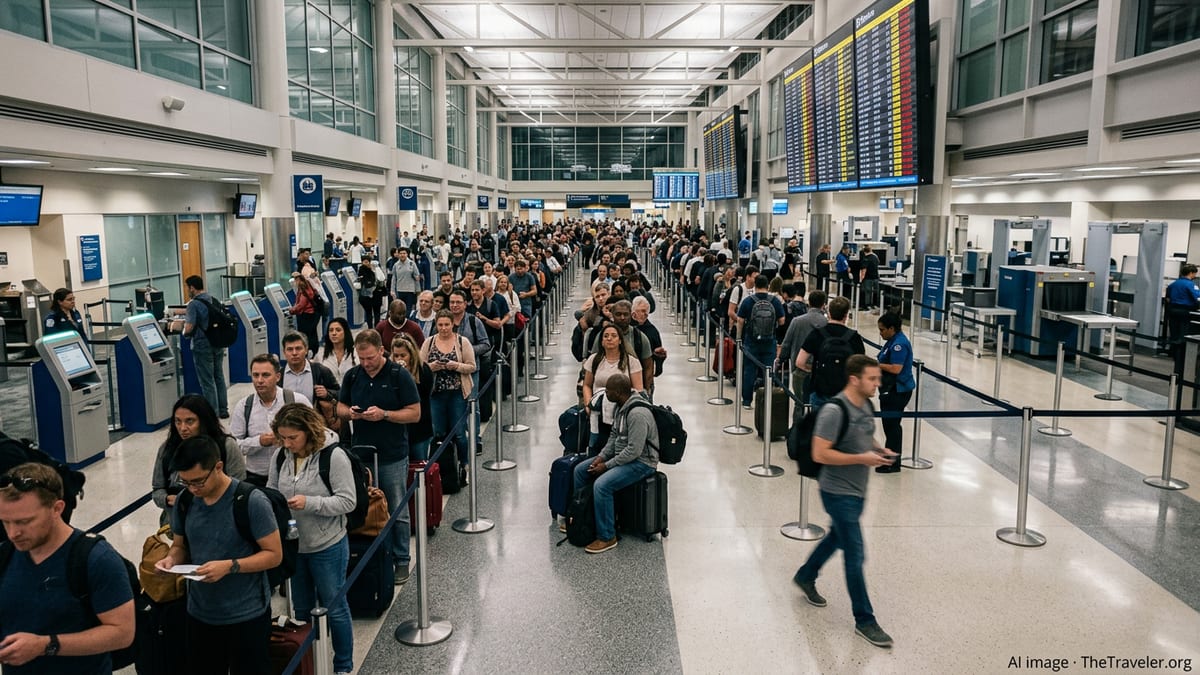
According to flight-tracking data cited in published coverage, more than 3,000 aircraft were already airborne and bound for U.S. airports when the order took effect. Those flights were allowed to continue, but thousands of departures scheduled for later in the day did not take off as planned. Reports from major hubs such as Atlanta, Chicago O’Hare, Los Angeles, Miami and Dallas described packed terminals, growing lines at customer-service counters and departure boards filled with delays and cancellations well into the night.
By Saturday morning, the fallout had intensified. Tracking services and multiple news outlets reported several thousand additional cancellations across the country as airlines tried to reposition aircraft and crew. Some airports were seeing dozens of canceled flights on top of significant delays, and carriers warned that disruptions could continue into Sunday as they worked through the backlog.
Authorities have publicly indicated there is no evidence that the outage was caused by a cyberattack or other malicious activity. Early reporting points instead to a systems failure affecting communications and radar links at regional facilities, with a cascading impact on the national network. A more detailed technical explanation is expected as federal reviews proceed.
Stranded at Hubs as Seats and Hotel Rooms Disappear
For travelers, the practical impact has been immediate and personal. Large hub airports including Hartsfield-Jackson Atlanta, Chicago O’Hare, Dallas-Fort Worth, Denver, Los Angeles International, New York’s LaGuardia and John F. Kennedy, and the Washington, D.C. region reported extended lines and crowded gate areas on Friday evening. Local media in several cities described passengers stretched along concourses waiting to speak with airline agents about rebooking options.
In South Florida and Southern California, airport operators used social media and public advisories to urge passengers not to head to the airport without checking flight status first. Similar messages were issued in Boston, Chicago and other major markets as local officials warned that delays and cancellations would ripple through late Friday and into Saturday. Travelers reported learning of the ground stop only after arriving at departure halls or, in some cases, after boarding planes that never left the gate.
Hotel availability near airports tightened quickly on Friday night. In cities with multiple major events this weekend, including professional and college sports games, large conventions and concerts, visitors already faced higher-than-normal occupancy. Reports from several hubs indicated that same-day walk-up rates climbed sharply as stranded passengers competed for remaining rooms. Some travelers chose to spend the night in terminals rather than pay last-minute prices or travel long distances into city centers.
With rebooked flights often pushed 24 hours or more into the future, airlines encouraged passengers whose trips were not time-sensitive to delay travel voluntarily. Airport statements and carrier advisories repeatedly urged customers to use mobile apps or websites instead of queuing in person whenever possible, both to reduce congestion and to access the most current inventory of remaining seats.
Scrambling for Alternatives: Trains, Buses and Rental Cars
As cancellations mounted and same-day flights filled, many travelers began looking beyond the airport for ways to get home. By late Friday, social media posts and local reporting highlighted long lines at rental car counters in cities such as Atlanta, Chicago, Dallas and Washington, with some locations running low on one-way vehicles to nearby states. Where cars were still available, publicly listed prices for last-minute one-way rentals rose steeply compared with midweek advance rates.
Intercity bus services also saw increased interest on Friday night and Saturday morning. Routes along the busy Northeast Corridor between Washington, Philadelphia, New York and Boston, as well as corridors in California and the Midwest, appeared to draw higher bookings from passengers who decided that an overnight ride by road was preferable to an uncertain wait at the airport. With many buses operating on fixed schedules, those options were most helpful to travelers stranded within a day’s drive of their destination.
On the East Coast, rail travel offered one of the most reliable alternatives. Amtrak’s reservation system on Saturday showed limited seats remaining on some popular Northeast Regional and Acela departures, reflecting a shift by some passengers from air to rail after the ground stop. Riders willing to accept economy seating on early-morning or late-night departures had better luck, while midday trains between Washington and Boston were among the first to sell out.
For travelers already abroad when the ground stop was ordered, choices were more constrained. International arrivals were managed on a case-by-case basis during the disruption, and published coverage noted that some overseas flights bound for the United States were diverted or held at origin airports until the FAA lifted its order. Once those aircraft arrived, passengers bound for onward domestic connections often discovered that their final legs had been canceled, prompting a scramble for overnight accommodation and new connections.
What Airlines Are Offering Disrupted Passengers
As the situation evolved, U.S. airlines began issuing travel waivers to give affected customers more flexibility. Major carriers announced that passengers booked to travel on Friday and in some cases through the weekend could rebook once, without change fees, onto new flights within a specified window. The exact terms varied by airline and fare type, and in many cases fare differences still applied if travelers moved from off-peak to higher-demand flights.
Federal consumer rules remain a key protection for stranded passengers. Public guidance from the U.S. Department of Transportation states that when an airline cancels a flight for any reason, travelers are entitled to a full refund of the unused portion of their ticket if they choose not to travel, even for nonrefundable fares. This applies regardless of whether the disruption is due to weather, operational challenges or broader system issues, although processing times for refunds can vary by airline.
Compensation beyond a refund is less clear-cut. In the United States, there is no overarching law requiring airlines to provide meal or hotel vouchers during large-scale disruptions. In practice, carriers often offer food vouchers, mileage credits or overnight accommodation when cancellations are within the airline’s control, but responses to infrastructure-related problems can differ. Travelers reported a mix of outcomes on Friday night, with some receiving hotel and meal assistance and others being advised to make their own arrangements and seek reimbursement later if eligible.
Experts interviewed in media coverage of the event advised passengers to keep all receipts for hotels, meals, ground transport and other expenses tied to the disruption, particularly for trips covered by travel insurance or premium credit cards that include trip-interruption benefits. Policy language varies significantly, but many products specify compensation limits per traveler and per day for qualifying delays.
How Travelers Can Navigate the Days Ahead
Although departures have resumed, industry observers expect the disruption to linger through the weekend as airlines work flight by flight to restore normal schedules. Aircraft and crews remain out of position across the network, and staffing rules place hard limits on how long pilots and flight attendants can work without mandated rest. That means some flights may still be canceled or rescheduled at short notice on Saturday and Sunday, even if overall system capacity improves.
Travel advisories urge anyone with a flight in the next several days to monitor status frequently, starting from home rather than at the airport. Airline mobile apps and text alerts generally update faster than terminal displays, and they give passengers the first opportunity to accept alternative routings or earlier departures when they become available. Where possible, travelers are encouraged to keep contact information up to date in their bookings to avoid missing rebooking notices.
For those with flexible plans, one strategy highlighted in travel-industry guidance is to accept longer or less direct routings in exchange for confirmed seats. A connection through a less crowded hub or a flight at off-peak hours may offer a better chance of getting home than waiting for the most convenient nonstop. At the same time, travelers are advised to build in extra connection time to account for residual delays.
Even as investigations into the underlying technical failure continue, the events of this weekend have underlined how dependent modern travel has become on complex and tightly synchronized systems. For passengers still sitting on airport floors, in hotel lobbies or on long-distance buses, the priority is simpler: securing a confirmed seat, in any cabin and by any reasonable route, that will finally bring them home.