


Zadar’s coastline may not have the endless sand of southern Spain, but it does offer a surprisingly diverse mix of pebble coves, concrete sunbathing terraces and a handful of genuine sandy beaches. Add in easy day trips to the islands of the Zadar archipelago and you have one of Croatia’s most flexible bases for beach days tailored to families, serious swimmers and island-hoppers. This guide focuses on Zadar’s key city beaches, nearby Nin, and the most accessible island options so you can match the right stretch of coast to your travel style.
Get the latest updates straight to your inbox!
How Zadar’s Beaches Work: Pebbles, Platforms and Patches of Sand
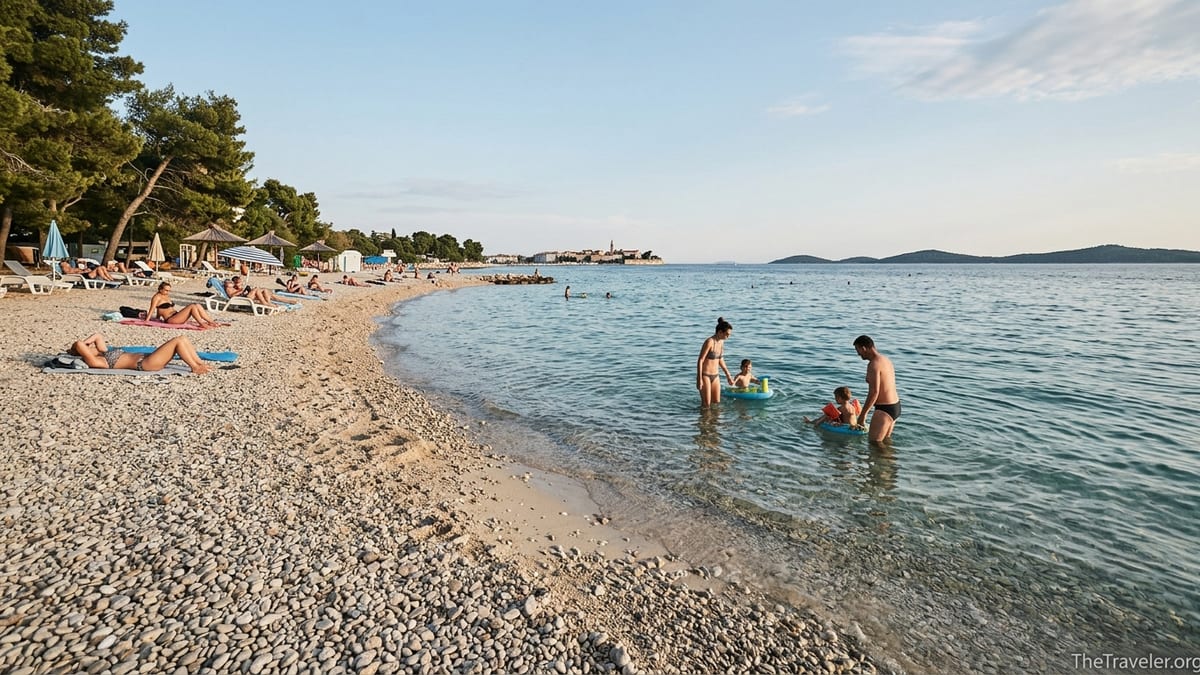
The first thing to know about Zadar is that most city beaches are not long sandy arcs but a mix of pebbles, rocks and concrete sunbathing platforms. This is typical for Dalmatia. Beaches like Kolovare and Borik have pebbly entries to the sea combined with paved sections where locals lay out towels or rent loungers. The water is usually very clear, which suits swimmers and snorkellers, but families with young children often prefer spots where the seabed is sandy or at least fine shingle.
True sand is more common just outside the city. Nin’s Queen’s Beach, around 20 minutes’ drive north of Zadar, is one of the best-known sandy stretches in the region, with very shallow water that suits toddlers and non-swimmers. On the islands, Sakarun on Dugi Otok is famous for its pale sand and turquoise lagoon, although it is busier and more of a day-trip destination than an everyday swim spot. Because sandy beaches are relatively rare, they can feel crowded in high season; planning around peak hours becomes important if you are travelling with children.
The second practical point is footwear. On pebbly and rocky beaches such as Diklo or sections of Puntamika, water shoes make getting in and out of the sea far more comfortable and reduce the risk of slipping on algae-covered rocks. You will see them sold in beach kiosks, supermarkets and souvenir stalls around town, usually for the price of a couple of coffees. Bringing a pair for each family member is one of the simplest upgrades you can make to your Zadar beach experience.
Finally, parking and access can shape your beach choices more than you might expect. Many city beaches have municipal pay-and-display zones that fill by late morning in July and August, while hotel-backed beaches often reserve their closest spaces for guests. If you are self-driving, it is worth deciding in advance whether you are happy to pay for a central, crowded but convenient beach like Kolovare, or prefer to drive a little further to a suburb such as Diklo or to Nin where you may find cheaper or simpler parking, especially in the shoulder months of June and September.
Kolovare: Zadar’s Classic City Beach
Kolovare is Zadar’s main city beach and the one you are most likely to visit if you want to mix a morning of sightseeing in the Old Town with an afternoon swim. It lies just south of the city walls, roughly a 15 to 20 minute walk from the Sea Organ. The beach itself is a combination of small pebbles, short built-up terraces and a seawater pool area, with pine trees behind offering some natural shade. The water drops off gradually near the main pebbly section, which suits older children and confident swimmers.
For families, the biggest advantages of Kolovare are its central location and full set of facilities. There are showers, changing cabins, lifeguards in peak season, simple snack stands and cafés for ice creams and cold drinks, and a good selection of inexpensive bakeries and pizzerias within a few minutes’ walk. If you are staying at one of the nearby hotels or apartments, it is realistic to come down for a quick early-morning swim before breakfast or an evening paddle around sunset without any logistics at all.
On the downside, Kolovare is busy in July and August, especially in the afternoon when both tourists and locals arrive. Most of the parking around the beach and the nearby sports complex is in paid municipal zones. Expect to feed a ticket machine for several hours if you are staying for the day, and be prepared to circle a little for a spot after 10 a.m. A practical strategy is to come early, park once, and combine the beach with a lunch in town and a stroll along the waterfront rather than trying to move the car again.
In terms of atmosphere, Kolovare is very much a city beach: it is lively, social and practical rather than scenic in a postcard way. If your priority is an easy swim between museum visits, or you are travelling with teenagers who like a bit of energy and people-watching, it works perfectly. For long, relaxed family days on the sand, you may find Borik, Nin or an island beach more appealing.
Borik & Puntamika: Family-Friendly Resorts in the City’s North
On the opposite side of the Old Town, Zadar’s northern district is home to Borik and Puntamika, a cluster of beaches backed by hotels, apartment blocks and holiday resorts. Borik is often recommended to families because it combines pebbly and partly sandy sections with shallow entry areas, a small aqua park in high season and several beach bars and snack kiosks. The shore here feels more like a resort strip than a simple local beach, which can be a plus if you want everything in one place.
Puntamika curves around a small peninsula between Borik and the larger Punta Skala area further northwest. It is a mostly pebbly beach with views back to Zadar’s Old Town peninsula and the islands beyond. The atmosphere is a little calmer than Borik’s central stretch, and there are corners where you can spread out a towel under pine trees or on low rocks. For families staying in northern Zadar, Puntamika often becomes the default evening swim spot because you can wander down from nearby apartments in flip-flops and be in the sea within minutes.
Facilities in this area are solid. You will find showers, changing cabins and seasonal lifeguards, plus a choice of cafés, beach bars and simple restaurants along the promenade. A typical beach day might involve kids rotating between the sea, an inflatable water park section and a playground, while adults base themselves at a café table or on hired loungers. Prices for sunbed rentals vary by operator and season but are usually in line with other Croatian coastal resorts rather than being a bargain destination or an extreme outlier.
Parking around Borik and Puntamika is a mix of hotel car parks, small private lots and municipal on-street spaces. Many spots are paid during the day in high season. If you are driving in from outside Zadar, it is sensible to arrive in the morning when empty spaces are easier to find and the day’s heat is still building. Another option is to use Zadar’s city buses from the Old Town or central districts, which run frequently to the northern suburbs and drop you within a short walk of the beach.
Diklo & Suburban Shores: Quieter Swims Close to Town
Continuing north from Borik brings you to Diklo, a string of small pebble and concrete beaches facing the islands offshore. This area feels more residential than resort-focused; many of the people in the water are locals and long-stay visitors staying in nearby apartments. The coastline is suitable for swimming almost along its entire length, with staircases or ramps leading into the sea from the promenade and occasional small coves where children can paddle at the edge.
Diklo works best if your priority is a straightforward swim rather than lots of entertainment. There are a few cafés and kiosks, but you will not find big inflatable water parks or loud beach clubs. The water entry can be a little steeper than at Borik or Kolovare in some spots, which suits adults and confident swimmers who want to dive straight into deeper water. Families with very young children tend to prefer the gentler gradients of Nin or the island shallows.
From a practical perspective, Diklo can be easier for drivers in high season than central beaches. Parking is scattered along residential streets and small bays, and although some spots are paid, there is often less competition than in the tight streets around Kolovare. In June and September in particular you may be able to park a short stroll from a quiet stretch of coast and feel like you have your own piece of sea, especially in the early morning or late afternoon.
Because there is less natural shade along sections of the Diklo promenade, bringing your own beach umbrella or small pop-up sunshade is useful, especially if you are planning to base yourself on one of the concrete platforms. A lightweight folding chair or inflatable mat can also make long stays more comfortable on the hard surface compared to lying directly on the stone with only a towel.
Nin’s Queen’s Beach: Shallow Sand for Small Children
For families who specifically want sand underfoot, the small town of Nin, north of Zadar, is a key destination. Its best-known stretch is Queen’s Beach, a long arc of soft sand and very shallow water that extends far out into the bay. In many sections, even adults can walk dozens of metres from the shore while the water is still only waist-deep. That makes this one of the safest-feeling options in the region for toddlers and younger children who are not strong swimmers.
The setting around Nin is flatter and more open than the rocky coves closer to Zadar. Behind the beach there are low dunes and grassy areas, along with several beach bars and simple restaurants serving pizzas, grilled fish and cold drinks. Parents can often sit at a shaded table while children play in the sand below. There are public toilets and showers, plus the usual rental stands for pedal boats and stand-up paddleboards in high season.
Because Queen’s Beach is so well known as a sandy, shallow option, it can be crowded in peak summer, particularly on weekends when families from Zadar and the surrounding region drive up for the day. Parking is provided in several lots behind the beach and approaches, generally on a paid basis during the season. To avoid the hottest part of the day and the busiest car parks, consider arriving early in the morning and leaving for a late lunch back in Zadar, or coming after 4 p.m. when the light softens and day-trippers begin to thin out.
Another consideration at Nin is wind. The broad, open bay can feel breezier than the more sheltered city coves, which is welcome on very hot days but can make umbrellas and lightweight sunshades unstable if not anchored well. If you are visiting with small children and lots of gear, opting for a more compact beach setup and parking relatively close to the sand will make the experience more manageable.
Island Escapes: Sakarun and Other Zadar Archipelago Beaches
Part of Zadar’s appeal is its access to the islands just offshore. The Zadar archipelago includes Dugi Otok, Ugljan, Pašman and several smaller islands, many of which have attractive beaches reachable by ferry or organized boat trip. For many visitors, a day on an island beach is the highlight of their stay, offering clearer water, quieter surroundings and a sense of escape from the city’s summer bustle.
The most famous island beach in the region is Sakarun on Dugi Otok, often described as a sandy lagoon with shallow turquoise water and a line of pines behind. Reaching it typically involves a ferry from Zadar to Dugi Otok followed by a bus or organized transfer across the island. Once there, you will find a long curve of pale sand and a gradual entry into the sea that suits families and casual swimmers. Simple beach bars and restaurants provide drinks and meals, and there is limited natural shade under the trees at the rear of the beach.
Because Sakarun’s beauty is widely publicized, it has become a popular day-trip destination and can feel busy in high season, particularly when multiple excursion boats arrive. Families who prefer more space might choose to visit in June or September, or to look at other Dugi Otok beaches such as Veli Žal, a scenic pebble beach facing the open sea. Smaller, less-known coves on Ugljan or Pašman may also suit travellers willing to explore with a rental car or scooter, swapping headline views for relative quiet.
Logistically, island beaches require a bit more planning than Zadar’s urban coastline. You will need to check current ferry timetables, factor in transfer times from ports to beaches and carry everything you need for the day, as shops near the sand may be limited or seasonally operated. For many travellers, the payoff of swimming in clearer water and spending the day surrounded by pine forest and sea views is worth the extra effort, especially if they are staying several nights in Zadar and want to vary their beach experiences.
Choosing the Best Beach by Travel Style
With several different coastal options around Zadar, it helps to match each beach to your priorities. If you are travelling with young children and want shallow water and sand for castle-building, Nin’s Queen’s Beach and Sakarun on Dugi Otok are the standouts, accepting that both can be busy in peak months. For families who prefer to stay close to the city and value cafés, playgrounds and easy transport over sand specifically, Borik and parts of Puntamika strike a balance between child-friendly facilities and practical access.
Swimmers who care more about clear water and depth than about lounging on the sand may gravitate towards Diklo, sections of the Borik–Puntamika peninsula and the more natural coves on the islands. These areas often feature pebble or rocky entries, concrete platforms for sunbathing and ladders into deeper water. A common pattern among repeat visitors is to use Kolovare or Borik for social beach days with a mix of sunbathing and café time, and then schedule one or two island excursions specifically for longer swims and snorkelling.
If you are staying without a car, city beaches like Kolovare, Borik and Puntamika are the most straightforward: you can walk or take a short bus ride, buy snacks and drinks on site, and head back to your accommodation whenever you like. With a rental car, expanding your range to Nin and selected island ferries opens up more variety. Be aware that parking costs, ferry tickets and occasional sunbed rentals add to your daily budget; planning a couple of higher-cost “special” beach days and mixing them with simple walks to nearby city beaches can keep overall expenses predictable.
Seasonality also shapes the experience. In July and August, choosing beaches with more infrastructure and lifeguards may feel reassuring when the sea is busiest. In shoulder months, some bars and water parks close, but you gain quieter coves, easier parking and more space on the sand or platforms. For travellers who prefer peace to facilities, a late September swim at Diklo or an October walk along an almost-empty Borik shoreline can be more memorable than a crowded high-summer afternoon at Sakarun.
The Takeaway
Zadar’s beaches are less about a single perfect strip of sand and more about having a toolkit of different options within easy reach. City beaches such as Kolovare, Borik and Puntamika deliver straightforward access, clear water and a lively atmosphere, which works well for mixed-age groups and short stays. Suburban stretches like Diklo provide quieter swims still within a short drive or bus ride of the Old Town, especially outside the core holiday weeks.
If sand and shallow water are non-negotiable for your trip, plan at least one day at Nin’s Queen’s Beach and, if schedules and budget allow, a ferry trip to Sakarun or another Dugi Otok bay. For many visitors, that combination of an ancient city base with one or two island days is what makes the Zadar area stand out compared with other parts of the Croatian coast. With realistic expectations about pebbles versus sand, a pair of water shoes and a little attention to parking and ferry timetables, you can assemble a set of beach days that matches your family, your swimming style and your appetite for adventure.
FAQ
Q1. Which Zadar beach is best for families with small children?
Nin’s Queen’s Beach is often the best choice for very young children because of its soft sand and extremely shallow water, while Borik and parts of Puntamika work well for families who want facilities and playgrounds close to the sea.
Q2. Are there any truly sandy beaches near Zadar?
Yes. Queen’s Beach in Nin and Sakarun on Dugi Otok are genuine sandy beaches, and Borik has some sandy or fine-shingle sections mixed with pebbles. Most other city beaches are pebble, rocky or concrete platforms.
Q3. Do I need a car to enjoy the beaches around Zadar?
You can comfortably use Kolovare, Borik and Puntamika without a car by walking or using city buses. A car becomes more useful if you want to reach Nin, explore quieter suburban beaches like Diklo or combine ferries with driving on the islands.
Q4. How crowded do Zadar’s beaches get in summer?
In July and August, city beaches such as Kolovare and Borik can be very busy from late morning through the afternoon, and island beaches like Sakarun receive substantial day-trip traffic. Visiting early in the morning, later in the afternoon or in June or September makes a noticeable difference.
Q5. Is parking difficult at Zadar’s main beaches?
Parking near Kolovare and central sections of Borik is usually paid and can be tight in high season. Suburban areas like parts of Diklo and the surroundings of Nin often offer simpler or slightly less competitive parking, especially outside peak holiday weeks.
Q6. Are Zadar’s beaches suitable for strong swimmers?
Yes. Many beaches have clear water and relatively quick drop-offs that suit confident swimmers, particularly along the Diklo promenade, outer parts of Puntamika and several island coves. Concrete platforms with ladders make it easy to access deeper water.
Q7. What should I pack for a beach holiday in Zadar?
Beyond the usual swimwear and sunscreen, water shoes are very useful on pebbly or rocky entries, and a light beach umbrella or sunshade helps on concrete platforms or open sandy areas like Nin. If you plan island trips, a small dry bag and plenty of water are practical additions.
Q8. Can I rely on public transport to reach Nin and the islands?
There are bus connections from Zadar to Nin and regular ferries from Zadar to several islands. However, timetables can be limited outside high season and may not always line up perfectly with preferred beach hours, so checking schedules in advance is important.
Q9. Are there lifeguards on Zadar’s beaches?
On the main city beaches such as Kolovare and Borik, and on popular family beaches like Queen’s Beach and Sakarun, seasonal lifeguard services are commonly in place during peak summer. Smaller coves and some suburban or island spots may not be supervised.
Q10. When is the best time of year for swimming in Zadar?
Sea temperatures are generally warmest from late June through early September. July and August offer the most reliable warmth but also the biggest crowds, while June and September balance swimmable water with more space on the beaches.