


Naples is famous for its chaotic streets, baroque churches and volcanic vistas, but locals know that the city’s real luxury is green space. Ask a Neapolitan where to escape the traffic and you will often hear two names: the vast Bosco di Capodimonte on the northern hill and sea-facing Parco Virgiliano out on Posillipo. Both are free, both are beloved, and both offer a different side of the city. Choosing between them depends less on which is "better" and more on what kind of escape you are looking for.
Get the latest updates straight to your inbox!
Two Very Different Green Worlds
Bosco di Capodimonte and Parco Virgiliano both count as parks, but on the ground they feel like two different worlds. Bosco di Capodimonte wraps around the royal palace of Capodimonte, a former Bourbon hunting reserve that has grown into roughly 130 hectares of gently rolling woodland, lawns and formal avenues north of the historic center. Much of it feels like a countryside estate, with long straight paths, dense stands of trees and broad clearings where Neapolitans play football or spread out picnic blankets.
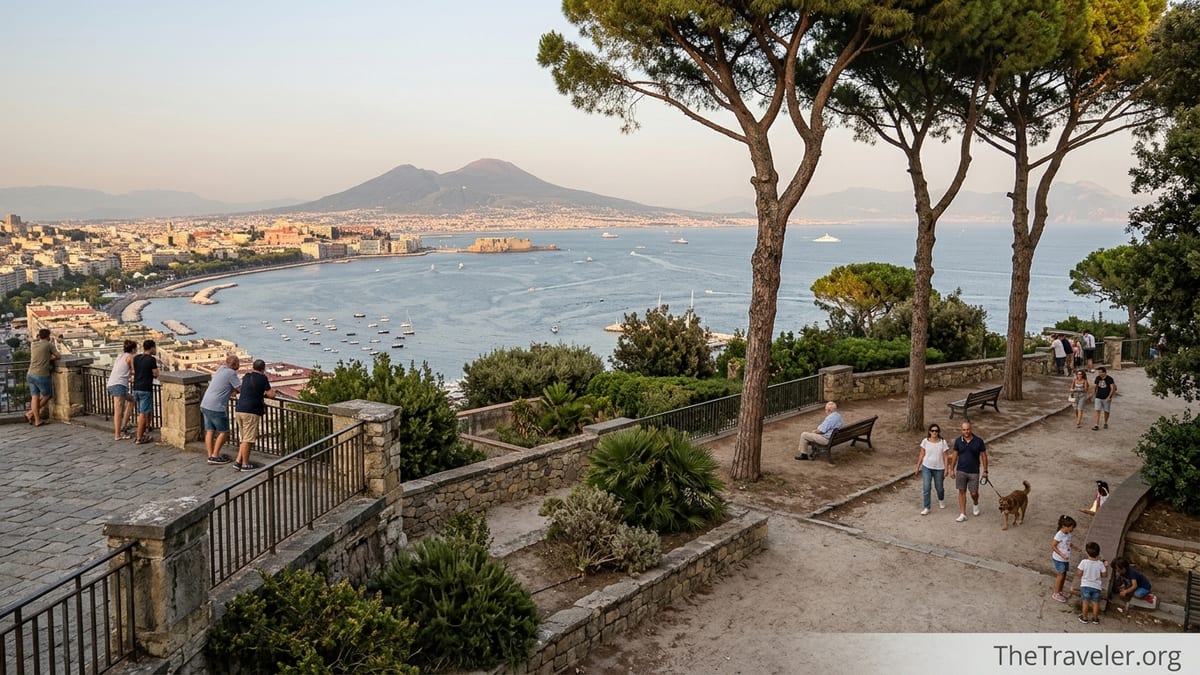
Parco Virgiliano, by contrast, is compact and built around drama. Perched about 150 meters above sea level on the Posillipo hill, it occupies around 9 hectares of manicured terraces that hang over the Bay of Naples. From different viewpoints you can look straight at Mount Vesuvius, across to Capri and Ischia, or down to the beaches at Gaiola, Marechiaro and the Phlegraean coast. It feels less like a forest and more like a series of open-air balconies over the sea, laced with pine trees, low shrubs and paved promenades.
If you picture a long walk under tall trees with plenty of shade and space to roam, Bosco di Capodimonte usually wins. If your dream is a sunset over the islands with the volcano as a silhouette, Parco Virgiliano is hard to beat. Many visitors end up doing both, but with limited time in Naples it helps to understand how each experience actually plays out in a single morning or afternoon.
Atmosphere: Quiet Woodland or Windy Clifftop Views
The atmosphere at Bosco di Capodimonte tends to be calmer, especially if you leave the main entrance area and follow one of the side avenues. On weekday mornings you are more likely to meet joggers, dog walkers and parents with strollers than big crowds. The wide gravel viali feel spacious even on Sundays, when families come up from the center to escape the summer heat. There are benches under mature oaks, holm oaks and plane trees, and sections of meadow where people bring folding chairs, card games and portable speakers, though the official rules restrict loud music and organized sports to certain areas.
Parco Virgiliano, on the other hand, is all about the horizon. Even on quieter days there is almost always a breeze coming off the sea. Locals head here in the late afternoon for the golden-hour light, especially in spring and early autumn when the sun sets roughly behind the islands. Along the main terrace you will often find couples taking photos with Capri in the background, groups of teenagers leaning on the railings, and dog owners doing slow laps around the perimeter. The mood is sociable and scenic rather than meditative, and on clear days you can spend long stretches just identifying landmarks along the gulf.
For travelers sensitive to noise, it is worth noting that Parco Virgiliano can feel lively in the evenings, especially in summer when it stays open late and families arrive after dinner. Bosco di Capodimonte also gets busier on weekends, but because of its size you can usually find a quiet side path even when the main avenues are animated with kids on bicycles and grandparents chatting on benches.
Access, Transport and Practical Logistics
Reaching Bosco di Capodimonte from central Naples typically involves a combination of metro and bus, or a direct city bus. A common route is to take Metro Line 1 to Museo or Cavour, then catch one of the uphill buses that stop near the museum gates, such as lines that terminate by the "Capodimonte – Museo" entrance. From Piazza Dante or Via Foria, city buses go up in roughly 20 to 30 minutes depending on traffic. Single public transport tickets in Naples usually cost around 1.50 to 2 euros, and you can buy them at newsstands, metro stations or via local transport apps before boarding.
Parco Virgiliano sits farther from the historic center in the Posillipo district, and the journey feels more like a small excursion. The most practical way on public transport is usually to take Metro Line 2 to one of the western stations such as Mergellina or Campi Flegrei, then switch to an ANM bus heading up toward Posillipo and specifically to the park’s vicinity. Buses serving the area run along Via Manzoni and Via Coroglio, and most visitors then walk the final 10 to 15 minutes uphill. Travel time from downtown can easily reach 45 to 60 minutes each way, and service is less frequent than routes serving Capodimonte, so it pays to check schedules the same day using a local journey planner app.
Both parks are free to enter, and there is no ticket office for the green areas themselves. At Capodimonte, you pay only if you decide to visit the museum, where the standard adult ticket is around 15 euros for the main collections, with various reductions and occasional free-entry days. Parco Virgiliano has no paid attractions inside, so your main costs will be transport and any snacks or drinks you buy from kiosks or nearby bars. If you plan to use taxis for either park, factor in that a ride from the historic center to Capodimonte can be in the 15 to 20 euro range depending on traffic, while a taxi to Posillipo and Parco Virgiliano often costs a bit more because of the distance and hill climb.
What You Actually Do Once You Arrive
At Bosco di Capodimonte, most visits blend nature and culture. One realistic scenario is to spend two or three hours inside the Capodimonte Museum, then emerge into the park for a slow loop and a picnic. The museum’s collections include paintings by Caravaggio and Titian along with an important series of Neapolitan works, and you can recharge afterward by walking out into the surrounding greenery. Many locals skip the museum entirely and come just to jog the long loops, walk dogs, or let children run in open spaces that are rare in the compact historic center.
The park’s layout includes several main avenues radiating from the palace, smaller paths cutting through wooded sections, and broad lawns where informal football games break out, especially on Sundays. There are a few small cafés or kiosks where you can get an espresso, bottled water or a snack at prices only slightly higher than standard city bars. A common pattern is to stop at a bakery near your accommodation for takeaway pizza al portafoglio or focaccia, then claim a patch of grass under a tree and treat Capodimonte as your own temporary garden.
Parco Virgiliano lends itself to strolling and lingering at viewpoints. A typical visit might last one to two hours: you enter through the main gate, follow the central path, and quickly find yourself on the primary panoramic terrace. From here you can look right across to Vesuvius and the entire curve of the gulf, then wander along to side terraces that frame the islands or the rugged coastline toward the Phlegraean Fields. There are play areas for children, small lawns where people sit on blankets or low walls, and exercise equipment that local runners use for stretching and bodyweight workouts.
Because there is less shade and fewer interior wooded paths, most visitors come to Parco Virgiliano for the light rather than long forest walks. Photographers in particular time their trip for late afternoon when Vesuvius and Capri glow in softer tones and the city below lights up. It can be a spectacular but simple outing: arrive with a bottle of water, do two or three slow laps around the terraces, take in the views, then perhaps continue to a Posillipo bar or pizzeria afterward for dinner with a sea view.
Facilities, Comfort and Accessibility
In terms of facilities, Bosco di Capodimonte has a slight edge, especially if you are planning a longer stay or traveling with children. The presence of the museum complex brings more structured services: staffed entrances, clearer signage and more frequent maintenance. There are public toilets associated with the museum and additional facilities during events and exhibitions, though opening hours can be tied to the museum schedule. Paths near the palace are generally wide and relatively even, suitable for strollers, though some gravel surfaces and gentle slopes may be challenging for certain wheelchairs.
Further into the Capodimonte woodland, surfaces shift to compacted dirt and gravel. They are fine for sturdy shoes but can become muddy after rain. There are plenty of benches scattered through the main avenues, and rubbish bins are reasonably frequent, making it simpler to manage picnics responsibly. Lighting exists along some of the principal paths, but the wooded sections can feel quite dark by late evening, so most visitors plan their visit for daytime hours when the park feels safer and more inviting.
Parco Virgiliano’s infrastructure is more minimal but adequate for shorter visits. You will find paved walkways, railings along the main drop-offs, a playground, benches at many viewpoints and a small number of kiosks that open during busier periods, especially in warmer months and on weekends. Public toilets may not always be open or easy to locate, so it is wise to use facilities at a café before heading into the park if you are visiting outside peak season or earlier in the day.
Accessibility at Parco Virgiliano depends on how close you can get to the entrance. Once inside, the main terrace loop is broadly level, with gentle inclines and paved surfaces suitable for strollers and many wheelchairs, although some side paths involve steps or steeper ramps. The biggest physical challenge is often the journey up the hill from bus stops or nearby parking, where sidewalks can be irregular. If mobility is a concern, a taxi directly to the park’s gate can remove much of that strain and make the seafront panoramas accessible without a difficult climb.
Best Times to Visit and Weather Considerations
Naples enjoys a mild Mediterranean climate, but the experience of each park changes with season and time of day. Bosco di Capodimonte’s tree cover makes it one of the most comfortable places to be on hot summer days. Even in July and August, temperatures up on the hill can feel several degrees cooler than the stone-paved alleys of Spaccanapoli. Morning visits are particularly pleasant, with dappled light coming through the trees and cooler air lingering in the hollows. In winter, the same shade can make the park feel chilly and damp, so a midday visit with layers is more comfortable.
Parco Virgiliano behaves differently because it is exposed and elevated. In summer, the sea breeze can be a blessing, especially towards late afternoon and evening when locals arrive to watch the sunset and the city lights appear. At midday on a clear day, however, the combination of sun and reflection from the water can be intense, with relatively little deep shade. A hat, sunglasses and water are essential if you plan to explore the terraces in the middle of the day. In cooler months, strong winds can make the park feel colder than the city below, and there are days when sea haze or cloud obscures parts of the view.
Opening hours for both parks can vary with the season and maintenance schedules, but Bosco di Capodimonte’s green area generally follows long daytime hours similar to the museum’s main schedule, while Parco Virgiliano typically stays open into the evening, especially in late spring and summer. Before visiting, it is sensible to confirm current opening times via the municipality or park information channels, since changes for events, storm damage or public holidays are not uncommon. As a rule of thumb, expect Capodimonte to be a daytime outing and Virgiliano to offer one of the city’s best sunset experiences when conditions cooperate.
Safety, Rules and Local Etiquette
Both parks are generally considered safe during daylight hours, particularly in the more frequented areas. At Bosco di Capodimonte, sticking to main avenues near the palace and avoiding very secluded corners near closing time is a practical precaution, as with any large urban park. The park management publishes regulations that prohibit open fires, camping, entering fenced-off woodland, climbing trees, and sports that could endanger people or the historic environment. In practice, you will see informal ball games and children cycling in designated open spaces, but organized groups are expected to request permission for events.
Parco Virgiliano also operates under municipal park rules that ban barbecues, glass bottles and loud amplified music. On busy evenings you may find people with portable speakers, but noise levels usually stay moderate, and families share benches with teenagers recording videos or chatting. The steep cliffs mean railings are there for a reason, and local etiquette strongly discourages climbing onto ledges for photos. Police patrols and municipal staff are more present during peak times, particularly in summer and at weekends.
For both parks it is wise to watch your belongings as you would anywhere in a city: keep bags within sight, avoid leaving phones on benches unattended, and carry only the cash you need. Scams targeting tourists are rare inside these green spaces compared with more commercial areas like the waterfront promenade, but common sense precautions apply. Pet owners should expect to keep dogs on leashes in many areas, and to carry bags for waste; enforcement varies, but locals appreciate visitors who respect the shared space.
Which Park Fits You Best?
If you are in Naples for only one full day and want a single green escape, your choice should reflect your itinerary and interests. Travelers who love art and history, or who are staying near the historic center, often get more value from Bosco di Capodimonte. You can combine a world-class museum with hours in a leafy park without leaving the northern edge of the city. It works particularly well for families who want space for children to run, or for runners seeking long, relatively flat loops away from traffic. Those who prefer shade, quieter corners and the feeling of a grand historic estate will usually feel at home here.
Parco Virgiliano suits visitors for whom the sea is non-negotiable. If you already plan to explore Posillipo, the Gaiola area or the western districts, building a visit to the park around golden hour gives you arguably the most cinematic perspective on the Bay of Naples without boarding a boat. Couples looking for a romantic viewpoint, amateur photographers chasing iconic shots of Vesuvius and the islands, and solo travelers who enjoy people-watching against a beautiful backdrop will often prefer Virgiliano over an inland woodland.
Time and energy matter too. Bosco di Capodimonte is easier to fit into a half-day from the center without complicated transport connections, while Parco Virgiliano requires more planning and at least a few changes on public transit unless you use a taxi or rental scooter. If you have mobility limitations, being dropped close to the gates at either location can make the difference between a rewarding visit and a tiring one, but the long forest avenues at Capodimonte generally provide more consistent shade and rest points than the exposed terraces at Virgiliano.
The Takeaway
Bosco di Capodimonte and Parco Virgiliano are not rivals so much as complementary answers to the same question: where can you step out of Naples’ intensity and breathe? One offers the shelter of trees and the proximity of masterpieces; the other trades canopy for a 360-degree panorama of volcano, islands and sea. Both are free, rooted in local life and reachable without leaving the city limits.
If your Naples journey revolves around art, historic streets and finding a calm corner to recharge between churches and pizzerias, set aside a morning or afternoon for Capodimonte. Treat the royal forest as an extension of the museum, or simply as the garden you wish you had at home. If your mental picture of the city has always included a fiery volcano and a line of islands floating on blue water, then time your trip to Virgiliano for a clear afternoon and stay until the lights come on along the curved bay below.
In an ideal itinerary you would experience both: a cool, shaded walk under tall trees one day, a salty breeze on a cliffside terrace the next. With realistic schedules, though, knowing the difference between woodland calm and clifftop spectacle will help you choose the green escape that best fits the Naples you came to see.
FAQ
Q1. Is Bosco di Capodimonte or Parco Virgiliano easier to reach from central Naples without a car?
Bosco di Capodimonte is generally easier because several city buses connect the historic center and museum area in about 20 to 30 minutes, while Parco Virgiliano usually requires a metro plus bus combination and closer to an hour of travel.
Q2. Which park is better if I want shade and cooler temperatures in summer?
Bosco di Capodimonte is better for shade, thanks to its extensive woodland and tree-lined avenues that stay noticeably cooler than the stone streets in the center.
Q3. Which park offers the best views of Vesuvius and the Bay of Naples?
Parco Virgiliano is the clear winner for views, with multiple terraces overlooking Vesuvius, Capri, Ischia and the entire curve of the gulf.
Q4. Are there entrance fees for either Bosco di Capodimonte or Parco Virgiliano?
Entrance to the green areas of both parks is free. You only pay at Capodimonte if you choose to visit the museum collections inside the royal palace.
Q5. Can I visit both Bosco di Capodimonte and Parco Virgiliano in one day?
It is possible but can feel rushed. Each park easily fills a half-day, and travel between the northern hill and Posillipo can take time, so most visitors choose one per day.
Q6. Which park is more suitable for running or longer walks?
Bosco di Capodimonte is better for running and long walks, with extensive loops, softer surfaces and less exposure to strong wind or harsh sun.
Q7. Is it safe to visit these parks alone?
Both parks are generally safe during daylight, especially on main paths and terraces. As in any large city park, it is wise to avoid very secluded areas near closing time and keep an eye on your belongings.
Q8. Are there places to buy food and drinks inside the parks?
Bosco di Capodimonte has small cafés or kiosks near the museum complex, while Parco Virgiliano sometimes has kiosks during busy periods; in both cases, bringing water and light snacks is a good idea.
Q9. Which park is more family friendly with children?
Both work well for families, but Bosco di Capodimonte offers more space for running and games, while Parco Virgiliano adds playgrounds and dramatic views that older children often enjoy.
Q10. If I have mobility issues, which park is more accessible?
With a taxi to the gate, both parks can be manageable, but the level, shaded avenues near the palace at Bosco di Capodimonte typically provide a more comfortable experience than the exposed, sometimes breezy terraces at Parco Virgiliano.