


More news on this day
Thunderstorms sweeping across parts of the Northeast briefly made Boston Logan International Airport the most delayed airport in the United States on Tuesday, with 19 flights held up as convective storms disrupted air traffic along key East Coast corridors.
Get the latest news straight to your inbox!
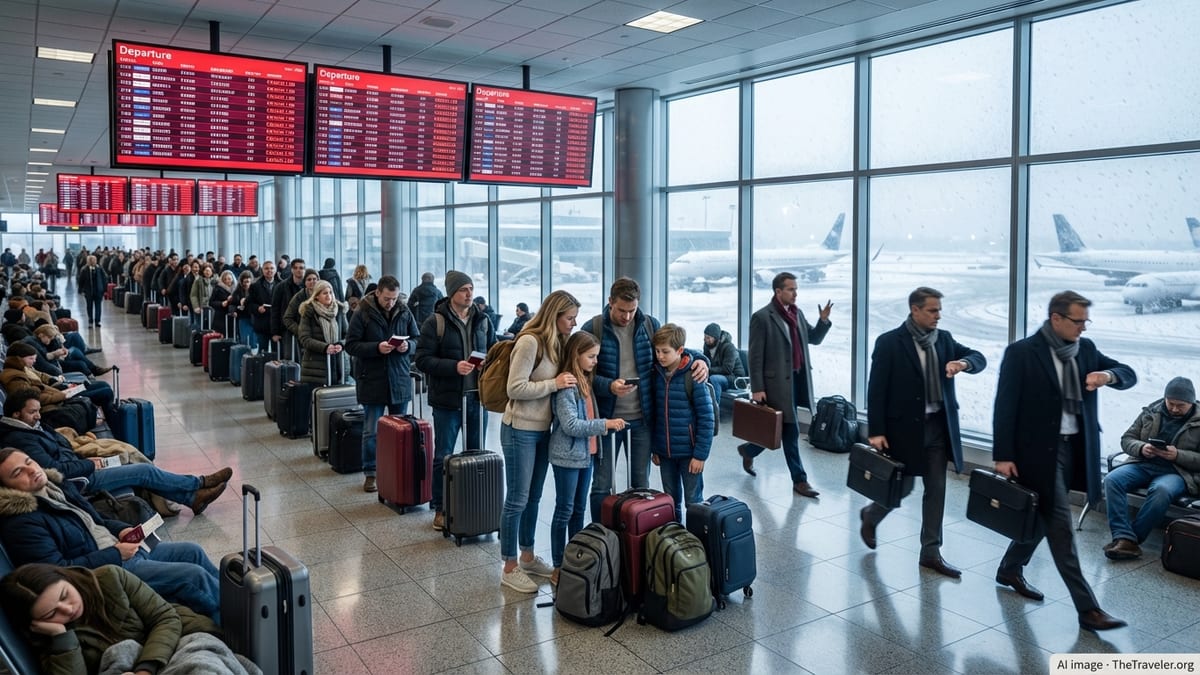
Storms Push Boston to Top of National Delay List
Publicly available data from flight tracking service FlightAware showed that Boston Logan recorded 19 delayed departures and arrivals during the height of the disruptions, the highest number among U.S. airports at that point in the day. The spike came as thunderstorms flared along heavily traveled routes, complicating traffic management for flights passing through the region.
According to published coverage summarizing the FlightAware statistics, the wider U.S. network experienced more than 775 delays and over 50 cancellations as the storms developed and moved east. While Logan’s 19 delays represented a small slice of that total, leading the national list underscored how even a short-lived weather pattern can reorder congestion across the system.
Meteorologists noted that the storms were typical of mid to late summer, when warm, humid air masses and upper-level disturbances can trigger fast-building cells that are difficult for airlines and air traffic controllers to route around efficiently. The same pattern has fueled several recent days of unsettled conditions across New England and the Mid-Atlantic.
FlightAware’s live boards often show Boston trading places with major hubs such as New York, Atlanta, and Chicago in terms of daily totals, depending on where weather systems and traffic management programs are concentrated. On this particular day, the thunderstorms aligned with Logan’s arrival and departure flows just long enough to put the airport at the top of the national delay ranking.
Thunderstorms Add to a Summer of Disruptions in Boston
The latest storm-related slowdown fits into a broader stretch of challenging operations at Boston Logan this summer. In late July, heavy rain and thunderstorms across New England triggered hundreds of delays and dozens of cancellations at the airport, as carriers adjusted schedules and crews in response to changing forecasts. Local media reports at the time described long lines, extended waits, and aircraft sidelined on the tarmac while lightning moved through the area.
Additional coverage from regional outlets has highlighted that disruptions in Boston have not been limited to weather. A fueling system issue in July prompted a temporary ground stop at Logan, leaving airlines to juggle residual delays even after operations resumed. On other days, staffing constraints within the air traffic system and at individual carriers have compounded the impact from scattered storms and low ceilings along busy East Coast routes.
Travelers and aviation enthusiasts posting on public forums have described a pattern of fast-moving thunderstorms over the past several weeks combining with tight airline schedules to create cascading hold-ups. Reports from passengers recount repeated gate holds, rolling departure times, and diversions as airlines attempted to sequence flights safely through convective weather stretching from New York to Boston and beyond.
Historical assessments from federal weather agencies have long identified Boston Logan as vulnerable to rapid shifts in conditions, with thunderstorms, fog, and coastal storms all contributing to occasional spikes in delays. Summer convection in particular tends to create short but intense windows of reduced capacity that can ripple through the schedule for hours.
How Convective Weather Disrupts Flight Operations
While a headline tally of 19 delays at one airport may sound modest, the figure reflects a broader operational challenge posed by thunderstorms. Convective storms can produce lightning, wind shear, microbursts, and rapidly changing ceilings, all of which can force temporary pauses in arrivals and departures or require greater spacing between aircraft for safety.
According to aviation and meteorological guidance, controllers may implement traffic management programs, including ground delays and reroutes, when storms line up along major jet corridors or near terminal approach paths. For an airport like Boston Logan, which sits on the edge of Massachusetts Bay, storms moving in from the interior can quickly intersect with arrival streams from the south and west.
The highly interconnected nature of U.S. air travel means that weather affecting one region can influence airports hundreds of miles away. Flights bound for Boston may be held at their origin when downstream thunderstorms make arrival times uncertain, while aircraft scheduled to depart Logan can be delayed waiting for connecting passengers or inbound planes that are themselves running late from earlier storms.
Thunderstorms also limit ground handling activity when lightning is in the area, as ramp personnel may be pulled back from the airfield for safety reasons. That can slow the process of turning aircraft on the ground, loading baggage, and pushing back for departure, further extending the overall impact of what might appear as a brief period of bad weather on radar.
What Travelers Through Boston Logan Should Expect
The pattern of weather-related slowdowns suggests that passengers traveling through Boston Logan in late summer should build extra time into their plans, especially on afternoons and evenings when storms are more likely to develop. Publicly available information from both airlines and flight tracking services indicates that delays often peak later in the day, as early disruptions stack up and thunderstorm coverage increases.
Airlines and airport authorities consistently advise travelers to monitor their flight status closely via carrier apps and websites, even when skies over Boston are clear. Thunderstorms along connecting routes or near major hubs such as New York and Washington can still force adjustments to flights to and from Logan, as traffic managers balance capacity across the broader network.
Industry observers note that rebooking options may be more limited on busy summer travel days, when many flights are already near capacity. In that context, passengers are encouraged by consumer advocates to consider earlier departures, flexible itineraries, or travel insurance if their plans are time-sensitive during periods of unsettled weather.
For Boston-bound and departing travelers on the day Logan led U.S. airports with 19 delays, the disruptions appeared to be part of a short but intense wave of storm activity. However, the event serves as a reminder of how quickly conditions can change for flights along the Northeast corridor, and how even modest delay totals at a single airport reflect broader weather-driven pressures across the national system.
Broader U.S. Network Feels the Impact
The same round of thunderstorms that elevated Boston Logan to the top of the delay rankings also affected operations across multiple regions. According to aggregated data cited in national coverage, airports in Florida, Texas, and the central Plains were placed on alert for potential thunderstorms capable of disrupting arrivals and departures, adding to the nationwide delay count.
Federal aviation advisories pointed to the possibility of weather-related slowdowns at high-volume airports including Dallas Fort Worth, Miami, Fort Lauderdale, Orlando, Tampa, and Denver. While not all of those facilities experienced significant impacts at the same moment, the widespread risk underscored how summer storm patterns can stretch airline and air traffic resources across several time zones.
For airlines, managing these conditions often involves preemptive schedule thinning, tactical cancellations, and efforts to reposition crews and aircraft to maintain coverage on priority routes. Industry analysts following the latest disruptions have suggested that carriers are still fine-tuning their summer operations after several seasons of volatile demand, labor adjustments, and infrastructure constraints.
As the current stormy pattern gradually eases, operational data from FlightAware and other tracking platforms will provide a clearer picture of how Boston Logan compares with other major airports over the remainder of the peak travel season. For now, the episode in which Logan briefly led the country with 19 delays serves as a snapshot of the delicate balance between weather, capacity, and demand in one of the nation’s most crowded air corridors.
National delay data and Boston Logan statistics