


More news on this day
Brazil’s northeastern gateways of Fortaleza and Recife are strengthening their role in transatlantic travel as new and expanded direct flights to major European tourism markets fuel a sharp rise in international passenger arrivals.
Get the latest news straight to your inbox!
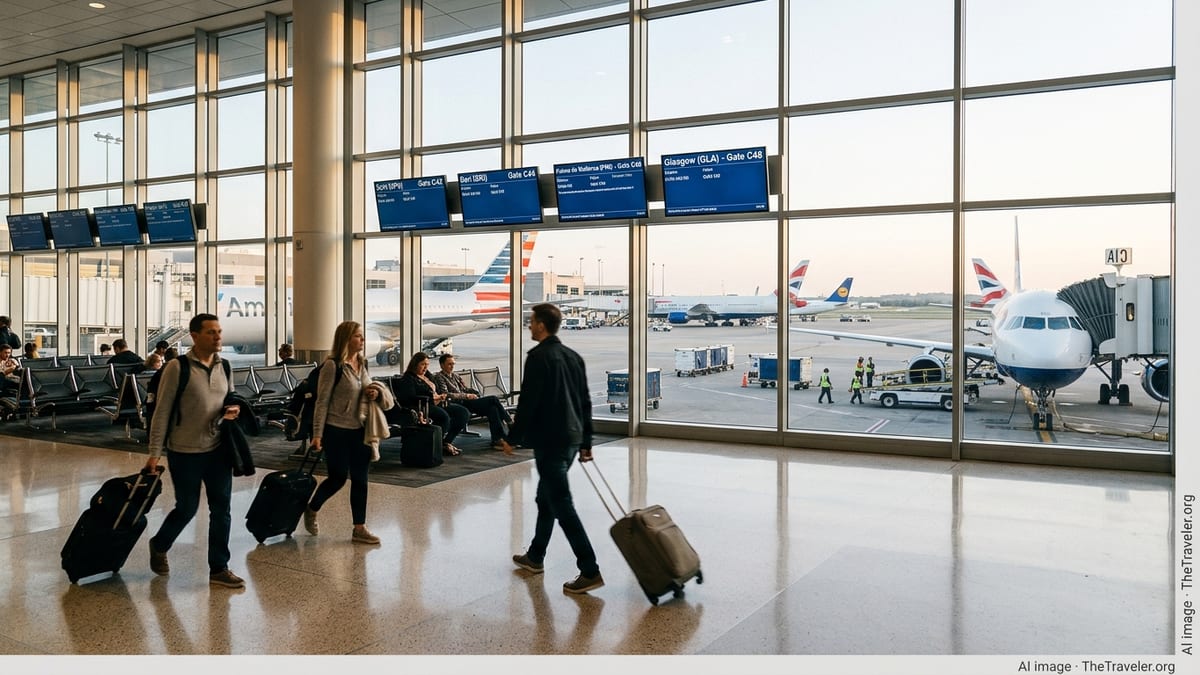
Fortaleza and Recife Step Up as Brazil’s New European Gateways
Publicly available traffic data and recent aviation reports indicate that airports in Fortaleza and Recife are consolidating their position as strategic hubs for Brazil’s connections with Europe. While São Paulo and Rio de Janeiro remain the country’s largest international entry points, the northeastern pair are increasingly acting as the closest bridge between Brazil and major tourism markets such as Portugal, Spain, France, Germany, Italy, the United Kingdom, the Netherlands, Belgium and Switzerland.
Industry information shows that Fortaleza’s Pinto Martins International Airport and Recife/Guararapes International Airport have both recovered international flows more quickly than many other Brazilian gateways and are now using that momentum to attract new long haul services. This shift reflects a broader effort by Brazil to diversify its inbound tourism channels and reduce reliance on a handful of southeastern hubs.
Regional and national tourism intelligence platforms highlight that airlines and tourism authorities view the Northeast as a natural catchment area for European demand, given its shorter flying times and coastal leisure appeal. As schedules are rebuilt and expanded, Fortaleza and Recife are becoming stronger points of entry for sun‑seeking travelers from across Western and Central Europe.
New Direct Routes to Spain and Expanded Frequencies to France and Portugal
The next wave of growth is being driven by fresh transatlantic links and added capacity on existing routes. According to published airport announcements, Fortaleza is scheduled to gain a direct connection to Madrid operated by Iberia from January 2026, restoring a non‑stop link between Ceará and Spain and tying the city more closely to one of Europe’s fastest‑growing outbound markets.
Regional aviation coverage also notes that the long‑standing Fortaleza–Paris route, operated under the Air France–KLM group, is increasing to as many as five weekly flights in the upcoming season. This enhancement directly improves access for travelers from France and, through onward connections, from neighboring markets such as Germany, Belgium, the Netherlands and Switzerland.
In Recife, TAP Air Portugal continues to underpin the city’s European connectivity with multiple daily services to Lisbon, which act as a feeder into secondary destinations across Portugal, Spain, Italy, Germany and the United Kingdom. These flights effectively plug the Brazilian Northeast into a dense European network, distributing tourists beyond the traditional gateways of Lisbon and Madrid.
Industry databases tracking airline schedules show that new or reinforced European routes sit alongside a widening web of Latin American and regional operations. This mix enables multi‑stop itineraries that combine Brazil’s Northeast with other South American and European destinations, broadening the appeal of Fortaleza and Recife for tour operators and individual travelers.
International Passenger Growth Outpaces National Trends
Recent analyses based on data compiled by Brazil’s federal agencies and tourism promotion bodies point to a strong acceleration in foreign arrivals by air across the Northeast. Between January and March 2026, the region recorded a pronounced year‑on‑year rise in international passengers, outstripping the national average and underscoring the effect of new flight options.
Within this surge, Pernambuco and Ceará stand out. Figures cited in sector reports show that Pernambuco, served primarily by Recife, more than doubled its volume of arriving international air travelers compared with the same period a year earlier. Ceará, with Fortaleza as its capital and main airport, also reported robust gains, helping push the Northeast’s overall growth rate well above that seen in many other Brazilian regions.
These gains are building on a multi‑year recovery from the sharp declines in 2020 and 2021. Publicly available airport statistics indicate that Fortaleza and Recife have closed much of the gap to their pre‑pandemic international volumes, even as they face competition from other Brazilian cities. The latest expansion moves suggest that airlines are now confident enough in demand to commit additional wide‑body and high‑density narrow‑body capacity to the Northeast.
Tourism analysts point out that this growth dovetails with a broader boom in European outbound travel, with several major markets reporting record passenger numbers and seat capacity for the 2025 and 2026 summer seasons. That environment has created favorable conditions for carriers to deepen their presence in Brazil and test new city pairs.
Strategic Positioning Within Europe’s Expanding Tourism Network
The intensifying role of Fortaleza and Recife comes as European tourism markets themselves are expanding and reconfiguring. Planning documents and aviation studies focused on summer 2025 and 2026 show that countries such as Italy, Spain, Portugal, France, Germany, the United Kingdom, the Netherlands, Belgium and Switzerland are all adding seats and routes on key leisure corridors, including long haul services.
Travel demand forecasts indicate that Portugal and Spain remain critical gatekeepers for traffic between Europe and South America, benefitting from strong national flag carriers and established diaspora travel. Lisbon and Madrid, in turn, channel visitors onward to Brazil, increasingly via northeastern airports that can offer shorter connections to popular beaches and cultural cities.
At the same time, the gradual expansion of capacity in markets like Italy, Germany, the Netherlands, Belgium and Switzerland is opening further opportunities for one‑stop itineraries into Brazil. Routes linking European secondary cities with hubs in Portugal and Spain, and from there to Fortaleza and Recife, are helping distribute travelers more evenly across Brazil’s vast territory.
Sector observers note that airlines are also responding to structural shifts in aircraft technology and consumer preferences. The growing use of fuel‑efficient mid‑size jets on long haul missions allows carriers to serve thinner routes directly, making cities such as Fortaleza and Recife more viable as non‑stop destinations from Europe than in previous decades.
Tourism and Economic Impact for Brazil’s Northeast
Tourism planning documents from state governments in Ceará and Pernambuco emphasize that air connectivity is central to regional development strategies. Officials have targeted higher‑spending international visitors as a way to diversify local economies traditionally tied to domestic tourism, industry and services.
With more European travelers arriving directly or with a single connection, hotels, restaurants, tour companies and transport providers in Fortaleza, Recife and surrounding destinations are seeing new business opportunities. Travel trade coverage suggests that the rise in arrivals is broadening seasonality, with visitors spreading beyond peak holiday months and seeking cultural, ecotourism and gastronomic experiences alongside beach stays.
Infrastructure investments at both Fortaleza and Recife airports, including terminal upgrades and runway improvements undertaken in recent years, are also paying off as international movements climb. Data from airport operators and concessionaires show that these facilities were designed with transatlantic traffic growth in mind, positioning them to capture a larger share of future flows between Brazil and Europe.
As additional routes and frequencies materialize over the next two years, Fortaleza and Recife appear poised to consolidate their role as leading gateways for Brazil’s connections with Portugal, Spain, France, Germany, Italy, the United Kingdom, the Netherlands, Belgium, Switzerland and other European tourism markets. The trajectory of passenger numbers so far suggests that the Northeast’s bet on aviation connectivity is beginning to reshape how and where international visitors enter Brazil.