


More news on this day
Munich Airport is reshaping the long-haul travel experience with its newly opened Terminal 1 Pier, where a central walk-through duty-free store and an expanded line-up of luxury and Bavarian brands now define the journey for non-Schengen passengers.
Get the latest news straight to your inbox!
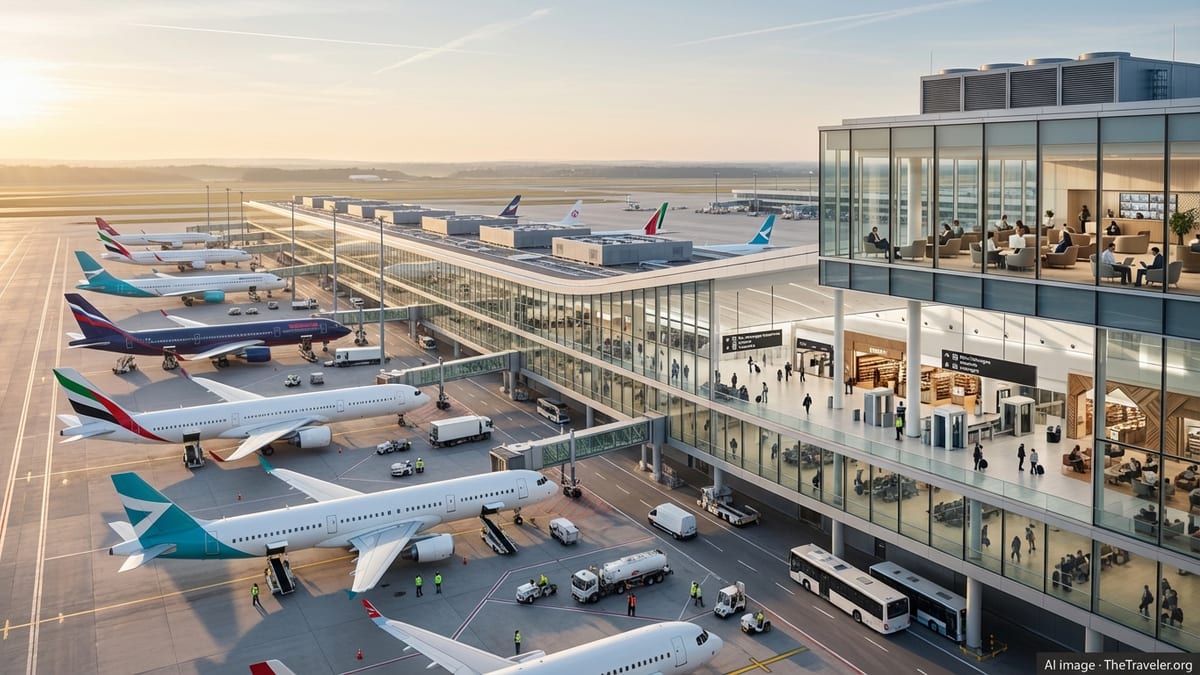
A New Terminal 1 Pier Built Around Retail Flow
The new Terminal 1 Pier, which has been in operation for non-Schengen services since April 2026, adds around 95,000 square meters of capacity and is designed to handle up to six million additional passengers annually. Publicly available information indicates that the development focuses on intercontinental and other non-Schengen routes operated by roughly 40 airlines using Terminal 1.
Rather than treating shops as an add-on, the building’s layout integrates commercial areas directly into the passenger flow. Central security and passport control feed into a marketplace-style concourse, positioning retail, dining and services along natural walking routes to the gates. Industry coverage notes that this approach is intended to improve wayfinding while ensuring that passengers encounter key commercial zones without detours.
The pier’s architecture combines long sightlines, high ceilings and natural materials with energy-efficient systems. According to project data released by the airport and its partners, the six-level structure also incorporates flexible gate areas capable of handling both narrow-body and wide-body aircraft, reflecting Munich’s ambition to compete for long-haul traffic.
For airlines and retailers, the concentration of passengers in a single, clearly defined path is expected to translate into higher dwell times in the commercial core of the pier, reinforcing Munich’s positioning as a premium European hub.
Germany’s First Walk-Through Duty-Free for Non-Schengen
At the heart of the new T1 Pier is what published reports describe as Germany’s first walk-through duty-free store dedicated to non-Schengen departures. The store is located directly after the central security checkpoint, so every departing passenger passes through the space on the way to the main concourse and gates.
The walk-through concept brings together perfumes and cosmetics, premium spirits, confectionery and travel accessories under a single, open-plan layout. The aim, according to trade and airport publications, is to create a curated environment where product categories blend into one another rather than being confined to separate units, encouraging browsing and impulse purchases.
The duty-free operation is managed by Eurotrade, Munich Airport’s in-house retail subsidiary, which already runs a significant share of commercial space across the campus. Eurotrade’s expanded footprint in the pier also includes specialty concepts such as MyDutyFree and MyCorner, which extend the duty-free assortment and offer last-minute travel essentials.
Industry analysis suggests that the walk-through model is becoming a defining feature of major hubs, but Munich’s T1 Pier implementation stands out for being tightly woven into the new building’s overall circulation plan, rather than retrofitted into existing space.
Luxury Labels Meet Bavarian Brand Identity
Alongside international travel-retail names, the T1 Pier’s commercial mix places notable emphasis on brands linked to Munich and Bavaria. According to published coverage, a new FC Bayern Fan Shop anchors the local offer, joined by regional food and confectionery specialists that highlight Bavarian products for departing visitors.
Passengers can browse global fashion labels such as BOSS, Polo Ralph Lauren and Emporio Armani, as well as watch and jewelry brands including Breitling, in dedicated boutiques positioned off the main marketplace. A Luxury Bags concept store and accessories outlets extend the premium mix, targeting long-haul travelers with higher spending potential.
The combination of international labels and regional signatures is presented within a design language that references Munich’s urban character and the surrounding Alpine landscapes. Recent reports describe the use of warm colors, wood finishes and clean architectural lines to distinguish the pier from more generic terminal environments, while still maintaining a contemporary, minimalist feel.
For the airport, this curated blend is intended to reinforce Munich’s identity as both a global hub and a gateway to Bavaria, using retail and design to communicate a sense of place before passengers board their flights.
Dining, Lounges and a Marketplace-Style Concourse
The retail upgrade at the T1 Pier is accompanied by a new food and beverage portfolio that aims to raise the standard of airport dining for non-Schengen travelers. Industry reports highlight five new concepts operated by Allresto, Munich Airport’s catering subsidiary, including formats that combine bar culture, regional cuisine and international classics.
Among the flagship venues is a new concept from Munich-based gourmet brand Käfer, which blends deli-style offerings with a bar and restaurant setting. Other units range from quick-service counters oriented to short connections to sit-down restaurants designed for longer layovers, with seating areas overlooking the apron.
The pier’s commercial heart is framed as a marketplace, grouping shops, cafes and services such as foreign exchange counters and electronics outlets around shared seating zones. This layout seeks to avoid the linear “corridor” feel associated with older terminal designs and instead encourages passengers to dwell in a central zone with multiple sightlines to their gates and flight information displays.
Complementing the retail and dining offer are two premium lounges located in the pier, as well as quiet zones and family areas. According to available project descriptions, these are intended to provide differentiated spaces for working, relaxing or spending time with children while remaining within easy reach of shopping and dining options.
Passenger Experience and Commercial Strategy at Munich
The T1 Pier development forms part of a broader strategy to reinforce Munich’s reputation for passenger service while safeguarding commercial revenues in an evolving aviation market. The integration of centralized CT-based security screening, streamlined border controls and clear wayfinding is expected to shorten processing times, freeing more of the journey for discretionary activities.
Industry observers note that Munich is using the T1 Pier to test a more cohesive approach to terminal planning, in which architecture, operations and commercial layout are designed together from the outset. The walk-through duty-free store, marketplace design and premium brand mix are key elements of this strategy, intended to generate higher spend per passenger without compromising comfort.
The project also marks a significant investment in non-Schengen capacity at a time when long-haul demand is returning and airlines are reassessing their European gateways. With twelve narrow-body or up to six wide-body stands available at the new pier, the airport has the flexibility to adjust to shifts in route networks and fleet choices.
As the T1 Pier ramps up operations in the coming months, traveler feedback and performance data will indicate how effectively Munich’s walk-through duty-free and luxury retail vision translates into real-world experience. For now, the new pier stands as one of Germany’s most prominent examples of a terminal built from the ground up around an integrated commercial and passenger-flow concept.