


More news on this day
Britain’s aviation network is facing a second day of severe disruption after a technical problem in the country’s air traffic control systems triggered the cancellation of 177 flights on Wednesday, compounding more than 1,300 scrapped services the previous day and leaving thousands of passengers stranded across the UK and abroad.
Get the latest news straight to your inbox!
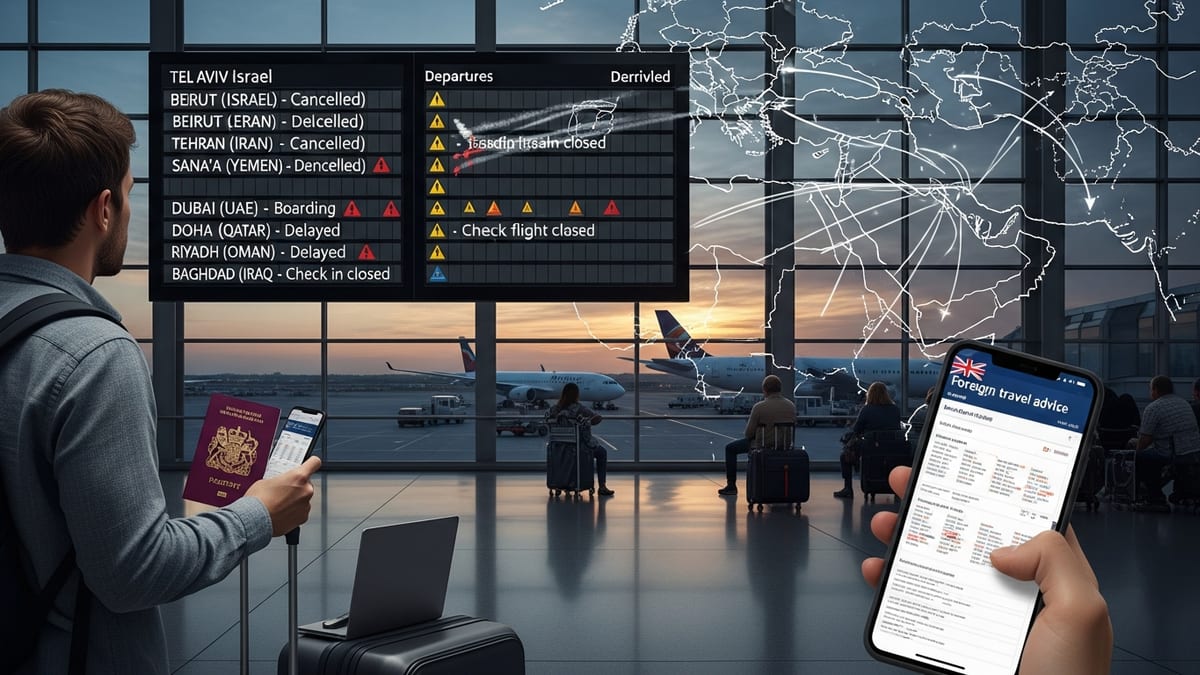
Second day of cancellations after major air traffic control failure
Publicly available data from flight tracking services indicates that 177 flights scheduled to operate to and from UK airports on Wednesday 9 September have already been cancelled, following approximately 1,300 cancellations on Tuesday 8 September as a system issue hit the UK’s National Air Traffic Services (NATS). The disruption began on Tuesday afternoon when NATS reported a technical problem affecting its ability to process flight plans, prompting widespread ground stops and strict flow controls at major hubs.
The cancellations are spread across multiple airports but are heavily concentrated at London Heathrow, the country’s busiest hub, along with London Gatwick, Manchester, Birmingham and Edinburgh. Reports indicate that both departures and arrivals have been affected, disrupting not only point to point journeys but also long haul connections and onward itineraries for transfer passengers.
Although NATS has stated that the underlying technical fault has been resolved, recovery of the network is proving slow as aircraft and crews remain out of position, schedules are compressed and airport capacity remains constrained. Aviation analysts cited in published coverage note that even a relatively short outage in such a tightly scheduled system can create knock on effects lasting more than 24 hours.
Data compiled by outlets drawing on Flightradar24 shows that Tuesday’s peak saw more than 1,000 flights cancelled outright and hundreds more suffering multi hour delays. International services have been particularly exposed, with aircraft and crews stranded away from their home bases overnight, leading to rolling cancellations into Wednesday.
Heathrow and Gatwick hardest hit as passengers face long waits
Heathrow and Gatwick, the UK’s two largest airports, are reported to be the most severely affected by the ongoing disruption. Screens at Heathrow’s terminals on Wednesday morning showed extensive rows of cancellations, especially on short haul European services operated by major network and low cost carriers. Similar scenes were described at Gatwick, where passengers reported overcrowded departure halls and long queues for rebooking desks.
According to summaries of flight data carried by several news outlets, nearly all of the 177 cancellations already logged for Wednesday involve services to and from Heathrow, with Gatwick and Manchester also seeing a significant number of affected flights. Many of these are rotations that would normally be operated by aircraft caught up in Tuesday’s disruption, resulting in a cascading schedule imbalance.
Passengers posting on social media and travel forums describe hours spent on board aircraft that remained parked on stands or taxiways before being returned to the gate and eventually cancelled. Others reported difficulty obtaining timely information about rebooking options, accommodation or compensation, particularly where flights were part of complex multi leg itineraries.
Airport operators have urged travellers to check the status of their flights before heading to the airport and to liaise directly with airlines for rebooking. Crowd management measures, including requests that passengers whose flights are already cancelled avoid travelling to terminals, have been implemented at several locations to ease pressure on facilities.
NATS under scrutiny as previous outage fresh in memory
The incident has renewed scrutiny of Britain’s air traffic control infrastructure and of NATS in particular. Publicly available information shows that the latest glitch comes three years after a separate flight plan processing failure in August 2023, which also caused widespread cancellations and delays across UK airspace. In the wake of that earlier event, the UK Civil Aviation Authority instructed NATS to review its contingency arrangements and report on system resilience.
Initial statements from NATS indicate that the current disruption stems from a technical problem affecting the processing of flight plan data, leading to a safety driven reduction in the rate at which flights could be handled. The organisation has not yet provided a detailed public explanation of the root cause, but has acknowledged the scale of the impact and the complexity of restoring normal operations once the immediate fault was cleared.
Airlines have been vocal in their criticism, highlighting the operational and financial consequences of repeated large scale air traffic disruptions that originate outside their direct control. Low cost carriers, which rely on high aircraft utilisation and tight turnaround times, appear particularly exposed, with some operators reporting tens of thousands of affected passengers and dozens of cancellations solely attributable to the air traffic control failure.
Industry observers note that the latest incident is likely to accelerate debate over system redundancy, investment in modernisation and the robustness of contingency plans at NATS. Questions are also being raised in policy circles about how the costs of such failures should be allocated between the air traffic provider, airlines and ultimately passengers.
Airlines struggle with rebooking and crew displacement
For airlines, the challenge has now shifted from immediate crisis management to medium term schedule recovery. Network carriers with large hub operations in London are attempting to prioritise long haul and high demand routes while cancelling or consolidating some short haul rotations to free up aircraft and crews. Published reports indicate that certain transatlantic and Middle Eastern services have operated with significant delays but have generally been maintained, while regional links to European cities have borne the brunt of cancellations.
Crew displacement has emerged as a major complicating factor. With aircraft and staff stranded at outstations after Tuesday’s mass cancellations, carriers are working to reposition resources while staying within legal duty time limits for pilots and cabin crew. This is leading to last minute changes to aircraft types and departure times, as well as further cancellations where no legal crew can be assembled in time.
Low cost airlines focused on point to point services face a different set of challenges. Their simplified networks and high utilisation models make it difficult to absorb large scale disruption without significant knock on effects over several days. Public communications from some of these carriers emphasise that the outage originated with air traffic control systems rather than airline operations, but travellers remain primarily concerned with practical issues such as when they can reach their destinations and whether they are entitled to refunds or alternative transport.
Consumer advocates have highlighted that UK and European passenger rights regulations generally provide for refunds or rebooking in the event of cancellation, but do not always guarantee compensation when the cause is classed as an extraordinary circumstance outside the airline’s control. As a result, many passengers are closely scrutinising airline policies and government guidance as they seek to recoup out of pocket costs for hotels, meals and missed connections.
What travellers should know as disruption continues
Travel industry sources advise that disruption is likely to persist through at least the end of Wednesday, and potentially into later in the week, as airlines attempt to restore normal rotations. Even flights that remain scheduled may face significant delays, particularly during peak hours at major airports where air traffic flow remains constrained while backlogs are cleared.
Passengers already in transit are being urged by airlines, airports and travel agents to monitor flight status tools and official channels closely, as departure times can change repeatedly over short periods. Travellers whose flights are cancelled are generally being offered the option of rebooking on a later service, requesting a refund or, in some cases, rerouting via alternative airports where spare capacity exists.
Experts quoted in recent coverage suggest that travellers with flexible plans may wish to postpone non essential trips until the network stabilises. Those who must travel are advised to allow extra time at airports, ensure that contact details are up to date in airline bookings, and retain receipts for any additional expenses that might be recoverable under airline policies or travel insurance.
While the technical issue behind the outage appears to have been resolved, the episode has underscored the vulnerability of modern air travel to single point failures in critical infrastructure systems. With Britain heading into a busy late summer and early autumn travel period, industry stakeholders are likely to face continuing questions about what steps will be taken to prevent a repeat of this week’s events.
Al Jazeera: Hundreds of flights delayed, cancelled after UK air traffic control glitch
Euronews: Technical glitch leads to more than 1,000 flight cancellations across UK
AOL: UK airports update as 177 flights cancelled on Wednesday
The Straits Times: Britain’s airports face more disruption after air traffic control glitch