


More news on this day
British Airways has extended the suspension of its flagship London–Dubai route and signalled a thinner schedule when flights resume, adding fresh uncertainty for travellers on one of Europe’s busiest long-haul corridors.
Get the latest news straight to your inbox!
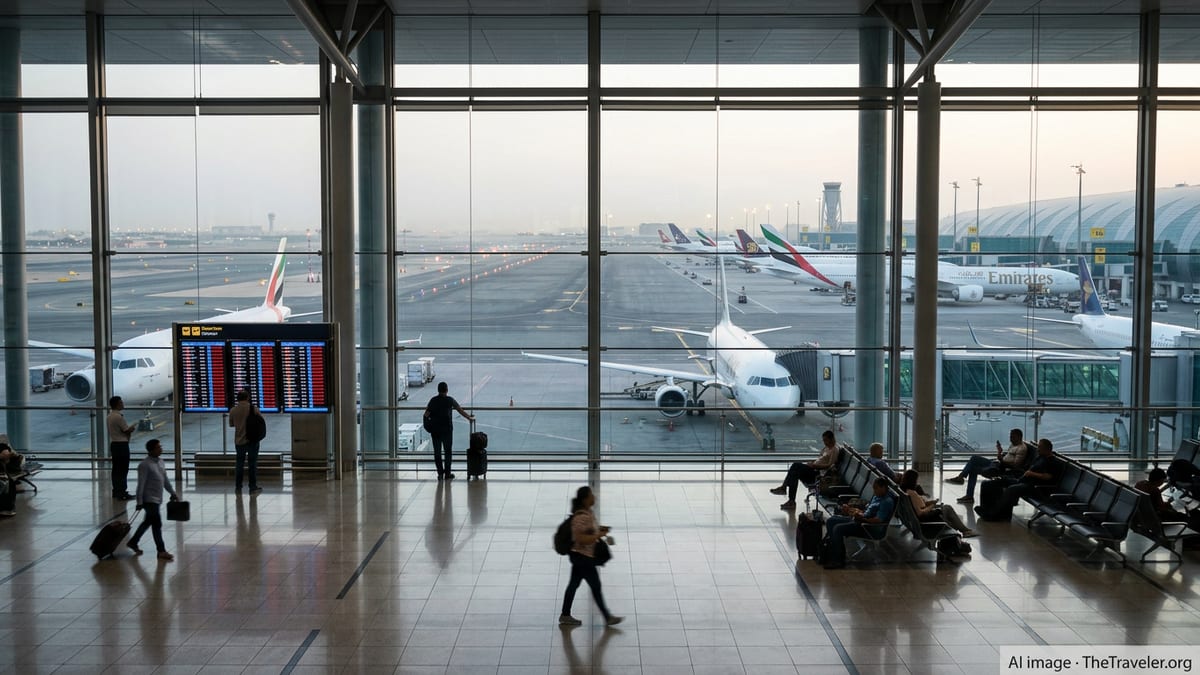
Extended suspension on the Heathrow–Dubai route
Publicly available information shows that British Airways has prolonged the halt of flights between London Heathrow and Dubai until at least 25 October 2026, after initially cancelling services in the spring as conflict in the Gulf region escalated. Industry coverage indicates that the carrier, which once operated up to three daily rotations on the route, has repeatedly pushed back the restart date as airspace restrictions, security advisories and operational challenges persisted.
Reports from travel trade publications describe the current suspension as part of a wider reset of the airline’s Middle East network, with Dubai among the hardest-hit destinations. One specialist outlet notes that Dubai flights, originally expected to return in early summer, were first extended through June, then through the peak holiday months of July and August, and are now off the schedule until the start of the Northern winter season on 25 October.
Online customer updates and traveller forums further illustrate the scale of disruption, with passengers reporting cancellations of June and July departures and being rebooked weeks or months later, or on alternative routings. These accounts align with official timetable data showing zero British Airways-operated services between Heathrow and Dubai during the current summer season.
Reduced frequencies when flights resume
When the route does return, it will look very different from its pre-conflict configuration. According to published schedule analyses, British Airways plans to operate just one daily Heathrow–Dubai rotation in the second half of 2026, a significant reduction from the former three daily services. Aviation data providers tracking winter 2026/27 filings show the airline stepping back up only to two daily flights from late October, rather than fully restoring previous capacity.
Travel industry briefings interpret this as a deliberate long-term shift in strategy rather than a short-term operational tweak. Reports suggest that aircraft and crews freed up by the Dubai cuts, along with reductions to Doha, Riyadh and Tel Aviv, are being redeployed to higher-yield markets in Asia and Africa where demand is more robust and routings are less exposed to airspace closures.
For passengers, the thinner schedule means fewer non-stop options and potentially higher fares on remaining British Airways services, especially at peak times such as school holidays and major events in the Gulf. With London–Dubai traditionally ranking among Europe’s most competitive long-haul city pairs, the capacity reduction from a major European carrier is likely to push more connecting traffic onto rival airlines and alliance partners.
Wider European retrenchment on Dubai routes
British Airways is not alone in curbing Dubai operations. Separate bulletins from Lufthansa Group and KLM outline their own suspensions and capacity cuts to the United Arab Emirates and neighbouring markets, driven by a combination of security concerns, fuel costs and airspace rerouting. A Lufthansa advisory circulated to travel agents earlier in the year set out a temporary suspension of services to Dubai and other Gulf destinations for several weeks, while group low-cost subsidiary Eurowings has extended its pause on flights to Dubai, Abu Dhabi and Amman into the autumn.
Similarly, Dutch carrier KLM has intermittently cancelled Dubai flights while maintaining reduced operations to other Gulf cities, citing elevated jet fuel prices and longer flight times as key pressures. Recent regional aviation round-ups list KLM’s Dubai, Riyadh and Dammam services as suspended into early September, following earlier cancellations announced in late spring.
These moves sit against a backdrop of conflict-related airspace advisories and a volatile fuel market that has prompted European airlines to re-evaluate long-haul flying into the Gulf. Analysts quoted in business press coverage highlight Dubai’s continued importance as a global hub, but note that European network carriers are, for now, prioritising routes less exposed to sudden closures or diversions.
Impact on travellers and booking options
The evolving cancellations and schedule changes are leaving many travellers to or from Dubai facing rebookings, refunds or extended layovers. Consumer-facing guidance from regulators and airport authorities stresses that passengers whose flights are cancelled are generally entitled to a choice between a full refund or transport to their final destination at the earliest opportunity, though the practical options depend on seat availability and airline policies.
Discussion threads on major travel forums show customers being moved onto later British Airways departures once services resume, shifted onto indirect routings via other hubs, or choosing to take refunds and rebook with Gulf-based carriers instead. Several posts reference extended hotel stays and out-of-pocket expenses while waiting for replacement flights, underlining the importance of checking travel insurance coverage and keeping documentation of any extra costs.
Airport advisories in the United Arab Emirates also urge passengers to arrive early, complete online check-in and monitor flight status closely, as schedules can change at short notice. With some European airlines continuing to adjust Dubai and wider Middle East operations week by week, travellers are being encouraged to stay flexible with dates where possible and consider alternative gateways in the region if their preferred flight is withdrawn.
How Dubai’s aviation hub is adapting
Despite the cancellations from certain European carriers, Dubai International Airport remains one of the world’s busiest long-haul hubs, supported by locally based airlines that have so far maintained the majority of their global networks. Coverage from regional business media notes that airlines based in the United Arab Emirates have adjusted some frequencies and routings in response to shifting airspace guidance, but broadly continue to connect Europe, Asia, Africa and the Americas through Dubai.
Industry commentators point out that the reduction in direct European flag-carrier capacity may open opportunities for Gulf airlines and selected Asian and African carriers to capture additional connecting traffic. In parallel, some European low-cost and leisure airlines continue to operate into secondary Dubai-area airports on a seasonal basis, though often at lower frequencies than before the current bout of instability.
For the near term, the outlook for European airline services into Dubai appears cautious, with British Airways’ extended suspension and reduced winter schedule emblematic of a broader trend. Travellers planning trips through the remainder of 2026 are likely to see fewer non-stop choices on traditional European network airlines, and may increasingly rely on Gulf-based carriers and alternative hubs to complete their journeys.
https://travelweekly.co.uk/news/british-airways-extends-dubai-service-suspension
https://www.aero.uk/news-52310/British-Airways-curbs-2026-Middle-East-schedule.html