


More news on this day
Houston’s George Bush Intercontinental Airport is alerting travelers to possible flight delays and cancellations as Tropical Storm Edouard tracks toward the Texas Gulf Coast, prompting airlines and passengers to adjust plans ahead of the system’s expected landfall.
Get the latest news straight to your inbox!
Storm track raises concern for Tuesday operations
Forecasts show Tropical Storm Edouard moving through the northwestern Gulf of Mexico with landfall expected along the Texas coast early Tuesday afternoon, bringing periods of heavy rain, low clouds and strong winds to the Houston region shortly after the system comes ashore.
Published coverage indicates that both George Bush Intercontinental Airport (IAH) and William P. Hobby Airport began warning of possible disruptions as the storm’s path shifted toward the upper Texas coast, with particular focus on Tuesday’s flight schedules as the most likely period for weather related slowdowns.
Reports describe the storm as primarily a rain and wind event for Houston, conditions that typically slow air traffic as aircraft are spaced farther apart on approach and departure, and as ground crews pause ramp operations when lightning or severe gusts move across the airfield.
Real time status information from the Federal Aviation Administration shows that even on routine weather days, Bush Intercontinental can experience modest arrival and departure delays of around 15 minutes, a baseline that is expected to increase if Edouard’s heaviest bands pass near the airport during peak travel hours.
Early delays and cancellations ripple through Bush and Hobby
According to published coverage from local media, Bush Intercontinental and Hobby together recorded more than 120 flight delays around the midday period when Edouard first began influencing conditions along the Texas coast, along with a small but growing number of cancellations as airlines proactively thinned their schedules.
Data from flight tracking service FlightAware shows that on recent weather affected days Bush Intercontinental has recorded dozens of delays and more than ten cancellations in a single calendar day, providing a benchmark for what travelers may experience if Edouard’s rain bands linger over the region.
Travel reports from earlier summer storms around Houston indicate that delays at Bush Intercontinental often outnumber cancellations, with many flights still operating but on extended ground holds or slowed arrival streams, a pattern that can strain tight connections and push late evening arrivals closer to midnight.
At Hobby, published updates describe shorter but still notable delays when thunderstorms or tropical disturbances move inland, creating a combined impact across Houston’s two main commercial airports that can affect travelers throughout the central and southern United States.
Airlines adjust schedules and issue travel waivers
Coverage of Edouard’s approach notes that several airlines serving Bush Intercontinental began offering weather waivers for affected dates, allowing travelers whose itineraries touched Houston to change flights without standard fees when seats were available in the same cabin.
These waivers typically apply to a defined travel window surrounding the storm’s arrival and may cover both nonstop and connecting itineraries that route through IAH, giving passengers options to move trips a day earlier or later or to connect through alternate hubs away from the Gulf Coast.
Historical data shows that carriers at Bush Intercontinental frequently consolidate lightly booked flights or swap aircraft types when storms disrupt operations, keeping at least some capacity in the market even as individual departures are canceled or rescheduled around weather windows.
Airport guidance available online stresses that rebooking authority rests with each airline, and that passengers whose flights are canceled or significantly delayed should use airline apps, websites or staffed channels to request refunds or alternative itineraries rather than traveling to the airport without confirmed new arrangements.
Advice for travelers headed to or through Houston
Publicly available information from Bush Intercontinental and Houston Airports recommends that travelers check flight status frequently in the hours leading up to departure, as airlines can adjust schedules multiple times in response to shifting rain bands, wind speeds and air traffic control programs associated with Edouard.
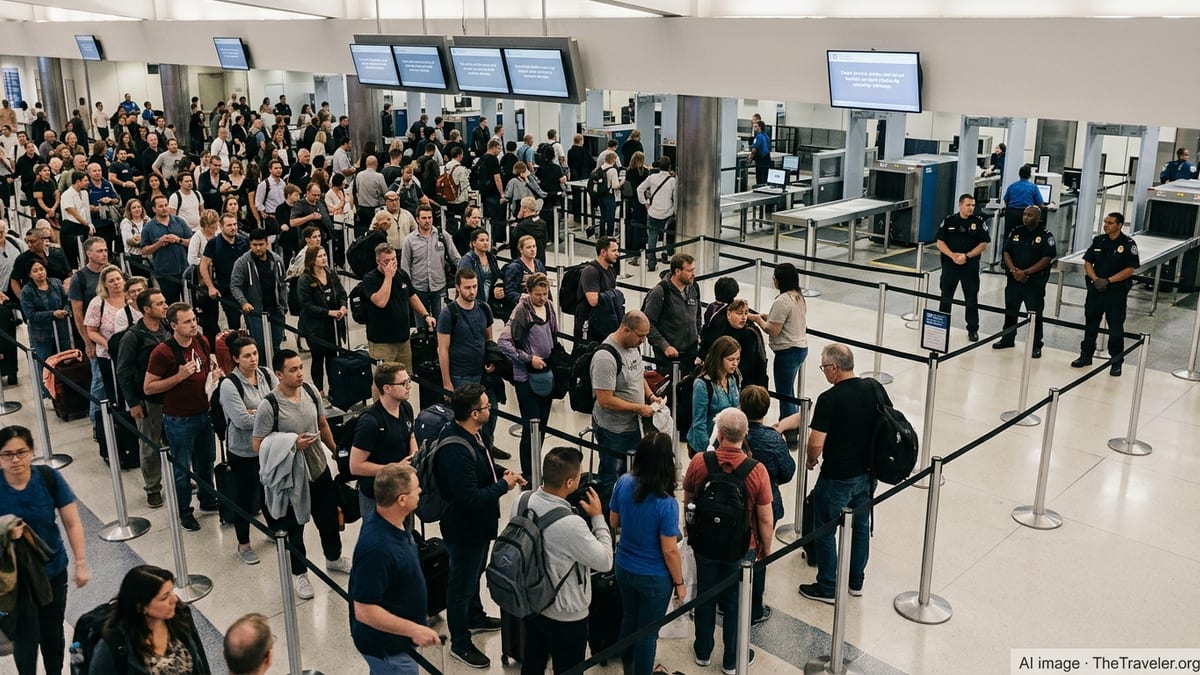
On previous storm days in Houston, airport advisories have urged passengers to arrive earlier than usual, highlighting longer check in and security lines when multiple flights are retimed into the same departure banks and when crews and aircraft arrive late from other affected cities.
Travel data and prior storm coverage show that connecting passengers are particularly vulnerable to missed flights when arrival delays in Houston shrink layover windows, especially on international routes that operate only once daily and have limited backup options.
For travelers with flexible plans, consumer advocates often point to early morning departures as more resilient, since these flights are less exposed to knock on effects from earlier delays and can sometimes depart in short weather lulls before tropical rain bands redevelop later in the day.
Broader context: a busy hub facing another tropical test
George Bush Intercontinental Airport is one of the nation’s busiest hubs and the primary international gateway for the Houston region. The airport’s role as a major connecting point means that weather disruptions in Houston can reverberate across domestic and long haul networks.
Recent storms, including tropical systems in early summer, have already produced ground stops and extended ground delays at Bush Intercontinental, illustrating how quickly thunderstorms and heavy rain over north Harris County can slow departures and force arriving aircraft into holding patterns.
Flight statistics compiled on multiple days this year show that it is not unusual for Bush Intercontinental to record more than 70 delays on a single storm affected morning, even without a direct tropical landfall, suggesting that Edouard’s approach could create another challenging operating environment.
Travelers booked through Houston in the coming days are being encouraged by publicly available guidance and travel industry reports to remain nimble, monitor conditions and keep backup plans in mind as Edouard moves inland and airlines work to balance safety, schedules and passenger connections.
https://www.houstonchronicle.com/news/houston-texas/article/iah-hobby-flight-delays-22412944.php