


Landing at Casablanca Mohammed V International Airport can feel intense after a long flight, but getting into the city is more straightforward than many first-time visitors expect. With a rail station beneath the terminal, a new Aerobus coach, plentiful taxis and two main downtown rail hubs, you have several solid options to reach your hotel near Casa Port, the Old Medina or the central business districts. This guide walks through each choice in practical detail, focusing on what works best for typical visitors arriving in 2026.
Get the latest updates straight to your inbox!
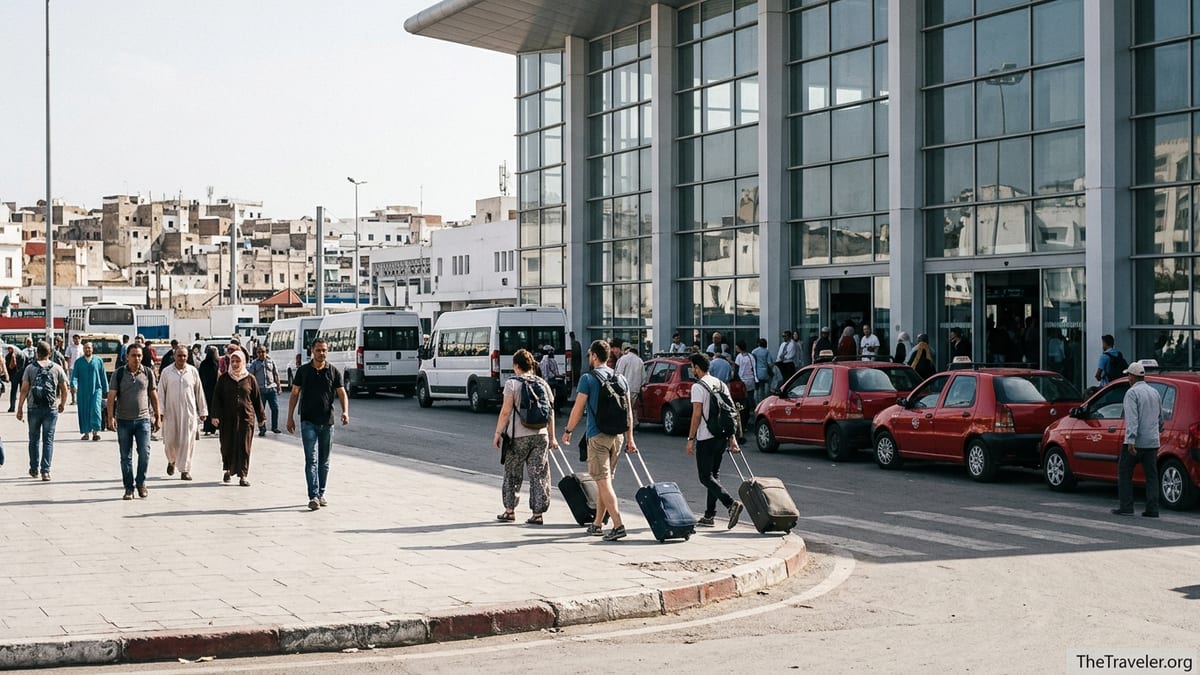
Understanding Your Route: From Mohammed V Airport to Central Casablanca
Casablanca Mohammed V International Airport sits roughly 30 kilometers south of the city. For most visitors staying near the Old Medina, Place des Nations Unies or the modern business hotels around Casa Port, the key question is how to bridge that distance smoothly, especially after an overnight flight. The good news is that the airport is directly connected to the city’s rail network, supplemented by an airport coach and regulated taxis, so you rarely need to arrange a private transfer in advance if you do not want to.
The main city-center station for visitors is Casa Port. It is within walking distance of the Old Medina’s Bab Marrakech gate and close to a dense cluster of hotels ranging from simple guesthouses to international brands such as Sofitel Casablanca Tour Blanche and Novotel Casablanca City Center. Casa Voyageurs is the other major station, serving high-speed and long-distance trains, but for most tourists based downtown, Casa Port is the more convenient terminus.
From the airport, direct trains serve both Casa Voyageurs and Casa Port. In addition, a dedicated Aerobus line now runs between the airport and central corridors like Casa Port and United Nations Square, and white “grand taxis” offer door-to-door service to hotels and apartments across the city. Your choice depends on your arrival time, luggage, budget and whether your priority is speed, comfort or simplicity.
For a typical couple arriving midday and staying near the Old Medina or one of the business hotels around Casa Port, the most efficient route is usually the direct airport train to Casa Port, followed by a short walk or a brief red taxi ride. Solo travelers on a tight budget might combine the train with a short tram or taxi hop, while families with young children or heavy luggage often find the fixed-fare airport taxi worth the extra cost.
Airport Train: The Most Reliable Option for Casa Port and Downtown Hotels
Mohammed V Airport has its own ONCF railway station directly underneath Terminal 1. After exiting customs, signs to “Gare ONCF / Train” lead you down escalators to the ticket hall. Trains run roughly once per hour between early morning and late evening, typically around the 50th minute of the hour, with a journey time of about 40 to 45 minutes to downtown. Services stop at intermediate stations and then continue to Casa Voyageurs and Casa Port.
Economy-class tickets from the airport to Casa Port are usually in the range of 60 to 70 Moroccan dirhams per person as of mid 2026, making the train one of the best-value airport rail links in North Africa. Tickets can be bought at staffed counters or vending machines using cash or card. Onboard, you will find standard 2nd-class compartments with airline-style seating, overhead racks and limited luggage space near the doors. While not luxurious, the trains are practical and generally reliable, especially outside peak commuter hours.
For visitors booked in hotels like Hotel Toubkal, Oum Palace Hotel & Spa or Radisson Blu Hotel Casablanca City Center, getting off at Casa Port is ideal. These properties are typically within a 5 to 10 minute walk of the station, so you can often avoid taxis altogether. Travelers heading to mid-range hotels in the Old Medina area, such as small riad-style guesthouses or budget hotels around Place de la Gare Casa Port, can also walk if bags are manageable.
One practical example: imagine you arrive at 13:10 and clear formalities by 14:00. You catch the 14:50 airport train and reach Casa Port shortly after 15:30. From there, it is a short stroll to a hotel such as Sofitel Casablanca Tour Blanche, which is close to the edge of the Old Medina yet still in the modern business district. Within an hour of leaving the terminal, you can be checking into your room without having negotiated a single taxi fare.
Aerobus: New Airport Coach Linking CMN to Casa Port and Business Areas
Casablanca’s Aerobus is a dedicated airport coach designed to complement the train and taxis. Operated by the city’s bus network, it connects Mohammed V Airport with key downtown locations including Casa Port station, United Nations Square and major boulevards across central business areas. It is especially useful if you prefer a simple, direct road connection that still costs less than a taxi.
As of 2026, a one-way Aerobus ticket is typically around 50 dirhams, slightly cheaper than the train for some riders and significantly cheaper than a taxi, particularly if you are traveling alone. Tickets are usually purchased on board from the driver or at small kiosks near the airport bus stop. Coaches are modern, air-conditioned and equipped with underfloor luggage holds, making them comfortable for those carrying suitcases.
The Aerobus route into town serves landmarks such as the Arab League Park corridor and the business districts around Boulevard d’Anfa and the Twin Center area, plus Casa Port itself. For example, a traveler staying in the Gauthier neighborhood at a contemporary boutique hotel can ride the Aerobus to a central stop near Boulevard Moulay Youssef and then take a short red taxi to the hotel, avoiding the need to change trains or haul luggage up and down station stairs.
Travel time by Aerobus varies with traffic. During lighter traffic, the journey from the airport to Casa Port can take about 45 to 60 minutes. In evening rush hours it may stretch closer to 75 minutes. Unlike the train, which follows a fixed rail timetable, the coach can be affected by congestion on the motorway and city streets. That said, many visitors arriving outside peak commuter periods find it a stress-free option, especially when their hotels are near one of its stops in the downtown business belt.
Taxis from Casablanca Airport: When Door to Door Makes Sense
White “grand taxis” are the official airport taxis at Mohammed V and remain a popular choice for travelers who prioritize door-to-door convenience. The official taxi rank is just outside arrivals and clearly signed. As of mid 2026, regulated daytime fares for a private grand taxi from the airport to central Casablanca, including areas like Maarif, Gauthier and the historic center near Casa Port, generally run around 250 to 300 dirhams. At night, after roughly 20:00, that price commonly rises to approximately 300 to 350 dirhams.
Unlike city “petit taxis” that use meters, grand taxis between the airport and the city usually operate on fixed fares agreed before departure. Drivers may initially quote higher prices, especially if they sense uncertainty, so it is wise to know the approximate official range. For instance, if a driver quotes 450 dirhams to Casa Port, you can politely respond that the standard fare is closer to 280 and negotiate from there. Often, simply showing you understand the going rate is enough to secure a fair deal.
Taxis make particular sense for families or groups of three or four people staying in areas not directly served by train or Aerobus stops. A group of four friends heading to an apartment rental in the residential district of Bourgogne might compare the costs: four train tickets plus a taxi might total around 320 to 340 dirhams, while a single grand taxi straight to the door could cost about 300 dirhams and save time and transfers.
Another advantage of taxis is flexibility for very late or very early arrivals, when train services are limited and the Aerobus may be less frequent. Travelers landing after midnight with a large snowboard bag or multiple suitcases often find the simplicity of walking out of customs, loading their luggage into a taxi and going straight to their hotel well worth the premium. For safety, use only the official rank at the terminal exit rather than accepting unsolicited offers inside the arrivals hall.
Casa Port vs Casa Voyageurs: Which Station Is Better for Visitors?
Casa Voyageurs is Casablanca’s main rail hub and the terminus for the high-speed Al Boraq trains to Tangier, as well as many intercity services to Rabat, Fes and Marrakech. Casa Port, by contrast, is a secondary station focused on local and airport-linked services. For visitors, the choice between them hinges on what you plan to do immediately after you land and where your hotel is located.
If your priority is to continue quickly to another city, Casa Voyageurs is the better arrival station. For example, a traveler landing at midday and heading directly to Marrakech can ride the airport train to Casa Voyageurs, then change platforms for the next southbound intercity service. In that scenario, diverting to Casa Port would simply add extra travel time and an unnecessary cross-town transfer.
However, if you are staying in Casablanca itself, particularly near the Old Medina, Place des Nations Unies, the central business district or the port area, Casa Port is usually the smarter choice. The station lies a short walk from the Old Medina’s northern edge and sits amid a cluster of hotels that cater to both business and leisure travelers. International chains such as Sofitel and Novotel, along with mid-range local hotels like Hotel Toubkal, are all within a quick stroll of the station, making arrival with luggage significantly easier.
A practical example highlights the difference. Two friends arrive together, one staying overnight in Casablanca at a hotel near Casa Port before flying on to Ouarzazate, the other catching a same-day high-speed train to Tangier. Both board the same airport train. The friend staying in the city remains onboard until Casa Port and walks five minutes to check into a hotel overlooking the port. The friend bound for Tangier gets off at Casa Voyageurs, crosses the concourse to the Al Boraq platforms and is on a northbound high-speed train within 30 minutes. Same train from the airport, but two different optimal endpoints.
Reaching the Old Medina, Downtown Hotels and Business Districts
One reason Casa Port is so convenient is its proximity to key visitor areas. The Old Medina is only a short walk away, with the Bab Marrakech gate and the central market reachable in about 10 to 15 minutes on foot from the station. Many small hotels and guesthouses in the Old Medina district, as well as simple two and three star properties near Boulevard Houphouet Boigny, can be reached without needing a taxi if you are comfortable rolling your luggage over a few uneven sidewalks.
For travelers staying in the central business district or around Place Mohammed V, the onward journey from Casa Port is also straightforward. Red petit taxis line up outside the station and typically charge a modest metered fare to landmarks like the Wilaya building, the United Nations Square tram node or hotels near Boulevard d’Anfa. In normal traffic, rides from Casa Port to the heart of the business area often come in under 30 dirhams, particularly if you remind the driver to activate the meter at departure.
Visitors heading to beachside hotels along the Ain Diab Corniche will need an additional transfer regardless of whether they arrive at Casa Port or Casa Voyageurs. From Casa Port, the usual pattern is a 15 to 20 minute red taxi ride along the seafront, with a typical fare in the range of 40 to 70 dirhams depending on traffic and the exact hotel. The same is true for suburban business zones like Casa Nearshore, where a taxi from either station is necessary.
Business travelers often split their time between meetings in the finance district, visits to the port area and evening dinners near the Corniche. In that case, staying near Casa Port can be a strategic compromise. You can walk to morning meetings near the courthouse or the central bank, jump into a short taxi to reach afternoon appointments along Boulevard d’Anfa, and still have relatively quick access back to the train station when it is time to head to the airport or on to another city.
Choosing the Best Option for Your Budget, Timing and Comfort
With several credible ways to get from the airport to the city, the “best” route depends on personal priorities. Budget-conscious solo backpackers typically gravitate to the train or Aerobus. A one-way train ticket plus a short tram or taxi ride might total under 90 dirhams, which is excellent value for a 30 kilometer transfer. For instance, a traveler staying at a budget hotel near Derb Omar could take the airport train to Casa Port, then a short taxi ride inland for under 30 dirhams.
Couples and small groups often weigh the price difference between rail and taxi against convenience. Two travelers paying around 60 to 70 dirhams each for the train, plus perhaps 20 to 30 dirhams for a petit taxi, end up close to 150 to 170 dirhams total to reach a downtown hotel. If an airport taxi quotes 280 dirhams, the convenience premium is significant but not overwhelming. In bad weather or late at night, many judge that premium worthwhile, especially if their hotel is not within easy walking distance of Casa Port.
Timing is another key factor. Trains are predictable but limited to roughly hourly departures. If you emerge from baggage claim just as a train leaves, you might face a long wait. In that case, a ready taxi or the next Aerobus departure can noticeably reduce your door-to-door journey time. By contrast, if you clear arrivals with 20 minutes to spare before the next train, it often pays to have a coffee in the station café and wait for the rail connection instead of heading to the taxi rank.
Comfort and luggage also count. Travelers with a single carry-on bag usually find it easy to navigate station stairs and city sidewalks. But for a family carrying two large suitcases, a stroller and a baby carrier, wrestling everything onto a train and then into a city taxi can feel cumbersome after a long-haul flight. For them, the ability to wheeling luggage straight to a taxi, load it once and step out directly in front of their hotel lobby may be worth the higher fare, especially on arrival day.
The Takeaway
For most visitors arriving at Casablanca Mohammed V International Airport and staying in or near the city center, the direct train to Casa Port is the best balance of price, reliability and convenience. It delivers you close to the Old Medina, central business districts and a dense cluster of hotels, with minimal need for onward transport. The Aerobus provides a helpful backup or alternative, especially if your hotel lies along its corridor or you happen to arrive just after a train has departed.
Grand taxis come into their own when you prioritize door-to-door comfort, travel with a group, or arrive very late or very early when public transport options are thinner. Knowing the approximate going rate to downtown helps you negotiate confidently and avoid inflated quotes. Meanwhile, Casa Voyageurs remains the logical hub if your plan is to continue quickly by train to other Moroccan cities like Rabat, Fes, Marrakech or Tangier.
Whichever option you choose, the core message is reassuring: Casablanca’s airport is well connected, and visitors rarely struggle to reach downtown. Spend a few minutes in the arrivals hall to check the next train time, compare that with the Aerobus schedule and taxi availability, and factor in your hotel location and luggage. With that small amount of planning, your first journey from the terminal to Casa Port, the Old Medina or the business district can be smooth, predictable and a gentle introduction to Morocco’s largest city.
FAQ
Q1. Is the train from Casablanca airport to Casa Port safe for solo travelers?
Yes, the airport train is generally considered safe during operating hours, including for solo travelers. Like any busy urban rail line, keep valuables close, avoid displaying expensive electronics, and sit near other passengers rather than in an empty carriage late at night.
Q2. How late does the train from Mohammed V Airport to Casa Port run?
Train schedules can change, but in recent timetables services have typically run from early morning until late evening at roughly hourly intervals. If you are landing after about 22:30 or before dawn, check the latest schedule before relying on the train and consider a taxi as a backup.
Q3. Which is better for tourists, Casa Port or Casa Voyageurs?
For visitors staying downtown near the Old Medina, Place des Nations Unies or business hotels close to the port, Casa Port is usually better. If you are heading straight to other cities such as Tangier, Rabat, Fes or Marrakech, Casa Voyageurs is the main hub and the more practical choice.
Q4. How much should a taxi from Casablanca airport to downtown cost?
Regulated daytime fares for a private white grand taxi to central areas like Casa Port, Maarif or Gauthier are typically around 250 to 300 dirhams, with night fares often nearer 300 to 350 dirhams. Always agree the price in advance and use the official taxi rank outside arrivals.
Q5. Can I walk from Casa Port station to the Old Medina with luggage?
Yes, if your luggage is manageable and you are comfortable walking 10 to 15 minutes, it is feasible. The sidewalks can be uneven in places, but many travelers roll a suitcase from Casa Port to Bab Marrakech or nearby hotels without difficulty, especially during daylight hours.
Q6. Is the Aerobus a good option if my hotel is near United Nations Square?
Yes, the Aerobus is designed to serve central corridors including Casa Port and United Nations Square. If your hotel is within a short walk of the square or the main tram intersection there, the Aerobus can be a straightforward and cost-effective alternative to the train plus taxi combination.
Q7. Are ride-hailing apps widely used from Casablanca airport?
Ride-hailing services exist in Morocco, but their availability and legality at airports can fluctuate, and official taxis still dominate at Mohammed V. Most visitors find it simpler to choose between the train, Aerobus or official taxi rank rather than relying on an app for their first transfer.
Q8. What if my flight is delayed and I arrive after public transport has stopped?
If you land after the day’s last train or Aerobus departure, the practical option is a taxi from the official rank. Keep a note of your hotel address in French and Arabic if possible, and expect to pay at the upper end of the usual airport fare range for late-night trips.
Q9. Do I need to book train tickets from the airport in advance?
No, advance booking is not necessary for the airport train. Tickets are sold on the spot at the airport station. Even in busier periods, travelers almost always find seats available in second class without reservations.
Q10. Is Casa Port a good base for day trips to Rabat or other cities?
Casa Port works well as a base for exploring Casablanca itself and the nearby Old Medina, but most intercity trains, including high-speed services, depart from Casa Voyageurs. For day trips to Rabat or longer journeys, you will usually take a short taxi or local train from Casa Port to Casa Voyageurs to start your trip.