


Casablanca Mohammed V International Airport can be confusing for first‑time visitors, especially when it comes to understanding the difference between Terminal 1 and Terminal 2. Signs are not always intuitive, airlines sometimes move operations, and a wrong turn can mean a stressful sprint with luggage. This guide breaks down how each terminal works in real life, how Royal Air Maroc connections are handled, where to find the train station, and what to do if you discover you are at the wrong terminal for your flight.
Get the latest updates straight to your inbox!
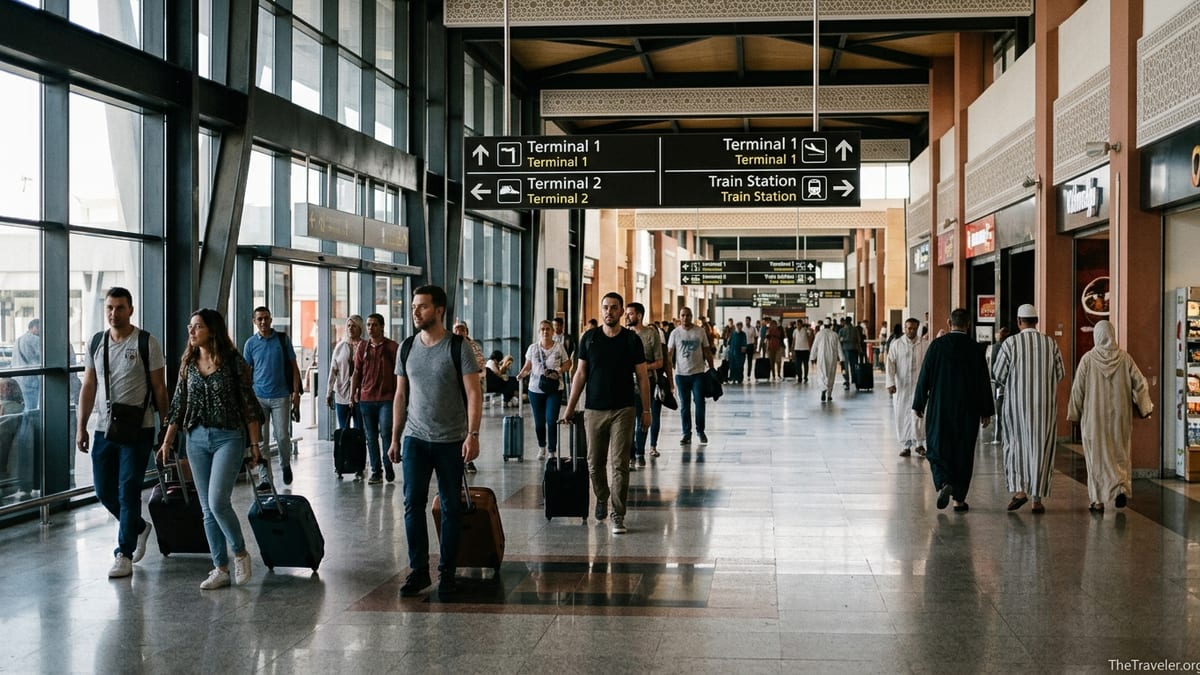
Terminal 1 vs Terminal 2: The Big Picture
Casablanca Mohammed V International Airport (CMN) has two main passenger terminals that handle the bulk of international and domestic traffic: Terminal 1 (T1) and Terminal 2 (T2). In everyday use, the two terminals feel like wings of the same building rather than completely separate facilities, and you can walk between them inside the secure area on most itineraries. The key difference for travelers is which airlines use which terminal and where your check‑in counters and arrival exits are located.
According to the airport operator, Terminal 1 is primarily dedicated to Royal Air Maroc and its partners, while Terminal 2 handles most other airlines. In practice, Royal Air Maroc uses Terminal 2 as its main check‑in and departure area for many flights, with some codeshare or partner operations using Terminal 1. This means you will sometimes see the same airline mentioned in connection with both terminals, which is why checking your booking or boarding pass before you travel is essential.
For most travelers, the main functional distinction is simple: Terminal 2 is the principal hub for Royal Air Maroc’s long‑haul and many medium‑haul flights, while Terminal 1 is the refurbished, modern wing that also serves Royal Air Maroc plus other airlines and provides direct access to the airport train station. If you are landing in Casablanca and connecting onward, you may move from one terminal to the other without exiting through immigration, but if you are starting or ending your journey in Casablanca, you will be dealing with the public landside areas and exits of a specific terminal.
The airport is about 30 kilometers south of downtown Casablanca, and both terminals share the same runways and airside facilities. Taxis, hotel shuttles, and most public ground transport serve both terminals, but the ONCF railway station is physically beneath Terminal 1. That detail matters if you are planning an onward train journey to Casa Voyageurs, Rabat, Marrakech, or Tangier shortly after you land.
Which Terminal Does Your Airline Use?
The single most important step before arriving at CMN is confirming your departure terminal with your airline within 24 hours of travel. As of mid‑2026, the official airport guidance is that Terminal 1 is dedicated mainly to Royal Air Maroc and its partners, while Terminal 2 hosts most other airlines. In reality, operational shifts, seasonal schedules, and codeshare agreements can blur this neat division. For instance, a Royal Air Maroc flight carrying an Iberia or Qatar Airways codeshare number might show up in different terminal summaries depending on which system you consult.
Royal Air Maroc passengers departing on long‑haul flights to destinations such as New York, Washington, Montreal, Doha, or various West African capitals are most often processed out of Terminal 2, where the airline concentrates check‑in counters, baggage drop, and many of its branded services. At the same time, some regional flights and partner operations can use Terminal 1. Travelers on airlines like Air Arabia Maroc, Turkish Airlines, or major European carriers will usually check in at Terminal 2, but a subset of services can operate from Terminal 1 depending on day and season. Because of these variations, relying on an old blog post or memory from a previous trip is risky.
A practical example: A traveler flying Chicago to Casablanca to Marrakech on a single Royal Air Maroc ticket may see their transatlantic leg listed as departing from Terminal 2 and their domestic connection as leaving from Terminal 1. Another traveler flying Paris to Casablanca on a European carrier and then continuing to Dakar on Royal Air Maroc might arrive at Terminal 2 but depart from Terminal 1 or the opposite. In both cases, the solution is the same: double‑check your terminal in your airline’s app on the day of travel and follow airport signage when you land.
If you arrive at the wrong terminal for departure, agents can usually point you to the indoor corridor or outside walkway leading to the correct wing. However, if you cut it close to check‑in closing time, that extra 10 to 20 minutes can make the difference between catching or missing your flight. Plan to arrive at the airport slightly earlier than you would at a single‑terminal airport, especially during peak holiday periods when check‑in queues for Royal Air Maroc can be long.
Royal Air Maroc Connections Between Terminals
Royal Air Maroc uses Casablanca as its main hub, which means a large share of its passengers connect through CMN between Europe, North America, the Middle East, and Africa. Many of those connections involve a terminal change, often between Terminal 2 and Terminal 1 or between the international and domestic sections of the complex. Fortunately, the terminals are physically joined, and internal signage in both French and English directs connecting passengers along a marked route.
On a typical Royal Air Maroc connection, you disembark your incoming flight, follow the “Transit / Correspondances” signs, pass through security and any necessary passport checks, and then emerge into a central airside concourse that links the terminal wings. Transfer times vary with time of day and queue length, but travelers with an hour to an hour and a half between flights generally report that the walk itself is manageable so long as flights arrive on time. The key is to move promptly, avoid shopping detours until you reach your departure gate area, and keep an eye on the departure screens as gate and even terminal allocations can change.
Royal Air Maroc provides transit assistance desks in Terminal 2 where staff can advise on tight connections, reissue boarding passes, or direct you toward your next gate. For layovers of more than eight hours under certain conditions, the airline may offer hotel accommodation, lounge access, or meal vouchers, but these services are typically coordinated from desks in Terminal 2 even if your outbound flight leaves from Terminal 1. Because rules depend on your fare, cabin class, and nationality, it is best to confirm eligibility with Royal Air Maroc in advance and then verify at the transit desk on arrival.
In practical terms, many experienced travelers treat connections in Casablanca as similar to a mid‑sized European hub: perfectly doable, but not the place to book ultra‑tight minimum connection times unless you are comfortable with a bit of uncertainty. If you are buying two separate tickets and self‑connecting, it is wise to allow at least three hours between flights in case of delays, re‑screening, or a longer than expected walk between terminals.
Arrivals, Baggage Claim, and Ground Transport Exits
Whether you land at Terminal 1 or Terminal 2, the arrival flow at Casablanca follows a similar pattern: disembark, walk to immigration, collect baggage, pass customs, and emerge into a public arrivals hall. The details, however, differ slightly between terminals, especially when it comes to how quickly you can reach taxis, hotel shuttles, or the train station in Terminal 1.
In Terminal 2, long‑haul international flights often arrive at gates connected to wide corridors that feed into large passport control halls. Queue times can range from relatively quick off‑peak processing to lengthy waits during evening banks of arrivals from Europe and North America. Once through immigration, you will find your baggage claim carousel on the same level. Royal Air Maroc handles a high volume of transfer luggage through Casablanca, so it is important to keep baggage tags and check your suitcase carefully upon arrival. After customs, automatic sliding doors lead to the Terminal 2 arrivals area, where you will see currency exchange kiosks, mobile SIM sellers, car‑rental desks, and exits to the curbside where official taxis line up.
Terminal 1 arrivals feel slightly more compact, reflecting its extensive renovation and more recent layout. After immigration and baggage claim, you again pass through customs and emerge into a modern arrivals hall. From here, you can access the escalators or elevators down to the train station level within the same building. If you are meeting a prebooked driver, they will usually wait just outside the sliding doors with a sign; if you are catching a city taxi, look for the marked ranks outside the terminal entrance. Official taxis are typically beige or cream‑colored in Casablanca, and you should agree the approximate fare or insist on the meter before setting off.
Realistically, many travelers’ first impressions of Casablanca come from this arrivals area. Lines at immigration can be longer than in some similarly sized airports, and baggage delivery can be slow at peak times. To make the process smoother, keep your passport and arrival documents handy, have the address of your hotel or first destination written down, and consider using facilities like airport ATMs only after you are past customs and in the public hall, where you can take a moment to organize yourself without blocking the flow of passengers.
Train Access at Terminal 1 and Other Transport Options
One of Casablanca Airport’s biggest practical advantages is its direct rail link. The ONCF train station is located beneath Terminal 1, reachable by escalator or elevator from the terminal’s public concourse. Trains typically run toward Casa Voyageurs, the main city rail hub, and on toward Rabat, Fes, or Marrakech via connections. For many travelers, the easiest route is airport to Casa Voyageurs by train, then a short taxi ride or tram into central neighborhoods such as Maarif or the Old Medina.
If you arrive at Terminal 1, reaching the train is straightforward: follow the overhead signs marked for the train station, go down to the basement level, and buy a ticket at the staffed counters or ticket machines. Prices are usually reasonable by European or North American standards, and schedules are posted on electronic boards. Carry some local currency (Moroccan dirhams) or a widely accepted bank card, as small kiosks or ticket desks may not accept every foreign card type.
Arriving at Terminal 2 requires a bit more planning if you want to take the train. While the station is physically under Terminal 1, the two terminals are connected by internal corridors and walkways. After exiting customs in Terminal 2, you can either follow the indoor signage leading toward Terminal 1 and then down to the station, or walk outside along the covered paths between terminal entrances. With luggage, the indoor route is usually more comfortable. Allow an extra 10 to 15 minutes to make this walk, especially if you are traveling with children or heavy bags.
For travelers who prefer road transport, both terminals are well served by airport taxis and prebooked private transfers. Taxi fares from the airport to central Casablanca are often negotiated as a flat rate, and it is common to see drivers quoting a price at the curb. While this can be convenient, insisting that the driver uses the meter or at least agreeing on a reasonable approximate fare in advance can avoid misunderstandings. If you are connecting directly to other cities such as Rabat or Marrakech, trains from the airport or from Casa Voyageurs are usually faster and more comfortable than attempting the entire journey by taxi.
Common Wrong‑Terminal Mistakes and How to Fix Them
Because Casablanca’s terminals serve overlapping airline portfolios and are connected in a way that can confuse first‑time visitors, wrong‑terminal mistakes are surprisingly common. One of the most frequent scenarios involves travelers following outdated advice that “all Royal Air Maroc flights use Terminal 1” or, conversely, “all Royal Air Maroc flights use Terminal 2.” In reality, the situation is more nuanced, and particular flights or codeshares can depart from either wing.
Imagine a traveler arriving from London on a non‑Royal Air Maroc airline, landing in Terminal 2, and assuming their connecting Royal Air Maroc flight to Agadir also leaves from T2. After glancing quickly at old notes, they head toward the nearest gate cluster, only to realize 40 minutes later that their domestic flight is scheduled from a gate in Terminal 1’s section of the complex. The fix is simple but stressful: a brisk walk across the internal corridor, another security check if required, and a nervous wait at the departure gate. In this case, the connection works out, but only because boarding started later than scheduled.
A second common mistake happens in the opposite direction. A traveler may arrive early at the airport by taxi and get dropped curbside at Terminal 1, expecting to check in for a long‑haul Royal Air Maroc flight that is actually processed in Terminal 2. They spend 15 minutes looking for the correct check‑in row before an airport staff member informs them that all check‑in desks for their flight are in the other terminal. With check‑in counters closing 60 minutes before departure, that unplanned walk, luggage in tow, becomes a race against the clock.
If you find yourself at the wrong terminal, the practical steps are straightforward. First, stay calm and locate an information screen or desk to confirm where your flight actually departs. Second, ask staff to point you toward the quickest walking route to the other terminal; in most cases this will be an indoor passage rather than going outside. Third, move directly without stopping for shopping or currency exchange. If you suspect you might miss check‑in or boarding, approach the nearest airline counter or uniformed staff member and explain the situation clearly; while nothing is guaranteed, staff can sometimes expedite re‑screening or alert gate agents if the misdirection was due to signage or a last‑minute terminal swap.
To avoid these problems, check your terminal the day before travel using your airline’s official channels, re‑check it on the morning of your flight, and then verify once more on the departure screens when you arrive at the airport. Treat third‑party apps and older web forums as background information rather than final authority; schedules and terminal allocations at hub airports evolve constantly as airlines adjust networks and as infrastructure projects progress toward Morocco’s anticipated surge in visitors for events like the 2030 World Cup.
Making the Most of Time in Each Terminal
While Casablanca’s terminals are functional rather than lavish, each offers enough services to keep you comfortable during normal layovers or pre‑flight waits. Both Terminal 1 and Terminal 2 feature cafes serving coffee, tea, sandwiches, and Moroccan staples such as mint tea and pastries. There are duty‑free shops selling cosmetics, perfumes, and local products, as well as small convenience outlets where you can buy bottled water, snacks, and basic travel items like adapters or neck pillows.
Royal Air Maroc and select partners operate lounges in the international area, primarily in and around Terminal 2. Access is typically granted to business‑class passengers, elite frequent flyers, and in some cases travelers who purchase a day pass. Lounges generally provide recliner seating, light buffet food, non‑alcoholic drinks, Wi‑Fi, and quiet space away from the main terminal crowds. If you have a long layover and value rest over wandering the concourse, asking at check‑in or at a Royal Air Maroc transit desk about lounge options can be worthwhile.
Within Terminal 1, domestic and regional travelers may find more localized dining options, along with facilities such as prayer rooms and basic children’s play corners. For many passengers connecting onward within Morocco on Royal Air Maroc Express flights, Terminal 1 becomes a brief but important pause between international legs. Take the opportunity to refill water bottles after security where permitted, stretch your legs, and familiarize yourself with the layout, especially if you plan to use the train on your return journey.
Wi‑Fi access and charging points can vary by gate area and terminal section, so do not assume outlets will be available at every seat. If staying connected is critical, arrive with devices fully charged, carry a small power bank, and consider purchasing a local SIM card in the arrivals hall before heading to your hotel. Staff at the kiosks in both terminals are accustomed to setting up SIMs for visitors and can often activate them on the spot with a copy of your passport.
The Takeaway
Casablanca Mohammed V Airport’s Terminal 1 and Terminal 2 may appear confusing on paper, but in everyday travel they function as connected wings of a single hub. Terminal 2 is the main engine of Royal Air Maroc’s global network, handling many long‑haul and European services, while Terminal 1 combines a modern design, domestic and regional operations, and direct access to the airport’s train station. Airlines, partnerships, and schedules shift over time, so relying on old assumptions about “which airline uses which terminal” is a recipe for wrong‑terminal stress.
The key to a smooth experience is preparation and flexibility. Confirm your terminal through your airline shortly before travel, build extra time into tight Royal Air Maroc connections that may involve crossing between terminals, and remember that the airport’s rail link sits directly under Terminal 1. If you do end up in the wrong place, staff can guide you along the indoor corridors that connect the terminals, and most errors are fixable if you catch them early enough.
By understanding how arrivals, baggage claim, ground transport, and terminal transfers really work at Casablanca, you can move through the airport with more confidence, whether you are using it as a quick transit point between continents or as your gateway into Morocco’s largest city. With realistic expectations and a few extra minutes in your schedule, Terminal 1 and Terminal 2 become manageable stepping stones rather than obstacles on your journey.
FAQ
Q1. How do I know if my Casablanca flight uses Terminal 1 or Terminal 2?
Your airline is the only reliable source, so check your booking, the airline’s website or app, and your boarding pass within 24 hours of departure, then confirm again on airport departure screens on the day of travel.
Q2. Are Terminal 1 and Terminal 2 connected inside the airport?
Yes. The terminals are physically joined, and most passengers can walk between them via internal corridors and signposted routes without leaving the secure area during a normal connection.
Q3. How long does it take to walk between Terminal 1 and Terminal 2?
The walk itself is usually around 10 to 20 minutes at a normal pace, depending on your gate locations, crowds, and whether you are moving airside or via public landside areas.
Q4. Where is the train station at Casablanca Mohammed V Airport?
The ONCF train station is located in the basement of Terminal 1, accessible by escalators or elevators from the public concourse after you exit baggage claim and customs.
Q5. What should I do if I arrive at the wrong terminal for my departure?
Stay calm, check a departure screen to confirm your correct terminal and gate, ask staff for directions to the other terminal, and walk there immediately; if time is very tight, speak to airline staff right away.
Q6. Do Royal Air Maroc connections always use the same terminal?
No. Many Royal Air Maroc flights use Terminal 2 but some regional or partner flights can operate from Terminal 1, so connections can involve a terminal change even when both flights are on the same airline.
Q7. Is immigration and baggage claim different in Terminal 1 and Terminal 2?
The process is similar in both terminals: immigration, then baggage claim, then customs and exit to the public arrivals hall, although layout and crowding can feel slightly different in each wing.
Q8. Can I easily catch a taxi from either terminal?
Yes. Both Terminal 1 and Terminal 2 have signed taxi ranks outside their arrivals halls, and official airport taxis serve both; always agree the approximate fare or request use of the meter before leaving.
Q9. Is Casablanca a good airport for tight self‑connects on separate tickets?
It is possible but not ideal. Because of immigration queues, potential terminal changes, and security checks, allowing at least three hours for self‑connections is safer than booking the minimum possible gap.
Q10. Are there lounges in both terminals at Casablanca?
Most Royal Air Maroc and partner lounges are concentrated around Terminal 2’s international area, while Terminal 1 offers basic services and domestic‑focused facilities; ask your airline which lounge you can use with your ticket.