


More news on this day
Cathay Pacific has unveiled plans to launch direct flights between Hong Kong and Almaty in the first quarter of 2027, creating Hong Kong’s first nonstop air link to Central Asia and signaling a strategic push into one of the world’s fastest evolving aviation regions.
Get the latest news straight to your inbox!
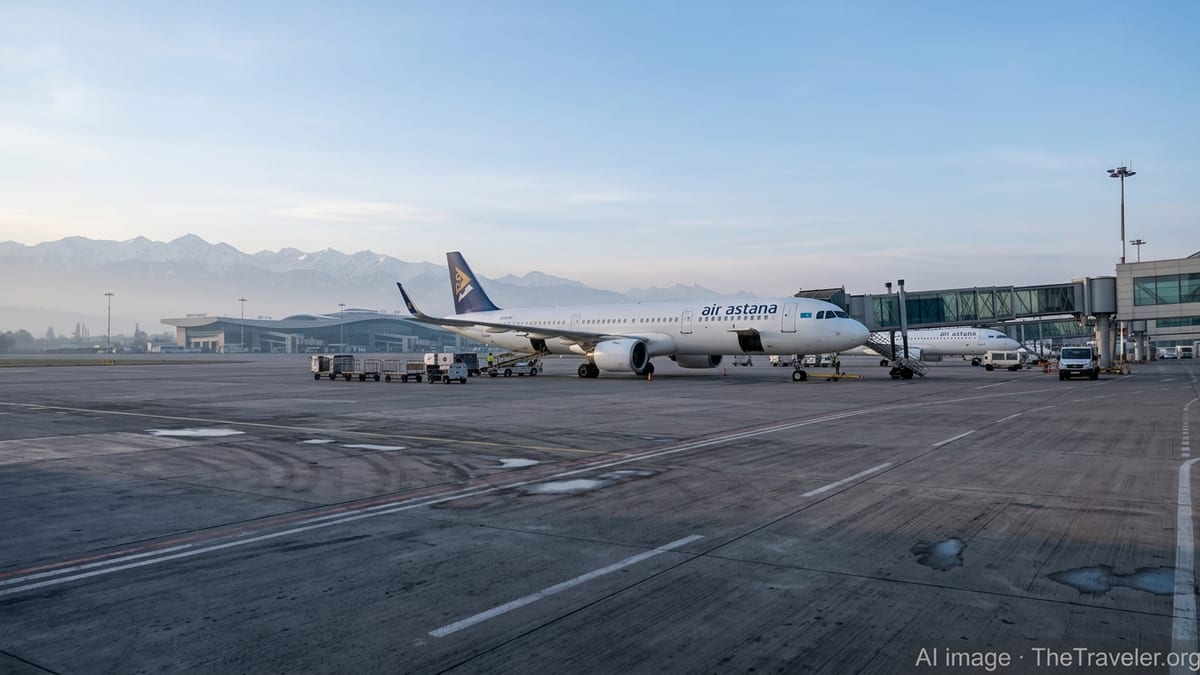
New Route Marks Cathay Pacific’s Entry Into Central Asia
According to publicly available information from the airline, the Hong Kong–Almaty service is scheduled to begin in early 2027 with three flights per week operated by Airbus A330-300 aircraft. The route will be the only nonstop connection between Hong Kong and Kazakhstan, positioning Cathay Pacific as the first Hong Kong-based carrier to establish a direct presence in Central Asia.
Almaty, Kazakhstan’s commercial and cultural hub, has been identified in industry coverage as a growing regional aviation center serving Central Asia, the Caucasus and parts of Eastern Europe. By targeting Almaty as its first Central Asian destination, Cathay Pacific is moving to capture both point-to-point demand and transfer traffic that can feed into its wider long-haul network via Hong Kong.
Published reports describe the launch as part of a broader effort by the carrier to expand its international network following several years of restructuring and market recovery. The Almaty announcement follows recent long-haul additions from Hong Kong to cities such as Seattle, underlining a renewed focus on connectivity to emerging and secondary hubs.
Industry analysis also notes that the Hong Kong–Almaty market has historically been underserved, with travelers typically relying on one-stop itineraries through Middle Eastern, European or regional Asian hubs. A nonstop service is expected to reduce journey times significantly and simplify itineraries for both business and leisure passengers.
Strengthening Hong Kong’s Role as a Belt and Road “Super Connector”
Publicly released material from Cathay Pacific frames the new Almaty route as a contribution to Hong Kong’s ambition to act as a “super connector” along the Belt and Road corridors. The city’s government has repeatedly highlighted Central Asia as a priority region for trade, logistics and investment, and the route announcement was made in the context of a high-level visit to Kazakhstan.
By adding Almaty to its schedule, the airline is expected to deepen air links between Hong Kong, the Chinese mainland and Central Asian economies. Reports indicate that demand between China and Kazakhstan has been rising, supported by growth in trade, energy cooperation and infrastructure projects. Hong Kong’s role as a financial and logistics hub positions it to intermediate these flows, with aviation connectivity seen as a critical enabler.
Network data shared in recent corporate communications show that Cathay Pacific and its low-cost affiliate HK Express already serve dozens of destinations across Belt and Road markets from the Hong Kong hub. Integrating Almaty into this network could facilitate multi-leg itineraries that connect Central Asia to North Asia, Southeast Asia and key long-haul points in North America and Europe via a single transit point.
Analysts note that the timing from a policy perspective is significant. The route announcement comes as Hong Kong works to reinforce its status as an international aviation and financial center, and as airlines adjust route maps to account for changing overflight patterns, geopolitical shifts and evolving cargo flows.
Economic and Tourism Upside for Kazakhstan and Hong Kong
Economic profiles published by Kazakh and international outlets describe Kazakhstan as Central Asia’s largest economy, with strengths in energy, mining, industrial manufacturing and agriculture. Hong Kong is already cited as Kazakhstan’s leading trading partner in the region, and air connectivity is widely viewed as a missing piece in efforts to deepen commercial ties.
With the new route, cargo operators and shippers are expected to gain a more direct channel for high-value and time-sensitive goods moving between Central Asia, the Pearl River Delta region and global markets. Almaty’s position on key overland and air corridors, together with Hong Kong’s status as a major airfreight hub, suggests potential synergies for logistics and e-commerce players.
The tourism sector on both ends of the route also stands to benefit. Industry coverage highlights Kazakhstan’s rising profile as an adventure and nature destination, with growing interest in hiking, skiing and cultural tourism around Almaty and the surrounding mountains. Direct flights from Hong Kong could open the country to a broader pool of leisure travelers from across East and Southeast Asia connecting through the hub.
Conversely, Kazakhstan-based travelers and those from neighboring states will gain easier access to Hong Kong’s shopping, culture and cruise offerings, as well as onward links to Japan, Southeast Asia, Australasia and North America. Travel trade observers suggest that tour operators and destination marketing bodies are likely to build new packages around the route once schedules and fares are published closer to launch.
Operational Details and Fleet Strategy
According to the airline’s announcement and supporting coverage, Cathay Pacific plans to serve the Hong Kong–Almaty route three times weekly using Airbus A330-300 aircraft configured for medium- to long-haul operations. This choice aligns with the carrier’s strategy of deploying widebody aircraft with flexible passenger and cargo capacity on developing markets where demand is expected to ramp up over time.
While detailed timetables and flight numbers have yet to be released, industry commentary indicates that scheduling is likely to be designed around convenient connections at Hong Kong International Airport. This would enable same-day transfers to and from major markets in the Chinese mainland, North Asia and long-haul destinations, enhancing the route’s overall appeal.
The move into Central Asia is also being viewed in the context of Cathay Pacific’s broader fleet and network rebuild. Public filings and recent route announcements show a gradual restoration and expansion of services as new aircraft are delivered and travel demand normalizes. Introducing Almaty as a new spoke from the Hong Kong hub suggests confidence in medium-term demand projections for business travel, visiting friends and relatives traffic, and tourism between the two regions.
Observers add that the use of a proven widebody type offers the airline operational flexibility should the route outperform expectations, with options to adjust capacity, frequencies or aircraft deployment as booking patterns become clearer after launch.
Competitive Landscape and Regional Aviation Implications
Market analysis indicates that Cathay Pacific’s entry will reshape the competitive landscape for travel between East Asia and Central Asia. At present, passengers often rely on carriers based in the Gulf, Turkey, China or regional hubs for one-stop connections between Hong Kong and Kazakhstan. A nonstop service reduces travel time and introduces a new connecting option via Hong Kong for itineraries spanning Asia and beyond.
Almaty International Airport has been pursuing growth as a regional hub, with recent infrastructure investments and expansions reported in local and international aviation media. The arrival of a major Asia-Pacific carrier is expected to support those ambitions, adding diversity to the airport’s portfolio of airlines and potentially stimulating new feeder services from surrounding markets.
For Hong Kong, the route supports efforts to diversify its aviation links beyond traditional long-haul markets in Europe and North America. Expanding into Central Asia broadens the city’s geographic reach and could help capture new traffic flows that are emerging as trade and tourism patterns evolve along the Belt and Road corridors.
With the launch targeted for the first quarter of 2027, airlines, airports, tourism boards and trade bodies on both sides are expected to use the coming months and years to refine partnerships and joint marketing initiatives. As more operational details are released, the Hong Kong–Almaty route is likely to be closely watched as a barometer of demand for deeper air connectivity between East Asia and Central Asia.