


More news on this day
Charleston’s Union Pier Cruise Terminal has bid farewell to cruise ships, as Norwegian Jewel’s recent visit marked the final scheduled call before the historic waterfront pivots to a new role in the city’s redevelopment plans.
Get the latest news straight to your inbox!
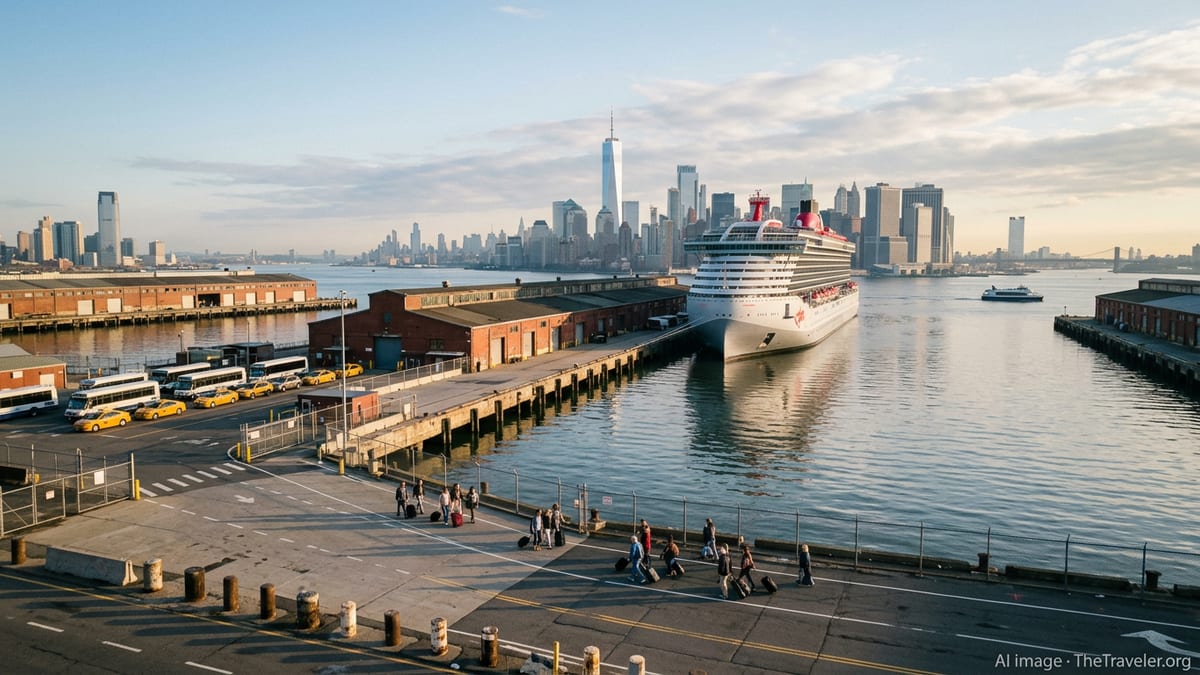
A Historic Cruise Chapter Closes on the South Carolina Coast
The Port of Charleston has long been a distinctive presence on U.S. cruise itineraries, offering a rare combination of deep-water berths and immediate access to a walkable historic district. Publicly available information shows that large cruise ships have been tied to Union Pier Terminal operations for decades, with modern homeporting ramping up in the 2010s as lines such as Carnival Cruise Line based vessels in the city for short Bahamas sailings.
Those homeport operations effectively ended in late 2024, when Carnival Sunshine concluded its program of roundtrip voyages from Charleston. Earlier decisions by the South Carolina Ports Authority not to renew its long-term agreement with Carnival cleared the way for a redevelopment of Union Pier and signaled that the city’s days as a regular cruise departure point were numbered.
Industry reports indicate that, since the start of 2025, Charleston has shifted to a limited role as a call port, hosting far fewer big-ship visits under voluntary caps intended to balance tourism with quality-of-life concerns for residents. The arrival of Norwegian Jewel this week closed even that chapter, representing the last scheduled cruise call at the Union Pier facility before it exits the big-ship market altogether.
For many in the cruise sector, the final call by Norwegian Jewel is being treated as the symbolic end of an era that saw Charleston evolve from a niche stop into a well-known embarkation point in the Southeast, and now back toward a different waterfront identity.
Norwegian Jewel’s Final Call Marks the End of Union Pier’s Cruise Role
According to recent cruise industry coverage, Norwegian Cruise Line’s Norwegian Jewel became the last cruise ship to use the Union Pier Cruise Terminal as Charleston completed its phase-out of big-ship calls. The timing aligns with earlier schedules that showed the 93,500-gross-ton vessel visiting Charleston on spring and early summer itineraries between the Mid-Atlantic and Bermuda.
The ship’s farewell appearance followed multiple adjustments to its Bermuda season, with port development work in Charleston prompting Norwegian to reroute several calls and ultimately close out its use of Union Pier. Public schedules and port information show that the call took place against the backdrop of a wider shift in how the city manages cruise visits, with limits on both ship size and annual calls.
Reports indicate that even other lines that had planned calls in the near term, including premium brands scheduling visits around holiday periods, were redirected to alternative berths such as Charleston’s Columbus Street Terminal rather than Union Pier. That redirection underscored how rapidly the cruise footprint at Union Pier has contracted as redevelopment gathered momentum.
For Norwegian Jewel, the departure from Charleston fits into a broader repositioning. The ship has been deployed on a variety of routes in recent years, from Alaska to coastal repositioning voyages and now Mid-Atlantic and Bermuda runs, and its Charleston visit becomes a notable historical footnote as the last big-ship passenger turn at Union Pier.
Redevelopment Plans Transform Union Pier Into a Mixed-Use Waterfront
Plans published by South Carolina Ports and local development groups indicate that Union Pier’s next chapter will be defined not by cruise traffic, but by urban design. The approximately 70-acre area that once handled thousands of cruise passengers a year is being re-envisioned as a mixed-use, walkable waterfront district.
Concepts outlined in public documents and news releases describe a neighborhood-scale project featuring residential buildings, retail, office space, and public green areas, along with improved access to the harborfront. The goal, according to these materials, is to reconnect downtown Charleston to its waterfront while reducing heavy, episodic traffic associated with cruise operations.
The end of cruise ship operations at Union Pier is presented within those plans as a necessary step to unlock redevelopment opportunities. Berths and staging areas once used for embarkation and disembarkation are expected to be reconfigured into streets, parks, and building parcels, while freight and non-cruise maritime activities are anticipated to continue in other portions of the Port of Charleston.
Urban planning observers note that Charleston’s decision mirrors moves in other historic coastal cities that have scaled back or relocated cruise infrastructure away from core heritage districts. The Union Pier plan is being watched closely by both preservation advocates and waterfront developers as an example of how former cruise terminals may be repurposed in the coming decade.
Tourism Strategy Shifts Toward Quality of Life and Selective Visits
As cruise calls wind down at Union Pier, Charleston’s broader tourism policy is also evolving. Reports on the city’s approach describe a strategy that seeks to maintain the economic benefits of visitation while addressing resident concerns about congestion, noise, and strain on historic streets during peak cruise days.
In recent years, local discussions have focused on limiting the number of ship calls, capping passenger capacity per vessel, and ensuring that visits are spread more evenly throughout the year. The final phase-out of Union Pier’s cruise operations aligns with those objectives, effectively eliminating the surges associated with large-scale embarkation days and motorcoach movements through the peninsula.
Travel analysts suggest that Charleston is betting on a tourism model anchored more heavily in overnight land-based visitors, cultural events, and small-scale coastal cruising, rather than mass-market, big-ship departures. The city’s well-established appeal as a food, history, and architecture destination gives it a degree of flexibility that some purely cruise-driven ports do not enjoy.
At the same time, business groups are monitoring how the change may affect hotels, restaurants, and tour operators that previously relied on cruise day traffic. The shift away from Union Pier-based sailings is expected to reshape when and how visitors move through the city, particularly around the former terminal footprint.
Future Cruise Landscape: Small Ships and Passing Calls Only
While Norwegian Jewel’s departure ends big-ship operations at Union Pier, Charleston is not disappearing entirely from cruise maps. Industry schedules and port announcements indicate that the city will continue to host a modest number of port-of-call visits, primarily from smaller ocean ships and river and coastal vessels.
Some reports highlight that domestic coastal operators, including lines running much smaller ships than the large Caribbean-focused fleets, plan to keep starting and ending voyages in Charleston, using facilities better suited to their scale. These vessels typically carry a fraction of the passengers of a large ship and operate itineraries concentrated along the U.S. East Coast inland and coastal waterways.
For large international brands, Charleston is expected to appear as an occasional call on repositioning and specialty itineraries rather than as a departure hub. Ship schedules for 2025 and beyond already show a marked reduction in the number of visits, with some lines omitting Charleston entirely in favor of other Southeastern ports that continue to support homeport operations.
As Norwegian Jewel sails on to new routes, its final visit to Union Pier serves as a bookend to Charleston’s modern cruise era. The city’s waterfront is poised to transition from a gateway for mass-market voyages into a more locally oriented district, even as a smaller, more targeted cruise presence remains on the horizon.