


More news on this day
Charlotte Douglas International Airport has revised its lightning detection and advisory program, adjusting how storms are monitored and alerts are triggered in an effort to improve safety on the ramp while reducing weather-related delays for travelers.
Get the latest news straight to your inbox!
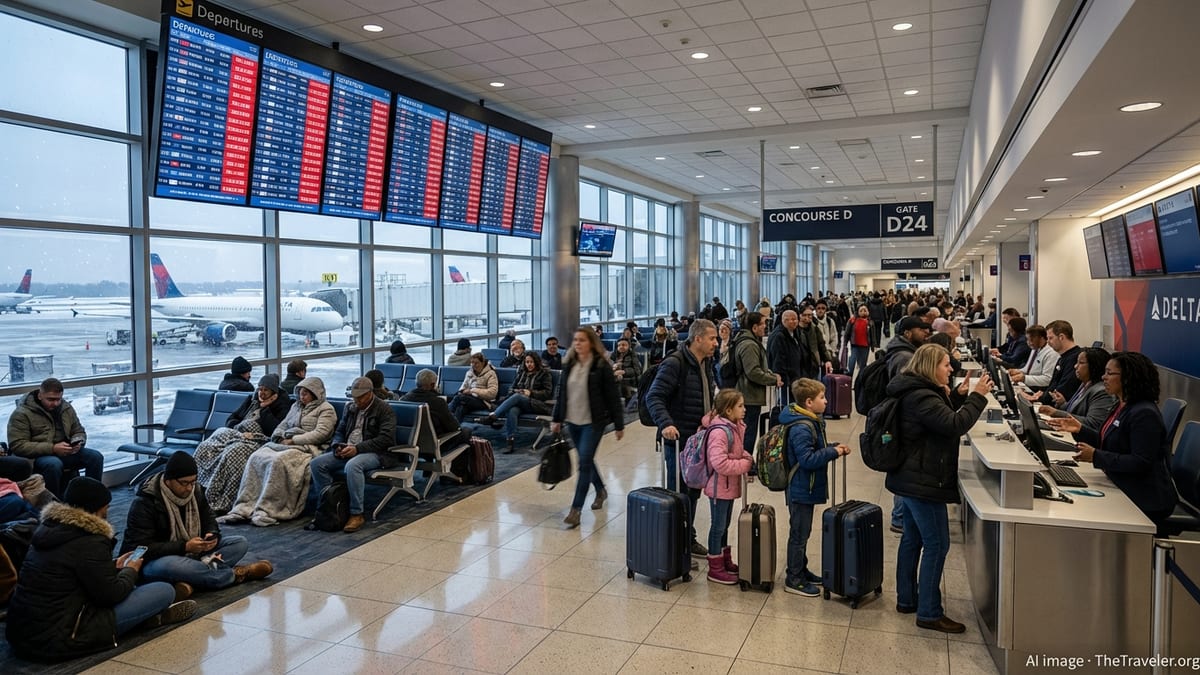
New Lightning Rules at One of the Nation’s Busiest Hubs
Publicly available information from Charlotte Douglas International Airport shows that the Lightning Detection and Advisory Program, or LDAP, adopted revised parameters earlier this summer. The changes refine how far from the airfield lightning activity is monitored and when alerts escalate from advisory to full ramp shutdowns, often referred to locally as a ramp going “red.” ([cltairport.com](https://www.cltairport.com/news/stories/item/updated-lightning-program-could-mean-fewer-delays/?utm_source=openai))
The airport reports that it now measures lightning proximity from the perimeter of the airfield instead of from a central point, effectively expanding the inner monitoring circle to cover more of the airport’s operational footprint. Within that footprint, the system continues to use tiered alert levels that move from advisory to warning and then to an alarm condition that halts most ramp activity. ([cltairport.com](https://www.cltairport.com/news/stories/item/updated-lightning-program-could-mean-fewer-delays/?utm_source=openai))
Charlotte Douglas International, owned and operated by the City of Charlotte Aviation Department, has grown into one of the world’s busiest airports, averaging more than 1,400 daily arrivals and departures and more than 53 million annual passengers. Any adjustment to how weather is managed on the ground can therefore ripple well beyond the local market into the wider U.S. network. ([charlottenc.gov](https://www.charlottenc.gov/City-Government/Departments/Aviation?utm_source=openai))
What Has Changed in the Lightning Detection Program
According to a recent airport development update, LDAP now uses a 25 mile radius around the airport perimeter for its initial advisory stage, an increase from the previous 20 mile threshold. That advisory stage is designed to act as a pre alert when either in cloud or cloud to ground lightning is detected in the wider area, signaling operators that storms could begin influencing ramp activity. ([cltairport.com](https://www.cltairport.com/news/stories/item/updated-lightning-program-could-mean-fewer-delays/?utm_source=openai))
The warning level, signaled visually as an amber condition, is triggered when lightning is detected within 10 miles of the perimeter. At this point, ground operations begin adjusting work on the ramp and planning for possible restrictions. When cloud to ground lightning is detected within 3 miles, the alarm or red condition is activated, resulting in a ramp closure until conditions stabilize. ([cltairport.com](https://www.cltairport.com/news/stories/item/updated-lightning-program-could-mean-fewer-delays/?utm_source=openai))
Notably, the revised setup removes in cloud lightning from the tightest 3 mile trigger. The airport’s coverage of the change indicates that this adjustment followed a detailed review of how often different lightning types led to ramp closures and the resulting effect on the airport’s ability to move aircraft and passengers. Reports indicate that much of the previous disruption was driven by electrical activity aloft that never translated into nearby ground strikes. ([cltairport.com](https://www.cltairport.com/news/stories/item/updated-lightning-program-could-mean-fewer-delays/?utm_source=openai))
Balancing Ramp Safety With Fewer Weather Delays
Industry guidance and historical experience at Charlotte show that lightning remains one of the leading causes of ramp closures and associated delays, since workers who handle baggage, fueling and aircraft guidance must be cleared from exposed areas when ground strikes are considered likely. Earlier airport communications have described how extended ramp closures can create long lines of aircraft waiting for gates and can contribute to passengers remaining on board longer than expected. ([cltairport.com](https://www.cltairport.com/news/stories/item/updated-lightning-program-could-mean-fewer-delays/?utm_source=openai))
By refining when the most restrictive alerts are issued, the updated LDAP aims to keep workers protected from cloud to ground strikes while reducing the number of closures triggered by higher altitude electrical activity. Public information about the program characterizes the effort as an attempt to better balance safety and efficiency, particularly during the summer thunderstorm season typical of the Carolinas. ([cltairport.com](https://www.cltairport.com/news/stories/item/updated-lightning-program-could-mean-fewer-delays/?utm_source=openai))
Federal research on lightning warning systems has long highlighted the challenge of setting meaningful thresholds around airports. A Transportation Research Board report profiling several major hubs, including Charlotte, notes that many airports rely on visual and audible alerts tied to defined distance rings. Adjusting those rings, as Charlotte has now done, can significantly alter how often operations are interrupted during convective weather. ([crp.trb.org](https://crp.trb.org/acrpwebresource2/wp-content/themes/acrp-child/documents/018/original/ACRP_8_Lightning_Warning_Systems_for_Use_by_Airports_.pdf?utm_source=openai))
Technology Behind Modern Lightning Monitoring
Charlotte’s updated program fits into a broader move in aviation toward more data driven weather decision making. Nationally, airports and air navigation service providers increasingly pair ground based lightning detection with other weather technologies so that tower controllers, airline operations centers and ramp managers have a clearer, real time picture of storm evolution. ([faa.gov](https://www.faa.gov/air_traffic/weather/wsds?utm_source=openai))
Specialized lightning systems used in aviation and other sectors combine detection of cloud to ground strikes with monitoring of in cloud discharges and even shifts in atmospheric electrical charge. Information published by major vendors describes how prediction algorithms can flag building charge fields before a first visible strike occurs, and how all clear timers are used to determine when it is safe for outdoor workers to return to exposed areas. ([thorguard.com](https://thorguard.com/faqs/?utm_source=openai))
Public commentary from travelers and aviation enthusiasts over recent years has frequently referenced the sensitivity of Charlotte’s lightning system, with several noting that the airport’s ramp can close while flights continue to land. Those accounts reflect the reality that lightning risk is very different for ground crews compared with aircraft at altitude or on final approach, and underline why airports continue calibrating where and when ground alerts are triggered. ([reddit.com](https://www.reddit.com/r/americanairlines/comments/1ck29ha?utm_source=openai))
Part of a Larger Push to Improve Reliability at CLT
The lightning program update arrives as Charlotte Douglas International continues a broader portfolio of investments aimed at improving operational resilience. Recent city and industry documents highlight ramp expansion projects, airfield technology upgrades and new terminal systems intended to ease congestion, shorten taxi times and manage passenger flows more effectively across the airport campus. ([charlottenc.gov](https://www.charlottenc.gov/Growth-and-Development/Doing-Business/Contract-Opportunities/ASR-Lighting-Vault-Design?utm_source=openai))
The South Ramp Expansion Program, for example, is designed to add capacity and create more efficient taxi routes for aircraft on the terminal side of the airfield. At the same time, technology initiatives within the terminal are being used to monitor passenger volumes at key choke points, helping the airport and its partners align staffing and resources during peak periods. ([charlottenc.gov](https://www.charlottenc.gov/Growth-and-Development/Doing-Business/Contract-Opportunities/ASR-Lighting-Vault-Design?utm_source=openai))
With thunderstorms remaining a regular feature of warm season afternoons in the Charlotte region, the revised lightning detection and advisory parameters are likely to be closely watched by airlines and passengers alike. For travelers, the change may not be obvious on an individual trip, but over time a better targeted system could mean fewer prolonged ground holds caused by storms that remain just beyond the zone where ramp work is considered unsafe.
Charlotte Douglas International Airport: Updated Lightning Program Could Mean Fewer Delays
Charlotte Douglas International Airport: Why Is the Airport Closed?
City of Charlotte Aviation Department: Charlotte Douglas International Airport Profile
Transportation Research Board: ACRP Report on Lightning Warning Systems for Use by Airports