


More news on this day
Freezing fog and icy early-morning conditions are again disrupting air travel in the Netherlands, with Amsterdam Airport Schiphol and other Dutch airports warning of reduced runway capacity, delays and a limited number of cancellations as visibility drops and aircraft require de-icing.
Get the latest news straight to your inbox!
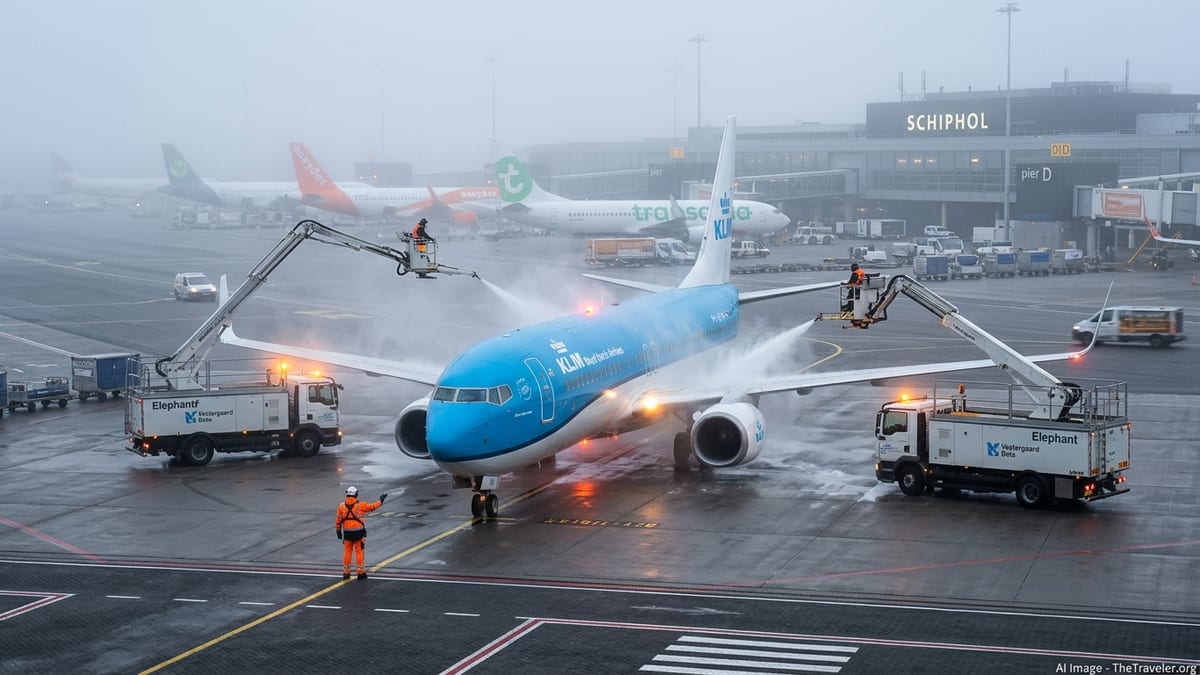
Freezing fog cuts Schiphol capacity and triggers delays
Forecasts and live aviation weather reports for Tuesday 24 November 2026 show periods of freezing fog at Amsterdam Airport Schiphol during the morning, with conditions expected to affect operations particularly between roughly 03:00 and 09:00 UTC. Terminal aerodrome forecasts for Schiphol indicate freezing fog and fog patches during this window, which typically require low-visibility procedures and slower runway movements for safety.
Independent flight statistics for Amsterdam show that weather has already contributed to delays this month, with an average departure delay of a little over 20 minutes over the 10 days to 22 November 2026 and a small proportion of flights cancelled. While those figures include a mix of causes, dense fog events on 10 November and further fog and icy-road alerts on 22 November have been specifically cited by Dutch authorities and air-traffic management bodies as disruption drivers. Today’s freezing fog warning fits into that pattern of intermittent weather-related constraints on the airport network, although the precise scale of today’s impact is still emerging.
Schiphol itself has not issued a separate detailed disruption bulletin for 24 November, but its published look-ahead traffic overview confirms that winter weather can force temporary reductions in the number of arrivals and departures compared with normal planning. Eurocontrol, which manages European air traffic flow, has similarly warned this month of “extensive” fog and patches of freezing fog affecting parts of northwestern Europe at times, naming the Benelux countries, including the Netherlands, among the risk areas. When such conditions coincide with busy morning banks of arrivals and departures at Schiphol, delays typically spread across airline networks and lead to missed connections.
Recent fog events show potential scale of disruption
Travelers looking to understand what today’s freezing fog could mean in practice can look at earlier events this month. On Tuesday 10 November 2026, thick fog over large parts of the Netherlands led to significant disruption at Schiphol. Dutch news reports and flight-tracking summaries indicate that by around 08:00 local time that day, 176 flights at Schiphol had been cancelled or delayed, while Eindhoven and Rotterdam The Hague airports also saw a smaller number of affected services. Eurocontrol described that fog and freezing fog episode as extensive, stretching from the southern United Kingdom through the Benelux region and further east and north.
Separate aviation disruption analyses for the same 10 November event report that the 176 affected Schiphol flights included 29 outright cancellations and 147 delays recorded by 08:00. Given that Schiphol typically handles around 1,200 to 1,300 flight movements per day at this time of year, that level of impact reflects a temporary but meaningful reduction in the airport’s handling capacity during dense fog. The knock-on effects included missed onward connections and aircraft arriving out of position for later flights.
There have also been more localized weather effects since then. On Sunday 22 November 2026, the Dutch meteorological institute KNMI issued an alert for fog and icy roads after a night with temperatures below freezing. The warning covered central and northeastern regions, including the Randstad conurbation where Schiphol is located, and highlighted the risk of difficult driving conditions to and from airports. While that alert did not generate disruption on the scale seen on 10 November, it is part of a recent sequence of fog and ice episodes affecting Dutch transport in late November.
Impact on Eindhoven and other Dutch airports
The effects of today’s weather are not limited to Amsterdam. Eindhoven Airport reported early on Tuesday 24 November that fog was disrupting the start of operations there, with at least two departures cancelled and another facing a lengthy delay. Similar to Schiphol, Eindhoven sits in an area affected by overnight frost and patchy freezing fog, and its morning schedule has a concentration of departures that are particularly vulnerable when visibility drops or de-icing is required.
Earlier in the month, Eindhoven also experienced delays and cancellations during the 10 November fog episode that hit Schiphol. Rotterdam The Hague Airport reported smaller numbers of affected flights on that date as well. Compared with Amsterdam, these smaller regional airports handle fewer daily movements, so even a handful of cancelled or heavily delayed flights can represent a noticeable share of their schedules and sharply limit options for rebooking passengers on the same day.
Road and rail access to airports can also be affected when fog coincides with freezing temperatures. On 10 November, the Dutch road authority Rijkswaterstaat recorded nearly 950 kilometers of traffic jams across the country during the morning rush hour, some of them near Schiphol, as multiple accidents were reported in foggy conditions. With KNMI repeatedly flagging risks of ice and reduced visibility this week, travelers heading to any Dutch airport are being advised to allow extra time for surface travel and to check for any local warnings affecting motorways and rail lines.
Operational constraints: low-visibility and de-icing procedures
From an operational perspective, freezing fog affects airports in two main ways: reduced visibility and the need for aircraft de-icing. When visibility falls below certain thresholds, Schiphol and other Dutch airports move into low-visibility procedures. These rules increase spacing between aircraft for both arrivals and departures and can limit which runways and taxiways are used. The result is a lower hourly movement rate than under normal conditions, meaning that fewer flights can land and take off in a given period.
Freezing temperatures around dawn also mean that many aircraft parked overnight require de-icing before departure. Industry advisories for Amsterdam this month have highlighted the risk of high de-icing demand coinciding with freezing fog, particularly in morning peaks. Because de-icing pads and vehicles can only process a limited number of aircraft per hour, queues build up behind the bottleneck and departure delays can grow, especially if visibility constraints are already slowing the flow of traffic to and from the runway.
The Dutch Aeronautical Information Publication notes that significant changes in meteorological conditions, such as sudden onset of freezing fog or ice, trigger the issuance of special weather messages and advisories. These are relayed by air traffic services units in the Amsterdam Flight Information Region so that airlines and pilots can adjust approach minima, fuel planning and diversion strategies. Although these systems are designed to keep operations safe in poor weather, they also mean that flight schedules have to be adapted, and some services will be cancelled or consolidated when capacity falls too far below planned levels.
What travelers should do today and in similar conditions
For passengers booked to travel via Schiphol or other Dutch airports on Tuesday 24 November 2026, the main practical step is to check their flight status frequently on airline apps or websites before leaving for the airport. Because freezing fog events can vary in intensity and duration, some early-morning services may face long delays or cancellations while later flights operate more normally once visibility improves and de-icing backlogs clear. Airlines generally update departure and arrival times as they receive revised slot information from air traffic control.
Travelers with tight connections through Amsterdam should be aware that even modest early delays can cascade through the morning and lead to missed onward flights, particularly on long-haul itineraries. When severe weather is clearly identified as the root cause, airlines are not usually obliged under European passenger-rights rules to pay statutory compensation, but they are still responsible for providing care such as meals and, where necessary, accommodation until passengers can be rerouted. Several consumer-rights organizations have recently reminded passengers affected by fog-related disruption at Schiphol to keep boarding passes, delay notifications and receipts in case reimbursement is possible for additional costs.
Looking beyond today, KNMI’s short-range outlook points to continued cold conditions, with light frost overnight and daytime temperatures only a few degrees above freezing in many parts of the country. That pattern suggests that further episodes of fog or freezing fog cannot be ruled out in the coming days, although the exact timing and severity remain uncertain. Travelers planning trips via the Netherlands in late November and early December should therefore build extra time into itineraries, avoid the shortest possible connection times where they can choose alternatives, and stay alert to weather advisories and airport operational updates as their day of travel approaches.