


More news on this day
A brief Federal Aviation Administration ground stop at Chicago O’Hare International Airport on Monday, November 23, 2026, triggered only minor delays but added to traveler anxiety during what is expected to be one of the busiest Thanksgiving travel periods in years, coming on the heels of major technology outages at Delta Air Lines and a rare nationwide ground stop earlier in the month.
Get the latest news straight to your inbox!
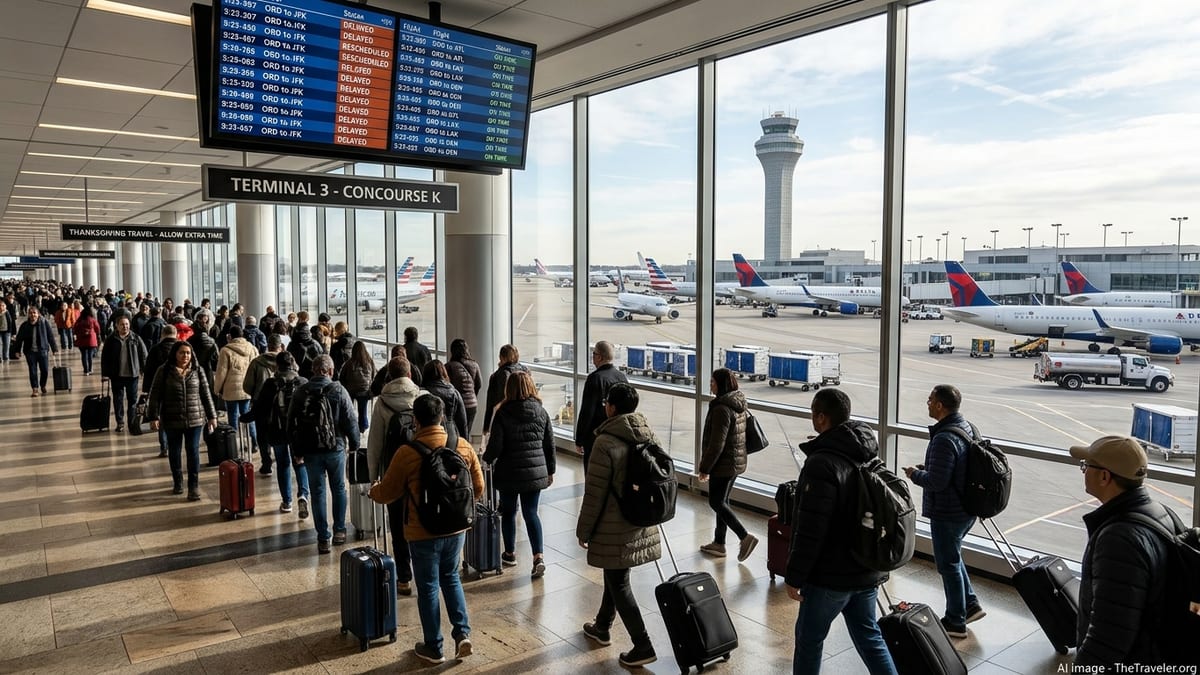
What happened at O’Hare and how operations recovered
The Federal Aviation Administration confirmed that it issued a ground stop for arrivals into Chicago O’Hare on Monday morning, citing a staffing issue at an air traffic control facility serving the airport. The restrictions were in place for roughly an hour and a half before being lifted late morning. Departures from O’Hare were not halted systemwide, though some flights were held at gates or on taxiways as arrival flows and runway configurations were adjusted.
By early afternoon, data from federal flight tracking systems and airport monitoring services showed that average delays at O’Hare had fallen to under 15 minutes, with no large wave of cancellations directly linked to the staffing-related ground stop. Airlines reported that most affected aircraft were able to operate later in the day, with passengers either departing on their original flights after a delay or being rebooked on subsequent services when connections were missed.
The timing of the disruption, at the start of the peak Thanksgiving travel week, amplified its visibility. O’Hare is one of the country’s busiest hubs, and the FAA often uses ground stops to temporarily meter traffic into complex airspace when staffing, weather or other constraints mean controllers cannot safely handle the usual volume of flights. Officials have not detailed the specific staffing shortfall involved but characterized the move as a precaution to maintain safe separation between aircraft.
O’Hare rush builds as Thanksgiving travel hits multi‑year highs
Airlines and airport officials expect O’Hare to handle several hundred thousand passengers per day through the Thanksgiving period, with United Airlines alone forecasting about 640,000 travelers through the hub between Friday, November 20, and Tuesday, December 1. Local authorities project the busiest day at O’Hare to be Sunday, November 29, when more than 100,000 passengers are expected to pass through security checkpoints as holiday travelers return home and business travel begins to resume for the following week.
Nationwide, federal forecasts and airline schedules indicate that U.S. air travel over the 2026 Thanksgiving period will be at or near a 16‑year high, with carriers operating more seats than in recent holiday seasons and reporting strong advance bookings. The American Automobile Association estimates that roughly 81.5 million people in the United States will travel for Thanksgiving by air, road, rail or other means, with close to 6 million expected to fly. Those figures, while projections, align with capacity that major airlines have loaded into their reservations systems.
The surge in demand is occurring even as domestic airfares have risen compared with last year, with several industry analyses pointing to average increases of around the mid‑teens in percentage terms for U.S. itineraries booked for the holiday window. Higher fuel costs, constrained aircraft availability on some routes and strong leisure demand have all contributed to the pricing environment. Travelers at O’Hare interviewed by local media said they weighed those higher prices against the opportunity to visit family, with many opting to book earlier flights or off‑peak days to reduce both cost and disruption risk.
Recent technical outages and a rare nationwide ground stop
The brief staffing‑related stop at O’Hare comes less than two weeks after a nationwide FAA ground stop on Friday, November 13, 2026, that halted most departures across the United States for several hours. According to public statements by the Department of Transportation and the FAA, that event stemmed from a telecommunications disruption affecting communications and radar systems used by air traffic controllers at multiple facilities, prompting the agency to suspend departures out of what officials described as an abundance of caution.
Federal summaries and congressional correspondence indicate that thousands of flights were delayed or canceled during the November 13 nationwide ground stop, with ripple effects continuing into the weekend as airlines repositioned aircraft and crews. The incident has drawn scrutiny from lawmakers and oversight bodies, which are examining how redundancy in key systems is managed and whether existing modernization programs are adequately funded and implemented.
On Sunday, November 22, Delta Air Lines passengers experienced another major setback when an outage affecting one of the carrier’s automated weight and balance systems delayed more than 1,300 flights, with several aviation trade and news outlets putting the total at over 1,600 delays across Delta’s network. The system, used to calculate each aircraft’s weight and center of gravity before takeoff, is critical for safe operations. During the outage, Delta and the FAA confirmed that the airline slowed or temporarily halted some departures while manual procedures were put in place. Operations gradually recovered through the evening, and Delta has said the underlying issue with the system was resolved by early Monday.
These disruptions have added to broader public unease about the resilience of airline and air traffic control technology, particularly when they occur in close succession. At O’Hare, several travelers arriving on Monday referenced the nationwide ground stop and Delta outage when explaining why they chose to travel earlier in the week, pad connection times or arrive at the airport considerably ahead of their scheduled departure.
Federal push to modernize air traffic control systems
In the wake of the November 13 nationwide ground stop, the White House announced the creation of the Transportation Technology Transformation Tiger Team, a task force bringing together officials from the Department of Transportation, the FAA, the Department of Homeland Security and other agencies. According to administration statements, the group’s mandate is to review vulnerabilities exposed by the ground stop, accelerate implementation of planned upgrades and recommend additional measures to prevent similar nationwide disruptions.
Transportation Secretary Sean Duffy has used the incident to renew calls for a substantial funding package to speed air traffic control modernization, requesting approximately 50 billion dollars from Congress for technology and infrastructure projects above previously appropriated sums. More than 60 aviation industry organizations, representing airlines, airports, pilots, business aviation and maintenance providers, have jointly urged lawmakers to approve at least 30 billion dollars in additional funding to update communications, navigation and surveillance systems, expand controller staffing and enhance cybersecurity.
Industry representatives emphasize that, despite the recent high‑profile outages, the United States still maintains one of the world’s safest air transport systems, with multiple layers of redundancy and strict safety protocols. They argue, however, that parts of the system rely on aging hardware and software that were not designed for current traffic volumes or the complexity of today’s network. The staffing‑related ground stop at O’Hare is being cited in some of those discussions as another example of how limited flexibility at key facilities can quickly affect travelers, even when safety is not directly compromised.
What Thanksgiving travelers through O’Hare should expect next
For the remainder of the Thanksgiving period, airlines, the FAA and airport authorities stress that they expect O’Hare to operate close to published schedules but caution that weather and any further staffing constraints could alter the picture quickly. Forecasts show the potential for storms along the East and West Coasts during portions of the holiday window, which could disrupt traffic flows through Chicago because many O’Hare flights connect passengers to or from those regions. Passengers are being advised by airlines and travel organizations to monitor flight status closely, particularly on peak days such as Wednesday, November 25, and Sunday, November 29.
Travelers planning to depart from or arrive at O’Hare in the coming days are being encouraged to allow extra time at the airport, especially during morning and late afternoon peaks when security lines and check‑in counters are busiest. Airport and airline guidance generally recommends arriving at least two hours before domestic flights and three hours before international departures during the holiday period, with additional time suggested for those checking baggage or traveling with children. Ground transport around O’Hare is also expected to be congested at peak times, and local authorities are reminding those picking up passengers to use the airport’s designated cell phone waiting areas instead of stopping on highway shoulders, where enforcement actions and fines can be substantial.
Travelers who remain uneasy about potential disruptions are making practical adjustments rather than canceling plans, according to anecdotal reports from carriers and booking platforms. Common strategies include booking first‑bank flights earlier in the day, choosing longer connection windows on itineraries that require a change of planes and keeping airline apps installed and notifications enabled so that any gate changes or delays are communicated in real time. While no formal advisory suggests that further ground stops are expected during the Thanksgiving period, officials acknowledge that isolated operational pauses, like the one seen at O’Hare, remain possible when safety or staffing considerations demand them.
For now, the O’Hare staffing incident appears to have been short‑lived, with limited operational impact compared with the nationwide and airline‑specific issues seen earlier in November. Travelers using Chicago’s main hub in the days ahead are likely to encounter typical holiday crowds and the risk of delays associated with high demand and variable weather, rather than direct fallout from Monday’s brief ground stop. Those planning journeys are advised to check official airline and airport channels on the day of travel for the latest status information and any updates related to ongoing modernization efforts or temporary operational restrictions.