


Childcare availability and cost are central to the feasibility of a relocation to Mexico for families with young children. This briefing outlines typical price ranges for key childcare options, explains how costs vary by city and type of provider, and highlights structural factors that affect what expatriate families are likely to pay in practice.
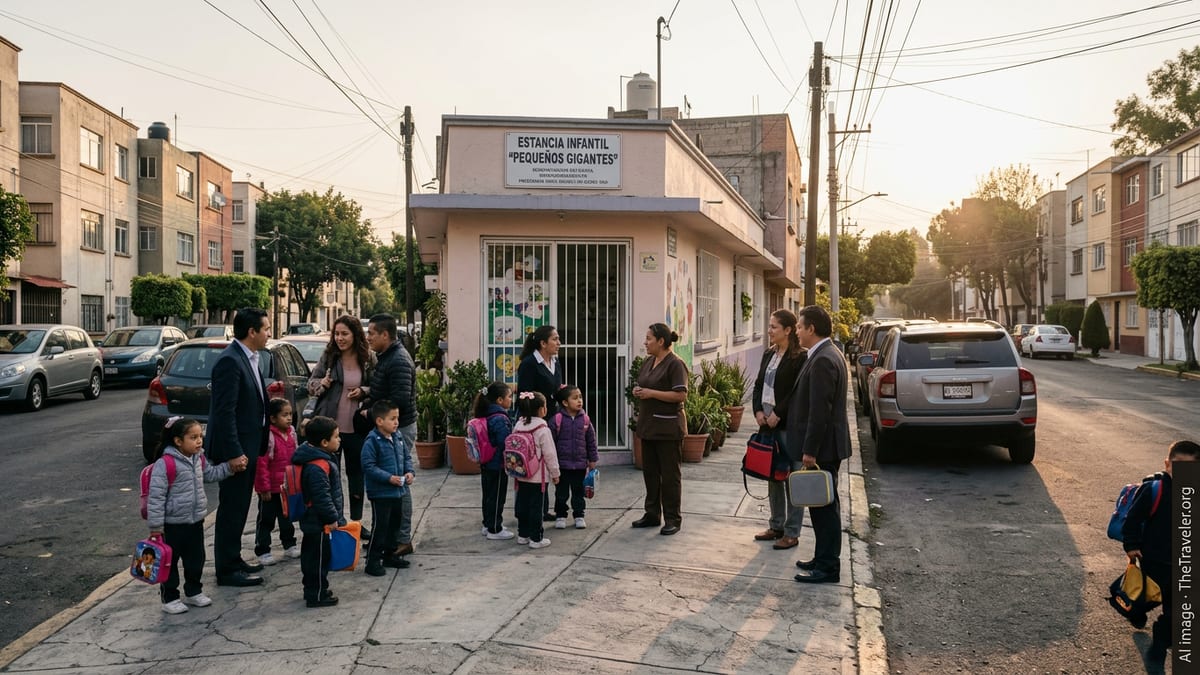
Overview of Childcare Options and Price Drivers in Mexico
Childcare in Mexico is delivered through a mix of public, subsidized, and private providers. For most expatriates, the realistic options are private daycare centers, private preschools or kindergartens, and in-home care via nannies or babysitters. Public and heavily subsidized schemes exist but are generally targeted at low-income or formally employed Mexican residents and may not be accessible or practical for new foreign arrivals.
At a national level, Mexico remains substantially less expensive for childcare than high-cost countries such as the United States or Western Europe. However, there is a very wide internal range. Costs in Mexico City, Monterrey, and other major metros can approach mid-tier international levels, particularly at bilingual or international schools and for experienced full-time nannies, while smaller cities and non-touristic areas are markedly cheaper.
Key cost drivers include city and neighborhood, whether care is formal (licensed center) or informal (at-home carer), operating hours and calendar, language and curriculum (local versus bilingual or international), and the level of qualifications and benefits provided to staff. Expatriate families often gravitate to higher-cost segments that provide bilingual staff, longer hours, and more formal structures, which can significantly raise the monthly budget compared with local averages.
In addition, inflation over 2023–2025 has pushed up education and care-related costs. Reports on school-related spending in Mexico show parents facing double-digit percentage increases in back-to-school expenses compared with pre-pandemic periods, and similar pressures are visible in childcare fees. As a result, price information more than a year old should be treated as conservative and adjusted upward.
Daycare Centers and Guarderías
Daycare for children below school age is typically provided by private guarderías (daycare centers), some of which are registered to accept government subsidies for eligible Mexican families. An OECD review of Mexico’s childcare system indicates that, when subsidies are applied, the average parental co-payment for regulated care can be well below the market cost, around a few hundred pesos per month, with separate low enrolment fees. This heavily subsidized level is not representative of what most expatriates will pay, but it illustrates the gap between supported and fully private prices.
In the fully private segment, expatriate families in major cities can expect approximate monthly daycare costs in the following ranges for full-time, licensed centers operating on typical working hours:
• Mid-range local daycare centers in large cities: roughly 3,000 to 7,000 MXN per month per child, excluding meals and extras in some cases.
• Bilingual or higher-end centers in Mexico City, Monterrey, Guadalajara, and similar markets: commonly around 7,000 to 12,000 MXN per month, with some international-branded centers charging above this band in premium neighborhoods.
• Smaller cities and non-metropolitan areas: full-time daycare can be available from approximately 2,000 to 4,000 MXN per month, but English-speaking staff and extended hours may be limited.
Daily schedules typically cover 7:00 or 8:00 in the morning until mid-afternoon, with some centers offering extended hours at additional charge. Registration fees, annual materials charges, and uniform costs can add the equivalent of one or more months of tuition across the year. In the post-pandemic environment, centers that emphasize small group sizes, enhanced sanitation, and security may command pricing at the upper end of local ranges.
Preschool, Kindergarten, and School-Affiliated Childcare
From approximately age three, many children in Mexico shift from general daycare to preschool or kindergarten programs, often attached to private schools. For expatriates planning a multi-year stay, it is common to select a school early and use its preschool offering as the primary childcare solution. This introduces tuition dynamics more akin to private education than to simple childcare.
Recent fee schedules from private schools in Mexican cities suggest that preschool tuition at mainstream private institutions can start around 3,000 to 4,000 MXN per month at the lower end and extend into the 7,000 to 10,000 MXN range at better-resourced schools. Some international or highly prestigious schools report monthly tuition well above 10,000 MXN even at preschool level, with one Jesuit school in northern Mexico listing high school tuition in the mid-6,000 MXN range several years ago, indicating that current early-years fees at comparable institutions in large metros are likely higher once recent inflation is considered.
On top of base tuition, many private schools charge one-time enrolment or membership fees, which can be substantial. It is not unusual for initial registration or “membership” payments to equal several months of tuition in international schools. Families should also factor in compulsory materials fees, meal plans, transport (often 1,500 to 3,500 MXN per month for bus services in some regions), and extracurricular activities when comparing preschool options to daycare or in-home care.
While public preschool under the national education system is officially free of tuition, places are limited and admission is based on catchment areas and priority criteria. Newly arrived expatriate families, especially those who do not hold permanent residency, typically do not rely on public preschool as their primary childcare solution, both because of language of instruction and because of variable hours that may not align with full workdays.
Nannies, Babysitters, and In-Home Care
In-home care is a common solution in expatriate households, particularly for infants and toddlers, or where flexible or extended hours are required. Pay levels vary sharply by city, nanny experience, and job demands. Recruitment platforms tracking Mexican nanny rates for 2026 report national average gross hourly rates around 170 MXN, with common bands between 120 and 220 MXN per hour. This reflects a wide national spread that compresses local extremes but provides a useful benchmark for expatriates evaluating offers.
Annualized salary data suggest that a full-time nanny in Mexico can earn in the region of 160,000 to 170,000 MXN per year on average, with lower figures around 80,000 MXN and higher-end roles exceeding 250,000 MXN per year in large cities. Nanny-focused expatriate resources indicate that in lower-cost coastal or secondary cities, some families still secure full-time live-in support starting roughly around the equivalent of 200 to 300 USD per month, although this tends to reflect lower wages, fewer formal benefits, and weaker English proficiency.
In major metropolitan areas, particularly Mexico City and Monterrey, expatriate households usually pay significantly above local minimum benchmarks for nannies with prior experience in foreign households, some English skills, and formal contracts that include social security contributions and paid leave. In such markets, negotiated monthly pay for full-time live-out nannies commonly falls somewhere in the 8,000 to 15,000 MXN range, with live-in roles potentially somewhat lower in cash but supplemented by food and housing.
Occasional babysitting for evenings or weekends is typically charged at a higher hourly rate than regular full-time arrangements, especially where short-notice or English-speaking care is required. Families should clarify whether quoted rates are gross or net of required employer contributions to Mexico’s social security and whether overtime, night work, and public holiday surcharges are expected.
Government Programs, Subsidies, and Eligibility Considerations
Mexico operates a patchwork of childcare-related supports, which historically have included subsidized daycare centers for low-income working parents and cash transfers to support families with young children. Analyses of federal programs note that where daycare is provided through registered facilities under such schemes, the cost per child can significantly exceed what parents pay out of pocket, with public funds absorbing most of the operating cost. Parent co-payments under these models have been reported at levels of several hundred pesos per month, illustrating the potential gap between subsidized and market costs.
However, access to these programs is targeted and contingent on meeting specific criteria such as documented low income, formal employment status, and local registration. Expatriate families arriving with corporate assignments or self-funded moves are typically outside the intended beneficiary groups, even if they hold temporary residence permits. As a result, they should budget on the basis of full private-market prices and treat any access to subsidized options as a windfall rather than a core strategy.
There are also tax and social security considerations around hiring domestic workers, including nannies. Employers are generally expected to register domestic employees with the national social security institute and make regular contributions. While many local arrangements are informal, expatriate employers attached to multinational organizations or aware of compliance norms increasingly insist on formal contracts. This does not change headline salary quotes but does increase total employer cost and should be built into relocation budgets when comparing nanny care with daycare or preschool.
Importantly, unlike some countries that have recently introduced universal free childcare, Mexico’s support structures do not eliminate direct childcare costs for middle- and higher-income families nationwide. Childcare remains a significant recurring expense for such households, though still often lower than median costs in high-income countries.
Regional Variations and Market Segmentation
Childcare prices in Mexico are highly location-sensitive. Mexico City, Monterrey, Guadalajara, and certain high-demand tourist or expatriate hubs generally command the highest rates. In these areas, bilingual daycare centers, international preschools, and experienced nannies serving foreign clients can quote prices that, while still lower than equivalent services in top-tier global cities, represent a substantial share of a local professional salary.
In contrast, medium-sized cities and many inland or non-touristic regions show substantially lower nominal costs across all childcare segments. A daycare place that costs 8,000 MXN per month in an upscale neighborhood in Mexico City might have a loosely comparable local alternative in a regional city for 3,000 to 4,000 MXN, albeit with fewer amenities and little English spoken. Likewise, nanny salaries that fall in the 10,000 to 15,000 MXN per month bracket in the capital could be 30 to 50 percent lower in smaller labor markets where domestic work is more abundant and local wages are lower.
Another important segmentation is between local mid-market providers and premium or international offerings. Local Spanish-language daycare and preschool options tend to align with what the majority of Mexican middle-class families can afford, while international schools and high-end centers target a mix of wealthy locals and foreigners willing to pay several multiples of average tuition. Media surveys of Mexican parents have found a sizable fraction willing to pay 7,000 to 15,000 MXN per month for private schooling, and a smaller segment able to pay more than 15,000 MXN per month, providing a reference point for top-tier early childhood education and care costs.
Expatriate families also need to factor in availability and waiting lists, which influence not just convenience but also cost leverage. In popular neighborhoods of Mexico City and in some resort-driven economies, demand for quality daycare and reputable nannies can outstrip supply, leading to higher asking prices, non-refundable deposits, and limited room for negotiation on schedules and included services.
Finally, seasonal and macroeconomic factors can shift effective childcare costs during a posting. Currency movements against the Mexican peso, wage adjustments in response to rising minimum wages, and changes in regulation of domestic work all feed into the medium-term trajectory of childcare expenses in local currency and in the expatriate’s home currency.
Planning Assumptions and Budgeting Guidance for Expats
For relocation planning purposes, it is useful to translate the diverse Mexican childcare market into approximate budget bands. A cautious planning framework for a large metropolitan area such as Mexico City might include the following indicative monthly net-of-subsidy figures per child (excluding one-time fees and extras):
• Local mid-range daycare or preschool: approximately 3,000 to 7,000 MXN.
• Bilingual or premium daycare and preschool: approximately 7,000 to 12,000 MXN, with some cases higher.
• Full-time nanny (one child, standard working week): total employer cost on the order of 8,000 to 15,000 MXN, varying by experience and benefits.
In smaller cities, it is realistic to adjust these ranges downward by 20 to 50 percent, especially for locally oriented providers. Conversely, in high-demand expatriate enclaves within major metros, families who insist on specific international brands, extensive English-language provision, or highly experienced nannies may encounter prices near or above the upper ends of these bands. One-time school enrolment fees, annual materials and uniform costs, and transport can collectively add the equivalent of one or two extra months of tuition per year.
Multinational employers offering cost-of-living or education allowances should be prepared for variability within and across cities. Providing indicative budgets based on premium childcare options can prevent underestimation, particularly for dual-career expatriate couples who need full-day coverage. Families should aim to gather current quotes from shortlisted providers three to six months before relocation, as published fee schedules often lag behind actual market rates during periods of inflation.
Overall, while Mexico generally offers meaningful savings compared with high-cost childcare markets, the proportion of household income spent on childcare can still be material, particularly for families with multiple young children in premium settings. A disciplined assessment of needs, language preferences, and willingness to integrate into local Spanish-language care can substantially influence the final monthly childcare budget.
The Takeaway
Childcare in Mexico presents expatriate families with a broad cost spectrum, from relatively low-cost local daycare and modestly paid in-home support to premium, internationally oriented preschools and highly compensated nannies in the largest cities. Regional differences, currency movements, and inflation mean that a single national figure is misleading; instead, location-specific quotes and clear benchmarking against the ranges outlined above are crucial.
For decision-makers assessing a move to Mexico, the key strategic considerations are the desired balance between cost and language or curriculum, the importance of flexible or extended hours, and the willingness to engage with the local childcare ecosystem rather than restricting choices to international or expatriate-focused providers. With realistic budgeting and early market research, most expatriate families can secure dependable childcare in Mexico at costs that, while not negligible, are generally more manageable than those in many high-income countries.
FAQ
Q1. How much should an expat budget monthly for daycare in a major Mexican city?
For full-time daycare in a large city, expatriate families should typically budget around 7,000 to 12,000 MXN per month per child for bilingual or higher-end centers, and roughly 3,000 to 7,000 MXN for mid-range local options.
Q2. Are nannies cheaper than daycare in Mexico?
Nannies can be cost-competitive with daycare, especially for families with more than one child. A full-time nanny in a major city often costs in the range of 8,000 to 15,000 MXN per month, which may be comparable to or slightly higher than placing a single child in mid- to high-end daycare, but more economical than paying for two separate daycare places.
Q3. Is childcare significantly cheaper in Mexico than in the United States or Europe?
In most cases, yes. Typical Mexican daycare and nanny costs are substantially lower than average childcare prices reported in many US and Western European cities. However, top-tier international schools and highly experienced nannies in Mexico’s largest metros can narrow that gap, so savings depend on the exact segment chosen.
Q4. Can expat families access subsidized public childcare programs?
Most government-subsidized childcare schemes in Mexico are targeted at low-income Mexican families or formally employed residents who meet specific eligibility conditions. Newly arrived expatriates, particularly on corporate packages, should not assume access to these subsidies and should budget based on private market rates.
Q5. What are typical working hours for daycare centers in Mexico?
Many daycare centers operate from around 7:00 or 8:00 in the morning to mid-afternoon, with some offering extended hours for an additional fee. Parents should verify exact schedules, holiday calendars, and whether early drop-off or late pick-up is available when comparing options.
Q6. How do childcare costs vary between Mexico City and smaller towns?
Mexico City, Monterrey, Guadalajara, and expatriate-heavy resort areas usually have the highest childcare costs. Smaller cities and non-touristic towns often offer daycare and nanny services at 20 to 50 percent lower prices, although English-language provision and premium facilities may be limited.
Q7. Are international or bilingual preschools much more expensive than local ones?
Yes. International or bilingual preschools typically charge on the upper end of local ranges, often 7,000 to 12,000 MXN per month or more, and may also require substantial one-time enrolment or membership fees. Local Spanish-language preschools usually cost less but may not offer the same language environment or curriculum.
Q8. What additional fees should expats expect beyond monthly tuition?
Beyond tuition, families should plan for enrolment fees, annual materials and technology charges, uniforms, meal plans, transportation, and fees for extracurricular activities or extended-hours programs. Collectively, these can add the equivalent of one or two extra months of tuition over the year.
Q9. Do nanny costs in Mexico include social security and benefits?
Not automatically. Quoted salaries may be gross pay only, and employers are generally expected to register domestic workers with social security and provide paid leave. Formalizing these obligations increases total employer cost and should be considered when comparing nannies with daycare or preschool.
Q10. How often do childcare costs in Mexico increase?
Childcare providers in Mexico typically review fees annually, often adjusting for inflation and wage changes. In recent years, many schools and daycare centers have implemented above-inflation increases, so expatriate families should expect periodic upward adjustments and allow contingency room in their childcare budgets.