


Childcare in Thailand can be significantly cheaper than in many Western countries, yet costs vary widely depending on location, language of instruction and care model. For expat families evaluating a move, understanding the likely range of expenses for nurseries, preschools, international early years programs and in-home care is critical to building a realistic relocation budget.
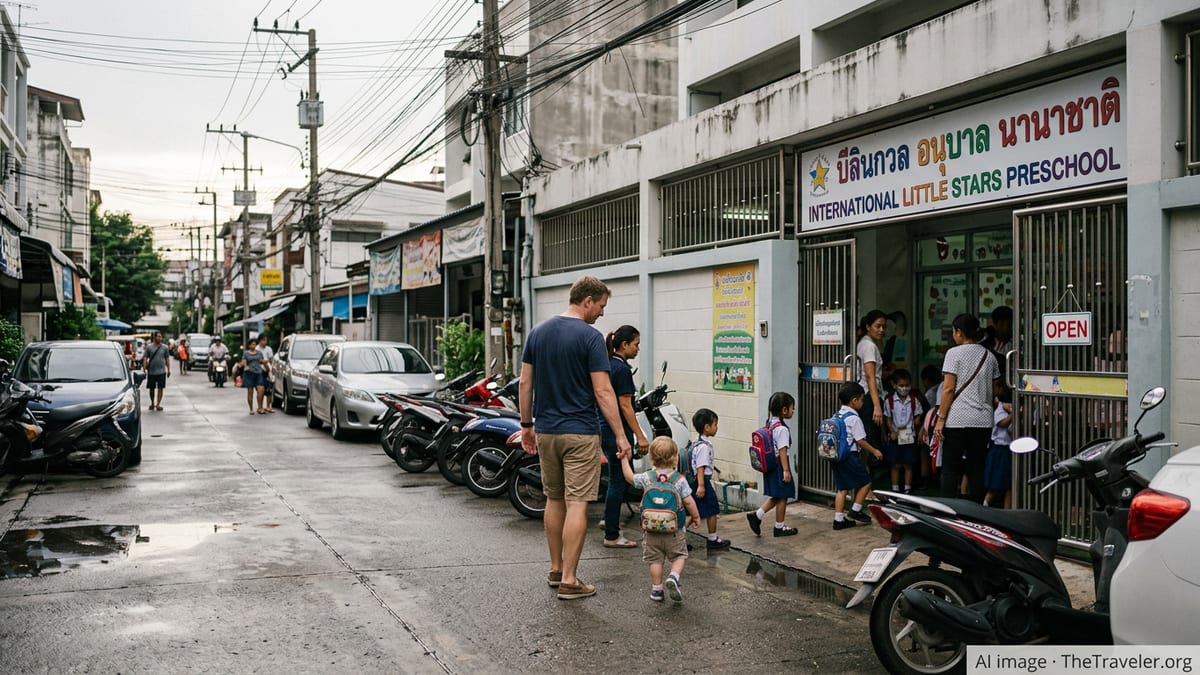
Overview of Childcare Options for Expats in Thailand
Childcare in Thailand for foreign families is provided through a mix of Thai public and private schools with early years sections, standalone kindergartens and nurseries, international schools offering preschool programs, and in-home care via nannies or live-in helpers. Costs span a wide spectrum, from low-fee local options delivered in Thai to premium international environments with foreign curricula and English immersion.
Geography is a key driver. Bangkok, major resort areas and large provincial cities such as Chiang Mai and Pattaya show the highest price points, particularly where international schools cluster. Smaller cities and upcountry locations generally offer far lower tuition and wages for domestic help, but with more limited English-language and international-curriculum options.
Most expat families combine several forms of childcare over time. A common pattern is full-day nursery or kindergarten from ages two or three, moving into international or bilingual schools for compulsory education, supplemented by part-time nannies or domestic workers for after-school and holiday care. Each element has its own fee structure, contract norms and non-tuition costs that must be considered.
Regulation of early childhood education exists but is less prescriptive than in some Western jurisdictions. Quality and staffing standards vary, making cost only one of several decision factors, but this briefing focuses on the financial dimension to support budget planning.
Cost Structure of Nurseries and Preschools
Nursery and preschool fees in Thailand range from modest local programs to high-end early years centers attached to international schools. At the international and premium end, annual nursery or kindergarten tuition frequently falls between about 250,000 and 550,000 Thai baht per year in major cities, with some top-tier schools higher. Recent fee schedules from mid-market and premium international schools show nursery and kindergarten programs priced in this broad band, with application and enrollment fees on top.
Mid-tier international or bilingual preschools outside central Bangkok can be significantly less. Published fee structures for regional international schools indicate nursery tuition in the range of roughly 180,000 to 300,000 baht per year, sometimes with options for half-day attendance at reduced cost. Standalone early years schools in Bangkok offering international-style programs often advertise term-based fees that translate to roughly 150,000 to 250,000 baht per year for full-time attendance, again excluding one-time registration charges.
Local Thai private kindergartens and bilingual schools are usually much cheaper. Publicly available fee sheets for Thai bilingual schools in Bangkok show nursery and preschool tuition that can be a fraction of international school rates, sometimes aligned more closely with local income levels. These options can be attractive for expats comfortable with Thai or bilingual environments, but they may have less English exposure and different pedagogical approaches.
Beyond tuition, families should plan for ancillary preschool costs such as registration or enrollment fees, which can range from around 3,000 to more than 50,000 baht depending on the status of the school, plus uniforms, meals, transport and occasional activity or material charges. Many schools bill per term, typically three terms per academic year, which affects cash flow even when the total annual amount is similar.
International Early Years Programs and Their Pricing
For expats seeking an English-medium curriculum aligned with British, American or other international standards, early years programs at full international schools are often the default choice. Current fee schedules for international schools in Bangkok and other major hubs indicate typical nursery and kindergarten tuition in the range of approximately 280,000 to 550,000 baht per year, excluding capital levies or large one-time registration fees that can add tens of thousands of baht per child.
Some well-known international schools publish tuition for pre-nursery or kindergarten that, when converted from foreign currency or listed in baht, places early years costs near or above the equivalent of 18,000 to 20,000 US dollars per year at the top end. Other high-quality but less elite international schools in Bangkok and secondary cities often cluster nearer 250,000 to 400,000 baht annually for nursery and kindergarten, with lower general fees in regional cities compared with the capital.
Fee policies usually distinguish between one-time charges, recurring annual tuition and separate “general” or “resource” fees that cover materials, technology, some activities and sometimes accident insurance. For example, some international schools disclose additional annual resource or general fees for nursery and kindergarten around 30,000 to 45,000 baht, payable on top of tuition. A refundable deposit of around 40,000 baht is also common in certain schools, tying up further capital until withdrawal.
Discounts and scholarships exist but are not universally available. A number of schools offer sibling discounts or small reductions for paying annually in advance. Some institutions historically extended preferential rates to foreign-passport holders or corporate contracts, but such schemes are policy-specific and subject to change. Families paying privately should assume that headline tuition, plus explicit general fees and transport or lunch charges, reflects their likely outlay, with limited room for negotiation at well-established schools with full enrolment.
In-Home Childcare: Nannies, Maids and Babysitters
In-home childcare is relatively accessible in Thailand compared with many Western countries, largely because domestic worker wages remain tied to local cost structures. However, there is a growing gap between basic domestic help and experienced, English-speaking nannies, particularly in Bangkok and major expat enclaves. The latter command salaries at the upper end of the local market.
Recent labour market guides and expatriate-focused advisory content suggest that a full-time live-in nanny in Bangkok, with childcare responsibilities and some household duties, now typically earns at least around 15,000 baht per month, with higher rates for English speakers or candidates with formal childcare training. Surveys and anecdotal evidence from expat forums indicate that experienced live-in maid or nanny roles commonly fall between about 13,000 and 25,000 baht per month, depending on language skills, employer expectations, and whether the worker is Thai or from neighbouring countries.
Daytime live-out nannies or babysitters in urban areas often charge a daily or hourly rate instead of a flat salary. Informal market data shared by residents points to ad hoc babysitting or overtime rates in the region of 100 to 150 baht per hour in Bangkok, with regular part-time arrangements priced per visit. For families outside major cities, rates can be significantly lower, though the pool of English-speaking candidates may be limited.
When budgeting for in-home help, expat families must include additional costs beyond salary. These commonly include social security contributions where applicable, paid annual leave, overtime pay for long days, bonuses around Thai New Year, and the incremental cost of room and board for live-in workers. Agency placement fees can also be meaningful, especially when using specialist nanny agencies that screen foreign workers and handle work permits.
Comparative Cost Levels by City and School Type
Location and school positioning have a pronounced effect on childcare costs. Bangkok and nearby provinces with dense international school clusters generally display the highest early years tuition, while regional cities and tourist areas offer more varied price points. Within each city, tuition ladders from Thai-language public kindergartens at the base to top-tier international schools at the apex.
Available fee schedules and expatriate reports allow for indicative comparative ranges, summarized below. These figures are approximate and refer to full-time early years programs for one child, excluding one-time enrollment or capital fees and transport.
Estimated annual cost ranges (Bangkok and large cities):
• Thai public kindergarten: Nominal or very low fees for Thai citizens; foreigners may pay modest local rates where accepted.
• Thai private / bilingual preschool: Roughly 40,000 to 120,000 baht per year, with considerable variation by district and brand.
• Mid-tier international preschool: Approximately 150,000 to 300,000 baht per year, often in less central locations or secondary cities.
• Premium international early years program: Roughly 280,000 to 550,000 baht per year in many cases, with some elite schools higher.
For in-home childcare, a broad indication for a full-time live-in helper or nanny in Bangkok is roughly 13,000 to 25,000 baht per month, lower in provincial areas. Over a year, this may equate to about 156,000 to 300,000 baht in salary costs, similar to or slightly above fees at some mid-tier preschools but well below the total cost of premium international nursery placements. Many families therefore use a combination, such as part-time preschool plus a nanny to bridge irregular hours and school holidays.
Hidden and Ancillary Childcare Costs
Beyond headline tuition or salary figures, expat families often encounter additional childcare-related expenses that can materially change the total cost picture. For school-based childcare, one-time application, registration or enrollment fees at private and international schools can range from low thousands of baht to upwards of 50,000 to 70,000 baht per child. These amounts are commonly non-refundable and due before a place is confirmed.
Recurring non-tuition charges also apply. Many schools levy separate annual resource or general fees for early years students, sometimes around 30,000 to 45,000 baht, alongside optional charges for transport, lunch, snacks and extracurricular activities. Uniforms, school supplies and special event fees create further incremental expenses. While each line item is relatively small in isolation, they can collectively add 10 to 20 percent to the nominal tuition cost over an academic year.
In-home childcare carries its own incidental costs. Employers are generally expected to provide live-in staff with furnished accommodation, utilities and meals, and to fund travel for any required visa runs or home visits for foreign domestic workers. Annual bonuses around Thai New Year, replacement of uniforms or work clothing, and health checks or vaccinations may also be customary in long-term arrangements.
Transport is another under-appreciated cost driver. If parents select a school outside their immediate neighbourhood, they may need to pay for the school bus service or budget for daily taxi or rideshare costs. Bus fees at some international schools for early years students can add many thousands of baht per term. Parents relying on part-time childcare to cover irregular or late working hours may also incur higher overtime or ad hoc babysitting rates when schedules change at short notice.
Budgeting Scenarios for Typical Expat Families
To support relocation decision-making, it is helpful to convert the wide ranges of Thai childcare costs into indicative annual budgets for different family profiles. The following scenarios are illustrative only but reflect current fee levels and wage norms in major Thai cities.
A cost-conscious expat family comfortable with Thai or bilingual environments might enrol a three-year-old in a local private kindergarten at 70,000 baht per year and hire a part-time nanny three afternoons per week at a rate that works out to roughly 8,000 baht per month. Total annual childcare spending in this scenario could sit in the region of 160,000 to 200,000 baht including uniforms, activities and small bonuses, considerably below full-time international school nursery costs.
A mid-budget family seeking international-style early years education but outside the most prestigious schools might select a regional or mid-tier international preschool charging around 220,000 baht per year, and engage a live-in helper on 16,000 baht per month to provide additional childcare and housework support. This arrangement could lead to annual childcare-related spending around 400,000 to 450,000 baht, factoring in school fees, helper salary, resource and transport charges, and typical bonuses.
A high-budget corporate assignee in Bangkok opting for a premium international school nursery at around 450,000 baht per year, plus an experienced English-speaking nanny on 25,000 baht per month, might see annual childcare costs for one young child exceed 750,000 baht once enrollment, resource, transport, meals and bonus obligations are included. Where employers do not fully subsidize schooling and childcare, such cost levels can strongly influence the feasibility of a relocation.
These examples underline that while Thailand can be relatively affordable for childcare compared with many Western capitals, the spread between local and top-tier international solutions is very wide. Careful scenario planning before relocation, including a realistic assessment of language preferences, commute tolerance and desired educational model, is crucial.
The Takeaway
Childcare costs in Thailand for expats range from affordable local options to premium international services that can rival or exceed global metropolitan price levels. Early years tuition at Thai private and bilingual kindergartens can be modest, while international preschools and early years sections of established international schools commonly charge between roughly 250,000 and 550,000 baht per year in major cities, with extra fees on top. At the same time, in-home childcare through nannies and live-in helpers remains comparatively accessible relative to many Western countries, especially outside Bangkok.
For relocation planning, the primary cost levers are school type, language of instruction, city, and the degree to which in-home care supplements or replaces institutional childcare. Non-tuition items such as registration fees, resource charges, transport, meals, bonuses and accommodation for domestic staff must be incorporated into budgets to avoid underestimating total expenditure.
Ultimately, Thailand offers expat families broad flexibility to tailor childcare arrangements to their financial capacity and educational priorities. A move can be financially attractive for families willing to use local or bilingual options and moderately priced in-home help, but substantially more expensive for those requiring top-tier international schools and highly compensated nannies. Clear-eyed analysis of the ranges outlined in this briefing, aligned with employer support and long-term schooling plans, is essential before committing to relocation.
FAQ
Q1. How much does full-time nursery or preschool cost for expats in Thailand?
For international or premium preschools in major cities, expat families should expect roughly 250,000 to 550,000 baht per year in tuition for full-time nursery or kindergarten, with mid-tier and local options significantly cheaper.
Q2. Are Thai public kindergartens a realistic option for foreign children?
Thai public kindergartens are very low cost but primarily serve Thai citizens, operate in Thai and may have limited capacity for foreign students, so availability and suitability vary case by case.
Q3. What is the typical salary for a full-time live-in nanny in Bangkok?
Recent market information suggests a full-time live-in nanny in Bangkok usually earns at least about 15,000 baht per month, with experienced or English-speaking nannies often receiving 18,000 to 25,000 baht or more.
Q4. Is it cheaper to hire a nanny or to use an international preschool?
In many cases, a full-time nanny costs less over a year than tuition at a premium international preschool, but combined arrangements and additional household benefits for live-in staff can narrow the gap.
Q5. Do international schools charge extra fees beyond tuition for early years?
Yes, most international schools charge additional enrollment, resource, technology, transport and meal fees, which can add 10 to 20 percent or more to the headline tuition cost each year.
Q6. How do childcare costs in Bangkok compare with other Thai cities?
Bangkok typically has the highest childcare costs, especially at international schools, while cities such as Chiang Mai, Pattaya and regional centers tend to offer lower tuition and domestic worker wages.
Q7. Can expats find part-time childcare such as babysitters in Thailand?
Yes, part-time nannies and babysitters are common in urban areas, with typical informal rates often around 100 to 150 baht per hour in Bangkok, although exact prices vary by experience and language skills.
Q8. How early should expat families budget for enrollment and registration fees?
Enrollment and registration fees are usually due at the time of application or acceptance and can range from a few thousand to more than 50,000 baht, so families should set aside funds several months before a planned start date.
Q9. Are there sibling discounts on childcare costs at Thai international schools?
Many, but not all, international schools offer sibling discounts or small reductions for multiple children, so parents should confirm current policies directly with each school when calculating total costs.
Q10. How much should be budgeted annually for a combination of preschool and nanny care?
For a mid-range arrangement in a major city, combining a mid-tier international preschool with a live-in nanny can easily total 400,000 to 500,000 baht per year once tuition, salary and ancillary fees are included.