


More news on this day
Spain is preparing to host Europe’s best views of the August 12, 2026 total solar eclipse, but an increasingly volatile wildfire season is prompting questions about whether smoke, heat and safety restrictions could cloud the celestial showcase.
Get the latest news straight to your inbox!
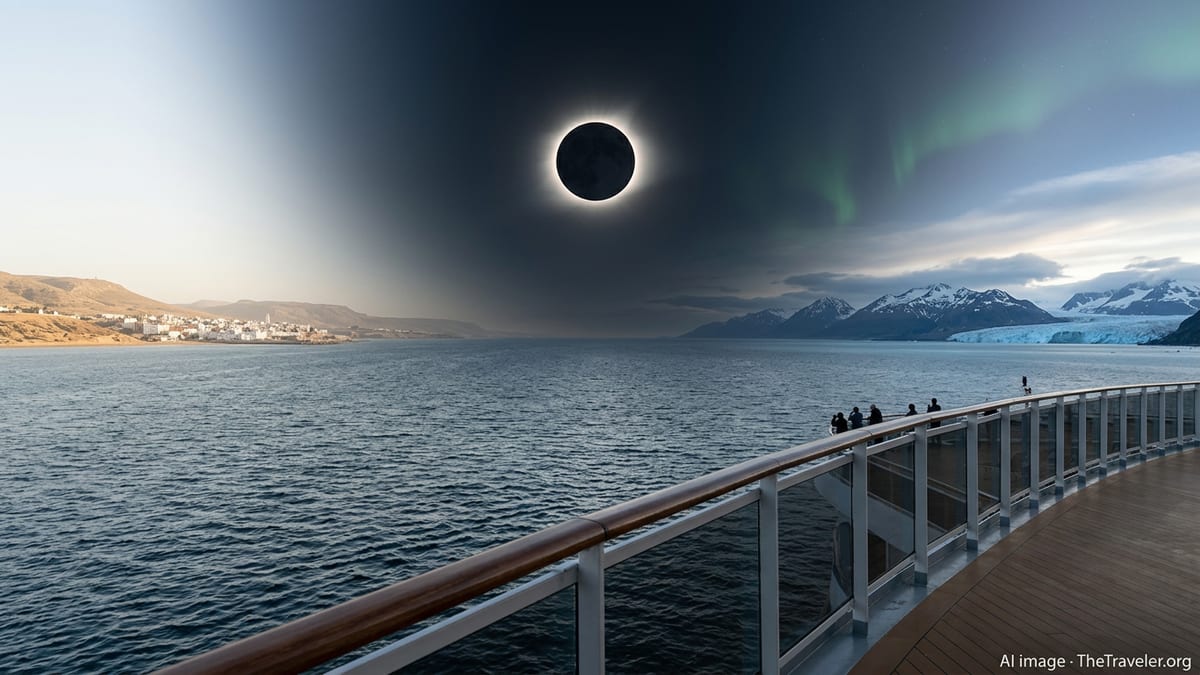
Astronomy Spotlight Meets Climate Reality
The August 12 event is set to be the first total solar eclipse visible from mainland Spain in more than a century, with the path of totality crossing from the Atlantic coast through northern and central regions before sweeping over the Balearic Islands. Astronomical agencies describe Spain as offering the widest stretch of totality in Europe, and tourism operators have been marketing the country as the prime viewing destination for eclipse chasers.
Totality is expected in the evening, with the Sun low on the horizon, a factor that already heightens sensitivity to haze and particulate pollution. Clear skies are critical not only for dramatic views of the corona, but also for safe navigation on crowded roads and at improvised viewing points expected along coasts, highlands and rural plateaus.
At the same time, published climate data and recent fire seasons show a steady rise in heat, drought stress and extreme fire weather across the Iberian Peninsula. The coincidence of peak summer, heightened fire danger and a major mass-mobility event has drawn attention from scientists, planners and the tourism industry to how wildfires could interact with an influx of visitors.
Recent Fire Seasons Raise Visibility Concerns
Spain endured some of its most destructive wildfires in decades during the summer of 2025, with European monitoring systems estimating hundreds of thousands of hectares burned across Spain and neighboring countries. Media coverage at the time highlighted long-duration blazes in regions such as Castilla-La Mancha and inland provinces northeast of Madrid, with smoke plumes affecting air quality far beyond the immediate fire zones.
Early assessments for 2026 suggest that fire risk remains elevated. Government briefings and public advisories point to a notable increase in the number of wildfire incidents and burned area since 2025, attributed to persistent drought, high temperatures and changes in rural land use that leave more continuous, unmanaged vegetation. Analysts note that even when major fires occur outside the path of totality, smoke can still drift hundreds of kilometers, potentially dulling sky transparency along prime viewing corridors.
In past summers, large Spanish wildfires have produced thick smoke layers that turned skies milky, reduced visibility on roads and, in some cases, forced temporary closures of nature reserves and hiking areas. For eclipse travelers targeting mountain viewpoints or forested lookouts, similar conditions in August could mean degraded views or last-minute changes in access if fire conditions deteriorate.
Government Response and Special Eclipse Planning
Spanish authorities have framed 2026 as a pivotal year for both wildfire preparedness and eclipse logistics. A royal decree approved in January strengthened coordination between national and regional agencies for forest fire operations, expanding shared aerial resources and refining protocols for cross-border assistance within the European Union. Publicly available information describes 2026 as featuring one of the largest state deployments ever for a wildfire campaign, reflecting lessons learned from the intensive 2025 season.
In parallel, Spain’s science and civil protection ministries have created a special security and civil protection framework specifically for the August 12 eclipse. Reporting on interministerial meetings indicates that this framework covers crowd management, traffic and transport planning, medical support and emergency response procedures across regions expecting the highest eclipse demand.
Official outreach materials tied to Spain’s “trio of eclipses” between 2026 and 2028 also highlight wildfire risk as a factor for visitors. Guidance for eclipse observers urges travelers to respect fire bans, avoid parking on dry grass or blocking forest tracks, and follow local instructions if risk levels rise. The material stresses that access to some rural or high-risk forest areas may be restricted on short notice to prevent ignitions or to keep emergency routes clear.
Tourism Industry Weighs Demand Against Risk
The tourism sector has moved quickly to capitalize on what agencies describe as a once-in-a-lifetime event. Specialized eclipse tours featuring routes through northern Spain, the interior plateau and the Balearic Sea have been on sale for months, often including dedicated viewing locations, chartered transport and astronomy briefings. Hotel booking data and travel marketing suggest that cities such as A Coruña, Bilbao, Zaragoza, Valencia and Palma de Mallorca are emerging as focal points for eclipse travel within the path of totality.
At the same time, wildfire experience in recent summers has made operators more cautious. Some itineraries marketed for 2026 already include language acknowledging that planned viewing sites near forests or rural landscapes could change if fire danger is high or if smoke significantly affects visibility. Tour organizers describe flexible routing as a selling point, allowing last-minute moves toward clearer skies or safer zones.
Broader tourism analysis from international organizations notes that southern European destinations face a growing intersection of peak-season heat, wildfire risk and visitor concentration. For Spain, the eclipse adds an extra layer of temporal pressure, concentrating travel into a narrow window around August 12 and increasing the need for coordinated contingency plans if fires break out near key highways, rail lines or airports serving eclipse regions.
Practical Advice for Eclipse Travelers
For international and domestic visitors alike, the main unknown is not whether the eclipse will occur, but how regional weather, wildfire activity and smoke will shape the experience on the ground. Travel planners recommend building flexibility into itineraries, with at least several days on either side of August 12 to relocate within Spain if conditions worsen in one area of the path of totality.
Safety advisories urge travelers to monitor official regional bulletins on wildfire danger, heat alerts and access restrictions, particularly in coastal forests, mountain ranges and rural viewing sites. Visitors are encouraged to treat fire regulations as non-negotiable and to avoid behaviors that increase ignition risk, such as roadside barbecues, off-road parking in dry vegetation or the use of open flames near campgrounds and picnic areas.
Observers are also being advised to consider more than just cloud forecasts when choosing a viewing spot. In a year of elevated fire risk, local topography, prevailing wind patterns and proximity to fire-prone vegetation could matter as much as simple sunshine probabilities. Urban or peri-urban locations inside the path of totality, with established infrastructure and clear evacuation routes, may offer a safer and more predictable experience than remote forest viewpoints.
As Spain counts down to August 12, the country stands at the intersection of astronomical opportunity and climate stress. The eclipse promises a rare spectacle in European skies, but whether it unfolds under crystal-clear darkness or through a veil of smoke will depend on how the 2026 fire season evolves, and how effectively visitors and host regions manage the pressures of a hotter, drier summer.