


More news on this day
India’s push to extend high speed rail from the national capital to the eastern city of Patna is emerging as one of the country’s most closely watched transport upgrades, with a proposed Delhi–Patna bullet train expected to cut travel times to under five hours and rewire economic links across Uttar Pradesh and Bihar.
Get the latest news straight to your inbox!
From Overnight Journey to Same Day Connection
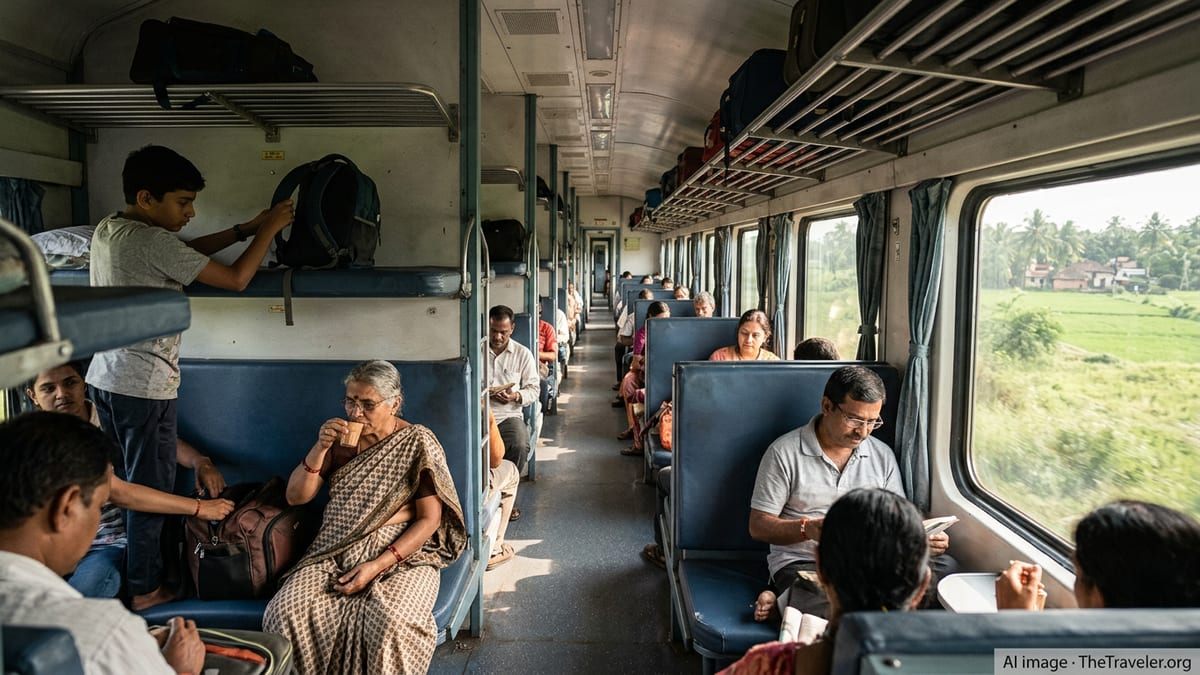
Current rail journeys between New Delhi and Patna typically take 12 to 16 hours on conventional express trains, making the route an overnight or full day commitment for most travelers. Timetables for premium services and seasonal Vande Bharat specials show end to end times still well beyond nine hours, underlining the gap between demand and existing capacity on one of India’s busiest eastbound corridors.
Against this backdrop, the proposed Delhi–Patna bullet train is being framed in local media coverage as a step change rather than an incremental upgrade. Reports highlight preliminary planning within India’s wider high speed rail vision, which already includes operational work on the Mumbai–Ahmedabad corridor and a sanctioned Delhi–Varanasi route. In this network, Patna appears as a key node for Eastern India, linking to Varanasi, Kolkata and potentially onward to the Northeast.
Recent Hindi language coverage of public events with India’s railway minister points to target journey times of around 4 hours 41 minutes between Patna and Delhi via high speed rail. While detailed alignment, station locations and funding models are still being refined, such a reduction would put Patna within practical same day reach of the national capital for business, government and leisure travelers.
The Delhi–Patna concept is also closely tied to India’s broader Diamond Quadrilateral high speed vision that aims to connect Delhi, Mumbai, Chennai and Kolkata through a series of fast corridors. Official summaries of the National Rail Plan and feasibility work describe Patna as part of extended eastward spurs, including Patna–Kolkata and Patna–Guwahati, suggesting that a Delhi–Patna line would be one building block in a larger eastern high speed lattice.
Strategic Role in India’s High Speed Rail Map
National planning documents on high speed rail outline a phased approach, beginning with higher demand routes in western and northern India, then gradually pushing into the Ganges basin. Patna sits at a strategic point in this sequence, located downstream of Varanasi on the Ganges and historically serving as a commercial and administrative hub for Bihar and neighboring states.
According to publicly available summaries of the National Rail Plan, new high speed lines are intended to complement existing broad gauge routes rather than replace them. The emerging network includes Delhi–Varanasi and Varanasi–Kolkata corridors, as well as additional links from Patna toward Guwahati. Within that mosaic, a Delhi–Patna bullet train would serve both as a long haul business corridor and as a critical connector between high growth cities along the Ganges plain.
Maps and feasibility studies associated with the Diamond Quadrilateral concept show high speed alignments threading through or near cities such as Lucknow, Varanasi and Patna. These alignments aim to integrate with conventional rail junctions and new expressways to form multimodal “economic spines” across India. For travelers, that could translate into new transfer options, combining bullet trains with regional rail and road to reach smaller destinations in eastern Uttar Pradesh and Bihar.
India’s first bullet train corridor between Mumbai and Ahmedabad is often used as a reference point for cost, construction sequencing and technology choices. Analysts following that project suggest that subsequent corridors, including the Delhi–Varanasi and prospective Delhi–Patna lines, may benefit from experience gained in viaduct construction, station design and land acquisition, potentially shortening timelines once formal approvals are in place.
Economic Ripple Effects Across Uttar Pradesh and Bihar
Economic planners increasingly point to high speed transport as a catalyst for investment in manufacturing, services and logistics. Gati Shakti program documents and related infrastructure compendia describe how new corridors across northern and eastern India are expected to draw warehousing, agro processing and light industry toward upgraded highways and future high speed rail stops.
In Bihar, Patna already functions as a gateway for trade in textiles, agriculture and resource based goods from the wider region. Government and policy publications describe the city as an outlet for products ranging from silk and handloom items to mineral resources and fertilizers, with improved road and rail links seen as key to cutting logistics costs. A fast Delhi–Patna rail connection would add another layer to this ecosystem, offering time sensitive shippers a premium, higher speed option alongside traditional freight corridors.
The tourism sector stands to benefit as well. Eastern India’s tourism belt stretches from spiritual centers such as Varanasi and Bodh Gaya to colonial era riverfronts in Patna and wetlands along the Ganges. High speed rail advocates argue that reduced travel times from Delhi can convert multi day itineraries into short breaks, encouraging more domestic visitors and repeat trips. This is particularly relevant for heritage and religious tourism, where better connectivity tends to translate into higher footfall and more stable seasonal flows.
Regional labor markets could also be reshaped. The current pattern of long distance migration from Bihar and eastern Uttar Pradesh to Delhi and other metros is heavily dependent on slow, crowded trains and long bus journeys. A bullet train that covers Delhi to Patna in under five hours would not only ease peak season congestion on existing trains but could gradually enable more commuters and professionals to maintain stronger ties between home districts and workplaces in the capital region.
Transforming the Travel Experience for Passengers
The potential Delhi–Patna bullet train would mark a qualitative change in the passenger experience compared with today’s options. Conventional express trains on the route offer overnight sleepers and day coaches, but journey times and crowding remain a frequent complaint, particularly around holidays and exam seasons. Seasonal premium services, including special Vande Bharat runs, have demonstrated demand for faster, more comfortable seating based options, but are constrained by existing track and signaling limits.
High speed rail technology allows for dedicated tracks, advanced train protection systems and streamlined boarding, which together support operating speeds above 250 kilometers per hour. Indian Railways’ early experience with semi high speed Vande Bharat services on other routes has shown how improved acceleration, modern interiors and fewer stops can change traveler expectations for intercity trips. Transferring these lessons to a full bullet train service between Delhi and Patna would significantly elevate connectivity standards in eastern India.
For air travelers, the arrival of bullet trains in the Delhi–Patna market could introduce new competition on price and convenience. At present, flights between the two cities are popular with business travelers and high income passengers, yet airport transfers, security checks and weather related disruptions can erode door to door time savings. A reliable four to five hour train journey from city center to city center, with predictable schedules and digital ticketing, may attract a share of these passengers, particularly as high speed rail fares in India are being positioned between conventional AC rail and economy air tickets.
Improved accessibility could also shape how travelers combine destinations. A visitor from Delhi might use a bullet train to reach Patna and then continue by road or regional rail to sites such as Nalanda, Rajgir or the Buddhist and Jain circuits in Bihar. Similarly, residents of Patna and surrounding districts would gain faster access to Delhi’s international flight network, higher education institutions and healthcare facilities, all of which reinforce the perception of the corridor as a single extended travel market.
Timelines, Challenges and What Comes Next
While local headlines about a Delhi–Patna bullet train have generated excitement, official documents still describe the project as part of a longer term pipeline rather than an imminent launch. High speed rail corridors in India move through multiple stages, including prefeasibility studies, detailed project reports, financing arrangements and state level agreements on land and alignment. Publicly available material indicates that the current focus is on completing the Mumbai–Ahmedabad line and advancing the Delhi–Varanasi and Varanasi–Kolkata segments that anchor the eastern branch of the high speed network.
Cost is a central consideration. Experience from the Mumbai–Ahmedabad route shows that high speed rail requires extensive viaducts, tunnels and advanced stations, all of which involve substantial capital expenditure. Government notes on the Diamond Quadrilateral and associated corridors emphasize that each new line must demonstrate technical feasibility and financial viability, often through a mix of public funding, loans from international partners and potential private participation in station development and real estate.
Land acquisition and environmental clearances are additional hurdles, particularly in densely populated parts of Uttar Pradesh and Bihar where farms, villages and floodplains are interwoven along existing transport corridors. Planning agencies are exploring alignments that can minimize displacement while still maintaining the straight, high speed friendly geometry that bullet trains require. Balancing these constraints with the need for centrally located stations in cities such as Patna will be a key test for the project’s next phase.
For travelers, the near term picture is likely to feature incremental improvements alongside long horizon high speed plans. New expressways, upgraded conventional rail services and additional Vande Bharat trains on eastern routes are expected to enhance connectivity even before a dedicated bullet train link appears on the map. Yet the idea of covering Delhi to Patna in under five hours is already influencing how tourism operators, investors and local businesses think about the region’s future, underscoring the transformative potential of India’s evolving high speed rail strategy.
Moneycontrol coverage on proposed Delhi–Patna bullet train
Press Information Bureau note on high speed rail corridors in Uttar Pradesh and eastern India