


More news on this day
Delta Air Lines Flight DL938, a regularly scheduled service from Los Angeles to New York, diverted to Minneapolis on July 29, causing disruption for passengers and drawing attention to how quickly long haul itineraries can change when conditions deteriorate en route.
Get the latest news straight to your inbox!
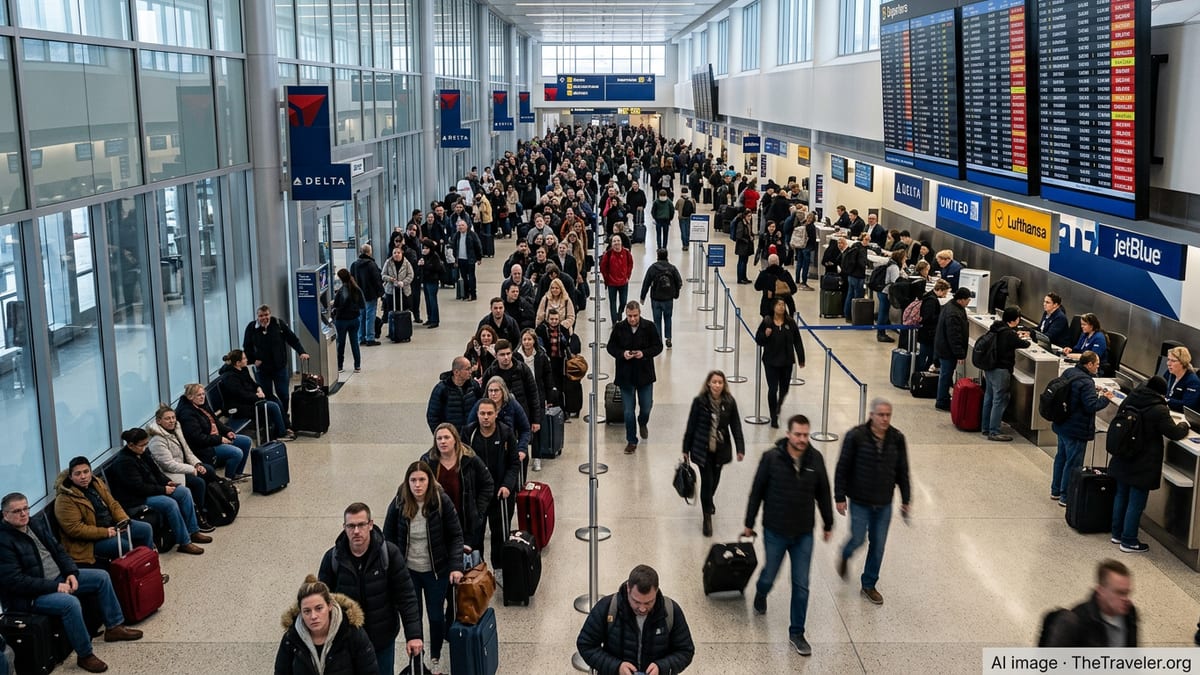
Coast to Coast Flight Makes Unexpected Upper Midwest Stop
Publicly available flight tracking data for July 29 indicate that DL938 departed Los Angeles International Airport in the afternoon for its usual nonstop transcontinental run to New York’s John F. Kennedy International Airport. Partway through the journey, however, the aircraft’s route shifted north, ultimately descending into Minneapolis–Saint Paul International Airport instead of continuing toward the U.S. East Coast.
Online flight logs and user monitoring of tracking platforms show the diversion occurred after the aircraft had already traversed a significant portion of the country. Instead of following the typical corridor toward the busy New York airspace, the flight was rerouted to Delta’s major hub in Minneapolis, where the carrier has extensive ground support and onward connections.
Initial posts from aviation enthusiasts and passengers referencing the flight suggest that the diversion was not related to a single dramatic event, but rather to a combination of operational considerations on a day when weather and air traffic constraints were affecting services into the New York area.
Weather and Air Traffic Constraints Over New York Region
On July 29, the New York airspace experienced challenging conditions that affected multiple carriers, according to publicly available weather and aviation data for the region. When thunderstorms or low visibility move across key arrival and departure routes, air traffic managers often impose flow restrictions that slow the rate at which flights can land or take off.
Published coverage in recent months has highlighted how sudden storms along the Eastern Seaboard can ripple through airline networks, prompting reroutes, holding patterns, or diversions to alternative airports that offer better approach conditions or more predictable arrival times. In such scenarios, long haul flights coming from the West Coast may face extended delays in holding stacks near New York, or may be forced to divert if fuel or crew duty limits become a concern.
Online commentary from at least one traveler who reported being on DL938 suggests that weather near New York played a central role in the decision to divert, rather than an onboard emergency with the aircraft itself. While individual accounts cannot provide a complete operational picture, they align with the wider pattern of weather related disruptions that often affect the region during the summer travel season.
Minneapolis Hub Provides Flexibility for Diversions
Minneapolis–Saint Paul International Airport is one of Delta’s primary hubs in the United States, and publicly available network information shows that the airline operates a dense schedule there, including frequent services to major coastal markets and a range of regional destinations. Using the airport as a diversion point can provide strategic advantages when a transcontinental flight can no longer reach its intended destination on schedule.
At a hub such as Minneapolis, Delta has access to its own maintenance facilities, a substantial pool of flight and cabin crews, and a large number of connecting flights that can be used to re accommodate disrupted passengers. For those originally bound for New York, this can mean rebooking onto later departures to the region, or in some cases routing through other East Coast cities that still have available seats and more favorable operating conditions.
Operational data compiled across the industry also show that diversions into major hubs are a common response when conditions at destination airports deteriorate unexpectedly. In these cases, network airlines often prioritize moving passengers to locations where onward options are most plentiful, rather than directing them to smaller or more constrained facilities.
Impact on Passengers and Broader Summer Travel Patterns
The diversion of DL938 added another layer of disruption to what has already been a demanding summer travel period for U.S. airlines. Travel demand has remained high, and industry analyses point to tightly scheduled fleets, busy hubs, and weather sensitive routes as recurring stress points across multiple carriers.
For passengers on DL938, the unscheduled stop in Minneapolis likely meant missed connections, longer travel days, and last minute changes to ground transportation or lodging at their final destinations. Standard airline practices in such situations typically include rebooking travelers on later flights and, when possible, providing assistance to help them continue their journeys once operating conditions stabilize.
Analysts who track airline performance note that diversions represent a fraction of total operations but can have outsized effects on individual travelers. A single transcontinental flight that is unable to reach its planned destination on time can generate a cascade of rebookings and seat swaps across multiple subsequent departures.
Operational Reliability and the Role of Diversions
Industry statistics on on time performance and irregular operations indicate that, while the majority of flights arrive as scheduled, diversions remain an essential safety and reliability tool. They allow crews and dispatchers to respond to changing conditions in the air and on the ground, from sudden weather shifts to congestion and runway closures.
Recent reporting on airline reliability has emphasized that carriers are balancing aggressive summer schedules with the realities of complex airspace and infrastructure constraints. When a flight like DL938 diverts, it underscores how quickly network plans can change and how contingent every long distance route is on real time assessments of weather, traffic flow, and crew resources.
As airlines review their midsummer operations, events such as the diversion of DL938 from Los Angeles to Minneapolis provide additional data points on how networks perform under stress. For travelers, they serve as a reminder that even straightforward nonstop itineraries can occasionally include an unplanned stop, particularly during peak travel months when storms and congestion regularly reshape the national air traffic picture.