


More news on this day
Coordinated and sporadic strike actions by airline staff across Europe and other regions are heightening the risk of widespread flight disruption at the height of the northern hemisphere summer, prompting renewed scrutiny of what protections travelers can rely on when their plans are thrown off course.
Get the latest news straight to your inbox!
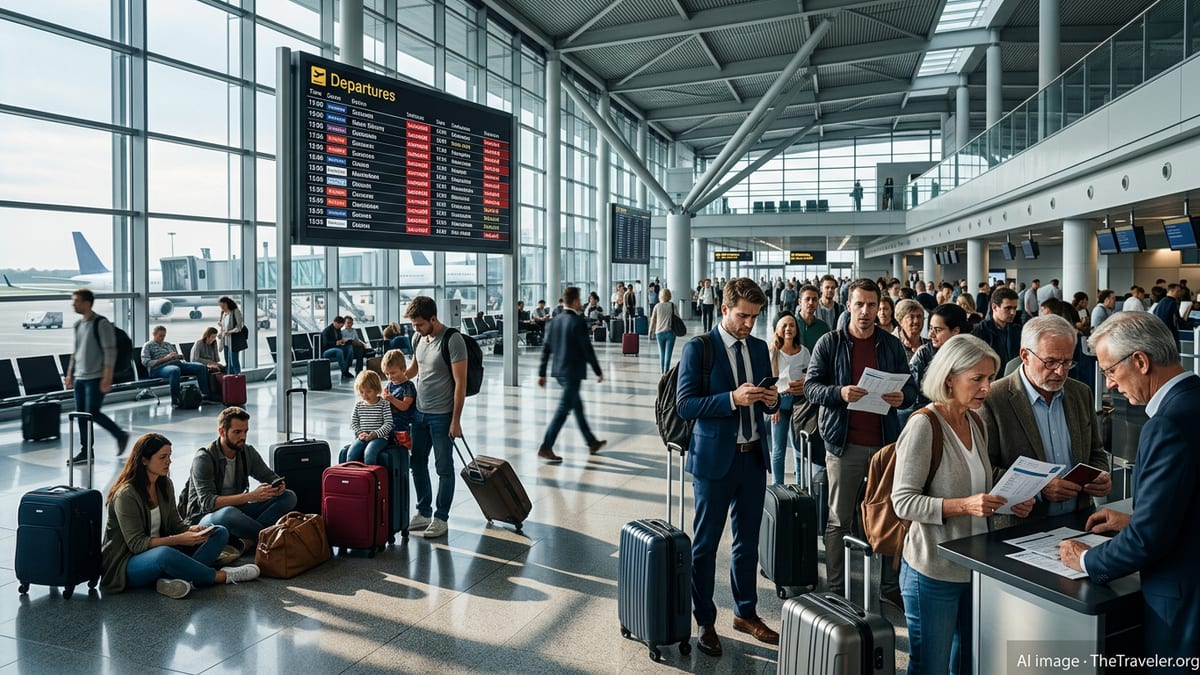
Wave of Industrial Action Hits Peak Travel Season
Recent months have seen a series of high profile walkouts by pilots, cabin crew and ground staff at major carriers and airports, particularly in Europe, amid disputes over pay, working hours and post‑pandemic staffing levels. In February, a large scale strike at Germany’s largest airline led to hundreds of cancellations and severe knock on delays across the country’s hubs, illustrating how quickly industrial disputes can ripple through global networks.
Reports from aviation analysts indicate that similar labor tensions remain unresolved at several airlines heading into August, increasing the risk of further disruption during one of the busiest travel periods of the year. While some actions are limited to individual airlines or airports, the interconnected nature of modern aviation means cancellations can cascade, affecting passengers far beyond the immediate strike zone.
Industry data compiled by trade bodies suggests that staffing disputes have become a persistent feature of the post‑pandemic recovery, as unions seek to restore wages and schedules that were cut during the crisis and carriers attempt to contain costs in the face of higher fuel and financing expenses. This backdrop helps explain why travelers are being warned to prepare for short notice schedule changes throughout the season.
How EU Passenger Rights Apply When Airline Staff Strike
Airline and airport strikes in Europe are governed by a detailed set of air passenger rights, commonly known as EU261, which has just undergone a significant reform. Under the existing rules, travelers departing from an EU airport, or flying into the bloc with an EU carrier, may be entitled to compensation if a flight is canceled at short notice or arrives with a long delay and the disruption is linked to circumstances considered to be within an airline’s control.
European case law and official guidance generally treat strikes by an airline’s own staff as within the carrier’s responsibility, meaning passengers can in many cases claim financial compensation on top of refunds, meals, and hotel accommodation. By contrast, wildcat actions by external service providers or air traffic control have often been treated as extraordinary circumstances, limiting payouts but not always eliminating the duty of care such as refreshments and rebooking.
Newly adopted EU reforms are set to clarify and strengthen several of these provisions. Publicly available information from European institutions shows that the updated regulation preserves existing compensation bands of 250 to 600 euros, while requiring airlines to provide clearer, proactive notification of rights and claim procedures when disruption occurs. The reforms also refine the definition of extraordinary circumstances to focus on events that are genuinely beyond an airline’s control.
Although carriers have a transition period before the revised rules fully apply, consumer groups are urging passengers caught up in strike‑related cancellations this summer to document their cases carefully, keep receipts for extra expenses, and submit claims directly to the operating airline, which remains the primary point of responsibility under EU law.
Protections Outside Europe: Patchwork Rules for Passengers
Beyond Europe, traveler protections during airline strikes vary widely, creating a patchwork of rights that can be difficult to navigate on multi‑leg journeys. In the United States, current regulations focus heavily on refunds: if an airline cancels or significantly changes a flight, passengers are entitled to get their money back if they choose not to travel. However, there is no federal requirement for cash compensation for delays comparable to the EU regime, and policies on hotel and meal vouchers during strikes are largely determined by individual carriers.
Several other jurisdictions, including Canada and the United Kingdom, have introduced or updated passenger rights frameworks in recent years, but the treatment of labor disputes is not uniform. Some systems distinguish between strikes by an airline’s own employees and those by third parties, while others place more emphasis on whether the carrier took reasonable steps to prevent or mitigate the disruption, such as arranging alternative flights.
Legal experts note that many long haul travelers are covered by more than one set of rules over the course of a trip. A passenger starting a journey in the EU, connecting through a third country and finishing in North America might find that EU protections apply to the first leg, while local regulations govern subsequent segments. This complexity is one reason regulators and consumer advocates advise travelers to check both the operating airline’s policies and the laws of the countries they are flying from and to.
What Stranded Travelers Can Expect at the Airport
When a strike leads to a mass cancellation, the immediate priority for most passengers is getting rebooked. Under European rules, airlines are required to offer a choice between a refund and rerouting at the earliest opportunity, including on another carrier if no reasonable alternative is available on their own network. In practice, the availability of seats during peak season can be limited, and passengers may face long queues at customer service desks as staff work through backlogs.
Duty of care obligations typically include meals, refreshments and, where an overnight stay is necessary, hotel accommodation and transport between the airport and the hotel. Travelers who book their own replacement flights or lodgings are often advised to keep detailed records and request written confirmation of the original disruption, in order to support later refund and compensation claims under applicable regulations.
Outside Europe, airlines may offer similar assistance as a matter of commercial policy, though the level of support can vary significantly between carriers and routes. Some larger airlines publish strike contingency plans and encourage passengers to use mobile apps or online tools to rebook without waiting in line, while smaller operators may rely more heavily on call centers and airport agents. Travel insurance or credit card protections can sometimes bridge gaps where statutory rights are weaker, but policy terms often exclude certain types of industrial action.
Preparing for Travel Amid Ongoing Labor Disputes
With labor negotiations ongoing at several major airlines and airport operators, analysts suggest that travelers treat strike risk as a normal part of trip planning for the coming months. Practical steps such as allowing longer connection times, avoiding tight same‑day transfers to cruises or events, and monitoring booking emails and airline apps in the days before departure can make it easier to respond quickly if a walkout is announced.
Consumer organizations recommend that passengers familiarize themselves with the key provisions of the air passenger rights rules that apply to their itinerary, paying particular attention to eligibility for refunds, rerouting and compensation in the event of airline staff strikes. Booking directly with airlines rather than through multiple intermediaries can sometimes simplify later claims, as responsibility for handling disruption is clearer.
As airlines, unions and regulators continue to debate the balance between worker rights, operational resilience and consumer protection, travelers are likely to remain exposed to sporadic disruption from industrial action. For now, understanding the scope of existing passenger rights frameworks, and keeping careful records when plans change, remains the most reliable way for passengers to protect their interests when flights are grounded by strikes.