


More news on this day
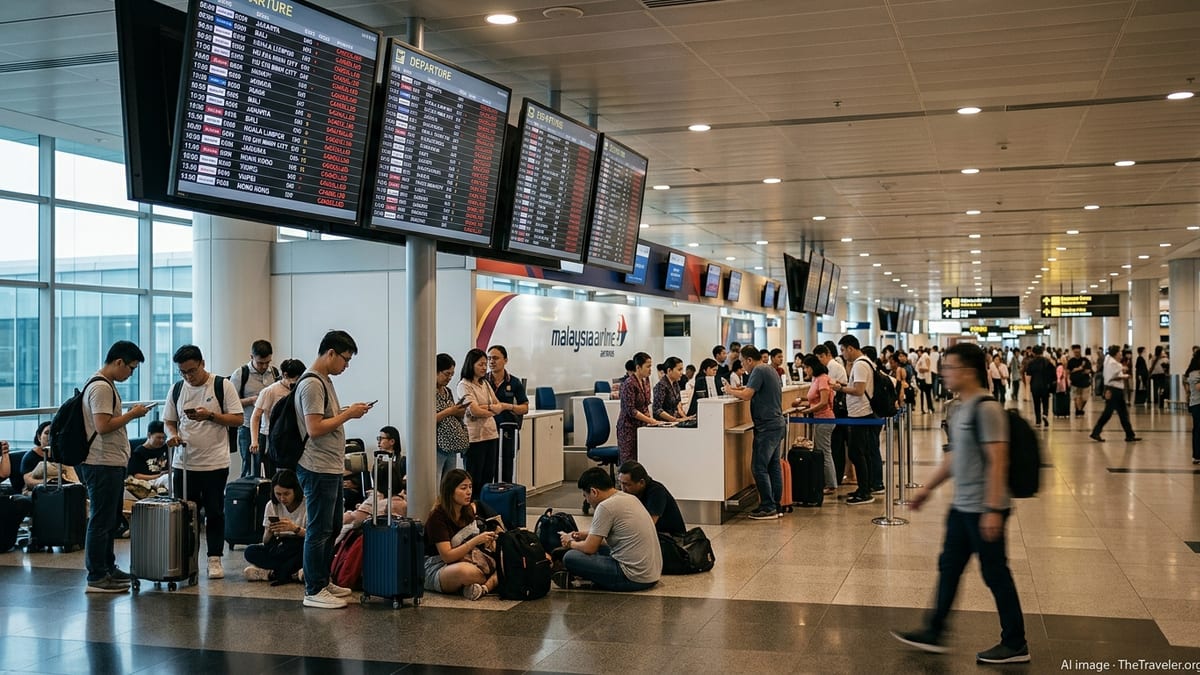
Delta Air Lines has formally re-entered the Hong Kong market with a new daily nonstop route from Los Angeles, positioning the service as a stabilizing option for transpacific passengers navigating a season of rolling cancellations and airport disruptions across Asia.
Get the latest news straight to your inbox!
Daily A350 Flights Restore a Lost U.S.–Hong Kong Link
The new Los Angeles International Airport to Hong Kong International Airport service began on June 6, 2026, marking Delta’s return to the city after an absence dating back to 2018. Publicly available schedule data shows that the airline is operating the flights on Airbus A350-900 aircraft configured with four cabins, including its Delta One suites and Premium Select sections.
The route runs daily in both directions, with westbound and eastbound timings structured to allow same-day connections on each side of the Pacific. Network filings and industry coverage indicate that Delta has designed the schedule to plug directly into its broader Los Angeles hub, giving travelers from dozens of U.S. cities a one-stop itinerary to Hong Kong without transiting other Asian gateways.
Industry analysis notes that the new flights make Delta the third major U.S. carrier with a nonstop presence between the United States and Hong Kong. The move places the airline into direct competition with established services from United Airlines and Hong Kong–based Cathay Pacific on a corridor that has seen demand rebound strongly as corporate and leisure travel to Asia recover.
At the same time, the new route gives Hong Kong another long-haul option at a moment when carriers have been rebalancing their Asia networks in response to changing traffic flows, higher fuel costs, and persistent airspace constraints over parts of Eurasia.
Targeting Transpacific Volatility and Disruption Risk
The timing of Delta’s launch coincides with a period of renewed strain across Asia’s aviation system, as published reports highlight airport congestion, staffing gaps, and weather-driven disruptions from major hubs in East and Southeast Asia. Travelers on multi-stop itineraries through cities such as Tokyo, Seoul, or Singapore have faced longer minimum connection times and an elevated risk of misconnecting when upstream flights run late.
By restoring a long-haul nonstop between Southern California and Hong Kong, Delta is promoting the route as a way to shield passengers from some of the operational complexity that has returned to transpacific networks. Travel industry coverage points out that single-flight itineraries reduce the number of potential failure points, particularly for journeys during peak travel periods when rebooking options are limited.
Analysts following the transpacific market also link the move to a wider pivot by large U.S. carriers toward concentrating long-haul Asia flying at a few well-developed hubs. In this context, Los Angeles functions as a western anchor for Delta’s international operation, enabling the airline to consolidate demand and deploy widebody aircraft in a way that can absorb irregular operations more effectively than thinner, multi-stop routings.
For passengers, the practical result is that a delay at one Asian airport is less likely to cascade into missed connections and overnight stays if the itinerary relies on a single nonstop segment across the Pacific, rather than staggered hops through multiple intermediate hubs.
Strengthening Los Angeles as Delta’s Pacific Gateway
The launch of Hong Kong service is part of a broader Los Angeles expansion that Delta has been outlining over the past two years. Company disclosures and route announcements describe LAX as the airline’s largest West Coast gateway, with more than 160 peak-day departures to domestic and international destinations, including Shanghai, Sydney, Brisbane, Auckland and Melbourne.
Delta has invested heavily in its physical footprint at the airport, completing a multi-billion-dollar redevelopment of Terminal 3 and the adjoining Delta Sky Way complex. Public information about the project highlights centralized check-in areas, expanded security lanes, and upgraded lounges designed to speed passenger flows and reduce stress at the front end of a long-haul journey.
The Hong Kong route slots into this environment by offering passengers streamlined transfers from other U.S. cities into a purpose-built international departure facility. Travel analysts note that efficient ground operations at LAX can help absorb some of the schedule volatility originating on other parts of the network, which in turn supports more reliable departures on time-sensitive long-haul flights.
In parallel, Delta has been growing its premium offerings in Los Angeles, including an expanded Sky Club presence and a dedicated Delta One lounge concept that caters to business and high-yield leisure travelers. These amenities are intended to reinforce the competitiveness of the LAX–Hong Kong service against incumbent carriers that have long marketed their premium cabins as a differentiator on Asia routes.
Competing in a Crowded, Constrained Transpacific Market
Delta’s move into the Los Angeles to Hong Kong corridor comes against a backdrop of intense competition for transpacific revenue. Industry coverage indicates that United Airlines has held a strong position on U.S.–Asia flying, leveraging a broad portfolio of routes from San Francisco and other hubs, while Cathay Pacific has continued to draw substantial connecting traffic over its Hong Kong base.
The new service adds meaningful capacity on a route that is already seeing high load factors, yet Delta’s deployment of the Airbus A350 suggests a strategy that balances passenger and cargo demand. Aviation analysts have pointed out that the aircraft’s belly-hold freight capability allows the airline to capture high-yield cargo flows between Southern California’s manufacturing and entertainment sectors and Asian supply chains.
Network specialists also frame the route as a partial hedge against ongoing airspace restrictions that force many carriers to take longer paths on northern transpacific routes. By operating from Los Angeles and coordinating with partners in Northeast Asia, Delta can offer a combination of direct and one-stop options that remain competitive on total journey time even when flight paths are adjusted for geopolitical or safety reasons.
For travelers, the expanded choice may translate into more stable pricing over time, as the additional capacity and carrier diversity can dampen the spikes in fares that sometimes emerge when disruptions elsewhere in the region temporarily squeeze available seats.
Passenger Experience Focused on Reliability and Comfort
Alongside the operational and strategic dimensions, Delta is placing emphasis on the onboard experience as a way to stand out in a demanding market. Aircraft configuration details in public filings show that the A350-900 assigned to the Hong Kong route offers lie-flat suites in Delta One, an enhanced Premium Select cabin with wider seats and deeper recline, and an upgraded Comfort section providing extra legroom compared with standard economy seating.
The airline is also promoting an extensive in-flight entertainment library, in-seat power across the cabin, and connectivity options designed to allow travelers to work or stay online throughout the nearly 15-hour journey. For many passengers, particularly those connecting from interior U.S. cities, the ability to complete the longest segment in one uninterrupted flight can be as important for perceived reliability as published on-time statistics.
Travel advisors observing the launch suggest that, for now, demand is being buoyed by a mix of pent-up leisure travel to Hong Kong and a gradual return of corporate itineraries linked to finance, technology, and entertainment. If current trends continue, the Los Angeles–Hong Kong nonstop is expected to become a core part of Delta’s transpacific schedule rather than a short-lived experiment.
For travelers watching a still-fragile Asia aviation landscape, the new route offers something increasingly rare during periods of disruption: a single, predictable long-haul flight that connects one of America’s largest metropolitan areas directly with one of Asia’s most important financial and cultural centers.