


More news on this day
Travel across the Asia Pacific region has been thrown off balance as Guangzhou Baiyun International Airport grapples with hundreds of delayed and cancelled flights, snarling operations for major Chinese carriers and leaving passengers facing hours of uncertainty.
Get the latest news straight to your inbox!
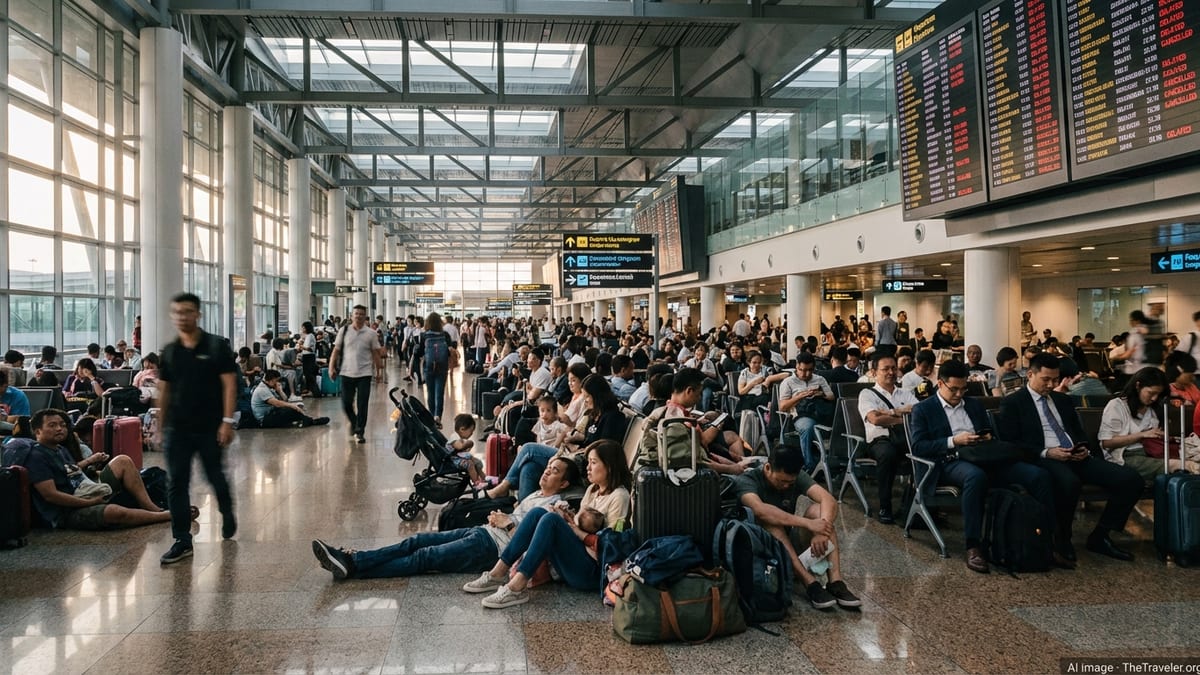
Guangzhou Records One of China’s Heaviest Delay Totals
Publicly available airport performance data for June 17 indicates that Guangzhou Baiyun International Airport has logged one of the highest disruption tallies in China, with nearly five hundred delayed departures and dozens of cancellations concentrated across its domestic and regional network. Reporting focused on today’s nationwide travel disruption notes that Guangzhou alone accounted for roughly 479 delays and 35 cancellations, a level that effectively turns the airport into one of the epicenters of the current wave of travel chaos.
The figures are particularly striking given Guangzhou’s role as a key southern hub, with four runways in regular use and an extensive schedule of flights linking mainland China with Southeast Asia, Northeast Asia and long haul destinations. Even with this capacity, the scale of delays means that aircraft and crew rotations have quickly fallen out of sync, leading to rolling disruption that is expected to reverberate into the evening peak.
Operational data published by flight tracking and timetable services shows that while some individual flights continue to operate more or less on schedule, the overall on time performance picture has deteriorated sharply compared with recent months. Prior analyses of Guangzhou operations for spring 2026 had already highlighted several thousand significantly delayed movements over a three month period, but today’s spike appears to be concentrated in a single intense day of disruption.
Air China, China Eastern and China Southern Feel the Strain
The three largest state controlled carriers, Air China, China Eastern and China Southern, are bearing the brunt of the disruption because of their dense Guangzhou schedules and heavy reliance on connecting traffic. China Southern, which treats Guangzhou as a primary hub, has seen knock on effects from delayed departures on both regional and intercontinental routes, with real time trackers showing adjusted departure and arrival times on services to destinations such as Brisbane, Los Angeles and multiple domestic cities.
Air China’s operations on core trunk routes between Guangzhou and Beijing have also been affected, with schedule information for services such as CA1328 showing heightened sensitivity to shifting departure slots and congestion. Likewise, China Eastern flights feeding into the Yangtze River Delta region are facing delays that complicate onward connections for travelers headed to cities across East Asia and beyond.
Because these three carriers interweave their networks across Beijing, Shanghai and Guangzhou, delays at Baiyun quickly propagate throughout the wider system. Aircraft arriving late into Guangzhou from other Chinese hubs or Asia Pacific cities are then unable to turn around on time, reducing available capacity for subsequent flights and compounding the disruption with each rotation that slips behind schedule.
Asia Pacific Routes Buckle Under Network Knock On Effects
The Asia Pacific region is particularly exposed to irregular operations at Guangzhou because many cross border routes depend on tightly timed connections through southern China. Schedules published for summer 2026 highlight Guangzhou’s role as a gateway for services to Southeast Asian destinations such as Hanoi, Ho Chi Minh City and Bangkok, as well as to key Northeast Asian and Pacific markets. When departures from Guangzhou are significantly delayed, the effect is felt on both sides of these routes.
Today’s disruption is already visible on a range of international services, with real time trackers noting revised timings, creeping departure delays and, in some cases, flight cancellations or removals from the day’s schedule. Even when an individual flight remains on the board, extended ground time can lead to missed onward connections and extended layovers for passengers who had planned same day transfers through Guangzhou.
Regional aviation analysts note in published commentary that Guangzhou’s position as a rapidly expanding long haul hub means that slots are tightly managed and turnaround times are carefully calibrated. In such a context, a sudden spike of nearly five hundred delays in a single day leaves little spare capacity, making it difficult to re accommodate affected travelers without widespread itinerary changes, particularly on popular Asia Pacific sectors during the busy summer season.
Ground Infrastructure and Terminal Changes Add Pressure
The disruption at Guangzhou Baiyun comes as the airport is undergoing a period of infrastructure transition, which may be limiting its flexibility to absorb irregular operations. Public information on airport facilities notes that parts of the older terminal complex, including sections linked to the Airport South metro station, are temporarily closed for upgrades during 2026. Passengers and local travelers have been advised in recent months to adjust their ground transport plans as Terminal 1 related metro access is suspended for renovation work.
This evolving terminal layout, combined with the operational demands of a four runway airfield, can create additional complexity for airlines and airport coordinators attempting to resequence flights, reposition aircraft and manage gate assignments during a surge of delays. With portions of the infrastructure offline or constrained, options for rapidly redistributing aircraft across stands and contact gates may be reduced, adding friction to efforts to stabilize the schedule.
Travel discussion forums and community posts over the past few weeks have already highlighted longer than usual queues, unpredictable security screening times and confusion over terminal changes at Guangzhou. Against this backdrop, today’s large wave of delays and cancellations is likely to magnify congestion at check in areas, security lanes and immigration checkpoints as passengers wait for updated flight information and revised departure times.
What Travelers Through Guangzhou Should Expect Next
For passengers booked to travel through Guangzhou Baiyun over the next 24 to 48 hours, publicly available flight boards and real time trackers suggest that rolling knock on delays are likely to continue, even if the volume of outright cancellations moderates. Aircraft and crews displaced by today’s disruptions will need time to return to their normal positions in the network, particularly for long haul routes where duty time limits constrain how quickly schedules can be reset.
Travel industry guidance generally advises passengers in these conditions to allow additional time at the airport, monitor airline apps and official flight information displays closely, and be prepared for last minute gate changes or revised boarding times. Reports from recent days at Guangzhou also underline the value of building in longer connection windows when itineraries route through Baiyun, especially for international to international transfers dependent on a single daily service.
While no single cause has yet been identified in public reporting as the trigger for today’s unusually high disruption count at Guangzhou, the combination of intense summer traffic, ongoing infrastructure works and tight crew and aircraft rotations across Chinese carriers has created a fragile operating environment. Until schedules are fully realigned, travelers across the Asia Pacific region can expect Guangzhou related delays to remain a key factor in their journey planning.