


More news on this day
Delta Air Lines has again found itself at the center of large-scale flight disruption in the United States, recently leading major carriers in cancellations and issuing fresh warnings to passengers traveling through four of its busiest hubs.
Get the latest news straight to your inbox!
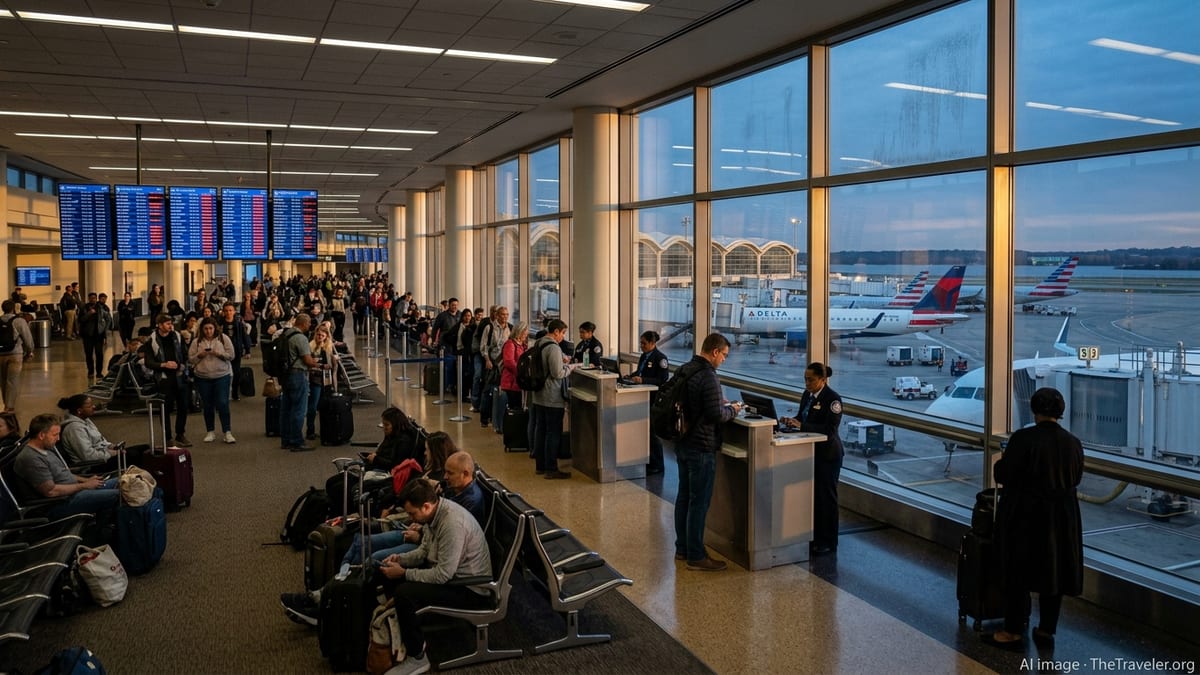
Alerts at Atlanta, Boston, New York and Chicago hubs
Publicly available operational data and airline advisories indicate that Delta’s current disruption is most acute at four major hub airports: Atlanta, Boston, New York and Chicago. These airports handle a large share of the carrier’s domestic and international traffic, magnifying the impact of each cancellation or delay across the network.
In Boston, Delta has posted a systemwide alert about fuel supply constraints that may affect flights to, from and through the region. The advisory notes that the issue is impacting multiple airlines and urges customers to monitor their flight status closely and consider flexible rebooking options if their plans are time-sensitive.
At New York’s LaGuardia Airport, Delta has circulated internal exception bulletins related to high temperatures, signaling possible aircraft performance and scheduling constraints during periods of extreme heat. Those internal documents outline fee waivers and rebooking flexibility when flights must be reduced or rescheduled because of weather and operational limitations.
Meanwhile, Delta’s largest hub in Atlanta and its growing operation at Chicago-area airports have experienced recurring delays and cancellations tied to severe summer storms, congestion and knock-on effects as aircraft and crews fall out of position. Local and national coverage of recent holiday weekends has highlighted long lines and missed connections on routes linking Atlanta and Chicago in particular.
Delta repeatedly out front on daily cancellation tallies
Independent flight-tracking services and federal data show that Delta has periodically led U.S. carriers in the number of canceled flights on some high-demand days this summer. On peak holiday and storm-affected periods, the airline has occasionally posted more cancellations than its closest rivals, a notable development for a carrier long known for operational reliability.
The pattern follows a difficult stretch for Delta dating back to the July 2024 technology outage linked to a widespread software failure, when the carrier canceled thousands of flights and struggled longer than competitors to restore normal operations. Public records and industry analyses of that episode describe how missed crew connections and aircraft in the wrong cities compounded initial problems and led to days of elevated cancellations.
More recent data, including daily figures compiled by commercial trackers and referenced in consumer discussions, suggest a similar dynamic at work in 2026. When storms, staffing shortages or airport constraints force schedule adjustments, Delta’s large presence at hub airports and tightly timed banked schedules can result in higher cancellation counts than at smaller or more point-to-point carriers.
Commentary from aviation analysts has pointed to a combination of aggressive scheduling, tight turnaround times and intense demand on key business and leisure routes as factors that can push a large network over the tipping point when external shocks occur. For passengers, the result can be a cascade of last-minute changes that are difficult to predict when booking months in advance.
Passenger warnings and flexibility policies
In response to the recent disruptions, Delta has updated its public guidance on delayed and canceled flights, stressing the importance of digital self-service and clarifying when customers may be eligible for refunds or fee-free changes. The airline’s website explains that when a flight is canceled or significantly delayed, it will attempt to automatically rebook travelers on the next available option.
For domestic trips, itineraries changed by three hours or more generally qualify as significant schedule changes, while international itineraries have a six-hour benchmark. In those cases, Delta states that customers may request a refund for the unused portion of the ticket if they choose not to travel, even on many nonrefundable fares.
The carrier has also continued to issue targeted travel waivers during specific events, such as the Boston fuel constraints and New York heat-related restrictions. These waivers typically allow passengers with affected itineraries to shift their travel dates, change destinations within a defined region or, in limited cases, cancel for a voucher or original-form-of-payment refund when no reasonable alternatives are available.
Travel agents and corporate travel managers have been asked to document rebookings carefully under these exception policies, reflecting the complexity of handling large numbers of disrupted passengers while maintaining visibility into costs and eligibility for refunds.
Impact on travelers and hub communities
The elevated cancellation levels have hit hardest in regions where Delta dominates local schedules, including Atlanta, Boston and New York. Travelers in these markets often rely on the carrier for nonstop access to business centers and international gateways, leaving fewer alternatives when flights are scrubbed or heavily delayed.
Consumer complaints and anecdotal accounts in online forums describe missed weddings, delayed business trips and unexpected overnight stays when multiple connections on a single itinerary fail. Some passengers report being rebooked several days later because peak-season flights are already full, while others turn to competing airlines at their own expense when same-day options on Delta are unavailable.
Communities that host major hubs, particularly Atlanta and Boston, also face broader economic and reputational effects when large-scale disruptions occur. Airport workers, ground transport providers and nearby hotels can see short-term surges in demand followed by traveler frustration and negative word of mouth when the problems persist.
Local leaders and tourism organizations monitor these patterns closely, as reliable air access is central to attracting conferences, investment and high-spending visitors. Extended periods of irregular operations at a dominant carrier may prompt calls for infrastructure investments, air traffic control improvements or diversification of airline service.
What passengers can do before heading to the airport
Aviation experts consistently recommend that travelers flying through Delta hubs during this period of heightened disruption take extra steps before leaving for the airport. That includes checking flight status frequently on the airline’s app, signing up for one-time notifications and monitoring airport-specific advisories covering fuel, weather or construction-related constraints.
Booking early-morning departures, allowing longer connection times, and favoring nonstop flights where possible can reduce the risk of becoming stranded if cancellations ripple through the system later in the day. For complex itineraries involving international connections, some travelers may consider overnight stopovers instead of tight same-day links at busy hubs.
When schedules begin to unravel, rebooking through digital channels can often be faster than waiting in line at the airport, especially during mass disruptions. Passengers who know their rights regarding refunds, hotel vouchers and meal assistance under airline policies and transportation regulations are generally better positioned to advocate for themselves.
Although Delta continues to promote investments in reliability, new aircraft and customer service, the recent wave of cancellations and warnings at its major hubs underscores how vulnerable even the largest and most established airlines remain to a combination of weather, infrastructure bottlenecks and internal scheduling strains. For now, travelers passing through Atlanta, Boston, New York and Chicago may need to build more flexibility into their plans and prepare for the possibility that their flight could be among those that never depart.