


Mexico’s digital banking ecosystem has expanded rapidly, offering a mix of traditional banks with strong apps, fully online banks, and fintech platforms. For expats considering relocation, understanding which digital options are realistically accessible to foreigners, and how they perform for everyday payments and cross‑border needs, is essential for planning a functional banking setup in Mexico.
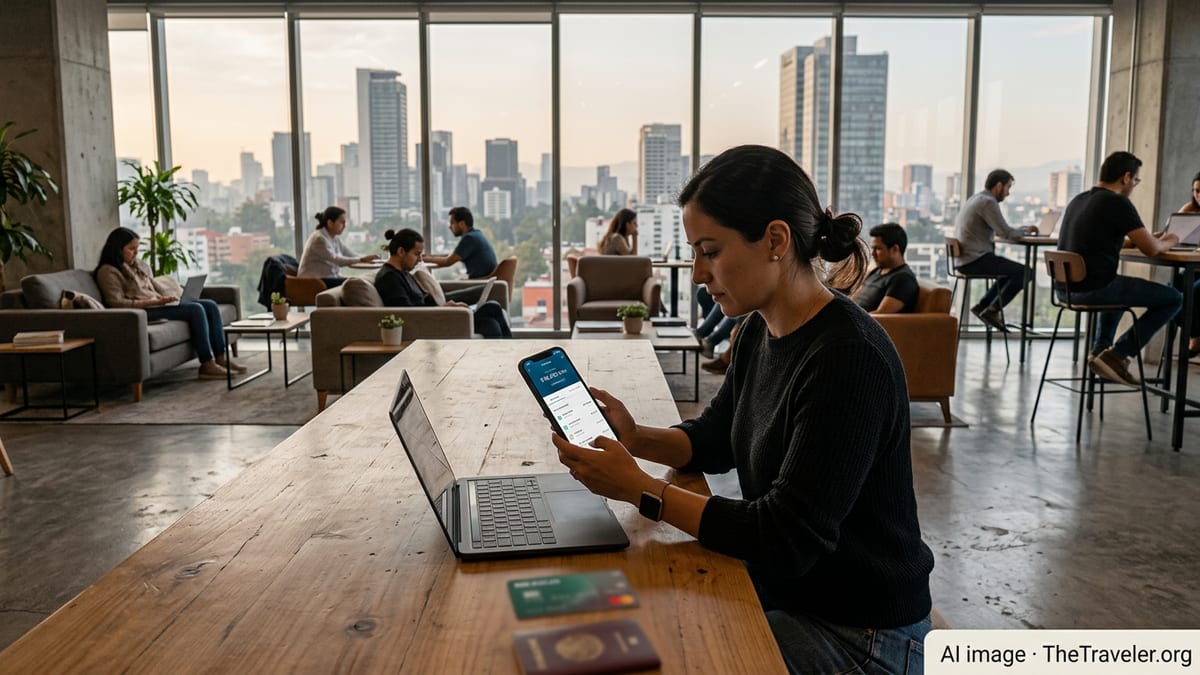
Digital Banking Landscape in Mexico for Expats
Mexico’s banking market has shifted toward mobile and online banking, with most major banks providing robust apps and several neobanks competing on low fees and higher savings rates. Digital banking penetration is high among younger and urban customers, and it is increasingly common to open and manage accounts primarily via smartphone. Regulatory oversight by the Mexican banking supervisor focuses heavily on anti‑money‑laundering and know‑your‑customer rules, which shapes how easily foreigners can open and use digital accounts.
For expats, the key distinction is between full banks and non‑bank fintechs. Full banks such as BBVA México, Banorte, Santander, HSBC, and Scotiabank operate under standard banking regulation and provide insured deposits, multi‑channel access, and debit cards usable worldwide. Fintechs and neobanks often operate as payment institutions or specialized financial entities, offering streamlined apps and attractive rates but sometimes narrower product sets and stricter limits.
Recent developments include the launch of fully digital banks backed by major groups and international players entering the market. For example, Openbank, Santander’s digital bank, started operations in Mexico offering online onboarding and app‑centric services, while other digital players have obtained full banking licenses to operate predominantly via mobile. These moves have intensified competition in digital services, benefiting consumers with better apps, lower fees, and more transparent interfaces.
Despite this progress, expats still face specific frictions: document requirements in Spanish, expectations of a Mexican tax ID (RFC) or population ID (CURP), and account tier limits for basic mobile‑only products. As a result, the best digital setup for an expat typically combines at least one Mexican bank with strong digital capabilities plus one or more cross‑border or multi‑currency platforms.
Eligibility and Onboarding for Foreigners
Digital account opening rules in Mexico are driven by national know‑your‑customer regulations. Banks classify accounts into tiers by risk and transaction limits. Low‑risk digital accounts opened entirely by app can require only basic identification but typically impose strict monthly deposit caps. Higher‑tier accounts, which are more suitable for long‑term residents, demand stronger documentation and usually at least one in‑person step.
Most mainstream banks allow foreigners with legal residency in Mexico to open standard accounts, which can then be managed digitally. Typical documentation includes a passport, a temporary or permanent resident card, and proof of a local address such as a utility bill or rental contract. In many institutions, a Mexican unique population ID (CURP) and sometimes a tax ID (RFC) are requested, especially when applying for higher‑value products or credit lines. Expat experiences suggest that requirements and flexibility can vary between branches of the same bank, making local practice as relevant as written policy.
Some digital‑first offerings specifically mention that both Mexican citizens and foreigners residing in Mexico can open accounts, subject to age and documentation requirements. For example, contract terms for certain neobanks and digital accounts reference eligibility for foreign residents over 18 who can provide CURP, an official photo ID, and acceptable proof of address. In practice, this means most fully online solutions are geared toward people already settled in Mexico, not non‑resident “pre‑arrival” customers.
For expats evaluating relocation, one practical implication is timing. It is generally easier to secure a robust digital banking setup after arrival with residency documentation in hand. Non‑resident options exist, particularly among fintechs and banks with cross‑border propositions, but they tend to be limited in functionality or designed mainly for remittance recipients.
Key Digital Banking Options: Major Banks and Neobanks
Several institutions stand out in Mexico for combining broad acceptance with strong digital channels that expats can realistically use. These players differ in their product positioning, but all support app‑based account management and debit cards for in‑store and online payments.
BBVA México offers one of the most widely used banking apps in the country and markets specific account configurations for foreigners. Public information highlights products where foreign applicants can open a basic account and then manage it fully through the mobile app, with features like digital debit cards for online purchases and contactless payments. Customer reports emphasize wide ATM availability and a mature interface, which are relevant advantages for expats who intend to rely heavily on self‑service channels.
Banorte has invested significantly in digital onboarding and mobile‑only accounts, including “Enlace Digital,” a product that can be opened from a smartphone using national identity data. Although originally designed for Mexican residents with CURP, foreign residents with appropriate documentation have been able to open this and other Banorte accounts and then control them via the app. User reports mention monthly deposit ceilings around the tens of thousands of pesos for entry‑level digital tiers, which may be enough for many day‑to‑day use cases but insufficient for high‑value transfers or investments.
Other full‑service banks such as Santander, HSBC, and Scotiabank provide competitive apps and broad networks. Santander’s strategy includes combining its traditional presence with Openbank, a fully digital brand that allows quick app‑based account opening and offers yields that are competitive with other digital banks. In parallel, new independent digital banks have obtained full banking licenses and market themselves as mobile‑only institutions with higher savings rates and minimal fees, positioning Mexico as a rapidly evolving neobank market.
Fintech and Cross‑Border Digital Platforms
Fintech platforms complement traditional banks by offering app‑based accounts, simplified interfaces, and, often, favorable foreign exchange terms. One of the most visible players is Nubank’s Mexican operation, branded locally and operating under a full banking license granted after it expanded from credit cards into savings products. Its app is known for transparency in fees and interest rates and is popular among digitally oriented users, including some expats who meet local documentation requirements.
Other fintech providers in Mexico specialize in payment accounts, corporate spend management, or niche products for small businesses, often with digital onboarding and no physical branches. These services can be attractive for expats running local companies or freelancers paid into Mexican accounts, though corporate platforms usually require local business registration and tax documentation, which places them beyond the scope of individual relocation planning.
Cross‑border fintechs that operate multi‑currency accounts, such as global money transfer or international account providers, allow users to hold balances in several currencies and move money between foreign and Mexican accounts. These platforms typically provide local receiving details in major currencies and then convert and send funds to Mexican banks at rates that are often more competitive than standard bank wire transfers. Articles aimed at foreign users emphasize the practicality of using such accounts to fund Mexican living expenses while keeping substantial savings in home‑country banking systems.
An additional trend is integration between Mexican digital banks and remittance‑focused platforms. Some alliances allow remittances sent from the United States to be deposited directly into digital accounts at Mexican neobanks, reducing collection time and cash handling. For North American expats or cross‑border workers, this environment creates more flexibility in how income is routed and managed digitally, though each solution’s eligibility criteria for non‑Mexican nationals must be checked carefully.
Account Limits, Fees, and Functional Constraints
Mexican regulation encourages financial inclusion through simplified digital accounts but imposes transaction and balance caps on these products to manage risk. Entry‑level mobile accounts that can be opened with minimal identification may cap monthly deposits at levels around 20,000 Mexican pesos, based on reported terms for several bank and fintech offerings. Such accounts are practical for light spenders or as secondary wallets but are inadequate for higher‑income expats or those funding significant household expenses from abroad.
More advanced accounts, which often require in‑person identity validation and fuller documentation, provide higher or no explicit caps and broader functionality, including international transfers, standing orders, and access to additional services such as investments or credit cards. These accounts can still be operated largely digitally after the initial setup, but the documentation hurdle is higher, and foreign residents must typically show residency status and proof of address in Mexico.
In terms of fees, many digital accounts advertise no monthly maintenance fee and no minimum balance, particularly where they are positioned as entry‑level products. However, certain conditions often apply, such as performing at least one transaction per month, maintaining modest balances, or accepting digital statements in place of paper. ATM withdrawal fees vary, with on‑network withdrawals usually free and off‑network withdrawals incurring per‑transaction charges that can add up for heavy cash users.
Foreign card use is another consideration. Most Mexican debit cards from major banks carry international brands and can be used abroad or online in foreign currencies, but foreign transaction fees and exchange markups differ. Some digital banks and fintechs emphasize lower spreads on international transactions, while others rely on standard card network rates plus a small margin. For relocation planning, a realistic approach is to assume Mexican digital accounts are optimized for payments in pesos and to combine them with foreign or multi‑currency accounts optimized for non‑peso activity.
Security, Regulation, and Practical Risk Management
Digital banking security in Mexico combines regulatory safeguards, bank‑level controls, and user practices. Full banks are subject to prudential regulation, capital requirements, and deposit insurance arrangements that protect customer funds up to defined limits. Fintech institutions operating as payment entities or specialized financial organizations face regulatory oversight but may not offer the same deposit protection framework, which is an important distinction for expats deciding where to hold larger balances.
On the technical side, leading digital banks rely on multi‑factor authentication, biometric login, transaction alerts, and configurable card controls within the app. Many applications allow users to lock and unlock cards in real time, set spending limits, or restrict online and foreign transactions. Push notifications for every card or transfer transaction are standard among better apps, providing immediate visibility into account activity.
Practical risk management for expats should include redundancy and distribution of funds across at least two institutions or platforms. Maintaining a primary Mexican digital bank account for local expenses, complemented by at least one foreign or multi‑currency account that can be accessed digitally from Mexico, reduces dependence on any single provider or card. This approach mitigates risks from occasional service disruptions, card compromise, or administrative issues such as temporary account reviews triggered by unusual cross‑border patterns.
Another consideration is customer support. While many digital banks emphasize app chat and call centers, service quality can vary. Spanish is the default language across all providers, and English support, where available, is not guaranteed to be comprehensive. Expats who are not fluent in Spanish should factor this into their choice of bank and plan for the possibility of needing local assistance during complex issues such as disputed transactions or account verification reviews.
Comparative Overview of Digital Options for Expats
The table below summarizes typical characteristics of key categories of digital banking options relevant to expats in Mexico. Specific terms vary by provider and change regularly, so this matrix is intended as a structural comparison rather than a product recommendation.
Category | Typical eligibility for expats | Typical monthly deposit limits (approximate) | Key advantages | Main constraints
Major Mexican banks with strong apps | Foreign residents with passport, residency card, proof of address, sometimes CURP/RFC | From entry tiers capped around tens of thousands of pesos to uncapped for full KYC accounts | Broad ATM and branch coverage, full‑service banking, insured deposits | Heavier documentation, onboarding often partly in‑branch, Spanish‑only processes
Fully digital banks with Mexican licenses | Foreign residents meeting digital KYC with CURP and address | Often higher limits than basic wallets, aligned with standard bank accounts | App‑first experience, competitive savings rates, low fees | Usually no support for non‑resident applicants, limited physical presence
Fintech payment accounts and wallets | Varies, many focus on Mexican nationals; some accept foreign residents | Generally low to moderate caps designed for day‑to‑day spending | Quick onboarding, simple interfaces, good for small recurring expenses | Not always covered by deposit insurance, limited features, caps unsuitable for high incomes
Cross‑border and multi‑currency platforms | Open to residents of supported countries, including many expats | Limits defined in foreign currency, often high enough for typical living costs | Favorable FX, strong online support, useful bridge between home and Mexico | Require a separate Mexican bank account or card for full local integration
From a relocation‑planning perspective, the most efficient configuration for many expats is to select one mainstream Mexican bank with a mature app for salaries, local payments, and direct debits, plus one or two specialist digital platforms for cross‑border transfers and currency management. This structure balances regulatory robustness in Mexico with flexibility in managing funds from abroad.
The Takeaway
Digital banking in Mexico has developed to a point where expats with legal residency can realistically manage most of their financial life through online and mobile channels. Major banks combine insured deposits and broad acceptance with increasingly sophisticated apps, while neobanks and fintechs provide alternatives with lower fees and more user‑friendly interfaces. However, eligibility is closely tied to Mexican residency and documentation, and entry‑level mobile‑only products often carry transaction caps that are too restrictive for higher‑income households.
For individuals evaluating relocation, the practical question is not whether digital banking is available but how easily a robust setup can be established after arrival. The most resilient strategy is usually to combine one well‑established Mexican bank account with strong digital tools and at least one cross‑border or multi‑currency platform to handle international flows and currency risk. Attention should be paid to onboarding requirements, language of customer support, and the difference in protection between full banks and non‑bank fintechs.
Given the pace of change in Mexico’s fintech ecosystem, expats should verify current eligibility rules and limits directly with shortlisted providers shortly before moving. Doing so ensures that the planned digital banking configuration will support day‑to‑day living, larger transfers such as rent or home purchases, and long‑term financial planning in a way that aligns with personal risk tolerance and documentation status.
FAQ
Q1. Can a non‑resident foreigner open a fully digital Mexican bank account before moving?
In most cases, no. The majority of Mexican digital bank accounts require proof of residence in Mexico and local identification such as CURP, which non‑residents do not typically possess.
Q2. What documents does an expat usually need to open a digital‑ready bank account in Mexico?
Most banks ask for a passport, Mexican temporary or permanent resident card, and local proof of address, and may also request CURP and sometimes a tax ID (RFC) for higher‑tier products.
Q3. Are low‑tier mobile accounts in Mexico suitable for managing an expat’s full cost of living?
Often not. Entry‑level digital accounts usually carry monthly deposit limits around the tens of thousands of pesos, which may be too low for higher living costs or large transfers.
Q4. Do Mexican digital banks charge monthly maintenance fees?
Many digital accounts waive monthly fees and minimum balances, although they may require at least one transaction per month and can charge for off‑network ATM withdrawals or certain services.
Q5. Is it safer to use a traditional bank’s digital app or a fintech‑only wallet?
Traditional banks generally offer stronger deposit protection and broader services, while fintechs can be more convenient and low‑cost but may not provide the same regulatory safeguards on deposits.
Q6. Can expats receive salary or pension payments from abroad directly into a Mexican digital account?
Yes, but charges and exchange rates can vary. Many expats use a cross‑border or multi‑currency platform as an intermediary to optimize exchange rates and then transfer pesos to a Mexican bank.
Q7. Are Mexican digital banking apps available in English?
Most apps and documentation are in Spanish. Some international providers may offer partial English interfaces, but expats should plan for primarily Spanish‑language digital banking.
Q8. How easy is it to close a Mexican digital bank account when leaving the country?
Closure is usually possible via branch or customer service and may require settling any outstanding fees and providing identification. Fully digital closure options exist but policies vary by institution.
Q9. Can an expat rely entirely on foreign digital banks and avoid a Mexican account?
While foreign accounts and cards can work for some expenses, a local Mexican account is often necessary for domestic transfers, utility debits, and services that only accept local banking details.
Q10. How should expats protect themselves against digital banking fraud in Mexico?
Best practice includes enabling biometric login and transaction alerts, using strong unique passwords, avoiding public Wi‑Fi for banking, and keeping at least one backup account in case a card or account is temporarily blocked.