


More news on this day
Rail passengers across south London are being urged not to travel after a series of incidents severely disrupted services on key routes, leaving trains halted and journeys in and out of the capital in chaos.
Get the latest news straight to your inbox!
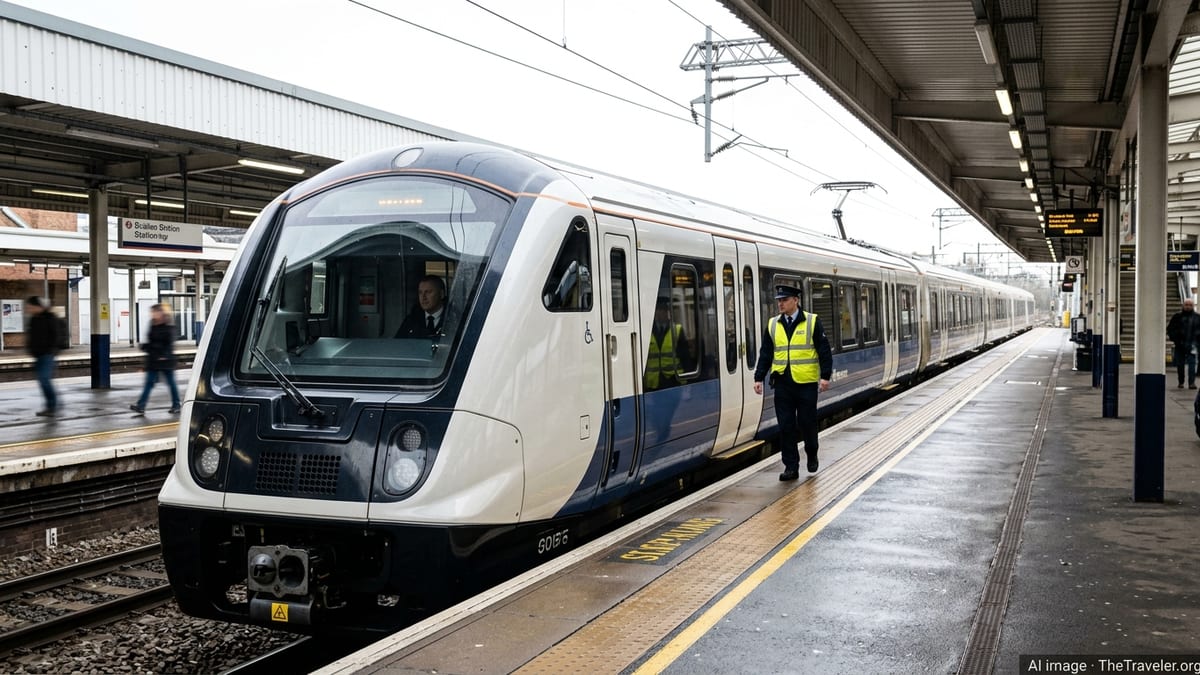
Multiple incidents bring south London routes to a standstill
According to live travel feeds and rail incident summaries on 14 June, services through parts of south London and towards the Sussex coast have been severely curtailed after infrastructure issues blocked key corridors. Reports from passengers and publicly available disruption updates describe all lines halted in the Purley area following damage to a railway bridge, with no trains able to run through this critical junction.
The Purley bottleneck is a major artery for services linking London with Gatwick Airport, Brighton and the wider south coast. When traffic is suspended here, trains on Southern and Thameslink routes are unable to reach or cross the area, effectively severing one of the main rail spines south of the capital. Social media posts and rail community forums on Sunday noted that travellers attempting to reach Brighton or return to London were being turned back or advised to seek entirely different routes.
The situation has developed on an already busy summer Sunday, when leisure travel to the coast and international journeys via Gatwick Airport are typically in high demand. As diagrams are reworked and units are stranded out of position, knock-on disruption has spread to wider parts of the Southern and Thameslink network, with cancellations and significantly extended journey times reported.
Rail users’ accounts indicate that, in some cases, trains already in service were brought to a halt and passengers were held on board while control rooms assessed the damage and the stabilisation work required on the affected bridge. Replacement road transport has been constrained by short-notice demand and heavy traffic on parallel road routes.
‘Do not travel’ advice issued across affected networks
Against this backdrop, operators covering south London and the main lines towards the south coast have issued unusually strong guidance. Publicly available information highlights a clear message: passengers are being asked not to travel on the worst affected routes unless their journey is absolutely essential, and to defer trips where possible.
The wording mirrors rare but increasingly familiar “do not travel” alerts used in recent years during major storms, infrastructure failures and complex, multi-site incidents. Commenters on rail forums noted that on Sunday the guidance went further than typical warnings to “allow extra time,” reflecting the scale of the disruption and the limited alternatives available while the Purley corridor remains blocked.
Where trains are still able to run, they are operating to heavily amended timetables, often starting and terminating short of London or diverting via slower, more circuitous routes. Some passengers reported being advised to route via Portsmouth and London Waterloo instead of using the direct corridor between the capital and the Brighton main line, significantly lengthening travel times.
Rail travel experts observing the situation say that the combination of a structural issue on a key bridge and constrained capacity on diversionary lines leaves operators with little flexibility. As a result, the emphasis has shifted from attempting to keep passengers moving at all costs to discouraging new journeys and focusing on safely recovering those already in transit.
Impact on commuters, leisure travellers and airport connections
The disruption is affecting a broad cross-section of rail users. Weekend commuters and shift workers relying on south London suburban services have encountered last-minute alterations, with trains starting at short-notice locations or cancelled outright. Some travellers reported having to abandon rail altogether and seek bus or taxi alternatives within Greater London.
Leisure travellers heading to the coast have been particularly hard hit. Brighton and other south coast destinations are popular on June weekends, and reports suggest many passengers faced difficult decisions between waiting in crowded stations, attempting complex diversions via other cities, or cancelling day trips entirely. The lack of certainty over when full services will resume has added to the frustration.
The situation also presents challenges for airport connectivity. While core Gatwick Express and Thameslink airport links are designed with some redundancy, a sustained blockage on one of the main approaches reduces the number of paths available for trains and can force operators to prioritise certain services over others. Passengers with flight departures on Sunday have been urged, through travel update channels, to leave significantly more time than usual and to consider alternative routes, including coach links from central London.
Accessibility concerns have also been raised, as short-notice platform changes and transfers to rail-replacement buses can be difficult for passengers with reduced mobility or heavy luggage. Where lifts or step-free routes are already out of service at some stations, the impact of large crowds seeking alternative trains or platforms can exacerbate pressure on remaining facilities.
Ongoing recovery efforts and what passengers should do
Network incident pages and operator service update portals indicate that engineers are working to inspect and stabilise the affected bridge infrastructure before any trains can safely pass through Purley. Recovery is expected to be gradual, with a limited service likely to return before a full timetable is restored. Even once the first trains resume, displaced rolling stock and crew may mean continued gaps and short-notice alterations for several hours.
Passengers already en route are being encouraged, through public guidance, to travel as far as they can using available trains and then make use of any arranged replacement buses or alternative rail routes. In some cases, mutual ticket acceptance has been introduced between operators, and rail community posts describe tickets being honoured on different lines where capacity allows.
For those yet to start their journey, rail operators and information services advise checking live departure boards and disruption summaries immediately before setting out, and considering postponing travel if flexibility exists. Travellers whose plans are time-critical are being directed by publicly available guidance to explore non-rail options such as long-distance coaches or, within London, a combination of Underground and bus routes that avoid the worst affected main line sections.
Compensation arrangements for delayed or abandoned journeys will depend on individual tickets and operators, but consumer advice shared by passenger advocates reminds travellers to retain proof of disruption, such as screenshots of departure boards or service alerts, to support any later claims. As the situation evolves through Sunday, further updates from rail infrastructure managers and train companies are expected to clarify when normal service through south London’s key rail corridors can resume.