


More news on this day
Rail passengers across south London and the wider South East are being urged not to travel after structural damage to a railway bridge in the Purley area forced the suspension of all trains through the busy Croydon corridor.
Get the latest news straight to your inbox!
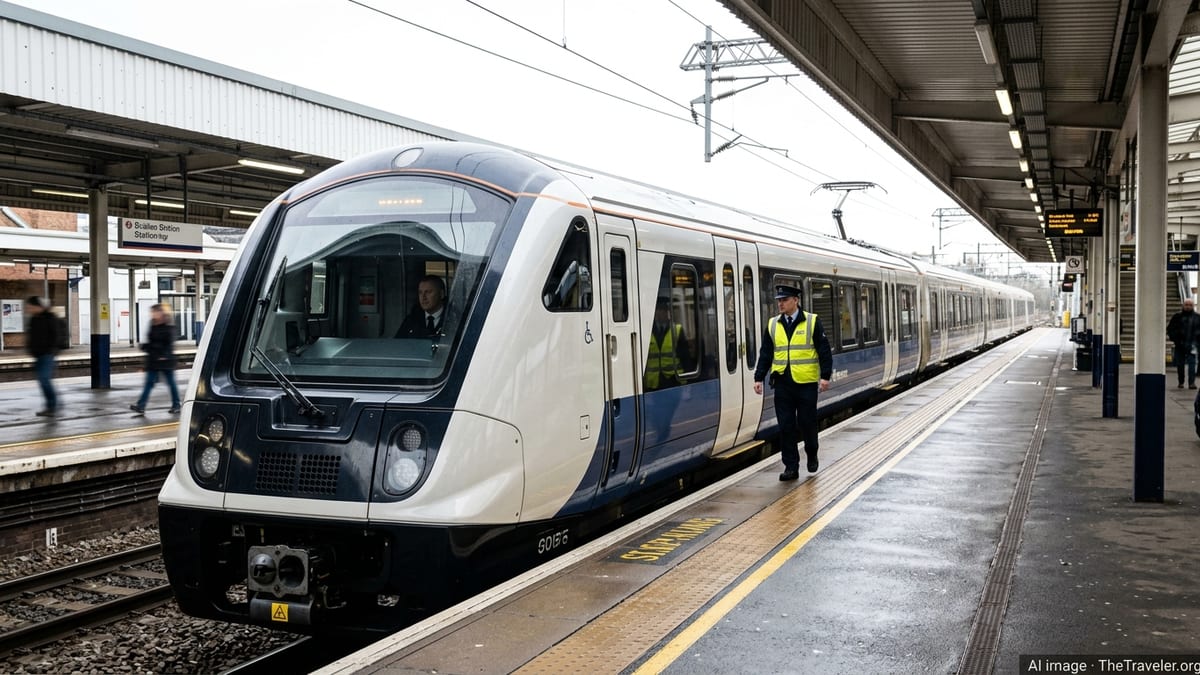
All routes through Croydon corridor brought to a standstill
Publicly available information from rail monitoring services and passenger alerts indicates that no trains are currently able to run via Purley in either direction, effectively shutting one of the main rail arteries through Croydon. The affected corridor is a critical part of the Brighton Main Line, funnelling trains between London, Surrey, Sussex and Gatwick Airport.
Passenger communications seen on social platforms describe repeated announcements that “no trains are able to run via Purley in any direction” and that those who have not yet set out should avoid rail travel if possible. Services that would usually pass through Purley to or from East Croydon are reported to be either cancelled outright or terminating short, leaving many stations along the route without trains.
Operational data suggests that, as a result, the impact stretches well beyond Croydon itself. Knock-on delays and cancellations are being reported on Southern and Thameslink routes serving areas such as Redhill, Three Bridges and Gatwick Airport, where trains normally depend on the constrained Purley bottleneck to reach central London.
The disruption is unfolding on a busy weekend in mid-June, a period when leisure travel, airport journeys and events generate heavier demand across the south London rail network.
Structural bridge damage at Purley behind shutdown
Reports from rail-focused news and community channels state that structural damage to a bridge in the Purley area is the cause of the shutdown. Network rail infrastructure in this location sits above and alongside local roads and residential areas, requiring engineers to halt traffic on the railway while inspections and safety assessments take place.
The wording in passenger-facing alerts highlights “structural bridge damage” rather than a routine infrastructure fault, indicating that engineers may need extended time to examine the extent of any weakness before authorising trains to pass. Rail infrastructure owners typically impose strict speed or access restrictions after such discoveries, sometimes reducing capacity or fully closing affected sections until temporary supports or repairs are installed.
Specialist rail news coverage in recent months has repeatedly pointed to the vulnerability of older bridges and embankments on busy main lines, especially where heavy rainfall or ground movement has occurred. While the precise circumstances at Purley have not been formally detailed, the description of structural damage fits a pattern in which safety concerns take clear priority over keeping trains moving.
The closure at Purley is particularly disruptive because it sits at a junction where several suburban and long-distance routes converge, meaning that any restriction is quickly felt across multiple lines feeding into and out of Croydon.
‘Do not travel’ message and limited alternatives
Based on current travel advice circulating from rail operators and shared widely by passengers, the guidance for most customers is not to attempt rail travel through the Croydon and Purley area. The message reflects the combination of blocked tracks, crowded alternative routes and uncertainty over when a reliable timetable can be restored.
Where alternatives are available, these appear to be limited and often time consuming. Some passengers are being directed towards routes that avoid Purley entirely, such as services via Sutton, West Croydon or Dorking, or to make use of local bus links between stations. However, with the core Brighton Main Line effectively severed at Purley, capacity on diversionary routes is likely to be constrained.
Airport travellers heading to and from Gatwick face particular challenges. In recent incidents affecting the same corridor, advice has typically involved using longer routes via East Grinstead with replacement buses, or diverting via other main lines where possible. Early indications today suggest that similar patterns may be emerging, with warnings that journey times could lengthen significantly and that some connections may not be guaranteed.
Commuters and leisure travellers alike are being encouraged to check updated journey planners before leaving home and to consider delaying or cancelling trips if their plans depend on passing through Purley, East Croydon, South Croydon or nearby junctions.
Major knock-on effects for Southern, Thameslink and local services
The Purley blockage is affecting a wide range of services operated by Southern and Thameslink, both of which rely on the Croydon area to move trains between London termini, the Sussex coast and key commuter towns. Gatwick Express, which shares the same corridor, is also likely to be constrained by the lack of available paths through the area, even if some trains can be turned short at Gatwick or London Victoria.
Recent disruption reports for the region show that when this corridor is compromised, services as far away as Horsham, Brighton and Eastbourne can experience heavy delays or cancellations, as trains and crews become displaced from their planned routes. Today’s closure through Purley appears to be triggering a similar cascade of timetable issues, with late-running or cancelled services rippling across the wider network.
Local stations such as Kenley, Coulsdon and Caterham, which depend on lines feeding into Purley, are also badly affected. Earlier advisories from rail operators in similar circumstances have highlighted ticket acceptance on London Buses between Croydon, Tattenham Corner and Caterham, a pattern that may be repeated while normal rail services remain suspended.
For many residents of south London and northern Surrey, the combination of limited rail options and busy road traffic can make alternative journeys significantly slower. Travellers are being urged through public information channels to allow extra time, expect crowding on any available services, and prepare for last-minute changes to stopping patterns.
Uncertain timeline for reopening and wider travel implications
At this stage there is no clear public estimate for when full services through Purley and the Croydon corridor will resume. Structural assessments and safety checks on bridges can vary in duration, with some incidents resolved within hours and others requiring days of restricted running or partial closures while repairs take place.
Experience from past infrastructure problems on the Brighton Main Line suggests that once engineers have inspected the bridge and agreed any remedial measures, rail operators may introduce a reduced timetable before gradually ramping up to normal service. Until that point, passengers are likely to face an unpredictable mix of cancellations, short-notice alterations and replacement transport.
The disruption arrives against a backdrop of high demand on the rail network in and around London during early summer, with major events, airport traffic and weekend leisure trips all contributing to crowded trains. Any prolonged shutdown at a strategic pinch point such as Purley has the potential to affect thousands of journeys, extending delays well beyond the immediate area.
Travellers planning to pass through Croydon, Purley or Gatwick over the coming hours are being advised, via journey planners and operator messaging, to keep checking for live updates and to have contingency arrangements in place in case trains remain suspended or alternative routes become saturated.