


More news on this day
Dubai International Airport is preparing for a major influx of passengers as millions of residents and visitors stream back to the emirate after the summer break, adding a fresh peak to an already record-setting year for the world’s busiest international hub.
Get the latest news straight to your inbox!
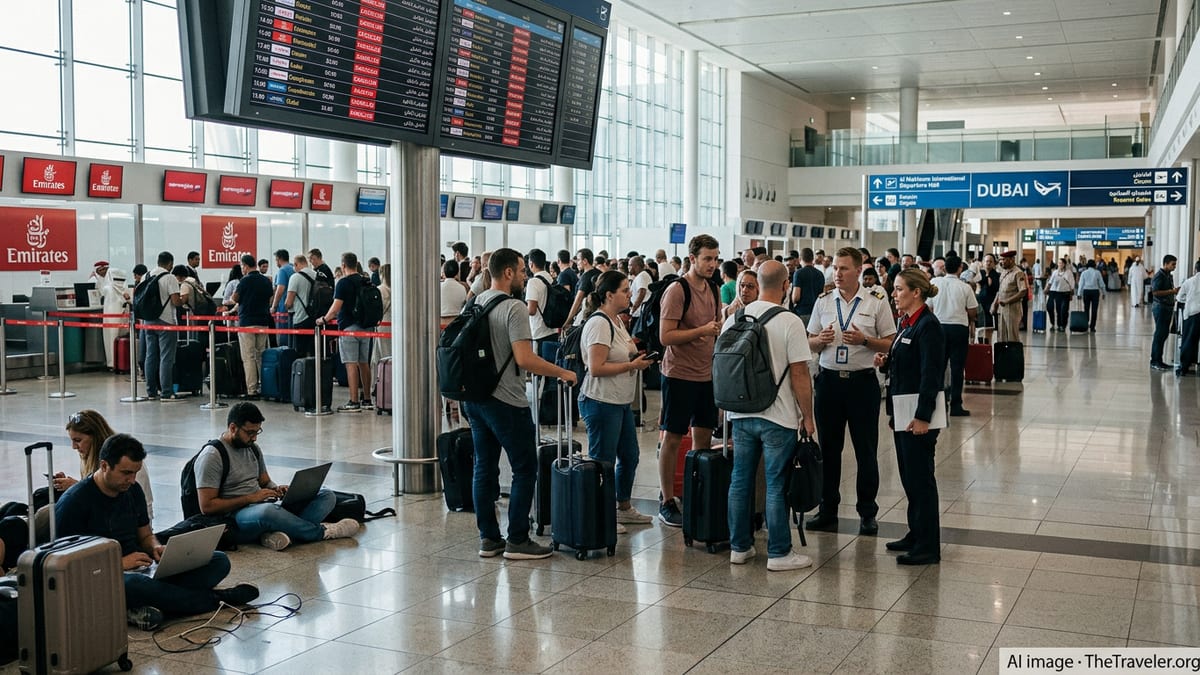
Post-summer travel wave builds on a record year
Publicly available data shows that Dubai International Airport (DXB) has already handled record passenger volumes in recent years, cementing its position as the world’s busiest airport for international traffic. The latest annual visitor and aviation statistics for Dubai indicate that DXB processed more than 90 million passengers in 2024, surpassing pre-pandemic highs and underlining the city’s role as a leading global gateway for business and leisure travel.
Within that broader trend, peak travel windows around school holidays and long breaks have become increasingly pronounced. Earlier in the 2024 summer season, Dubai Airports reported that more than 3.7 million passengers were expected to pass through DXB in a concentrated period in mid to late June, coinciding with Eid Al Adha and the start of school holidays. According to regional aviation coverage, this surge marked one of the busiest summer starts on record for the airport, with sustained high loads on outbound and transit flights over several days.
As schools reopen and residents return from holidays, attention is now shifting from outbound to inbound traffic. Reports from Gulf-based business and aviation outlets indicate that DXB is again preparing for multi-million passenger volumes over a relatively short window as families and workers fly back to the city at the end of August and into early September. This returning wave follows a summer in which the airport has already operated near capacity while maintaining tight performance standards in baggage handling and border processing.
Sector analysts note that such clustered peaks are increasingly characteristic of DXB’s traffic profile. With Dubai continuing to attract growing numbers of international visitors each year, and with a large expatriate population that typically travels during major school breaks, the airport’s summer and post-summer passenger flows have become critical markers of the wider tourism and economic cycle.
3.7 million returning passengers highlight seasonal patterns
Regional news reports on Dubai’s aviation sector describe the latest post-summer period as one of the most intense inbound waves since before the pandemic, with around 3.7 million passengers expected to pass through DXB as residents and tourists return after their summer trips. While outbound traffic dominated in June and July, the balance has now shifted toward arrivals, with carriers adding capacity on popular routes from Europe, the Indian subcontinent and key Middle Eastern markets to accommodate demand.
Coverage of Dubai’s air travel trends shows that this kind of concentrated movement is not new, but the scale has increased significantly. During an earlier back-to-school window in late August and early September 2024, for example, several UAE-based outlets reported that DXB was preparing to handle approximately 3.43 million passengers between August 21 and September 2 alone, with daily averages above 260,000 travelers and more than half a million people passing through the terminals over the two busiest days of that stretch. Those figures illustrate the magnitude of traffic that can now be concentrated into just under two weeks.
The current forecast of around 3.7 million passengers returning after the summer break is broadly in line with these prior peaks, indicating that DXB’s post-holiday volumes are continuing to track upward along with the city’s wider visitor growth. Travel data compiled by Dubai’s tourism authorities points to steady annual increases in international arrivals, supported by more routes, higher frequencies and the strong global networks of Emirates and flydubai, both of which use DXB as their primary hub.
Aviation observers note that such seasonal surges create a distinctive rhythm for Dubai’s travel industry. Outbound spikes at the start of school holidays are now mirrored by equally strong inbound phases once breaks end, reinforcing DXB’s twin role as both a home airport for residents and a major transfer point for long-haul itineraries linking Europe, Asia, Africa and the Americas.
Operational measures to keep traffic flowing smoothly
To manage these intense travel windows, DXB’s operator and its partners have progressively expanded capacity and refined operations. Official traffic updates published by Dubai Airports describe significant investments in terminal infrastructure, smart gates and baggage systems that allowed the airport to handle a record number of passengers in 2024 while maintaining high on-time performance and processing speeds. Government tourism reports for the same period highlight that more than 98 percent of passengers were cleared through passport control in under 10 minutes at peak times, a key metric for customer satisfaction.
Public guidance issued ahead of previous summer peaks offers a window into how the airport is likely to handle the current influx. During the June 2024 surge, Dubai Airports and local media urged travelers to arrive several hours before departure, make use of online and early check-in, and familiarize themselves with baggage rules to reduce last-minute congestion at counters. Similar travel advisories appeared again at the end of August 2024, when reports indicated that DXB would manage over half a million passengers on just two days as residents flew back to Dubai before the new school term.
For the present post-summer phase, airlines serving DXB are expected to rely on a comparable toolkit: encouraging passengers to spread their arrival at the airport over a longer window, directing them toward smart immigration gates where eligible, and promoting self-service kiosks and bag-drop facilities. Aviation trade coverage notes that DXB’s terminals are already heavily digitized, enabling faster processing of high passenger volumes and more efficient use of staff during the busiest hours.
These measures are particularly important given DXB’s status as a single primary hub for a vast share of Dubai’s air traffic. Unlike cities with multiple large airports, most of Dubai’s commercial passenger flows converge on DXB, which increases the operational stakes during any period where traffic climbs into the multi-million range over a matter of days or weeks.
Economic and tourism impact for Dubai
The anticipated influx of around 3.7 million passengers at the end of the summer break also carries broader implications for Dubai’s tourism and services economy. Annual visitor reports compiled by Dubai’s Department of Economy and Tourism show that the city welcomed more than 18 million international overnight visitors in 2024, a figure that has continued to climb as new markets open and route networks expand. Many of those visitors either arrive or transit through DXB, making the airport a central indicator of the emirate’s economic momentum.
Post-summer return periods typically translate into a sharp rise in demand for hotels, transport and retail as residents and visitors settle back into the city. Hospitality analysts note that occupancy often strengthens from September onward, supported by both leisure arrivals and the corporate travel associated with Dubai’s busy calendar of trade fairs and events in the cooler months. In this context, the latest post-summer passenger surge at DXB represents an early signal of how robust the upcoming travel and events season is likely to be.
Longer term, sustained growth in DXB’s traffic is part of a wider aviation strategy that includes the major expansion of Dubai World Central (Al Maktoum International Airport). Government and airport briefings referenced in tourism and infrastructure reports outline plans for a new, significantly larger hub to complement DXB and eventually handle up to hundreds of millions of passengers annually. The recurring need to accommodate 3 to 4 million passengers within tightly defined peak windows underscores why planners are prioritizing additional capacity.
For travelers, however, the near-term focus remains practical: navigating one of the busiest weeks of the year at the world’s leading international hub. With DXB again preparing for millions of returning passengers after the summer break, the airport’s performance over this period will serve as another test of its ability to combine sheer scale with a smooth passenger experience.
Arabian Business coverage on DXB’s 3.7m summer peak