


More news on this day
Air travel across Dubai and the wider Middle East remains fragile amid a mix of geopolitical tensions, earlier extreme weather impacts and shifting airline schedules, even as British Airways outlines plans to restore some of its suspended regional routes.
Get the latest news straight to your inbox!
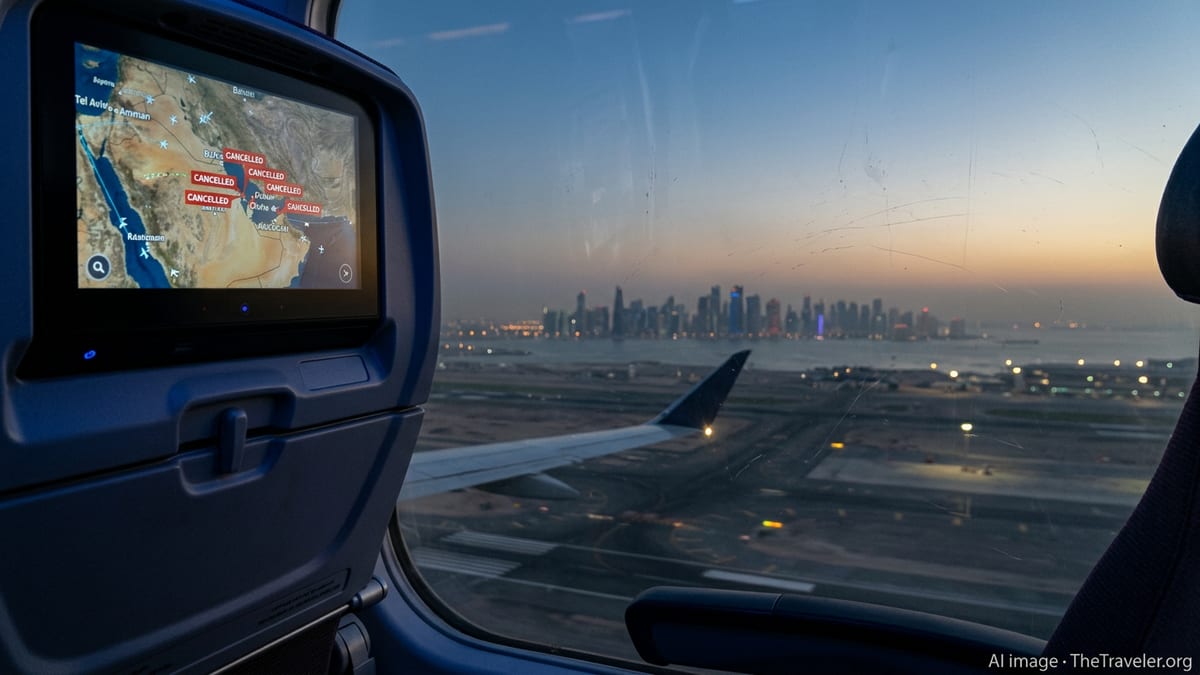
Regional tensions keep Gulf flight schedules unstable
Commercial aviation across the Gulf has been repeatedly disrupted in 2024 and 2026 as conflicts and airspace restrictions forced airlines to cancel or reroute services. Industry analysis shows that escalating tensions around Iran and Israel in 2024 and subsequent flare-ups in early 2026 sharply reduced available airspace, triggering widespread cancellations at Gulf hubs.
According to recent regional coverage, some Gulf airports saw as many as four in five flights cancelled at the height of the spring 2026 crisis, a level of disruption not seen since the pandemic. Routes linking Europe with the United Arab Emirates, Qatar, Bahrain and Saudi Arabia were particularly affected as carriers sought alternative routings or paused operations altogether.
In this context, Dubai International Airport, one of the world’s busiest hubs for international passengers, has remained operational but heavily exposed to rolling schedule changes. Publicly available flight-tracking and airline notices indicate that while core services operated by Emirates and flydubai continue, many foreign carriers are still running reduced timetables or temporary suspensions.
Industry forecasts suggest that the Middle East will continue to absorb a high volume of rerouted overflights as long as parts of the region’s airspace remain constrained, placing additional pressure on already congested corridors into and out of Dubai.
Legacy of Dubai’s extreme weather disruption
Dubai’s current operational challenges are layered on top of the legacy of severe weather disruption in April 2024, when record rainfall and flash floods brought aviation to a near standstill. Meteorological bulletins and airport statements from that period describe more than two years’ worth of rain falling in less than 24 hours, inundating runways, approach roads and surrounding districts.
Reports from that week indicate that Dubai International temporarily suspended operations, diverted dozens of flights to Dubai World Central and other regional airports, and ultimately saw hundreds of cancellations and extensive delays as crews and passengers struggled to reach the terminals through flooded streets. Passenger accounts and aviation data from the time point to average delays exceeding an hour for both arrivals and departures during the peak of the disruption.
Airport bulletins later confirmed that by 19 April 2024, scheduled activity at Dubai International had largely returned to normal, at around 1,400 flight movements per day. However, local officials have since acknowledged that access to the airport, rather than airfield infrastructure alone, was a key vulnerability, prompting investments in emergency response procedures, communications and coordination with airlines.
The episode has become a reference point for the region’s climate resilience planning. Policy studies published after the storm highlight how a single extreme-weather event can cascade through global aviation networks, amplifying the impact of later shocks such as geopolitical closures or airline schedule cuts.
British Airways edges toward Middle East restart
British Airways has been among the foreign carriers most visibly adjusting its Gulf operations in response to the evolving situation. The airline initially maintained a solid presence in the region, including long-standing services from London to Dubai, Doha, Bahrain, Abu Dhabi, Riyadh and Amman.
After the outbreak of the latest regional conflict in early 2026, the carrier temporarily suspended several of these routes and later extended the pause as airspace constraints and demand uncertainty persisted. Travel-industry briefings from June 2026 indicate that the suspension of flights between London and Dubai was pushed back to at least 25 October 2026, a delay from an earlier target of a July restart. Services to Tel Aviv, Bahrain and Amman remain halted under the most recently published schedule adjustments.
Specialist booking platforms tracking British Airways inventory for September 2026 show limited availability on certain Middle East routes and complete gaps on others, reflecting a network still in flux. Customer notices reference flexible rebooking and refund options for tickets issued before April 2026 and travel dates running through the autumn, underlining that the carrier does not yet have firm restart dates for every suspended destination.
At the same time, British Airways has signalled its intention to return to key Gulf markets when conditions allow. The airline’s earlier move in April 2024 to relaunch a daily London–Abu Dhabi service, operated with Boeing 787-9 aircraft into the UAE capital’s Zayed International Airport, demonstrated the strategic importance it places on the wider region despite subsequent adjustments.
Patchwork of airline responses across the Gulf
Other international carriers are taking varied approaches to Dubai and Middle East flying as they weigh security assessments, insurance requirements and commercial demand. Recent regional overviews list airlines such as Air Canada, KLM, Finnair and Wizz Air among those that have either extended suspensions or curtailed services to Gulf destinations and beyond.
For example, low-cost operator Wizz Air has paused multiple routes from mainland Europe to Amman, Dubai and Abu Dhabi, with some services not expected to resume until late October 2026. Finnair has indicated that its flights to the UAE and Qatar will remain suspended for the upcoming winter season, citing airspace capacity limitations related to the conflict.
In contrast, Gulf-based airlines are gradually rebuilding their schedules. Emirates has increased capacity on several trunk routes and has partially restored some links, such as a reduced Dubai–Bahrain operation, even as other services, including certain Kuwait flights, stay temporarily off the board. Etihad Airways continues to use its Abu Dhabi hub to absorb rerouted passengers whose original flights on foreign carriers have been cancelled.
This patchwork of responses means travellers are seeing very different levels of reliability depending on their chosen airline and gateway. Routes operated by home carriers from Dubai and Abu Dhabi generally offer more options for reaccommodation, while passengers relying on point-to-point flights from European or North American airlines face fewer alternatives if a route remains suspended.
What passengers flying via Dubai and the region should expect
For travellers with upcoming itineraries to or through Dubai, the current environment requires close attention to booking details and schedule updates. Public advisories from Dubai International stress that passengers should check their flight status directly with their airline before leaving for the airport, particularly during periods of regional tension or unsettled weather.
Recent disruptions have shown that even when airport infrastructure is functioning, access to terminals can become a bottleneck. During the April 2024 floods, passengers were advised to allow significantly longer travel times and, where possible, to use the Dubai Metro rather than private vehicles because of widespread road closures. Similar guidance is likely to be repeated in any future severe weather episode.
On the airline side, customer notices from British Airways and other carriers serving the Middle East currently outline flexible policies for affected routes, including options to reroute via alternative hubs, move travel dates several months ahead or obtain refunds where flights have been cancelled outright. However, not all reprieve windows or waivers are identical, making it important for passengers to review the specific conditions attached to their tickets.
As British Airways refines its plans to restart suspended Middle East services, including the key London–Dubai route, analysts expect gradual restoration rather than an immediate return to pre-crisis frequencies. For now, travellers can anticipate a prolonged period of higher fares on remaining services, tighter capacity and a continued risk of short-notice schedule changes across Dubai and the wider Gulf.