


More news on this day
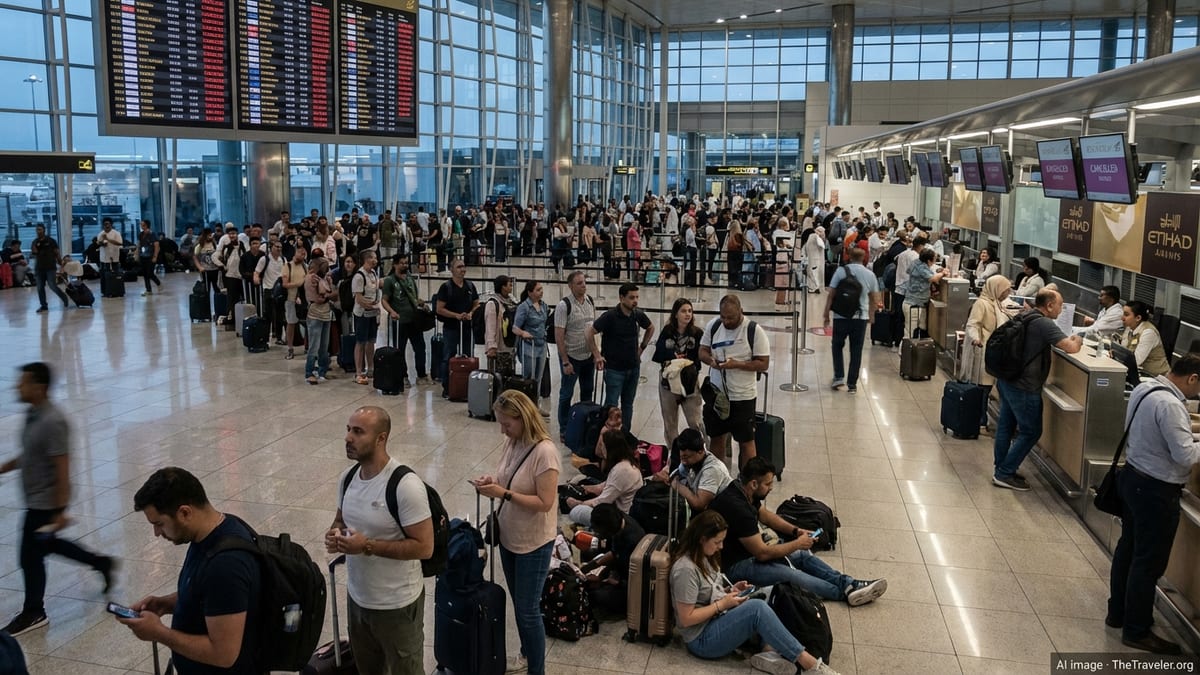
Passengers flying to and through Dubai and wider Middle East hubs are being urged to monitor their flight status closely, as schedule disruptions persist despite the United States pausing air strikes on Iran for a second consecutive night.
Get the latest news straight to your inbox!
Pause in strikes brings caution, not normality
Reports from regional and international media indicate that the recent pause in United States strikes on Iran has softened immediate fears of further rapid escalation, but has not yet translated into a full return to normal operations for airlines serving the Gulf. Aviation planners are still working with a patchwork of restrictions, diversions and suspended routes that built up during almost two weeks of near-continuous military activity.
Coverage from outlets tracking the conflict notes that the halt in US attacks follows 13 nights of operations targeting Iranian assets and infrastructure, a campaign that raised concerns about the security of key air corridors and energy shipping lanes. The pause is described as part of a tentative diplomatic opening, yet the broader security picture in and around the Strait of Hormuz and the northern Gulf remains fragile.
For airlines, that uncertainty has translated into a cautious approach. Safety assessments, crew routing rules and insurance requirements are being updated in near real time. While some carriers have begun reintroducing services or increasing frequencies, others continue to hold back capacity to and over the Gulf until they are confident that the risk of renewed strikes has receded.
Dubai hub remains busy as foreign airlines hold off
Dubai International Airport continues to function as one of the world’s busiest long haul hubs, with local carriers maintaining the majority of their schedules, according to publicly available flight data and regional travel coverage. Reports indicate that most departures and arrivals are operating, aided by rerouted flight paths that avoid sensitive airspace to the north.
However, the same reports show that the war in Iran has sharply reduced the number of foreign airlines serving Dubai compared with earlier this year. Regional business coverage notes that the total count of carriers operating at Dubai’s airports has fallen significantly since the latest phase of the conflict began, as non-Gulf airlines weigh operational complexity, crew duty limits and alternative routing costs.
Several European and North American airlines that had planned to restore Dubai routes this summer have postponed their return. Published airline statements and industry reporting highlight carriers such as British Airways and others that have extended suspensions into the autumn season while they reassess security advisories and demand forecasts. This has created more room for Gulf-based airlines to add capacity and capture connecting traffic, but it also leaves many travellers with fewer non-stop options from their home markets.
New conflict-zone guidance reshapes Gulf airspace
Travel industry outlets report that the European Union Aviation Safety Agency has issued a conflict zone advisory covering parts of Gulf airspace, including the skies over the United Arab Emirates, Bahrain, Kuwait, Oman and Qatar for a limited period. The guidance urges airlines to avoid certain airways and altitudes while the risk from missile and drone activity is assessed, particularly around Kuwait and nearby waters.
In response, various international carriers have extended or adjusted suspensions of flights into key regional hubs. Coverage by European travel media notes that Air France, for example, has temporarily halted services to Dubai, Riyadh and Beirut, while its partner KLM continues to reroute to avoid Iranian, Iraqi and Israeli airspace and some sections of the Arabian Gulf. Similar patterns are visible across other European carriers, many of which have opted for longer routings that bypass the conflict-affected region altogether.
These changes have knock-on effects beyond the Middle East. Europe to Asia flights that previously transited the Gulf now face longer flight times and higher fuel burn, while cargo routes must be recalibrated to ensure crews remain within duty limits. Even as some regional airlines add extra flights to mop up demand, the overall network remains less efficient than before the conflict, leaving consumers exposed to schedule changes and higher fares on select routes.
Pressure points: Kuwait, Saudi Arabia and regional links
While Dubai and Abu Dhabi remain relatively resilient as hubs, routes into Kuwait, parts of Saudi Arabia and some secondary Gulf cities have seen more pronounced disruption. Reports from Middle East travel publications describe repeated cancellations of flights between the United Arab Emirates and Kuwait in recent days, as that country contends with incoming missile and drone fire linked to the Iran conflict.
Local and regional airlines serving Kuwait have issued rolling updates and advisories as they cancel or consolidate services on short notice. Flights between Sharjah, Abu Dhabi and Kuwait City have been particularly affected, according to publicly available schedules. Travellers connecting through these secondary routes, rather than the main Dubai and Doha hubs, face a higher likelihood of last minute timetable changes.
Saudi destinations have also come under pressure at various points during the current crisis, with coverage highlighting isolated cancellations after attacks on airports in the kingdom’s south and west. While the overall Saudi network remains open, the sporadic nature of the security incidents has forced airlines to maintain a flexible approach, keeping contingency plans in place for rapid rerouting or ground delays when required.
What passengers should do before heading to the airport
Across the region, airlines and airports are urging passengers to remain proactive. Travel advisories compiled by consumer and industry media consistently stress the importance of checking flight status on official channels before setting out for the airport, as same-day changes are still possible even where most services are operating.
Guidance from major Gulf carriers recommends that passengers arrive at the airport earlier than usual, build in extra time for security and immigration checks, and proceed to their gates promptly once airside. Some airlines have issued special messages for families and peak summer holiday travellers, advising them to allow at least three hours before departure and to clear security well ahead of boarding to avoid missing flights affected by gate changes or revised boarding times.
Passengers transiting through Dubai, Abu Dhabi, Doha or other regional hubs are also being encouraged to monitor any changes to connecting flights and to consider longer layovers where possible. With skies over parts of the Gulf subject to evolving restrictions, rerouted aircraft may experience extended flight times that compress connection windows. Travel experts quoted in recent coverage recommend that travellers keep airline apps updated, enable notifications and remain prepared for last minute gate or timing adjustments until the regional security situation stabilises more firmly.