


More news on this day
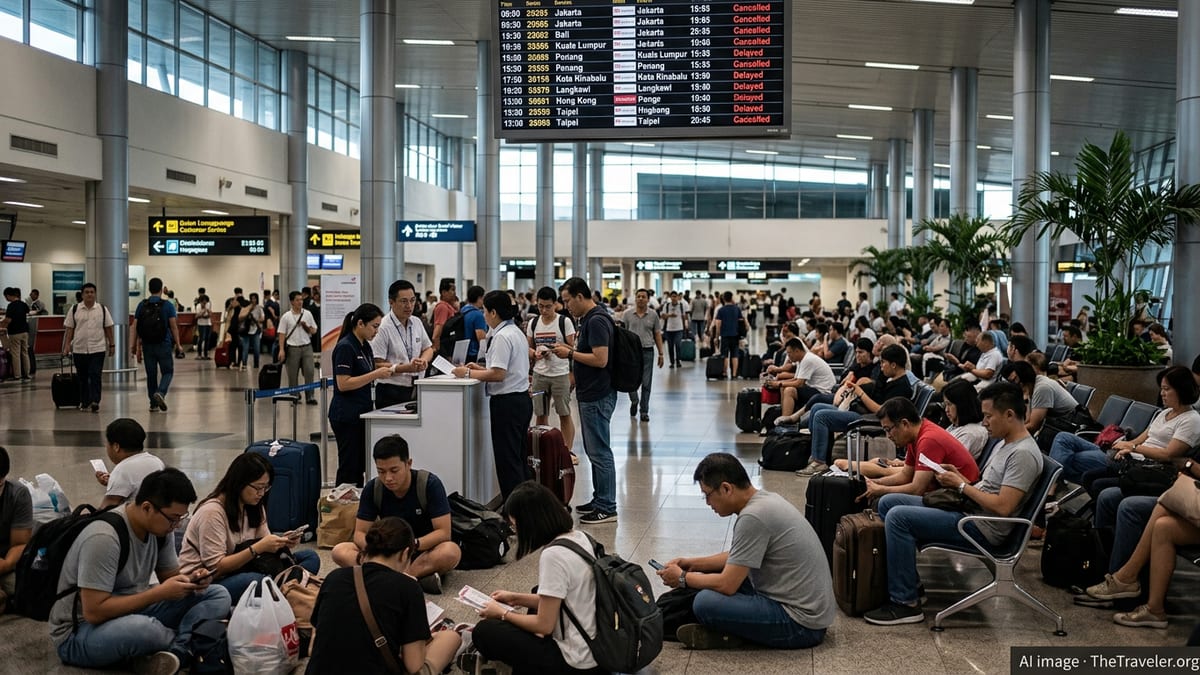
Passengers were still camped out across Hong Kong International Airport on Monday morning, as the region’s main aviation hub worked to restore normal schedules after Typhoon Noul triggered mass flight cancellations over the weekend.
Get the latest news straight to your inbox!
Lingering disruption after weekend of cancellations
According to published coverage, some air passengers remained stranded at Hong Kong International Airport on Monday, July 27, even as Typhoon Noul moved away from the city and local storm signals were lowered. Airlines continued to struggle with the knock-on effects of hundreds of cancellations and delays during the typhoon’s peak.
Airport operator updates and media reports indicate that about 350 flights were canceled on Sunday alone, with around 2,000 passengers left stranded overnight in terminal buildings. Many of those affected were travelers whose long-haul and regional connections could not be rebooked immediately once operations resumed.
By Monday, the airport was handling a significantly higher number of flights than during the storm, but schedules were still curtailed compared with a typical summer travel day. Published airline statements pointed to a gradual, staggered recovery stretching into Monday as carriers repositioned aircraft and crews and cleared backlogs of displaced travelers.
Travel industry observers noted that even when storm signals are lowered, the network-wide effects of a severe tropical cyclone can last well beyond the weather event itself, particularly at a busy transit hub that relies on tightly timed international connections.
Stranded passengers face long waits and scarce rooms
Local media coverage described scenes of passengers sleeping on terminal benches, floors and makeshift bedding on Sunday night, after services were suspended or heavily curtailed during Typhoon Noul. Some travelers reported waiting many hours in line to obtain new flight bookings, meal vouchers or basic information on onward connections.
Reports from Hong Kong outlets indicated that hotel availability near the airport and on Lantau Island tightened sharply as the storm intensified, with many stranded passengers struggling to secure reasonably priced accommodation. Published accounts highlighted complaints about room rates that rose into the low thousands of Hong Kong dollars per night during the disruption.
Publicly available information shows that the temporary shutdown of some public transport links, including services across the Hong Kong–Zhuhai–Macau Bridge during the height of the storm, further complicated options for those attempting to leave the airport area. For some travelers returning to nearby cities such as Macau or Zhuhai, the closure of cross-boundary routes extended their stay at the terminal for much of Sunday and into Monday.
Travel advisers noted that passengers with flexible tickets or comprehensive travel insurance were generally better positioned to rearrange itineraries and secure alternative routing, while those on tightly budgeted itineraries or fixed tour packages often had fewer options as seats on remaining flights filled quickly.
Airport and airlines roll out recovery measures
According to official press releases and airline statements, the Airport Authority activated its emergency center as Noul approached, coordinating with carriers and service providers on contingency plans. Publicly available updates indicate that support teams were deployed across the terminal complex to manage queues, direct passengers to rebooking counters and distribute basic supplies.
Information from the airport operator shows that meal vouchers were handed out to some passengers when the strongest storm signal was in effect, allowing them to use selected food and beverage outlets that remained open during the typhoon. Toiletries and simple comfort items were also made available in certain waiting areas for those forced to spend the night in the terminal.
Major airlines serving the hub published online advisories throughout the weekend, urging customers to check flight status before heading to the airport and offering fee waivers or flexible rebooking for affected itineraries. Some carriers indicated that they would operate additional or larger aircraft once conditions allowed, in order to accommodate stranded travelers on Monday and in the days that follow.
Operational data released on Sunday evening suggested that traffic volumes were gradually returning, but with a continuing wave of cancellations and delays that spilled into Monday’s schedule. Aviation analysts noted that crew duty-time limitations and aircraft repositioning often slow recovery after a major weather shutdown, even when runways and taxiways are clear.
Broader impact on regional travel plans
Travelers passing through Hong Kong from Europe, North America and across Asia felt the ripple effects of Noul’s passage, with many missing onward connections to destinations in mainland China, Southeast Asia and Oceania. According to published coverage, some transit passengers who had expected short layovers of only a few hours instead faced unplanned overnight stays after their connecting flights were canceled or significantly delayed.
The disruption also affected outbound tourism from Hong Kong, with families and groups departing for summer holidays confronted by last-minute changes. Reports from local broadcasters and newspapers described cases in which trips were shortened or rearranged, as travelers opted to delay departures to later in the week when airlines expected schedules to be closer to normal.
Travel data specialists point out that severe tropical cyclones tend to have a disproportionate impact on hub airports that serve as transfer points for multiple long-haul routes. When one segment is canceled due to weather, it can leave aircraft out of position for subsequent flights, forcing airlines to rebuild rotations carefully over several days.
For visitors already in Hong Kong, the effect on broader city activities appeared more limited by Monday, with most public transport, businesses and attractions returning to normal or near-normal operation once storm signals were lowered.
What travelers can expect in the coming days
By Monday afternoon, publicly available information from airlines and airport authorities suggested that operations were stabilizing, with expectations that near-normal schedules could resume by late Monday or early Tuesday. Nevertheless, residual delays and occasional cancellations were anticipated as carriers continued to manage the backlog of displaced passengers.
Travel experts recommend that passengers due to fly to or from Hong Kong in the days immediately following Typhoon Noul leave extra time for check-in, security and immigration, given the likelihood of longer queues and busier terminals. Checking flight status frequently and making use of airline mobile apps or messaging services is also advised, as gate assignments and departure times may change at relatively short notice during the recovery period.
Industry observers note that the Noul disruption will serve as another test of Hong Kong International Airport’s typhoon-readiness systems, from early warning mechanisms and staffing plans to the capacity of terminal facilities to support large numbers of stranded travelers. Previous storms have led to incremental improvements in contingency measures, and analysts will watch closely to see whether similar adjustments follow this latest event.
For now, the priority for airport operators and airlines remains clearing the remaining stranded passengers and restoring predictability to flight operations, while travelers weigh whether to adjust future itineraries during the region’s peak typhoon months.