


More news on this day
A multi-car freight train derailment in Upstate New York has disrupted regional rail travel at the height of the summer season, with early reports indicating several cars left the tracks near a key corridor used by both passenger and freight services.
Get the latest news straight to your inbox!
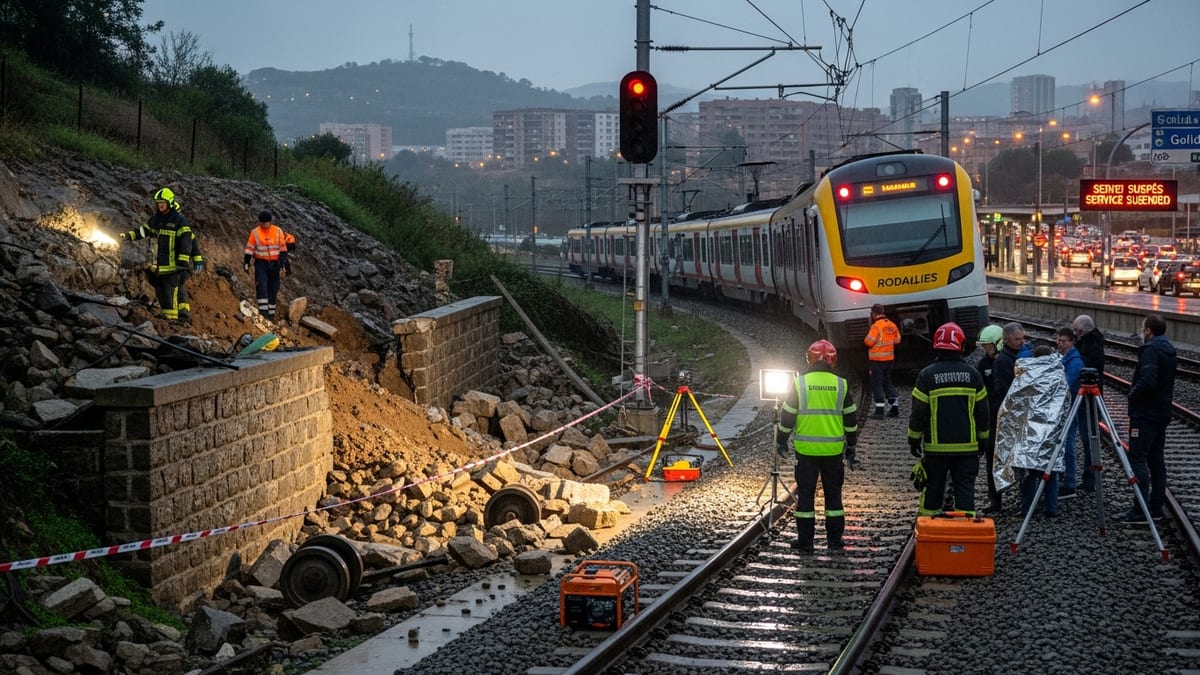
Disruption along a key Upstate rail corridor
According to early regional coverage and public rail incident summaries, the derailment occurred along a busy Upstate New York route that links smaller communities with major hubs further downstate. Multiple freight cars left the rails, some coming to rest at sharp angles beside the track, prompting immediate suspensions and slow orders for trains in both directions.
Initial reports indicate that the incident involved a freight consist carrying a mix of general cargo rather than exclusively hazardous materials. Even so, emergency response protocols required rail traffic to be halted while track conditions, signaling equipment and adjacent rights of way were inspected. This created a knock-on effect for intercity and regional passenger operations that share or intersect the same corridor.
Publicly available rail operations data for New York and Amtrak service alerts suggest that several departures were delayed or truncated as dispatchers worked around the blocked section. Some trains reportedly turned back short of their normal terminus, while others were rerouted or replaced with buses where alternate roads paralleled the affected line.
The derailment comes at a time when Upstate rail links are being promoted as a convenient alternative to driving for summer events and lake-region tourism. Recent announcements have highlighted special train services to major fairs and festivals in Central and Northern New York, underscoring how a single infrastructure incident can quickly ripple across seasonal travel plans.
Impacts on summer travelers and local tourism
For travelers, the most immediate impact of the derailment has been uncertainty. Information posted by rail operators and state transportation channels points to service adjustments, with some trains experiencing extended travel times and others substituted by motorcoach connections between key stations. Travelers heading to resort towns and outdoor destinations in Upstate communities have been advised to build in additional time and to verify last minute changes before departure.
Local tourism businesses that rely on rail-borne visitors may also feel short term effects. Many small cities and villages along Upstate lines market themselves as car free gateways to wine regions, historic main streets and waterfronts. When derailments or other incidents interrupt trains, visitors sometimes shift back to highway travel, which can reduce walk in traffic near stations.
Travel industry observers note that even brief rail disruptions can influence traveler perceptions over the longer term. When visitors encounter delays or complex rebookings during a short summer vacation, they may be more hesitant to rely on trains for future trips, especially if alternative airports and intercity buses are within reach.
On the other hand, prior disruptions in the Northeast and Midwest have shown that clear communication, realistic timetable updates and swift restoration of normal operations can help preserve confidence. The key, as several recent case studies in rail operations research point out, is reducing the gap between official notices and actual conditions on the ground so that passengers can make informed choices about their routes.
What is known about safety and infrastructure
Detailed investigation findings typically emerge only after federal regulators and rail safety boards complete on site inspections, equipment analysis and interviews. In similar derailments documented in recent months, publicly available summaries have examined factors such as track geometry, rail wear, component fatigue and train handling in the minutes leading up to the incident.
In Upstate corridors, freight and passenger trains frequently share infrastructure that was originally built in the late nineteenth or early twentieth century and later upgraded with modern signaling and communications. Industry and government reports have emphasized that heavy freight tonnage, temperature swings and more frequent service patterns can accelerate the need for track maintenance and monitoring.
Recent national safety filings show that multi car derailments remain a small fraction of overall train movements, but they tend to attract outsized attention because of their potential impacts on nearby communities and long distance travel. When incidents occur near bridges, riverbanks or road crossings, investigators also assess whether surrounding structures or earthworks influenced how the cars left the rails.
In the current Upstate case, early images circulated by local media depict cars derailed along a relatively open section of right of way, rather than within a dense urban district. That geography may help limit property damage, although it does not lessen the operational complexity of rerailing equipment, repairing track and certifying the line for full speed service.
Travel advice for passengers planning Upstate trips
Travelers with upcoming rail journeys through Upstate New York are being encouraged, through published advisories, to check real time status tools offered by their carrier before leaving home. In situations like the current derailment, schedules can change multiple times in a single day as repairs progress and dispatchers adjust traffic flows.
Passengers with flexible itineraries may wish to consider routes that connect through larger hubs where substitute transportation options are more readily available. Some travelers choose to complete only part of their trip by train, then continue by rental car or regional bus if lingering speed restrictions make the rail segment significantly longer than usual.
Those who hold nonrefundable tickets can often pursue travel credits or fee free changes when disruptions trace back to infrastructure incidents. Publicly available passenger rights information indicates that policies differ by operator and route, so keeping documentation of delays, cancellations and rebookings can be helpful if a traveler later seeks compensation.
For visitors intent on a car free holiday, another strategy is to anchor lodging in a city with multiple transit links, such as a mid sized Upstate hub that offers local buses, bike share or seasonal shuttles. That way, even if long distance trains experience temporary disruption, on the ground mobility options remain available once travelers arrive.
Broader questions about rail reliability in peak season
The Upstate derailment adds to a series of recent rail incidents across North America and Europe that have disrupted travel during peak periods. Public discussion has increasingly focused on how networks can remain resilient when infrastructure is under pressure from higher demand, extreme weather and aging assets.
Transportation studies published in the past year suggest that after a major disruption, irregular train movements and altered headways can persist for hours, even after tracks are cleared. These patterns affect not only long distance passengers but also commuters and airport bound travelers connecting to regional rail at the last minute.
As more travelers seek lower carbon alternatives to driving or flying for short and medium distance trips, reliability becomes a central factor in that choice. Rail advocates point out that, on average, trains remain among the safest and most environmentally efficient modes of transportation, yet acknowledge that each highly publicized derailment can undermine public confidence.
In Upstate New York, the coming days will likely determine how quickly regular timetables can resume and how well passengers feel informed about their options. For travelers planning late summer getaways, the derailment serves as a reminder to build flexibility into itineraries, monitor advisories closely and consider backup plans when relying on a single rail corridor.