


More news on this day
Flight operations in Dubai and across parts of the Gulf remain volatile in mid-to-late September 2026, with rolling delays and selective cancellations affecting regional carriers and international airlines as route planning adjusts to heightened security tensions and changing airspace risk guidance.
Get the latest news straight to your inbox!
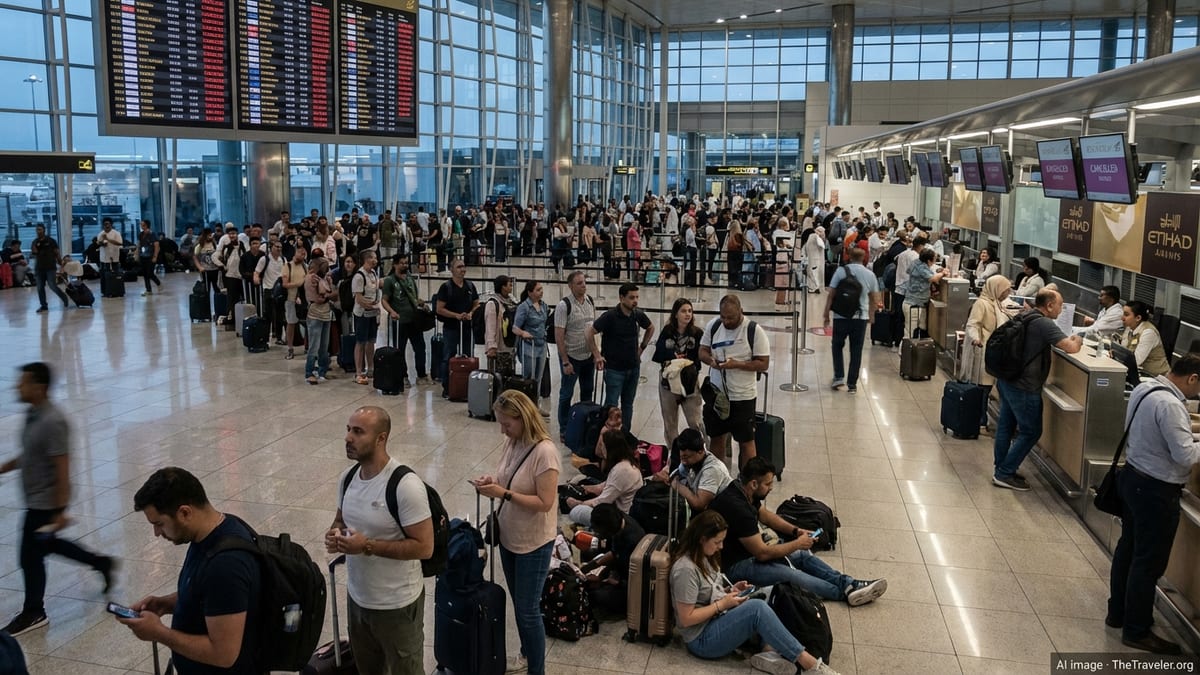
What travelers are seeing at Dubai and Abu Dhabi airports
Published coverage and flight-tracking snapshots over the past two weeks point to disruption that is uneven rather than systemwide: many flights still operate, but arrival and departure boards have been punctuated by clusters of late arrivals, missed connections, and last-minute schedule changes.
On Sunday, September 13, delays mounted at both Dubai International Airport (DXB) and Abu Dhabi’s Zayed International Airport (AUH), with flight-tracking data cited by regional media indicating more than 170 delays across the two hubs during the afternoon peak. Reports also highlighted a small number of outright cancellations, including two flydubai services between Dubai and Bahrain.
Earlier in the month, similar patterns were reported at DXB and AUH as multiple factors overlapped: renewed regional security concerns alongside unrelated operational shocks such as air-traffic-control disruption in the United Kingdom and wider network ripple effects from weather events elsewhere in the region. The result for passengers has been longer waits at hubs, more frequent gate and timing changes, and tighter connection windows on itineraries that would normally be routine.
How regional airlines are adjusting: reroutes, selective cancellations, and longer flight times
Airlines based in the UAE and nearby states have largely continued flying much of their networks, but with targeted cancellations and frequent retiming on routes that overfly or sit adjacent to higher-risk corridors. In practice, that can mean longer routings that add time in the air, later arrival slots, or last-minute aircraft swaps as carriers work to keep schedules intact.
UAE-focused travel updates published in early September described ongoing warnings from major local operators including Emirates, Etihad Airways, flydubai, and Air Arabia that some flights could be delayed, cancelled, or rerouted at short notice. These advisories have been echoed across airline channels during the month, emphasizing that passengers should verify flight status before traveling to the airport.
On specific days of disruption, publicly listed examples have included delayed Emirates arrivals into Dubai from major European cities such as London, Manchester, Amsterdam, Rome, and Munich, alongside flydubai disruptions affecting a spread of regional and near-international points including Jeddah, Bahrain, and cities in the Caucasus and Central Asia. In Abu Dhabi, published coverage has pointed to Etihad disruptions affecting a mix of Middle East, Europe, Asia, and long-haul routes, alongside airline-specific operational issues on certain services.
International carriers extend pauses as risk guidance remains in focus
While Gulf-based airlines have mostly tried to maintain connectivity, several international operators have taken a more conservative stance by extending temporary suspensions or trimming frequencies to selected Gulf and wider Middle East destinations. That divergence can matter for travelers connecting through Dubai, Doha, or Abu Dhabi, especially those relying on interline agreements, code shares, or tight onward connections to Europe and North America.
Recent travel-industry reporting has linked some of these decisions to renewed conflict-zone guidance, including an updated European aviation risk advisory referenced in September coverage that has encouraged operators to avoid specific Gulf airspace and waters for a defined period. In parallel, airlines have continued to revise schedules around airspace constraints and rerouting requirements that can change quickly, particularly when overflight permissions and preferred corridors are reassessed.
Logistics and aviation operations updates published for corporate shippers in mid-September also described day-to-day volatility across a wide set of Middle East markets, warning of capacity constraints, flight cancellations, and delays affecting multiple countries and carriers. Even when passenger flights continue, these conditions can tighten seat availability on certain routes and push more travelers into fewer remaining departure options.
What it means for itineraries: connections, refunds, and practical planning
For travelers, the biggest immediate risk is not always a cancellation at the origin but a chain reaction: a reroute that lengthens flight time, a missed connection at DXB/AUH/DOH, and then limited rebooking options because later flights are full. This is particularly relevant for routes where airlines consolidate passengers after earlier disruptions, and for itineraries with late-night connections that have fewer same-day alternatives.
Passengers booked on itineraries involving the Gulf can reduce disruption risk by monitoring flight status closely on the day of travel and rechecking it after check-in, since gate times and aircraft routings can change quickly. Where tickets allow, choosing longer connection times through major hubs can help absorb delays created by longer routings and air-traffic-flow restrictions.
Refund and rebooking outcomes still depend heavily on ticket rules and the reason a flight is cancelled. Publicly available airline guidance in recent months has repeatedly emphasized that schedules may change for operational, regulatory, or safety reasons, and that travelers should avoid heading to the airport without a confirmed booking. For travelers starting or ending trips in the UK or EU, consumer protections may apply in some cases, but eligibility can vary based on notice periods and the underlying cause of the disruption.
With the region’s situation evolving week by week, published coverage suggests passengers should expect continued schedule revisions through the end of September 2026, particularly on flights that rely on constrained corridors or that historically overfly sensitive airspace. For now, the most reliable expectation is variability: many flights will operate, but a meaningful share will run late, and a smaller subset will be cancelled or retimed as airlines recalibrate routes day by day.