


More news on this day
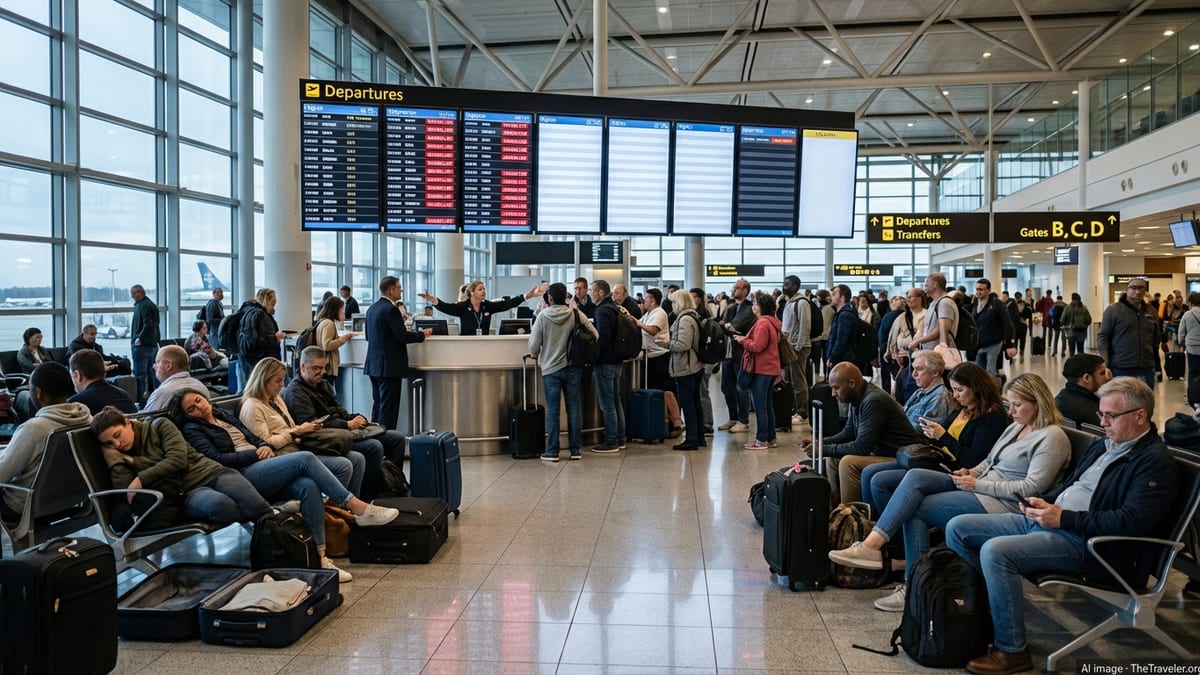
Flight schedules across Dubai and parts of the Middle East remain unsettled in mid-September 2026, as airlines juggle evolving airspace constraints, conflict-zone risk advisories, and knock-on delays that can ripple through major hubs such as Dubai International (DXB) and Abu Dhabi’s Zayed International.
Get the latest news straight to your inbox!
Why Dubai connections are vulnerable right now
Dubai’s role as a global transfer hub means even limited disruption can quickly cascade. When carriers detour around restricted airspace or reduce flying to certain nearby markets, aircraft rotations change, crews may time out, and inbound delays can trigger missed onward connections. That effect is amplified at DXB, where banked arrivals and departures are designed for short connection windows.
Current disruption is being driven by a mix of risk advisories and operational constraints affecting multiple flight information regions (FIRs) in and around the Gulf. Publicly available conflict-zone guidance from European aviation authorities has urged operators to avoid or use heightened caution in several Middle East airspaces, prompting route changes that add flight time and can compress schedules elsewhere.
U.S. aviation security restrictions and conflict-zone notices also continue to shape planning for some operators, especially those with U.S.-linked aircraft, crews, insurance requirements, or compliance considerations. Even when a carrier keeps a route operating, it may fly different tracks, depart at different times, or add fuel stops, any of which can shift arrival slots in Dubai and Abu Dhabi.
Airspace restrictions and advisories driving reroutes
Airspace limitations are not uniform across the region, and that is a major reason travelers see inconsistent outcomes such as a delay on one day and a cancellation on another. Some states have implemented restrictions affecting overflights, while others remain open with heightened caution, and published industry updates have described varying levels of limitation across Iran, Kuwait, Israel, Lebanon, Syria, and neighboring corridors. These measures can force airlines to funnel traffic through narrower lanes, increasing congestion and delay risk.
European conflict-zone advisories have remained a key reference point for global carriers. Recent updates have highlighted elevated risk conditions across multiple Gulf and Levant FIRs, and published coverage has pointed to guidance that, in certain cases, encourages avoidance of specific airspace or increased caution through the end of September 2026. When large international airlines adjust routings, the changes can alter arrival waves into DXB and Zayed International, affecting unrelated routes through network knock-on effects.
Compounding the regional situation, unrelated disruptions can stack on top of rerouting pressure. Recent reporting has linked some UAE flight disruption to wider air-traffic control issues in Europe as well as other events affecting long-haul schedules, underscoring how a hub like Dubai can feel the impact of multiple distant constraints at once.
What travelers are seeing: delays, selective cancellations, and short-notice changes
Across early to mid-September, published flight-tracking coverage has pointed to significant volumes of delays at UAE airports on peak days, with some routes facing later-than-scheduled arrivals and a limited number of cancellations. Reports have also noted examples of cancellations on certain Gulf routes, including services between Dubai and Bahrain on at least one day, alongside broader arrival disruption impacting multiple airlines.
Some of the most visible impacts have included delays on flights to and from nearby regional markets where airspace access is more constrained, and sporadic cancellations on routes that require operating close to higher-risk corridors. At the same time, carriers have largely continued operating the majority of their networks, relying on selective cancellations, aircraft swaps, and adjusted timings rather than broad shutdowns.
Airline travel-update pages have repeatedly emphasized a basic theme: passengers should confirm flight status before leaving for the airport and watch for direct notifications about changes. That guidance is particularly important for travelers with onward connections in Dubai, where a modest inbound delay can translate into a rebooking scenario if the next flight departs on time.
How airlines are managing operations out of DXB and Abu Dhabi
UAE-based carriers have generally kept core long-haul services running while adapting tactically. Operational approaches have included rerouting around restricted corridors, adding fuel where needed to support longer tracks, and adjusting schedules to reflect new block times. In the current environment, a flight that historically took one routing may now take another, and that variability can be reflected in day-to-day arrival times.
International airlines serving Dubai have also been reviewing their Middle East schedules. Some carriers have extended suspensions or reduced frequencies on specific routes when risk assessments or operational feasibility changed, while continuing service on other city pairs. The result for passengers is an uneven patchwork: one destination may be unaffected while a neighboring market sees delays and temporary cancellations.
Even when airports remain open and functioning normally, the constraint can be upstream: restricted overflight permissions, limited arrival and departure windows in certain FIRs, or reroute-induced congestion. Industry operational advisories have indicated that some restrictions are currently scheduled to run through late September 2026, which suggests continued sensitivity for schedules into the month’s final weeks.
What to do now: check-in timing, rebooking, and connection planning
For travelers departing Dubai, the most practical step is to treat departure times as less stable than usual. Reconfirming flight status on the airline’s channels on the day of travel, and again before leaving for DXB or Zayed International, can help avoid long waits in the terminal for a delayed or rescheduled flight. Passengers with tight connections should also review their minimum connection time and consider earlier departures where feasible.
For passengers whose flights are delayed into Dubai, missed onward connections remain a key risk. Rebooking options depend on the carrier and fare type, but publicly available airline disruption guidance generally routes customers toward self-service tools such as manage-booking functions, rebooking links, or airport service desks when connections break.
Travelers may also want to anticipate operational changes that do not appear as cancellations, such as gate changes, later boarding, or altered arrival terminals. In a hub environment, those small adjustments can matter, particularly for families, passengers with reduced mobility, and those connecting to separate-ticket onward travel.
With multiple factors still in play, including regional airspace constraints and broader network disruptions, the near-term outlook points to continued irregular operations rather than a uniform shutdown. For now, the most reliable strategy is flexible planning: confirm status repeatedly, allow extra connection time, and keep rebooking options ready if the day’s routing changes.