


Landing at Dublin Airport can feel busy and unfamiliar, especially if you are arriving from outside Europe or connecting onward across Ireland. This guide walks you through every stage of arrival, from stepping off the plane and clearing passport control to collecting bags, finding cash and SIM cards, and choosing the best way into the city or beyond. It focuses on the real layout and services in Terminals 1 and 2 so you know exactly what to expect after landing.
Get the latest updates straight to your inbox!
Understanding Dublin Airport’s Terminals and Layout
Dublin Airport has two passenger terminals, Terminal 1 and Terminal 2, which sit next to one another and are linked by a short, fully indoor walkway. Most low cost and European carriers, including Ryanair, use Terminal 1, while Aer Lingus and most long haul airlines operate from Terminal 2. If you arrive at the “wrong” terminal for your bus or pickup, it rarely matters in practice because you can walk between terminals at ground level in about five minutes.
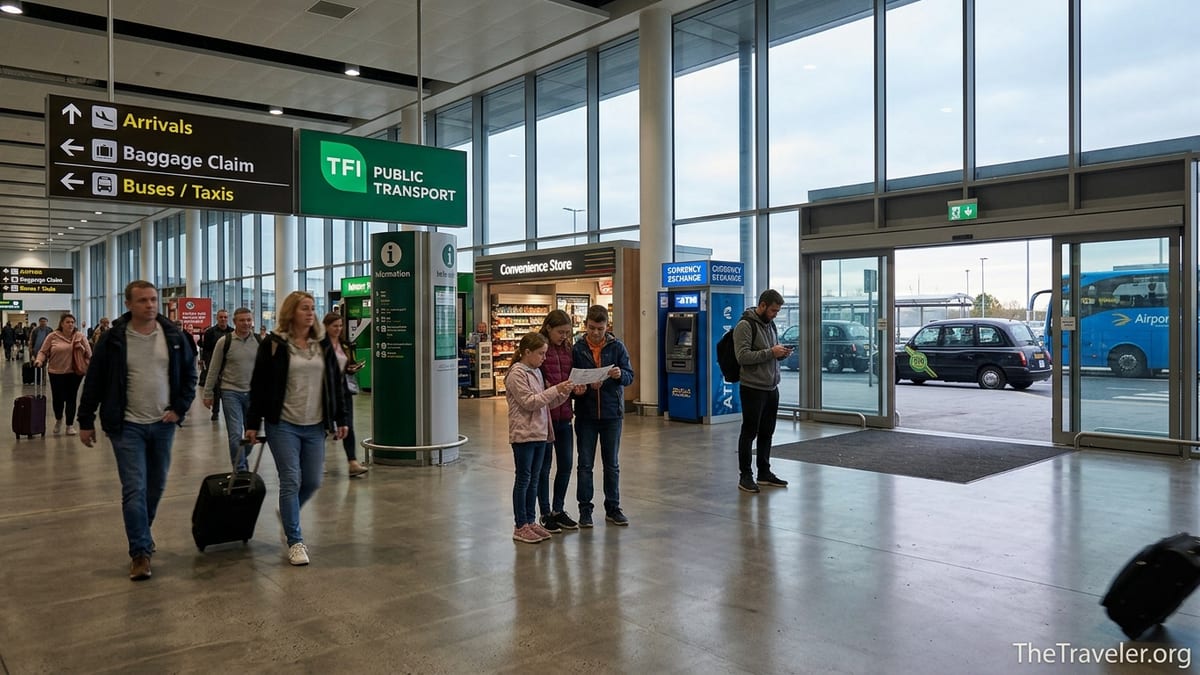
Both terminals follow a similar pattern on arrival. You will exit the aircraft and follow overhead signs for “Arrivals” and “Baggage reclaim.” These corridors lead first to passport control, then to the baggage carousels, and finally to customs and the public arrivals halls. The arrivals halls are where you will find car rental desks, information counters, ATMs, convenience shops, and the exits to the forecourt, taxi ranks, and bus zones.
Arrivals in Terminal 2 are spread across two levels, but everything is clearly signed. After customs you will emerge into the main arrivals level, where there is a Spar convenience store, coffee options, and transport information. Terminal 1’s arrivals area is more compact but just as straightforward, with clear signage to taxis, buses, and the walk to Terminal 2.
If you have a tight connection to a domestic or short haul flight, remember that all flights at Dublin Airport share the same airfield. Transferring between terminals normally means walking through public areas rather than an airside transit system, so allow extra time if you need to collect and recheck baggage.
Passport Control: EU and Non EU Arrivals
After disembarking, follow signs for “Passport Control” or “Border Control.” Dublin Airport has separate channels for EU / EEA / Swiss passport holders and for “All other passports.” If you hold an Irish or other EU passport, you usually join the shorter EU lane and may be able to use eGates when they are operating. Non EU travelers join the main non EU queue and speak directly with an immigration officer at a staffed booth.
Typical questions from the border officer include where you are staying, how long you plan to visit Ireland, and whether you have a return or onward ticket. Having your accommodation address to hand, such as a hotel in central Dublin or a guesthouse in Galway, will speed things up. Many visitors also carry proof of travel insurance and evidence of funds, although these are only occasionally requested.
Waiting times vary by time of day and season. Early morning long haul arrivals, such as flights from the United States or the Middle East, can produce longer queues in Terminal 2. Evening European arrivals may move more quickly, especially in Terminal 1 where aircraft are often smaller. Allow at least 30 to 60 minutes from disembarking to clearing passport control during busy periods, though it can be much faster in quieter times.
If you have a connecting flight on a single ticket with Aer Lingus or another carrier, check whether you are remaining airside or must clear Irish immigration and recheck bags. Many passengers arriving from outside the European Union clear immigration in Dublin even if they are connecting onward to another EU destination, so build that into your connection time.
Baggage Claim and Customs: What Happens After You Land
Once you clear passport control, electronic screens direct you to your baggage carousel number. Carousels are grouped together in each terminal’s baggage hall, and flights from the same region often share adjacent belts. Luggage trolleys are widely available and are free to use, which can be a relief after a long flight. If you arrive from London with Aer Lingus into Terminal 2, for example, your bags will usually appear on one of the lower numbered belts close to the main exit doors.
Expect baggage delivery times similar to other European airports. On a typical short haul flight, bags may start to appear within 15 to 25 minutes of arrival. For large, full transatlantic flights arriving early in the morning, it can sometimes take longer. If your baggage does not appear, go to your airline’s lost luggage desk, which is located beside the carousels. You will need your bag tag receipt and boarding pass.
After collecting luggage, follow signs for customs. EU arrivals, including those from other Schengen and European Union states, usually walk through a green channel indicating “Nothing to declare.” Non EU arrivals also use the green channel if they are within standard duty-free allowances. There is a red channel for travelers carrying goods above duty free limits or items that must be declared. Random inspections can take place in either channel, so keep your receipts easily accessible.
Once you pass customs, you walk straight into the public arrivals hall. This is the point where you can meet waiting friends, check in with a pre booked driver, or orient yourself before deciding on cash, SIM cards, and onward travel. If you need time to reorganize, stand to the side of the main flow of people rather than stopping directly in front of the exit doors, as this area quickly becomes congested after several flights land at once.
Money, ATMs, SIM Cards and Wi Fi on Arrival
Dublin Airport operates in euro, and nearly every service in the terminals accepts debit and credit cards. That said, it can be convenient to withdraw a small amount of cash for tips, small purchases, or rural buses that may still prefer coins. ATMs operated by major Irish banks and international providers are located in both arrivals halls, usually close to the exits and information counters. Some independent ATMs may offer dynamic currency conversion at poor rates, so where possible opt to be charged in euro by your home bank instead of in your home currency.
If you need a local SIM card, look for mobile network desks and convenience stores in arrivals. Irish providers such as Vodafone, Three, and eir typically sell prepaid SIMs suitable for tourists, often with data bundles of 10 GB or more and inclusive EU roaming. For example, a typical tourist oriented prepaid SIM might cost around 20 to 30 euro for a month of data and calls, though prices and promotions change regularly. Staff can usually help you insert the SIM and check that data is working before you leave the terminal.
Many travelers now rely on eSIMs purchased before departure, which activate as soon as the phone connects to an Irish network. If you choose this route, you can still visit a physical shop in the arrivals hall if you run into activation issues. Free Wi Fi is widely available throughout both terminals, which also helps if you need to download ride hailing apps, confirm hotel bookings, or message family to say you arrived.
Payment cards and digital wallets work almost everywhere in Dublin. Contactless payments such as tap to pay with a smartphone or watch are widely accepted on buses, in cafés, and at ticket machines. However, Ireland still uses chip and PIN in many situations, so bring a physical card even if you prefer mobile payments. Having at least two different cards, for example a Visa and a Mastercard, can be useful in case one network is temporarily unavailable.
Public Transport to Dublin City Centre and Beyond
Once you are ready to leave the terminal, one of the most cost effective ways into the city is by bus. Two main private coach brands, Dublin Express and Aircoach, operate frequent services between the airport and central Dublin, with stops at locations such as O’Connell Street, the quays along the River Liffey, and key hotels in the south city. These coaches pick up outside both Terminal 1 and Terminal 2, in clearly marked coach zones on the forecourt. A single adult fare is typically under 10 euro if bought in advance and slightly more if purchased from the driver or at the airport.
Public Transport for Ireland services also operate regular buses between the airport and the city. These are standard city buses rather than dedicated airport coaches. They are cheaper but make more stops and have less luggage space. The benefit is that they integrate with the TFI Leap Card system and the TFI 90 minute fare, where one fare covers multiple journeys within a 90 minute window on most Dublin services. For example, you might tap onto a bus from the airport, transfer to another bus in Drumcondra, and still only pay a single capped fare within that period.
The TFI Leap Visitor Card is a special version of the Leap Card that offers unlimited travel for a set number of days in Dublin’s transport zones, including a return trip between Dublin Airport and the city. Visitors can usually choose between 1, 3, and 7 day versions. As of mid 2026, these cards are commonly sold in selected airport shops in both terminals, such as Spar or WHSmith branded outlets, and in central Dublin at the Dublin Bus head office on Upper O’Connell Street. A separate standard Leap Card is also available, which you can top up with pay as you go credit and use across buses, Luas trams, and DART commuter rail.
For travelers heading beyond Dublin, several long distance coach operators run direct services from the airport to cities such as Galway, Cork, Limerick, and Belfast. These services usually depart from designated coach bays beside Terminal 1, with branded shelters indicating the company and route. Booking in advance often guarantees a seat and may be cheaper than buying at the curb, so if you know you will travel directly to Galway, for instance, consider booking a Galway airport coach before your trip.
Taxis, Rideshares and Car Rental at Dublin Airport
Official taxis at Dublin Airport line up at designated ranks immediately outside the arrivals halls of both terminals. Follow the overhead signs marked “Taxi” and you will find a managed queue with staff helping to direct passengers to available cars. All official taxis in Ireland must display a roof sign and a photo ID with license number. Fares are metered and regulated, with supplements for night hours, Sundays, and additional passengers or luggage. A typical daytime fare from the airport to central Dublin might be in the region of 30 to 40 euro depending on traffic and the exact address.
It is not permitted for taxis to pick up passengers at random on access roads or nearby petrol stations, so it is safest to use the official ranks directly outside the terminals. Cash and cards are generally accepted in licensed taxis, but if you plan to pay by card, you may want to mention this before departing. Many vehicles display contactless terminals that can handle tap to pay transactions, making it straightforward to pay with a phone or card at the end of the ride.
Rideshare style services exist in Ireland but typically operate under the same regulations as standard taxis rather than as separate app based private hire systems. In practice most visitors rely on the conventional taxi ranks at the airport. If you have arranged a private transfer or a chauffeur service, your driver will usually meet you inside the arrivals hall with a sign or at a pre agreed meeting point near the exit doors.
For those who plan to explore Ireland by car, major international and local car hire brands maintain desks in both terminals’ arrivals areas. After completing paperwork at the desk inside, you will usually be directed to a nearby multistorey car park or a short shuttle ride away to collect the vehicle. Companies typically require a valid driving licence, a credit card in the main driver’s name, and in some cases an additional proof of identity. Inspect the vehicle carefully for existing damage and ensure any marks are recorded before leaving the car park.
Buying and Using Leap Cards for Public Transport
The TFI Leap Card is the main stored value smart card for public transport in Dublin and several other Irish cities. As a new arrival, you have two main options: the Leap Visitor Card designed for short term tourists, and the standard Adult Leap Card, which you top up as needed. The Visitor Card includes unlimited travel on Dublin Bus, Go Ahead Ireland city buses, Luas trams, and DART and commuter rail within specified zones, including the airport link, for the duration of the card. The standard card instead deducts a set fare each time you tap in.
At Dublin Airport, you can normally buy Leap Visitor Cards and sometimes standard Leap Cards from designated agents in arrivals. Examples include certain Spar or WHSmith convenience stores and the transport or tourist information desks when staffed. Look for the green TFI logo displayed at the counter. Elsewhere in the city, Leap Cards are widely sold and topped up in convenience stores such as Spar, Centra, and some petrol stations, as well as at ticket machines at DART and Luas stops.
Using the card is simple. On buses you tap the card once on the reader beside the driver when boarding; the fare is automatically deducted, and you do not tap off. On Luas trams, DART, and commuter trains you tap on at the platform or station gate at the start of your journey and tap off at your destination. If you are using a Visitor Card, the system will still track your travel for statistics, but there is no extra charge per journey beyond the upfront cost.
For example, a visitor staying three full days in Dublin might choose a 3 day Leap Visitor Card to cover the airport bus plus unlimited buses and trams around the city, including a day trip to Howth by DART. A traveler who plans to visit multiple cities, such as Cork or Galway, might find a standard Leap Card more useful within Dublin and then buy separate intercity rail or coach tickets for longer distances, since Leap Cards generally do not cover long distance intercity trains.
Onward Travel Across Ireland: Trains, Coaches and Domestic Flights
If Dublin is only your entry point to Ireland, it is useful to plan onward travel before you land. For rail journeys, the main intercity station is Dublin Heuston for routes to Cork, Limerick, Killarney, and the southwest, and Dublin Connolly for services to Belfast, Sligo, and the northeast. There is no direct rail station at the airport, so you first take a coach or bus into the city. A typical route might be a Dublin Express or Aircoach service from the airport to the city centre, then a short Luas tram or taxi ride to Heuston Station for a train to Cork.
Several intercity coach operators also run directly from Dublin Airport to regional cities and towns, which can save time compared with routing via the city centre. For example, airport express coaches to Galway and Limerick depart from dedicated bays near Terminal 1, often timed to connect with popular flight arrival windows. If your flight from North America lands early in the morning and you plan to reach Galway by lunchtime, booking a seat on one of these direct airport coaches can avoid the need to navigate central Dublin while jet lagged.
Domestic flights within Ireland are limited but do exist, typically connecting Dublin with airports such as Kerry, Donegal, or the Aran Islands via regional carriers. These flights depart from the main terminals, so if you are connecting domestically, check whether your baggage is checked through. If not, you must follow the full arrivals process, collect your bags, and then go upstairs to departures to check in again. Always allow a generous buffer time for such do it yourself connections, as weather or congestion can delay arrivals.
Many visitors choose to spend at least one or two nights in Dublin before traveling elsewhere in Ireland. If you are staying in the city, note the name and approximate area of your accommodation, such as Temple Bar, St Stephen’s Green, or near O’Connell Street. Bus and coach drivers often announce central stops by district, and taxi drivers will expect at least the hotel or street name to estimate both time and fare.
The Takeaway
Arriving at Dublin Airport is generally straightforward once you know the basic sequence: passport control, baggage claim, customs, then into the arrivals hall for money, SIM cards, and transport. Both Terminal 1 and Terminal 2 are compact by international standards, and you can walk between them quickly if your bus or coach leaves from the other building. With a little preparation, even a first time visitor can move from aircraft door to city centre hotel or regional coach without stress.
Think ahead about the essentials you need immediately on landing. Keep your accommodation details handy for border officers and taxi drivers, decide whether you want to buy a Leap Visitor Card or a standard Leap Card in arrivals, and consider whether a bus, taxi, or pre booked coach best fits your budget and luggage situation. If you are connecting onward the same day, check schedules for trains or intercity buses in advance so you know which city terminal or coach bay to aim for.
Above all, allow a bit of extra time. A busy morning of long haul arrivals can lengthen queues at passport control and slow baggage delivery. Weather and traffic sometimes affect coaches and taxis. Building a margin into your plans, whether for a same day connection to Galway or for a simple hotel check in downtown, will make your first hours in Ireland feel calmer. With realistic expectations and this arrival guide in mind, you will be well placed to step out of Dublin Airport and start your Irish journey with confidence.
FAQ
Q1. How long does it usually take to get through Dublin Airport after landing?
For most travelers, it takes around 45 to 90 minutes from landing to exiting the arrivals hall, including passport control, baggage claim, and customs, though this can be shorter at off peak times.
Q2. Can I buy a TFI Leap Card or Leap Visitor Card at Dublin Airport?
Yes, you can usually buy Leap Visitor Cards and often standard Leap Cards from selected shops and transport or tourist counters in the arrivals areas of both terminals.
Q3. Is it better to take a bus or a taxi into Dublin city centre?
Buses and coaches are cheaper and work well if you are comfortable handling your luggage and walking a short distance to your accommodation, while taxis cost more but take you directly to your door, which can be easier after a long flight or with heavy bags.
Q4. Are there ATMs and currency exchange services in the arrivals halls?
There are multiple ATMs from banks and international providers in both arrivals halls, and you will also find currency exchange counters, though many visitors rely on bank cards and only withdraw a small amount of cash.
Q5. Where do I catch Aircoach or Dublin Express at the airport?
Both Aircoach and Dublin Express pick up at clearly signed coach bays outside Terminal 1 and Terminal 2; follow the “Buses” or “Coaches” signs from the arrivals hall and check the information boards for the correct zone for your route.
Q6. Can I get a local SIM card on arrival in Dublin?
Yes, convenience stores and mobile provider counters in arrivals typically sell prepaid SIM cards from major Irish networks, and staff can often help with activation and basic setup.
Q7. How much does a taxi from Dublin Airport to the city centre cost?
Fares vary with traffic and the exact destination, but many visitors pay in the region of 30 to 40 euro for a metered taxi ride from the airport to central Dublin during daytime hours.
Q8. Is there a train from Dublin Airport into the city?
No, there is currently no direct rail link from Dublin Airport; you must travel by bus, coach, taxi, or car to reach the city centre or the main train stations at Heuston or Connolly.
Q9. What should I do if my checked luggage does not arrive?
If your bag does not appear on the carousel, go to your airline’s baggage services or lost luggage desk located near the belts, provide your bag tag receipt and contact details, and they will arrange delivery or collection once the bag is found.
Q10. Can I sleep overnight in Dublin Airport if I arrive very late?
Some passengers rest in public seating in the terminals overnight, but facilities are basic, shops may close for several hours, and it is generally more comfortable to book a nearby airport hotel if you have a long layover or very early departure.