


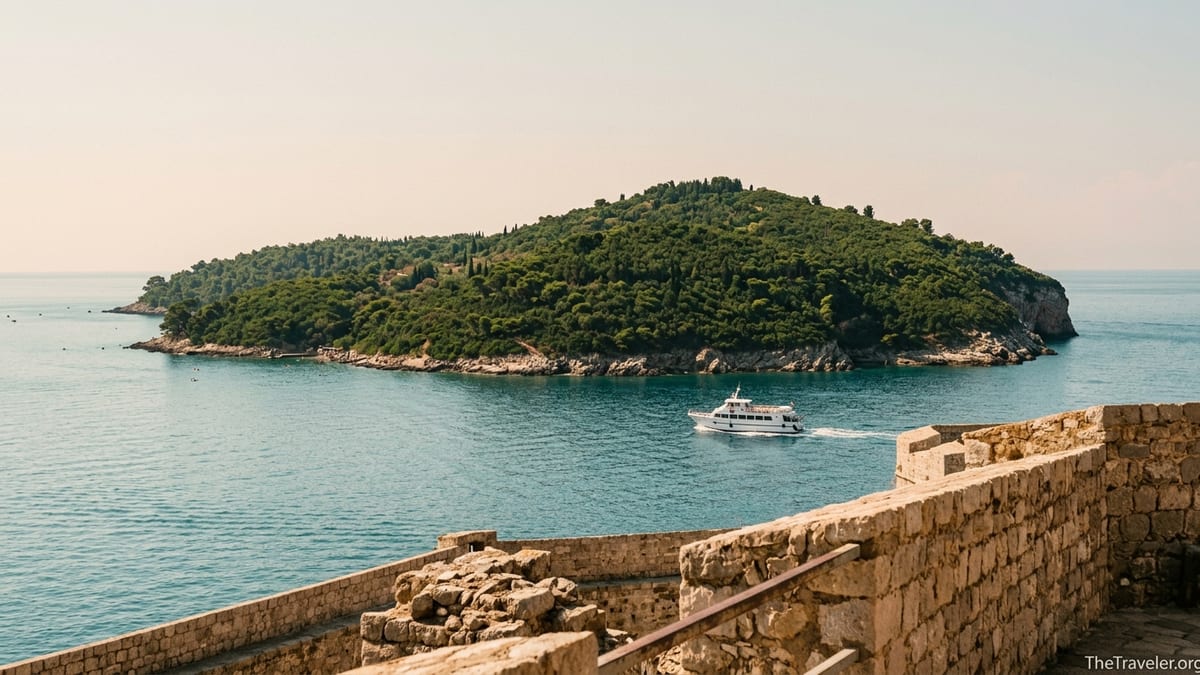
Lokrum Island sits just 600 metres off the walls of Dubrovnik, but it feels like a different world: pine forest instead of polished stone, peacocks instead of cruise crowds, rock pools instead of bar terraces. With a frequent ferry from the Old Port and no cars allowed, it is one of the easiest and most rewarding day trips you can make during a stay in Dubrovnik.
Get the latest updates straight to your inbox!
Why Lokrum Island Belongs on Your Dubrovnik Itinerary
Lokrum is a small protected nature reserve directly opposite Dubrovnik’s Old Town, roughly a 10 to 15 minute boat ride across the channel. The island is covered in dense Mediterranean forest with cypress, pine and oak, cut through by shaded walking paths that link rocky coves, a 19th century botanical garden, the ruins of a Benedictine monastery and a small saltwater lake known as the Dead Sea. For many visitors, it offers exactly what Dubrovnik itself can lack in peak season: breathing space and easy access to the sea.
Because the island is managed as a special reserve, visitor numbers are controlled through a single official passenger ferry from the Old Port. There are no cars, no hotels and no permanent residents. You come to swim off the rocks, float in the lake, watch peacocks wander between stone ruins and perhaps climb to a Napoleonic fort at the island’s highest point for views back to the Old Town and the open Adriatic. It is a simple place, but that is part of its appeal.
The island is especially popular with families wanting calm, clear water, Game of Thrones fans seeking the Iron Throne replica housed in the monastery complex, and locals looking for a quick escape from the crowds. Plan it well and you can leave Dubrovnik’s Old Port after breakfast, spend a relaxed half day swimming and exploring, and be back on the Stradun in time for an evening walk along the city walls.
Taking the Ferry from Dubrovnik’s Old Port
The standard way to reach Lokrum is the public ferry that departs from Dubrovnik’s Old Port, just below the city walls near the cathedral. Ticket booths for Lokrum are set up at the entrance to the marina area in season, generally operating from April to early November, with the most frequent departures between June and September. The crossing takes about 10 to 15 minutes each way and you disembark at a small pier on the island’s north side, a short walk uphill from the monastery ruins.
As of 2026, adults typically pay around 30 euros for a combined return ferry ticket and Lokrum nature reserve entrance; children are charged a reduced rate. These prices can change slightly year to year, but they give you a realistic benchmark when budgeting. Tickets are usually sold for same-day use rather than a specific time slot, and in high summer boats commonly depart every 30 minutes or so from mid-morning until late afternoon, with fewer crossings at the shoulders of the day. The last boat back to Dubrovnik is normally in the early evening, often around 6 pm or slightly later in peak season, so this is very much a day-trip rather than a late-night excursion.
If you hold a current Dubrovnik Pass, you may be eligible for a discount on the Lokrum ferry portion of your ticket, which can reduce the overall cost by a meaningful margin for a couple or family. The discount structure can change, so it is worth asking at the Old Port kiosk to confirm the latest offer. Private boat operators at the main harbour in Gruž and around the Old Town sometimes advertise excursions that include a stop at Lokrum, but these usually use their own moorings or moor offshore and are less convenient if your main aim is to explore the interior of the island on foot.
How Long to Stay and When to Go
Most visitors find that three to five hours on Lokrum is enough for a relaxed circuit including a swim, a visit to the Dead Sea, time in the botanical garden and monastery, and perhaps a drink at one of the small cafes near the main paths. A common pattern is to catch a late-morning ferry, spend the middle of the day swimming and exploring when Dubrovnik’s Old Town is hottest and most crowded, then return by mid or late afternoon. If you want to add the climb to Fort Royal at the island’s highest point and enjoy longer swims at several coves, plan on closer to a full day.
The island is at its busiest from late June through August, especially between about 11 am and 3 pm when multiple cruise ships may be in port. If you prefer a quieter experience, aim for a ferry before 10 am or one of the later afternoon departures. In April, May, September and early October, services operate less frequently but crowds are lower and temperatures are usually still warm enough for swimming, especially for those comfortable in slightly cooler water. Note that no overnight stays are allowed on Lokrum: boats return everyone to Dubrovnik each evening and the island is closed outside official hours.
Because the ferry is weather dependent, particularly in shoulder seasons when strong winds can blow through the channel, it is wise to keep some flexibility in your schedule. If you are in Dubrovnik for several days, pick the clearest, calmest day in the forecast for Lokrum so that you can enjoy the water at its best and avoid potential cancellations. On days when the sea is rough, the rock platforms around the island can feel exposed, especially on the southern side where waves hit more directly.
Swimming Spots and the Dead Sea Saltwater Lake
Lokrum is ringed with rocky coves and bathing platforms rather than sandy beaches, so expect to swim from flat slabs of limestone, small concrete jetties and natural rock shelves. Many visitors bring or buy inexpensive rubber water shoes in Dubrovnik to make it easier to cross uneven surfaces and avoid sea urchins that cluster on the rocks just below the water line. The water here is generally very clear; on calm days you can see schools of small fish and the pale stone seabed several metres below.
The most sheltered and family-friendly place to swim is the Dead Sea, or Mrtvo More, a small saltwater lake near the southern shore of the island, roughly 10 minutes’ walk from the ferry pier through pine woods. This natural pool was formed by the collapse of a sea cave and is still connected to the open Adriatic via underwater channels, which means the water is salty and buoyant but usually calmer than the surrounding sea. Stone steps and ledges provide relatively easy entry, and in summer the lake is filled with visitors floating on their backs or paddling inflatables. It works well for children and less confident swimmers, although there is no lifeguard presence, so supervision is still essential.
On the eastern and southern edges of Lokrum, paths lead to a series of exposed rock platforms facing the open Adriatic. These areas are popular with stronger swimmers and sunbathers who enjoy wave action and deeper water. At the southern tip you will find a signed clothing-optional area traditionally used by naturists. The western side of the island, looking back towards Dubrovnik, has a mix of quieter coves and viewpoints; this is a good area if you want a swim with a clear view of the Old Town walls, especially in late afternoon when the light softens on the stone.
Monastery Ruins, Peacocks and the Botanical Garden
Just a few minutes’ walk from the ferry pier are the ruins of the Benedictine monastery, first recorded in the early 11th century and later renovated as a summer residence by Habsburg archduke Maximilian in the 19th century. Today the complex is a mix of stone cloisters, garden courtyards and a small visitor centre, with some sections adapted as a casual restaurant and cafe. Inside, an exhibition covers the island’s history and its role as a filming location for scenes in the series Game of Thrones. A replica Iron Throne sits in one of the vaulted rooms, and visitors line up for quick photos between swims.
Wandering the grass and gravel paths around the monastery, you are likely to meet some of Lokrum’s most memorable residents: its peacocks. These birds were originally brought to the island from the Canary Islands in the 19th century and now roam freely, often strutting across lawns or perching on low walls. They are used to visitors and frequently wander between tables at the nearby cafe. Children tend to be delighted, but it is worth remembering they are still wild animals; avoid feeding them and give them space if they spread their tail feathers or seem agitated.
South and east of the monastery, a landscaped botanical garden showcases plant species collected from around the world during the island’s 19th century development. While parts of the collection have suffered from storms and the passage of time, you can still see towering eucalyptus, palms, agaves and other Mediterranean and subtropical varieties growing among the original paths. In high summer this area offers welcome shade and a quieter atmosphere than the lakeside, and its benches are good places to pause with an ice cream from a nearby kiosk before continuing to the Dead Sea.
Food, Water and Facilities on the Island
Facilities on Lokrum are deliberately limited to preserve its atmosphere as a nature reserve, but you do not have to go hungry or thirsty. A casual restaurant and bar operate close to the monastery complex during the main season, serving simple Mediterranean dishes such as grilled fish, salads, pasta and pizzas, alongside cold drinks, coffee and local beer. Prices are generally a little higher than similar items in less touristy parts of Dubrovnik, reflecting the island location and short season, so many budget-conscious visitors bring their own snacks or picnic supplies from supermarkets in town.
Small kiosks near the ferry pier and popular swimming areas typically sell bottled water, soft drinks and basic snacks like crisps and ice cream. However, opening hours can be shorter in shoulder seasons and stock can sell out on especially hot days. To avoid relying on island options, plan to carry at least one large refillable water bottle per person. Drinking fountains are not consistently available, and carrying your own water means you can choose more remote coves without worrying about walking back to the main hub in the heat.
Toilets are located near the main arrival area and around the central complex, but outside of these points the island feels very undeveloped. There are no beach clubs with loungers and waiters; instead you will be spreading a towel on warm stone, propping your day pack against a rock and using your sandals as a makeshift pillow. For many visitors, this is precisely the charm. That said, shade can be limited on the exposed rocks, so packing a hat, light shirt and high-factor sun cream is important, especially for children and anyone spending multiple hours by the water.
Luggage, What to Pack and Practical Tips
Because Lokrum is a car-free nature reserve with rocky paths, compact packing makes the day more pleasant. There are no left-luggage offices on the island itself, and visitors arriving in Dubrovnik on early flights or buses with large suitcases are better off using luggage storage services in the Old Town or near the main port before boarding the ferry. Several independent storage shops operate within a 5 to 10 minute walk of the Old Port, and some hotels and guesthouses will hold bags for guests before check-in or after check-out for a small fee, which is usually easier than trying to manage big wheeled cases on the island’s paths.
Aim to bring a small backpack with swimwear, a lightweight microfibre towel, water shoes, sun protection, water and snacks. A dry bag can be useful if you plan to swim at several spots, as the rock entries sometimes involve wading out with your belongings. If you are travelling with young children, consider a simple inflatable ring or arm bands for use in the Dead Sea lake and sheltered coves, but remember that flotation devices are not a substitute for active supervision.
There is signal coverage for most major mobile networks around the island, though it can dip in some low-lying interior sections. Card payments are widely accepted at official kiosks and the main restaurant, but it is still sensible to carry some euros in cash for small transactions or in case payment terminals are offline. Footwear is more important than you might expect: trainers or sturdy sandals for walking plus water shoes for swimming will make a big difference to comfort compared with simple flip-flops on sharp rocks or hot paths.
Suggested Day Trip Itineraries
One straightforward way to experience Lokrum is a half-day circuit from Dubrovnik’s Old Town. You might take a 10 am ferry from the Old Port, walk up to the monastery complex for a quick look at the cloisters and botanical garden, then continue down to the Dead Sea lake for your first swim of the day. After an hour or two floating in the calm water and relaxing on the rocks, you could return to the central area for a simple lunch at the island restaurant or a picnic under the pines. A final shorter walk to one of the western coves for a last dip and photo of Dubrovnik’s walls from the sea gives you time to catch a mid-afternoon boat back.
Travellers who want more walking and viewpoints might opt for an earlier start. Catching one of the first ferries, you can walk directly up through the forest to Fort Royal at the island’s highest point before the day heats up. The climb is not technically difficult but involves a steady uphill path; at the top you are rewarded with panoramic views over the Old Town, the Elafiti Islands and the open Adriatic. From there, descend towards the southern shore to explore the more exposed rocky bathing platforms and the naturist area if that appeals, before working your way back via the Dead Sea and monastery for a late lunch and return ferry.
If you are travelling with children or prefer a slower pace, you can limit walking distances by focusing on the central and southern sections of the island. Spend most of your time between the monastery lawns, the peacock-filled gardens and the Dead Sea, moving in short shaded hops and saving energy for swimming. Because the island closes each evening and there are no overnight facilities, it is important to keep an eye on the time and confirm the day’s last ferry at the Old Port ticket kiosk before you depart in the morning.
The Takeaway
Lokrum Island is not a place of big-ticket attractions or elaborate infrastructure. Its appeal lies in the combination of easy access from Dubrovnik’s Old Port with a landscape that still feels surprisingly wild: pine woods, rocky headlands, a hidden saltwater lake and monastery ruins threaded with peacocks. For the price of a ferry ticket and reserve entrance, you gain half a day or more of shade, sea and space away from crowded streets and cruise ship crowds.
Plan ahead by buying your ferry ticket early in the day, packing water, sturdy footwear and basic snacks, and deciding whether you want a short swimming-focused break or a fuller loop around the island’s paths. Once you are on Lokrum, the rhythm is simple: walk, swim, rest, repeat. Whether you float in the Dead Sea, sit in the Iron Throne for a quick photo or simply find a quiet rock ledge with a view back to Dubrovnik’s walls, you are likely to leave feeling that you have discovered one of the city’s easiest and most rewarding escapes.
FAQ
Q1. How do I get to Lokrum Island from Dubrovnik?
The easiest way is the official ferry from Dubrovnik’s Old Port, which runs regularly in season and takes about 10 to 15 minutes each way.
Q2. How much does the Lokrum ferry and entrance cost?
Combined return ferry and island entrance for adults is typically around 30 euros, with reduced prices for children, although exact rates can change each year.
Q3. How long should I plan to stay on Lokrum?
Most visitors are happy with three to five hours, enough time for swimming at the Dead Sea, exploring the monastery, walking through the gardens and having a relaxed drink or snack.
Q4. Can I swim everywhere on the island?
You can swim at many rocky coves and platforms around the shore and in the Dead Sea lake, but there are no sandy beaches and some entries are over uneven rocks, so water shoes help.
Q5. Is the Dead Sea lake suitable for children and less confident swimmers?
The Dead Sea is sheltered and usually calmer than the open sea, which makes it popular with families, but there are no lifeguards so close supervision is still essential.
Q6. Are there places to buy food and drinks on Lokrum?
Yes, there is a restaurant and a few kiosks near the main paths, though prices are higher than in less touristy parts of Dubrovnik, so many visitors bring their own water and snacks.
Q7. What should I wear and pack for a day trip?
Wear sturdy sandals or trainers for walking, bring swimwear, a towel, water shoes, sun protection, plenty of water and a small day pack rather than large luggage.
Q8. Can I stay overnight on Lokrum Island?
No, overnight stays are not allowed. The island is a protected nature reserve and all visitors must return to Dubrovnik on the ferry by early evening.
Q9. Will I see peacocks and other wildlife?
Peacocks roam freely around the monastery lawns and paths and are commonly seen; you may also notice lizards and various seabirds while walking the trails.
Q10. Is Lokrum worth visiting if I have only one full day in Dubrovnik?
If you enjoy swimming and nature, a morning or afternoon on Lokrum combined with a half day exploring Dubrovnik’s Old Town makes for a balanced and memorable single-day itinerary.